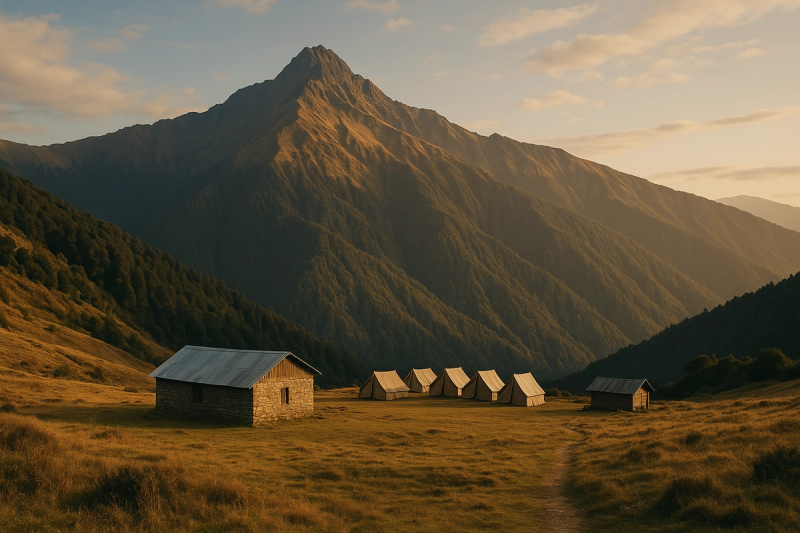
So, Mt. Saramati had been haunting my Google Maps for years. Everytime I zoomed into Nagaland, that tiny label near the Indo–Myanmar border would stare back at me. Highest peak of Nagaland, remote village, crazy beautiful ridge, border views… all the buzzwords. And also, hardly any proper, detailed Indian blog that actually explained what happens after you reach Püngro or Thanamir. So ya, I had to go see it myself.
If you’re also the kind of person who loves offbeat treks, basic homestays, and that feeling of being almost at the end of the road, then Mt. Saramati base camp trek will make you very, very happy. And slightly dead also, because it’s steep as hell.
Where Exactly Is Mt. Saramati And Why It’s A Big Deal
#Alright, basic stuff first. Mt. Saramati is in Eastern Nagaland, near the border with Myanmar, in Kiphire district. Height is around 3,826 m (approx 12,552 ft). On paper it sounds like just another Himalayan-ish number, but in reality it rises pretty sharply from the surrounding valleys, so views are insane when the sky is clear.
Most people do the trek from a small village called Thanamir, which calls itself the “Apple Village” of Nagaland. Some old-school folks still mention Püngro side and other approaches, but if you are reading this now, trust me, Thanamir route is the practical one. That’s where updated homestays, guides and trail information is available these days. A lot of local guides told me even some small trekking groups from mainland India are beginning to come each year now, especially in Oct–Nov season, but it’s still pretty quiet compared to say Sandakphu or Tawang kind of spots.
Is It Safe And Do You Still Need ILP And Permits?
#Short answer, ya it’s safe enough if you listen to locals and don’t behave like YouTube vlogger trying to make a border drama reel. The general security situation in Nagaland has improved a lot, and this region sees trekkers, birders and sometimes researchers also. Still, it’s border zone, so you can’t just wander off randomly on the ridge and start flying drones above Myanmar side.
For Indians, Inner Line Permit (ILP) is still needed to enter Nagaland. You can apply online through the Nagaland government portal or get it from Dimapur / Kohima facilitation centres. Process is not very painful now, just don’t leave it for last minute. Foreigners need the usual permits and should double‑check with tour operators or official websites because rules keep changing slowly-slowly. Once you reach Thanamir, the village council and forest folks keep basic track of who is trekking, for safety and border reasons.
How To Reach Thanamir (Without Losing Your Mind)
#Reaching base of Saramati is actually more exhausting than the trek itself, I swear. But ok, here’s the realistic route if you’re starting from outside Nagaland.
Most people do:
- Fly or train to Dimapur (nearest bigg-ish city with airport and railways)
- From Dimapur go to Kohima by shared sumo (approx 3–4 hours, 400–600 ₹ range)
- From Kohima, you’ll need to get to Pfütsero / Meluri side and then towards Kiphire region depending on current road condition and what locals advise
Roads in Eastern Nagaland are… let’s just say they exist, but they’re not exactly highways. Landslides in monsoon, random roadworks, all that is very normal. Shared Sumos and local taxis are still the main way to move. Prices vary, but for a full day of hiring a local Bolero or similar from Kiphire side to Thanamir, budget around 3,500–5,000 ₹ for the vehicle. If you are in a small group, it becomes reasonable. Solo can be a bit painful on pocket unless you find co-travellers.
Um, also small tip: keep your day flexible. In my case, we were stuck for two hours near Püngro because one truck got stuck in slush, and the entire world had to wait while it got dragged out. So don’t plan super tight connections. Just accept that this is part of the journey, chai karo, enjoy the views, talk to people. Everyone’s in the same boat.
Thanamir Village: First Impressions, Apples And Homestays
#By the time we finally rolled into Thanamir, it was already late afternoon. Village is perched on a slope, wooden houses, church on the hill, kids playing football like everywhere in the North East. There are apple orchards around, though peak apple season is usually around late Aug–Sept. I was a bit late for good apples, got some small ones, still tasty though.
Accommodation wise, don’t expect fancy resorts. What you’ll mostly find:
- Simple homestays run by local families
- A couple of guesthouse-type setups used by trekkers and researchers
Charges are usually in the range of 800–1,500 ₹ per person per night including basic meals (rice, dal, local veggies, egg or chicken if available). If you want separate room and more privacy, you might pay slightly more, but nothing crazy compared to city stays. There is no point bargaining too hard here honestly, money directly supports village economy and they really do put in a lot of effort.
I stayed with a family whose teenage son had already done the trek multiple times and ended up being my guide. At night, over super hot rice and pork curry, they went over the plan: start early next morning, hike up to base camp, overnight there, summit next day, back to Thanamir by evening if weather behaves. Classic 2D/1N or 3D/2N style.
Mobile Network, ATM, Last-Minute Supplies
#Network in Thanamir is patchy. Some people got faint BSNL and Jio signals in certain spots, others nothing. Don’t depend on it. Download offline maps before. Up in base camp and beyond, it’s mostly zero network. Which is kind of the whole point also, na?
Cash is king. Nearest ATM that actually works regularly might be in bigger towns on the way (Püngro/Kiphire side). Please don’t land in Thanamir with only UPI vibes and 300 rupees. Carry enough cash for:
- Homestays (couple of nights)
- Guide + porter charges
- Trek food, village snacks, random tea stops
There are small shops in the village where you can buy biscuits, Maggie, water, basic stuff. But proper trekking gear, warm layers, headlamp, power bank – bring from home. Don’t assume you’ll be able to rent snow jackets here like you do in some Himachal town. This side is still very raw tourism wise.
Do You Really Need A Guide For Mt. Saramati?
#Yes. 100 percent. No debate. Even if you are that one friend who always says, “bro I’ll manage with offline map”.
Reason is simple – it’s forested, some sections are confusing, weather can turn suddenly, and there’s a sensitive international border nearby. Local youth and elders know which ridge line is ok, where to fill water, where not to camp, and they are also in touch with village council. Also, it’s a nice way to support them. When we went, guide charges were around 1,200–1,800 ₹ per day depending on group size and number of days. Porters if you want, extra. Always discuss the total plan, cost, and food arrangement clearly before you start. No awkwardness later that way.
Best Time To Do Mt. Saramati Trek (And When To Avoid It Like Crazy)
#I’ll keep this straight:
- Best months: October–November and March–April
- Colder but beautiful: Late Nov–Feb (can get quite chilly, frost, some years even snowfall on higher sections)
- Avoid if possible: Heavy monsoon months (June–Sept) – leeches, slushy trail, landslides on roads. Some very hardcore people still go but honestly, why would you.
I went in November and it was perfect trekking weather in the day – cool, slightly crisp, but once the sun dipped, temperature dropped properly, especially at base camp. I wore all my layers at night. If you don’t like cold, you may prefer March/April when it’s a bit milder and the forest feels very alive.
Mt. Saramati Base Camp Trek: Day-Wise Experience
#Day 1: Thanamir To Base Camp – The Long Forest Climb
#We started early, like 6:30–7am, quick breakfast of rice and boiled eggs, stuffed some dry snacks into our bags, filled water bottles. The trail begins right above the village, crossing through fields and thin patches of forest first. Slowly it becomes denser. For the first 1–2 hours you’re basically just climbing steadily. Not very technical or dangerous, but the gradient is no joke. I was sweating like mad within thirty minutes.
The forest is really beautiful though. Tall trees, moss, those patches of light coming through leaves, random birds calling. My guide kept pointing out different plants used traditionally by the Yimkhiung people – for medicine, for food, for rituals. This is something I really loved about Saramati trek compared to some crowded Himalayan treks, you actually have silence and space to hear the forest, you know?
We stopped for lunch at a small clearing. Simple packed lunch from homestay – rice and dry sabzi wrapped in foil, chai in steel flask. Nothing fancy but somehow it tastes like 5-star food when you’ve been climbing for hours. After lunch, trail got slightly steeper and rockier in parts. By mid afternoon we reached base camp area.
Base camp is not a big built-up campsite with ten dhabas or anything. It’s basically a clearing where earlier some basic wooden shelters used to be and now many groups pitch tents. Some local shelters may still be there or rebuilt based on recent seasons, but assume you’ll be sleeping in tents and carrying basic gear. If you’re not carrying tent, many homestays arrange everything as a package including tent, sleeping bag, mats, food – so just clarify in advance.
By late evening, fog rolled in. We couldn’t see anything beyond a few meters, but the quiet was unreal. Just the sound of wind in the trees and small fire crackling. We had dinner early, chatted under the dim light, and slept soon because next day was summit push. And also because it was freezing outside.
Day 2: Summit Day – Ridge Walk And Border Views
#We woke up before sunrise, around 4:30–5. Honestly I didn’t sleep properly anyway, I kept waking up checking the time like kid before school picnic. Quick tea and biscuits, layered up, headlamp on, we started the final climb.
This section from base camp to the summit is steeper and slightly more exposed in places, but still not technical mountaineering or anything. It’s a proper trek, not a climb. There are roots, rocks, narrow trail segments. In some places you’ll be scrambling a bit with hands, but nothing crazy if you are reasonably fit and careful. Obviously, good shoes are must. Don’t come in flat sneakers and then blame the mountain.
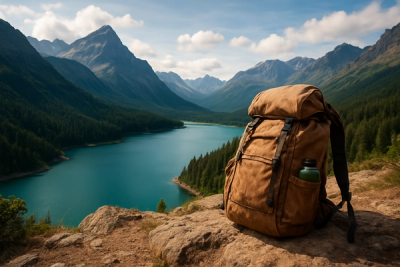
As we gained height, the forest started thinning and suddenly we popped out on the ridge. When the first light hit that ridge line – man, that was the moment. On one side, vast rolling hills of Nagaland. On the other, Myanmar stretching into misty distance. If the sky is clear, you can see layers upon layers of hills fading into blue. Our day was partly cloudy but still, the expanse felt wild.
We reached the summit after around 3–4 hours from base camp, with many breaks. There’s a modest marker at the top, some prayer flags sometimes depending on who has come recently. Don’t expect Instagram-friendly signboard saying “Welcome to Mt. Saramati”. It’s more raw. And kind of better that way.
We sat there for a long time, just staring. My guide was telling stories of how earlier times people used these trails for trade and movement between villages in Myanmar and Nagaland side, long before international borders became strict. There’s a strange feeling sitting on a border mountain like that, knowing one step this side is India and one step that side is another country, but the landscape doesn’t care at all.
By mid morning, clouds started to build, so we began descent. And this is where your knees will cry. Going down the steep forest trail is harder in some way. Poles are very useful. We made it back to base camp by noon, packed up, quick lunch, and continued all the way down to Thanamir by late afternoon. It was a long, tiring day, but still doable if you start early and your pace is ok. Some groups prefer to stay one more night at base camp and come down relaxed the next day. Both options are fine.
Fitness Level: Can A Normal Person Do This Trek?
#Yes, you don’t have to be some ultra marathon runner. But you also can’t be sofa potato and expect magic. Gradient is steep and you’re doing continuous climb for hours. I’d say if you can:
- Comfortably walk 8–10 km in city with some up-down
- Climb stairs for 20–30 minutes without dying
- And carry a 6–8 kg backpack for a few hours
…you’ll manage. Try to do some walks / runs for at least 2–3 weeks before coming. Old knee injuries, breathing issues etc, talk to your doctor if needed. Altitude is not extremely high by Himalayan standards, but it’s still above 3,500m, so take it slow, hydrate, listen to your body.
What To Pack For Mt. Saramati Base Camp Trek
#Packing is one area where I messed up a bit, so learn from my stupidity. I’ll keep it simple and not do some perfect super-polished list, just the main things:
- Good trekking shoes with grip (trail can be muddy and slippery in sections)
- Warm layers: thermals, fleece, light down or padded jacket, woollen cap, gloves
- Rain / wind shell – weather changes fast, especially in shoulder seasons
- Decent 40–50L backpack if you’re carrying own gear
- Headlamp with extra batteries – absolute must, mornings and nights get dark-dark
- Personal meds, ORS, bandaids, basic first aid
- Power bank – don’t rely on charging at base camp
- Snacks: nuts, chikki, dark chocolate, some energy bars if you like
If your homestay is arranging tents and sleeping bags, ask what rating their bags are. Nights can drop near or below zero in cold months, so avoid super local thin blankets only. I had my own sleeping bag liner which helped a lot. Also carry a small garbage bag to bring back your trash. There is no cleaning department coming up there.
Food, Culture And Little Things I Loved
#One thing I’ll say – food in these villages may not be Insta-pretty, but it’s comfort food at its best. Rice is life here. Along with it you’ll usually get:
- Boiled or smoked pork curries (if available)
- Naga style chutneys with chilli that will wake your soul up
- Local green veggies, boiled or lightly fried
- Egg curry when meat is not there
Flavours are simple, not loaded with masala like some mainland dishes. If you’re non-veg, you’ll be very happy. If you’re vegetarian, you’ll still be fine, just inform your host in advance so they can plan. Pure vegan might be slightly trickier but still manageable with some communication. Nagaland food trends these days also include instant noodles, chips, biscuits everywhere, so you won’t starve, don’t worry.
Culturally, Thanamir and that side is mostly Yimkhiung Naga tribe. There’s a mix of traditional and Christian influences like most of Nagaland. Evenings when people gather, sing hymns, or just talk around fire – that vibe is something you don’t get in commercial hill stations. Many younger folks are into football, K‑dramas, Instagram reels, same as rest of us. But they still have strong connection with land and forest through elders. You can feel that in the way they talk about the mountain.
Costs: Rough Budget For The Trek
#Ok, very quick money breakdown for an Indian backpacker-style trip, excluding your flight/train to Dimapur:
– Shared Sumo Dimapur–Kohima and onwards toward Kiphire region: 1,000–1,800 ₹ overall depending on breaks and route.
– Private cab from bigger town to Thanamir (one way, full car): 3,500–5,000 ₹ approx, split among group.
– Homestay in Thanamir: 800–1,500 ₹ per night with meals.
– Guide: 1,200–1,800 ₹ per day per group.
– Porter (optional): 800–1,200 ₹ per day.
– Extra snacks, tea, minor tips etc: 500–1,000 ₹ for entire trek.
So for a 3–4 day trip from Kohima side to Thanamir, doing Saramati and coming back, budget roughly 8,000–12,000 ₹ per person if you’re in a small group and sharing transport. Solo can go higher, obviously. Compared to some Himalayan treks that cost 15–20k with big operators, this is still quite reasonable and more directly community based.
Current Travel Trends & Updates Around Saramati Side
#In the last couple of years, Eastern Nagaland has started appearing more on social media. You’ll see reels of people riding bikes through Kiphire roads, visiting Fakim Wildlife Sanctuary, and doing birding trips. Saramati is slowly becoming that dream peak for people who want an offbeat trek but not something technical. Still, it’s far from crowded. There’s talk of improving homestay standards, better toilets, maybe more organized community treks in coming seasons. Even a few Northeast-based operators have started offering Saramati packages now.
From safety perspective, things are stable, but always check local news or talk to Nagaland-based travel folks for any fresh advisories, especially because it’s near border. Weather-wise, patterns have become a bit unpredictable (like everywhere) so sudden rain in shoulder months is common. Roads are being worked on gradually, but I won’t be surprised if they remain rough for quite some time. Just factor that into your expectations. This is not a luxury trip, it’s more like controlled adventure.
Small Mistakes I Made (So You Don’t Repeat Them)
#Me and my friend did a few classic blunders:
- We underestimated the cold at base camp and didn’t carry an extra pair of dry socks. Trekking in damp socks next morning is not fun, trust me.
- We thought there will be strong mobile network in Thanamir. Nope. Had to send last minute texts from a random turning on the approach road where our driver suddenly got signal.
- We delayed ILP planning and ended up wasting some time in Dimapur sorting it. Just get it done online before.
- I carried too much food from Kohima thinking there will be nothing in the village. But homestay food was more than enough, so my backpack was unnecessarily heavy.
None of this ruined the trip obviously, but with a bit more planning we could’ve been more comfortable. Still, some level of jugaad and on-the-spot fixes are part of these journeys, right. If everything is perfectly smooth, it feels like just another package tour.
Who Should Actually Do Mt. Saramati (And Who Probably Shouldn’t)
#You should definitely consider Saramati if:
- You enjoy remote, less touristy places and can handle basic conditions
- You have already done some easier treks in Himalayas or Western Ghats and want something different
- You’re curious about Naga culture beyond the usual Hornbill Festival / Kohima circuit
- You don’t need fancy cafes, big markets, or nightlife on your trip
Maybe skip or postpone if:
- You have serious knee, heart, or breathing issues and haven’t trained at all
- You get very anxious without constant network and luxury bathroom
- You only have one or two days free – that’s too rushed for such a remote area
Also, if you’re travelling with elderly parents or very young kids, maybe they can enjoy Thanamir village stay while fitter people in group do the trek. No need to push everyone to summit just for one family photo.
Final Thoughts: Why Saramati Stayed With Me
#Looking back now, what really stuck with me wasn’t just “I climbed highest peak of Nagaland” bragging rights. It was the feeling of reaching a small village at the edge of the country, being welcomed into someone’s home like long-lost cousin, walking inside those silent forests with a local guide who treats the mountain almost like a living grandparent, you know, with respect. And that moment on the ridge, when India and Myanmar both were just layers of hills under the same morning sky.
Saramati is not glossy tourism. It’s rough roads, smoky kitchens, cold tents, shared tea, and slow conversations. It’s also one of the most honest treks I’ve done in India. If you go with right expectations and an open mind, I honestly feel it will become one of those journeys you keep thinking about randomly years later while sitting at your desk in some office.
If you’re planning your own trip and want more Indian travel stories and guides like this – not just copy‑paste touristy stuff – you can always dig around on AllBlogs.in. I keep finding new offbeat ideas there, and maybe one day I’ll finally write that second part about exploring more of Eastern Nagaland too.