So, um, Malaysia had been sitting on my list for years, you know that mental list we all have between Goa, Bali and "somewhere in the hills". When I finally did Penang, Cameron Highlands and Langkawi in one trip, it honestly felt like I did three totally different countries in one go. Same visa, same currency, completely different vibes.
If you’re planning Malaysia in 2026 and wondering what to see, I’d say just lock these three: foodie heaven Penang, cool and misty Cameron Highlands, and laidback beach life in Langkawi. You get culture, tea plantations, mountains, beaches, duty‑free shopping… and lots of roti canai obviously.
Quick travel updates & basic stuff Indians should know
#First things first, the practical gyaan. As of late 2025, Malaysia has been pretty stable for travellers – no major safety issue for tourists, and honestly I felt safer walking around at night in Penang than in some parts of Mumbai. Petty theft can happen like anywhere, but if you’re not flashing your iPhone around in a random alley at 2 am, you’re fine.
For us Indians, eVisa / eNTRI keeps changing slightly with time, so just check the official Malaysian immigration website or VFS before you book flights. Don’t trust random Telegram forwards, please. Flights from India are quite frequent to Kuala Lumpur and sometimes directly to Penang or Langkawi from places like Chennai and Bangalore, but mostly you’ll transit through KL.
Money wise, Malaysian Ringgit (MYR) is roughly around 18–20 INR range most of the time, it goes up and down, but that’s a decent mental conversion. For a mid‑range desi style trip (not backpacking like crazy, not luxury also), expect around ₹4,000–7,000 per night for good hotels or guesthouses if you book in advance. Street food is cheap and amazing, so your stomach will be happy at least.
Penang: Where my stomach fell in love first
#Penang is the first place where I realised: okay, Malaysia is basically like India’s cousin who went abroad, became modern but still loves good food and chai. The island is famous for George Town – a UNESCO World Heritage city – packed with heritage shophouses, temples, Chinese clan houses, and these super cool street art murals that everyone Instagrams like mad.
I stayed in George Town near Armenian Street, in this small heritage guesthouse. Paid around ₹4,500 per night for an AC room with private bathroom and simple breakfast. Nothing crazy fancy, but the location was 11/10. I could literally walk to all the major murals, cafes, and food courts.
What to see and do in Penang (beyond just clicking street art pics)
#Honestly you can spend two full days just wandering around George Town and not get bored. But here’s what really stood out for me:
- The street art trail: You’ll find murals like “Little Children on a Bicycle” and “Boy on a Bike” randomly on walls. Best way is to just walk early morning or late evening when it's not too hot and follow your curiosity rather than some strict map.
- Clan Jetties: Wooden houses on stilts over the water, each jetty belongs to a Chinese clan. Chew Jetty is the most famous (and crowded) but still fun. Feels like stepping into a different time.
- Kek Lok Si Temple: This one is huge. It’s one of the biggest Buddhist temples in Southeast Asia. Go around late afternoon, explore, and then catch sunset views of Penang from the top. The view is just… ya, beautiful.
- Penang Hill: Take the funicular train up. Cooler weather, nice views, some walking trails. Don’t go in the middle of the day, you’ll just stand in queue and sweat.
Btw, public transport is pretty decent in Penang. There’s a free CAT bus (Central Area Transit) around George Town, and the Rapid Penang buses are affordable. I mostly used Grab (their Uber), honestly. Works like a charm and not too expensive if you’re sharing with friends.
Penang food: come hungry, leave rolling
#This is the real reason I fell for Penang. It’s like if Chennai, Kolkata and Singapore had a food baby. Indian, Chinese, Malay, Nyonya – all mixed up, all tasty.
Must‑try stuff (don’t @ me if you disagree):
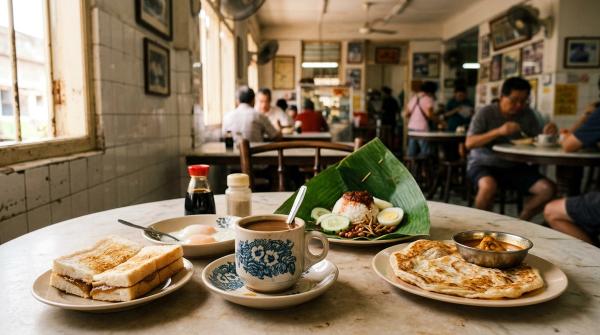
- Char Kway Teow – smoky stir‑fried flat noodles with prawns, egg, bean sprouts. I had it at a random stall near Chulia Street Night Hawker area and I still think about it sometimes while stuck in Bangalore traffic.
- Nasi Kandar – this one feels very familiar for Indians, especially if you’re from the South. Rice with multiple curries, fried chicken, gravies, sambal etc. Line Clear Nasi Kandar and Nasi Kandar Beratur are crowd favs.
- Teh Tarik and Roti Canai for breakfast – you’ll feel right at home, like a upgraded version of our chai‑parotta.
Veg folks, don’t worry, there’s plenty for you too. Little India area in Penang has proper Indian veg restaurants with dosa, idli, paneer etc. There are also Chinese and hipster cafes with vegetarian and vegan options. Just mention “no meat, no fish, no egg” clearly, because sometimes fish sauce sneaks in.
Cameron Highlands: Mist, tea and a much needed break from city noise
#After sweating like crazy in Penang, landing up in Cameron Highlands felt like a hill station version of home. Slightly like Ooty + Munnar + a bit of British nostalgia. It's around 1,500 meters above sea level, so the weather is cool and sometimes nicely chilly at night. I actually had to wear a jacket. In Malaysia. Wild.
I went there by bus from Penang (via Ipoh), it was around 5–6 hours total. Roads are a bit twisty towards the end, so if you get motion sick, maybe pop a pill and avoid scrolling on your phone non‑stop like me and my headache.
Where I stayed & how much stuff costs up there
#Cameron Highlands has three main areas: Tanah Rata, Brinchang and then the areas around the tea plantations. Most backpackers and budget travellers stay in Tanah Rata. I picked a simple guesthouse there – paid roughly ₹3,000–3,500 per night for a clean room, hot shower and walking distance to cafes and tour offices. Easy life.
If you want fancier resorts overlooking tea estates, those can go from ₹8,000 up to 15–20k per night, especially on weekends or school holidays. Malaysia also has its own school holidays calendar, so always check that because prices shoot up when local families travel.
Things you must see in Cameron Highlands
#Cameron is not the place for crazy nightlife. It’s more like: inhaling cold fresh air, drinking hot tea, and realising you need to walk more in life.
- Tea plantations (BOH Tea Estate & others): The classic postcard view. Rolling green hills, perfectly lined tea bushes. I did a half‑day tour that covered BOH plantation, a factory visit, and a viewpoint. It felt a bit touristy, but the views are honestly worth it.
- Mossy Forest: This was my favourite. A misty, slightly eerie forest with moss hanging off the trees, wooden walkways and viewpoints. It looks like something out of a fantasy movie. Go with a guide because they know which parts are open, safe, and not ruined by over‑tourism.
- Strawberry farms: Super touristy, but kinda cute also. You can pick your own strawberries, click a few cheesy pics and overpay for strawberry ice cream. Good for families or if you’re a sucker for this kind of thing, like me.
Weather wise, it can rain anytime. I got proper drenched once because I underestimated the clouds. So carry a light rain jacket, good shoes with grip (paths can be muddy), and a small umbrella. Don’t be like me with my sad, wet sneakers.
Food & vibe in the Highlands
#Cameron Highlands has a different food vibe compared to Penang. Think steamboat/hotpot, grilled corn, strawberries with chocolate, and classic Malaysian dishes. I had a really cosy steamboat dinner in Brinchang – perfect for the chilly weather, they bring raw veggies, meat, noodles and you cook in hot broth at your table. Veg steamboat also available in many places, just ask.
Evenings are pretty quiet. Most shops close early, so stock up on snacks and water beforehand. I spent one night just sitting on the balcony with tea, watching fog roll into the valley. Sounds dramatic but it was actually very peaceful and my brain really needed that kind of silence.
Langkawi: Beaches, duty‑free shopping and a lot of chill
#From the mountains, I flew to Langkawi, and suddenly life turned into a beach holiday. Langkawi is a group of 99 islands, but most of us stay on the main island where all the hotels, beaches and airport are. It’s also duty‑free, so alcohol, chocolates, perfumes etc are cheaper compared to the rest of Malaysia. My friends went a bit mad in the supermarket, not gonna lie.
I based myself in Pantai Cenang area, which is the busiest beach stretch with cafes, bars, money changers, water sports, the whole package. My hotel was like a 7–8 minute walk from the beach, with a small pool. Paid around ₹5,000 per night. You can definitely find cheaper homestays and hostels starting from ₹1,200–2,000 also if you book early or don’t mind simpler places.
What to do in Langkawi (apart from lazying on the beach)
#Langkawi surprised me a bit because I thought it’s only for couples and honeymooners. But there’s actually plenty to do even if you’re travelling with friends or solo.
- Langkawi SkyCab & Sky Bridge: This is the famous cable car that takes you up to Gunung Mat Cincang. From there you can walk on the curved Sky Bridge which hangs between two peaks. Views are insane on a clear day. Go early morning to avoid crowds and haze.
- Island hopping tours: You’ll see signboards everywhere for these. They usually cover Pregnant Maiden Lake, eagle watching, and a couple of smaller islands. Half‑day trips are enough, and prices are pretty reasonable – you can bargain a bit, Indian instincts and all.
- Water sports at Pantai Cenang: Jet skiing, parasailing, banana boat etc. Check safety standards, life jackets etc before saying yes. Don’t automatically go for the cheapest guy on the beach.
At night, the beachside shacks and bars light up, but it’s still not as wild as, say, Goa’s party scene. It’s more like chill music, bean bags on the sand, and people just enjoying a drink or two. I liked that, it didn’t feel too rowdy.
Langkawi food & budget tips
#Langkawi has everything from Malay warungs (small local eateries) to Indian restaurants, burger joints, and fancy seafood places. I kept it simple – local nasi goreng, mee goreng, tom yum soups, and the occasional Indian fix when homesickness kicked in. A good meal can be as cheap as ₹250–400 at a local place, or ₹800–1,000 in nicer restaurants. Still much cheaper than eating out in big Indian metros tbh.
Since the island is spread out, Grab works well but sometimes cars are fewer late night. Renting a scooter is very popular (around 35–55 MYR per day) but only do it if you’re confident on two‑wheelers and remember: they drive on the left like us, but rules are actually followed here, so don’t ride like we do on Indian roads.
When to visit & how to plan Penang + Cameron Highlands + Langkawi together
#Malaysia is basically tropical, so it’s hot and humid most of the year. But there are still better and worse times.
Generally speaking, November to March is decent for Penang and Langkawi, with a bit more rain some months. For Langkawi specifically, December to March is usually considered the best – clearer seas, nicer beach weather. Cameron Highlands stays cooler year‑round, but weekends and school holidays get crowded.
A simple 8–10 day itinerary that actually works in real life could be something like:
- Day 1–3: Penang – explore George Town, street art, temples, food
- Day 4–5: Cameron Highlands – tea plantations, Mossy Forest, chill weather
- Day 6–9: Langkawi – beaches, island hopping, Sky Bridge, duty‑free shopping
You can travel between them like this: Penang to Cameron Highlands by bus (via Ipoh), Cameron to KL (if needed) and then fly to Langkawi, or Penang directly to Langkawi by short flight or ferry. Personally, I prefer flying between Penang and Langkawi, because ferries can be rough sometimes and I’m not trying to re‑experience my motion sickness trauma again.
Safety, culture shock (or the lack of it) & random tips
#One thing I really appreciated – as an Indian traveller, Malaysia doesn’t feel too alien. There are Tamil signboards, Indian temples, people speaking Tamil and Malayalam in some areas, and of course, Little Indias in many cities. You won’t face a big food or language shock, honestly English is widely spoken and understood in all tourist areas.
A few quick tips from my side:
- Dress modestly when visiting temples, mosques and some rural areas. Shoulders and knees covered is usually fine. On beaches and touristy areas, regular western clothes and swimwear are okay, just don’t go overboard.
- Carry a universal adapter, Malaysian plugs are Type G (like UK). Many hotels have only those.
- Get a local SIM at the airport – Maxis, Digi, Celcom etc. Data is cheap, and it makes life so much easier for Grab, Maps, translations, everything.
- Tap water is technically treated, but most locals still drink filtered or bottled water. I stuck to bottled and refill stations.
The only time I felt slightly uncomfortable was when a taxi guy tried to overcharge late at night in Cameron Highlands, but even that was just a minor argument, nothing scary. Overall, the vibe is chill and people are quite helpful if you’re polite.
Final thoughts: Is this trio worth it for 2026 and beyond?
#If you’re thinking, "Should I really do Penang + Cameron Highlands + Langkawi in one trip or just stick to KL and Genting like everyone from my office?" – please, go for this trio. KL is nice, but these three places show such different sides of Malaysia that you’ll come back feeling like you saw a proper mix of culture, nature, and seaside chill.
Penang hits your stomach and your camera roll. Cameron Highlands gives your lungs fresh air and your brain some quiet. Langkawi takes care of your beach cravings and shopping desires. For me, that’s a pretty solid combo in one country, without crazy travel times or budget blow‑outs.
If you’re planning your own trip and want more detailed itineraries, cost breakdowns and honest reviews from people who actually travel on desi budgets, not unlimited influencer money, definitely keep an eye on AllBlogs.in – I’ve found some genuinely helpful stuff there when I plan my next escapes.