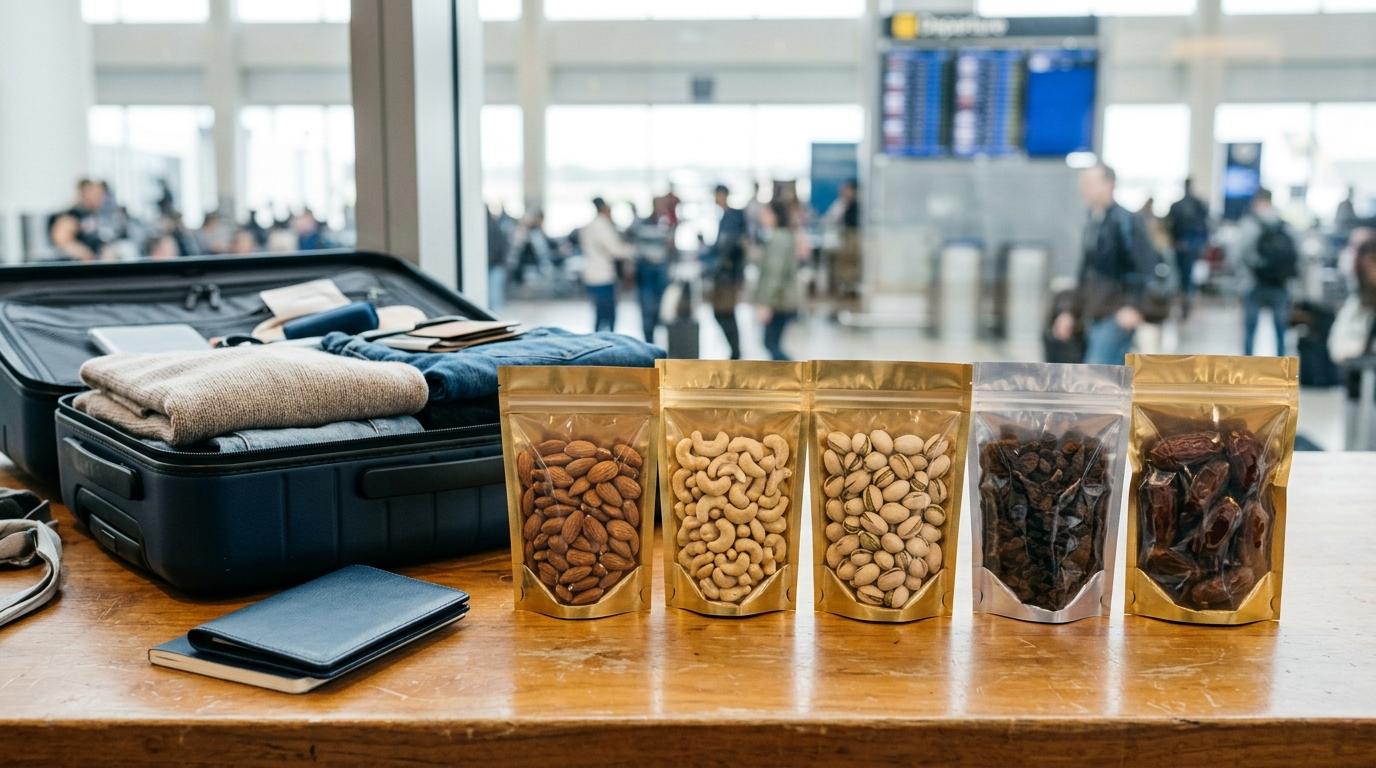
If you are flying abroad from India, there is a good chance your bag has more than clothes and chargers in it.
Maybe your mother has packed almonds because “you won’t eat properly there.” Maybe you are taking cashews for relatives. Maybe you bought dates, raisins, pistachios, walnuts, dried figs, or a dry fruit gift box at the last minute because it felt like a safe and useful thing to carry.
So the big question is:
Can you carry dry fruits on international flights from India?
Yes, in most cases, you can.
Dry fruits are solid food items, so Indian airport security usually allows them in both cabin baggage and check-in baggage. But the real issue is not only the airport in India. The more important question is: will the country you are landing in allow them?
Many countries have strict rules for food, nuts, seeds, fruits, and plant-based products because of pests, contamination, and biosecurity concerns. A sealed packet of roasted almonds may pass without any problem. But loose, raw, homemade, wet, sticky, or unlabeled food can easily get questioned.
This guide explains what you can carry, where to pack it, what to declare, and which dry fruit items need extra care.
Quick Answer
#Yes, you can carry dry fruits on international flights from India, including:
- Almonds
- Cashews
- Raisins
- Dates
- Pistachios
- Walnuts
- Dried figs
- Dried apricots
- Trail mix
- Dry fruit gift packs
They are usually allowed as long as they are properly packed and permitted by the destination country.
For Indian airport security, dry fruits are normally not a problem because they are solid foods. They do not fall under liquid or gel restrictions unless they are wet, oily, syrupy, pasty, or sticky.
But remember this simple difference:
- Airport security checks whether the item is safe for the flight.Their job is to make sure you are not carrying anything dangerous on the aircraft.
- Customs checks whether the item is allowed into the country.Their job is to check food, agriculture, plant products, pests, seeds, and restricted items.
The safest choice is to carry dry, sealed, commercially packed dry fruits whenever possible. Keep the labels visible, avoid raw or fresh-looking items, and declare food if the arrival form asks about it.
Can You Carry Dry Fruits in Cabin Baggage?
#Yes, you can usually carry dry fruits in cabin baggage.
Small packets of almonds, cashews, raisins, pistachios, dates, walnuts, or trail mix are usually fine. If you want something to snack on during the flight, or you are carrying a small gift box that you do not want crushed, cabin baggage is convenient.
That said, large dry fruit packets can sometimes look dense on the X-ray scanner. For example, a one-kilo block of dates or a heavy pouch of mixed nuts may be pulled aside for checking. This does not mean it is banned. It simply means security may want to see what it is.
If you are carrying dry fruits in cabin baggage:
- Keep them in original packaging if possible.
- Use clear packets if you have repacked them.
- Keep large packets easy to remove.
- Do not bury them under too many things.
- Avoid wet, oily, sticky, syrupy, or paste-like dry fruit items.
- Do not mix dry fruits with pickle, chutney, ghee, syrup, or wet sweets.
Plain dry fruits are usually easy at airport security. The moment something looks like a paste, gel, syrup, liquid, or powder, it may take longer to clear.
Can You Carry Dry Fruits in Check-in Baggage?
#Yes, you can carry dry fruits in check-in baggage too.
In fact, check-in baggage is usually better if you are carrying larger quantities. This is common for students, families, NRIs, or anyone moving abroad for a longer stay.
Pack dry fruits in check-in baggage if:
- You are carrying several packets.
- The packets are heavy.
- You do not need them during the flight.
- They are dense and may slow down cabin baggage screening.
- You are carrying sealed gift boxes.
Make sure the packets are sealed properly. Dry fruit packets can tear easily, and nobody wants cashews, raisins, and pistachio shells all over their clothes.
For extra safety, put the packets inside zip pouches or plastic covers.
Also remember: putting dry fruits in check-in baggage does not help you avoid customs rules. If the destination country requires food declaration, you still need to declare them when you land.
Which Dry Fruits Are Usually Easier to Carry?
#Some dry fruits are easier to travel with because they look processed, dry, and clearly meant for eating.
Usually safer options include:
- Commercially packed almonds
- Roasted cashews
- Salted or roasted pistachios
- Raisins
- Dried cranberries
- Dried apricots
- Dried figs
- Packaged dates
- Dry fruit gift packs
- Factory-sealed trail mix
- Vacuum-packed mixed nuts
Branded packets are helpful because they show important details like:
- Ingredients
- Weight
- Brand name
- Best-before date
- Processing details
- Whether the item is roasted, salted, dried, or pitted
This makes life easier if customs wants to inspect your bag.
If you are taking dry fruit gift packs abroad, choose sealed boxes instead of open decorative trays. A factory-sealed box with a label is much easier to explain than a loose box filled from different shops.
Roasted Nuts Are Usually Better Than Raw Nuts
#Roasted nuts are generally easier than raw nuts because they are visibly processed.
This matters more at customs than at Indian airport security. Raw nuts, seeds, and plant-based items may raise more biosecurity concerns in some countries.
So if you have a choice, carry roasted almonds, roasted cashews, or roasted pistachios instead of raw, loose, or shell-covered items.
Dry Fruit Items That Can Be Risky
#Not every dry fruit item travels smoothly. Some may still be allowed, but they can raise questions because they look wet, raw, homemade, fresh, sticky, or hard to identify.
Be a little careful with the following items.
1. Wet, Sticky, or Syrupy Dates
#Dry, packaged dates are usually fine.
But very wet dates, mashed dates, syrupy dates, or dates stuffed with oily fillings can create confusion, especially in cabin baggage. If they look like paste, gel, syrup, or sticky food, they may not be treated like a simple dry snack.
If you are carrying dates, choose sealed and dry-looking packets.
2. Homemade Date Rolls or Dry Fruit Blocks
#Many Indian homes make date rolls, dry fruit laddoos, nut bars, or energy bites with ingredients like:
- Ghee
- Coconut
- Jaggery
- Honey
- Sesame
- Poppy seeds
- Edible gum
- Spices
They may be perfectly fine to eat, but they are harder to identify during airport screening and customs inspection.
If you carry homemade dry fruit sweets, keep the quantity small, pack them neatly, and avoid very oily or soft versions in cabin baggage.
3. Raw Nuts in Shells or Husks
#Packaged walnuts, pistachios, almonds, and cashews are usually easier.
But raw nuts with shells, husks, soil, plant matter, or debris can look like agricultural material. Many countries inspect such items more closely.
Avoid carrying anything that looks freshly harvested or unprocessed.
5. Unlabeled Homemade Mixtures
#A clear packet of almonds and raisins is easy to understand.
But a random plastic pouch filled with crushed nuts, seeds, powders, spices, and dried bits is not. Customs officers may not know what is inside, and that can lead to extra inspection.
If you make your own mix, pack it in a transparent pouch and label it clearly.
6. Very Large Quantities
#A few packets for personal use are different from a suitcase full of cashews.
If the quantity looks commercial, customs may ask questions about import rules, duties, resale, or permits.
Keep the quantity reasonable. If it looks like you are opening a dry fruit shop abroad, expect questions.
Do You Need to Declare Dry Fruits at Customs?
#This is the part many travellers forget.
If Indian airport security allows your dry fruits, that only means you can take them on the flight. It does not automatically mean the destination country will allow them in.
Customs rules start when you land.
Many arrival forms or airport kiosks ask questions like:
- Are you carrying food?
- Are you carrying fruits, nuts, seeds, or plant products?
- Are you carrying agricultural items?
- Are you carrying animal products?
- Are you carrying homemade food?
Dry fruits, nuts, dates, raisins, and trail mix are food. Some may also be considered plant products.
If the form asks, answer honestly. If you are unsure, declare it.
Declaring food does not always mean it will be confiscated. Often, the officer will simply ask what you are carrying, check the packet, and allow it if it meets the rules.
The bigger problem is hiding food or selecting “No” when you are actually carrying items that should be declared.
A simple answer works best:
“I am carrying sealed packets of roasted almonds, cashews, raisins, and dates for personal use.”
That sounds much clearer than saying “some Indian snacks” or “just food,” which can feel vague and invite more questions.
What Dry Fruits Should You Declare?
#Declare dry fruits if the destination country asks about food, nuts, seeds, fruits, plant products, or agricultural items.
This includes:
- Almonds
- Cashews
- Pistachios
- Walnuts
- Raisins
- Dates
- Dried figs
- Dried apricots
- Trail mix
- Dry fruit gift packs
- Loose dry fruits bought from markets
- Homemade dry fruit sweets or rolls
- Seed-heavy mixes
If you are travelling to a country with strict biosecurity rules, declaration is even more important.
Best Way to Pack Dry Fruits for International Travel
#Good packing makes the whole process smoother. It also protects your dry fruits from spilling, crushing, or getting thrown away because they cannot be identified properly.
Use this checklist before you leave for the airport.
1. Prefer Sealed Commercial Packets
#Original packing is the safest option.
It usually shows:
- Brand name
- Ingredients
- Weight
- Expiry or best-before date
- Processing details
- Whether the item is roasted, salted, pitted, dried, or sweetened
This helps during customs inspection.
2. Keep Labels Visible
#Do not remove labels just to save a little space.
If you cut down the packaging, keep the label with the packet. For gift boxes, avoid transferring everything into one plain plastic bag.
A label can save you a lot of explaining.
3. Use Transparent Bags If Repacking
#If you must repack dry fruits, use clear zip pouches or transparent containers.
Officers should be able to see what is inside without opening every packet.
Avoid:
- Black plastic bags
- Unmarked foil packets
- Tightly taped mystery packets
- Random reused food packets with wrong labels
4. Keep Different Items Separate
#Do not mix everything into one big pouch if you can avoid it.
Keep almonds, cashews, raisins, dates, and pistachios separate. This helps if customs wants to inspect one item but not the others.
5. Keep Everything Dry
#Avoid adding ghee, honey, syrup, oil, rose water, or wet flavouring before travel.
A dry packet is always easier than a sticky one.
If food leaks, smells strong, or stains other items, it may attract attention.
6. Be Careful with Powders
#Dry fruit powder, milk masala, nut powder, protein-style homemade mixes, and health powders may be allowed, but they are harder to identify.
Large quantities of powder can slow down screening.
If you are carrying powder, keep it in branded packaging or clearly labelled containers.
7. Put Bulk Packets in Check-in Baggage
#Use cabin baggage for small snack packets or delicate gift boxes.
Use check-in baggage for bigger personal-use quantities.
This keeps your cabin bag lighter and reduces the chance of extra checking at security.
8. Keep a Small List Ready
#If you are carrying many food items, make a simple list on your phone.
For example:
- 500 g roasted almonds
- 500 g cashews
- 250 g raisins
- 1 box dates
- 1 sealed dry fruit gift pack
This helps if you need to declare or explain your items quickly.
Indian Airport Screening Tips
#Indian airport security mainly checks for flight safety. Dry fruits are not usually a problem, but how you pack them can make a difference.
Keep Dense Packets Easy to Remove
#A tightly packed pouch of nuts can look dense on the scanner.
If you have a large amount in your cabin bag, keep it near the top so you can remove it if asked.
If your bag is pulled aside, do not panic. Security may only want to check the packet.
Avoid Sticky Food in Cabin Baggage
#Dry fruits are easier than wet sweets, chutneys, pickles, syrups, or pastes.
If your dry fruit item has syrup, ghee, honey, or sticky filling, pack it carefully and consider putting it in check-in baggage.
Do Not Pack Food Right Next to Electronics
#Avoid placing dense food packets directly next to power banks, chargers, cables, laptops, or other electronics.
It can make your bag look cluttered on the X-ray and may slow down checking.
Carry One Small Snack Pack for the Flight
#If you want to eat nuts during the flight, carry one small sealed pouch in your cabin bag.
Put the rest in check-in baggage.
Answer Clearly If Asked
#If security asks what is inside, keep your answer simple:
“These are sealed dry fruits — almonds and raisins.”
Simple answers work better than long explanations.
Country-Specific Caution
#Every country has its own food and agriculture rules.
Your airline may allow dry fruits on board. Indian airport security may also allow them through. But the final decision is with the destination country’s customs and biosecurity officers.
So do not rely only on WhatsApp advice or what someone’s cousin carried last year. If you are carrying more than a small snack quantity, check the official customs or biosecurity website of the country you are entering.
Here is a practical overview for common destinations.
United States
#Many packaged dried fruits and roasted nuts may be allowed for personal use, but food declaration is important.
Declare food when asked, especially nuts, seeds, fruits, and plant-based products.
Raw seeds or items that can germinate may get more attention.
Australia and New Zealand
#Australia and New Zealand are very strict about biosecurity.
They carefully check food, seeds, nuts, dried plant material, and agricultural products.
Commercially packed, roasted, or properly dried items may be easier, but declaration is extremely important. Avoid loose, raw, unlabeled, or homemade mixed items.
United Kingdom and Europe
#Commercially packed dry fruits and nuts for personal use are often less complicated than fresh food, meat, or dairy products.
Still, rules can vary depending on the country and your route.
Check the destination rules if you are carrying large quantities or mixed food packs.
Middle East
#Dry fruits and dates are common in many Middle Eastern countries.
Personal-use quantities of packaged dry fruits are usually straightforward, but customs rules still apply.
Avoid carrying commercial-looking quantities unless you have checked import requirements.
Canada
#Packaged dry fruits and nuts may be easier than fresh produce, but food declarations still matter.
If a form or officer asks about food, answer clearly.
Final Takeaway
#Yes, you can carry dry fruits on international flights from India.
Almonds, cashews, raisins, pistachios, dates, walnuts, dried figs, and dry fruit gift packs are usually travel-friendly when they are dry, sealed, labelled, and meant for personal use.
The main thing to remember is this: airport security and destination customs are not the same.
Security in India may allow your bag through, but customs at arrival can still inspect food items under local rules.
For the smoothest trip, pack dry fruits neatly, avoid wet or raw-looking items, choose commercial packaging when possible, keep quantities reasonable, and declare food honestly when asked.
That small step can save you stress, delays, and the painful moment of watching perfectly good kaju and badam go into the airport bin.