I wait for kharbuja season the way some people wait for mangoes, and yes, I know that sounds a little dramatic. But if you grew up in North India, or honestly in any home where summer meant steel plates, ceiling fans, and fruit chilling in a bucket of water, you probably get it. Kharbuja, musk melon, sweet melon, whatever your family called it, is one of those fruits that can be absolutely dreamy or deeply disappointing. There is no real middle ground. A good one tastes floral, honeyed, cooling, almost creamy in that grainy-soft way. A bad one? Sad watery sponge. I've brought both home. More than once.
And that's why this post exists, basically. Because every year people poke melons like they owe them money, sniff the wrong end, refrigerate them too early, cut them too late, and then say kharbuja isn't worth it. It is worth it. You just gotta know what you're looking for. Also, a lot of the advice floating around online is either too vague or weirdly robotic, and fruit doesn't work like that. Real life produce shopping is messy. The pile is uneven, the vendor is yelling, one melon smells amazing and the next one from the same crate tastes like wet cardboard. So here's the practical, slightly obsessive, very personal guide I wish somebody had given me years ago.
First, what even is a kharbuja?
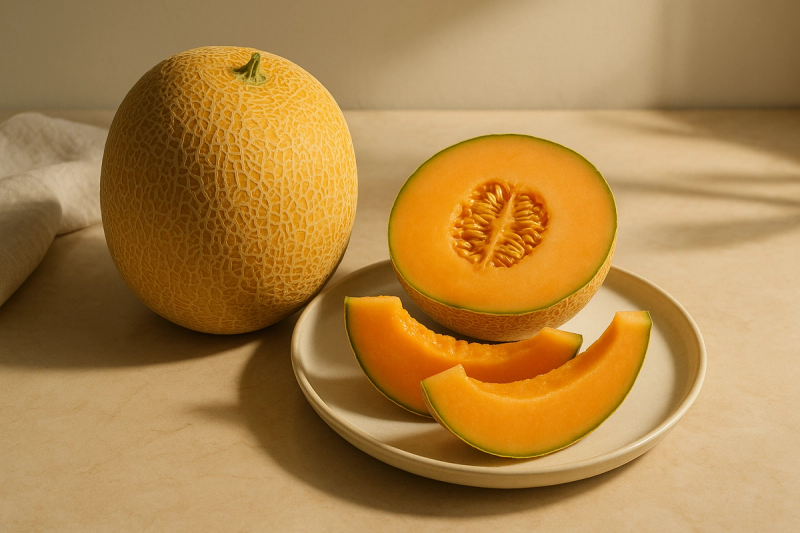
#In everyday Indian use, kharbuja usually refers to muskmelon types, though depending on where you shop you might see overlap with cantaloupe-style melons. The outside can be netted or smoother, pale beige to yellowish, and the inside is usually soft orange, salmon, pale green, or creamy depending on variety. The smell is your first clue that you're in good territory. A ripe kharbuja has that warm, sweet, almost perfumey aroma that somehow smells like summer vacation. If it has no smell at all, ehhh, maybe not ready. If it smells fermented or boozy, definitely step away.
Also, tiny side note because food culture keeps shifting and I kinda love watching it happen: in 2026 there’s a bigger push toward local, seasonal fruit boards, low-waste kitchens, and naturally hydrating produce in cafes and restaurant menus. Melon granitas, melon-chili salads, savoury fruit plates, probiotic fruit bowls, all that stuff is having a moment. Not everything needs to be foam-ed and deconstructed, thank god, but kharbuja is absolutely back in a cool way. Which is funny because Indian homes never stopped eating it. We were ahead of trend, lol.
The best way to pick a sweet kharbuja at the market
#Okay, this is the heart of it. If you're standing at a fruit cart or supermarket crate wondering which one won't betray you, here's what I do. Not in some perfect order either, because in real life I usually pick one up, put it back, second guess myself, then go back to the first one.
- Smell the blossom end, not the stem end. The blossom end is the side opposite where the stem was attached. That end should smell sweet and mellow. If you have to imagine the sweetness, it's not there yet.
- Feel the weight. A ripe kharbuja should feel heavy for its size because good melons hold a lot of juice. Light ones are often dry-ish inside.
- Look for a healthy rind color. Depending on variety, the background color should be more golden, cream, or warm beige rather than cold green. Green usually means underripe.
- Check the surface. You want firm skin with no major soft spots, cuts, bruises, mold, or wet patches. Tiny scuffs are normal. Mushy spots are not your friend.
- Press gently at the blossom end. It should have the slightest give, just a little. Rock hard means needs more time. Too soft means overripe or mealy waiting to happen.
- If it has a stem scar, it should look clean and slightly sunken, not jagged with stem still clinging on. Many melons that ripened properly slip from the vine more neatly.
One thing I don't rely on much? Tapping. People swear by the thump test and, sure, very experienced growers can sometimes tell by sound. Me? I think half of us are just pretending. I have thumped excellent melons and terrible ones. Smell and weight have been more reliable for me, by far.
Signs it's underripe, overripe, or just plain bad
#This matters because not every disappointing kharbuja is the same kind of disappointing. Some you can save by waiting a day or two. Others are done for and no amount of fridge magic will help.
- Underripe: little to no aroma, greener background color, very firm blossom end, bland taste if cut. These can soften a bit at room temp, but sugar doesn't increase dramatically once harvested, so don't expect miracles.
- Ripe and sweet: fragrant blossom end, slightly yielding, heavy, warm beige or golden undertone, juicy flesh with that classic musky sweetness.
- Overripe: very soft spots, strong almost alcoholic smell, wrinkling, leaking, or flesh that goes watery and grainy in a bad way.
- Unsafe: visible mold, cracked rind with seepage, sour odor, slimy cut surfaces, or if it's been pre-cut and sitting warm too long. Just no.
The saddest kitchen moment is cutting open a gorgeous melon and realizing it's all promise, zero payoff. Happens to the best of us.
Can kharbuja ripen after you buy it? Sort of... but not exactly how people think
#This is where people get confused. Kharbuja can soften and become more aromatic at room temperature after harvest, yes. But it doesn't really get much sweeter in the way a banana or mango seems to. So if you buy a truly immature melon, waiting may improve texture a little, maybe aroma too, but not transform it into a sugar bomb. That's why choosing well in the first place matters way more than people want to admit.
What I do is leave a slightly firm kharbuja on the counter for 1 to 3 days, away from direct sun, then check it morning and evening. Once it smells sweet and the blossom end gives a touch, I move it to the fridge. If your kitchen is super hot, like peak Indian summer hot, don't forget it for ages. Fruit goes from not-ready to weirdly tired faster than you think.
How I store kharbuja without ruining it
#Storage is where a lot of sweetness gets dulled, especially if the melon goes into the fridge before it has developed enough aroma. Whole, uncut kharbuja is usually happiest at room temperature until ripe. Once ripe, refrigerate it to slow further softening. Cut melon absolutely belongs in the fridge, covered well, because food safety isn't optional and melon flesh is delicate.
- Whole unripe kharbuja: keep on the counter, cool-ish room, out of direct sunlight.
- Whole ripe kharbuja: refrigerate and try to eat within about 3 to 5 days for best flavor and texture.
- Cut kharbuja: store in an airtight container in the refrigerator and eat within 3 to 4 days. Sooner is better, honestly.
- Don't leave cut melon sitting out for more than 2 hours, and less if your room is very warm.
One little trick I learnt after too many fridge-ice-cold, flavor-muted melon experiences: take the cut pieces out 10 to 15 minutes before serving. Not forever, just a bit. The aroma opens up. Cold can mute sweetness, same with tomatoes, same with some stone fruit. Kharbuja tastes more like itself when it's cool, not freezing.
My favorite way to cut it, because yes there are annoying ways and easy ways
#I used to attack kharbuja with a tiny knife like I was in a cooking competition and, wow, that was dumb. Now I do the simple thing. Wash the rind first, always, because the knife drags whatever's outside into the flesh. Then slice it in half through the middle, scoop the seeds with a spoon, cut into wedges, and remove the rind. Or cube it if I'm feeling organised, which is rare. If the melon is very ripe, use a sharper knife than you think you need. Slippery fruit plus blunt blade is a terrible combo.
And don't toss the seeds immediately if you're into low-waste kitchen stuff. The whole zero-waste fruit movement in 2026 is kinda everywhere, from home cooks to newer cafe menus, and some people clean and dry melon seeds for roasting. I don't do it every time because life is short and dishes are many, but when I do, with salt and chilli, it's actually pretty nice.
How to serve kharbuja so people actually get excited
#At home we mostly just ate it plain, maybe with a pinch of black salt if someone was feeling fancy. And honestly? Plain ripe kharbuja still wins. But there are some really good serving ideas that don't bury the fruit under nonsense.
- Classic chilled wedges with black salt and a tiny squeeze of lime.
- Cubes with mint, cracked black pepper, and a little chaat masala. Summer in a bowl.
- Kharbuja and cucumber salad with feta or paneer, basil or mint, and roasted seeds for crunch.
- Blended into a cold breakfast smoothie with yogurt and a bit of ginger.
- Frozen into granita or popsicles, especially if the melon is sweet but not super flavorful on its own.
- Wrapped with salty cured meat if you eat that, because sweet-salty fruit pairings are still big on restaurant menus and for good reason.
One of my favorite lazy desserts is kharbuja with a spoonful of thick dahi, drizzle of honey only if needed, and crushed pistachios. It sounds almost too simple to mention, but it works. Actually, simple is the whole point with melon. If you find yourself adding ten ingredients, maybe the melon wasn't good enough to begin with.
A quick note on nutrition, because people always ask
#Kharbuja is mostly water, which makes it great in hot weather when you're trying to eat something refreshing that isn't another sugary packaged drink. It also provides vitamin C, vitamin A precursors depending on the variety, and some potassium. Basically, it's one of those fruits that feels indulgent while being very light. That's probably part of why hydrating fruits have shown up in so many 2026 wellness menus and hotel breakfast spreads lately. Again, trend or no trend, Indian aunties knew all this already.
My biggest kharbuja mistakes, so maybe you don't repeat them
#I once bought the prettiest melon from an upscale grocery store because it looked expensive and therefore trustworthy. Rookie logic. It had almost no smell, but I convinced myself it would ripen beautifully. It did not. Another time me and my cousin bought one from a roadside cart on a blazing afternoon, and the vendor picked it by smell in like two seconds. Best one of that whole summer. So yeah, price and polish mean very little with fruit.
Other mistakes? Refrigerating too early. Cutting it straight from the fridge and wondering why it tasted muted. Buying giant melons for a two-person house and then resentfully eating melon four days in a row. Also, this one hurts, ignoring tiny soft spots because I didn't want to keep searching. Future me always regrets lazy produce decisions.
What’s trendy with melon in 2026, and which ideas are actually worth trying
#There are a few fruit trends this year that are genuinely fun and not just social media fluff. Savory fruit plates are bigger now, especially with herbs, cheese, chilli oils, and fermented elements. Restaurants are treating melon less like filler on a buffet and more like a proper ingredient. I've also seen more cold-pressed melon juices mixed with basil, yuzu, or coconut water, and probiotic fruit cups with kefir or cultured yogurt. Some of it is great. Some of it tastes like branding.
If you ask me what is actually worth doing at home, I'd say these three. First, kharbuja with chilled labneh or hung curd, olive oil, mint, and flaky salt. Sounds a bit cheffy but tastes amazing. Second, melon-chilli-lime salad with toasted pumpkin seeds. Third, blending overripe-but-still-good melon into a no-cook soup with cucumber and herbs. Everything else... maybe leave to restaurants with someone else washing the blender.
So, the short version if you're standing at the fruit stall right now
#Pick up the melon. Smell the blossom end. If it's sweet and fragrant, that's your first green flag. Check that it feels heavy. Look for warm beige or golden background color, not green. Press very gently, only a little give. Skip obvious soft spots, cracks, mold, or weird fermented smell. Let it sit at room temp if slightly firm, then chill once ripe. Eat it plain or with just enough seasoning to make the sweetness pop. That's it. That's the game.
And if you still get a dud once in a while, don't feel bad. Fruit is gloriously annoying. That's part of the deal. But when you get a really good kharbuja, cold but not too cold, cut on a hot afternoon, maybe eaten leaning over the sink because the slices are dripping everywhere... man, there's almost nothing better. Anyway, that's my melon rant for the season. If you're into this kind of food-geeky but homey stuff, have a look at AllBlogs.in too, it's got that same fun rabbit-hole energy.