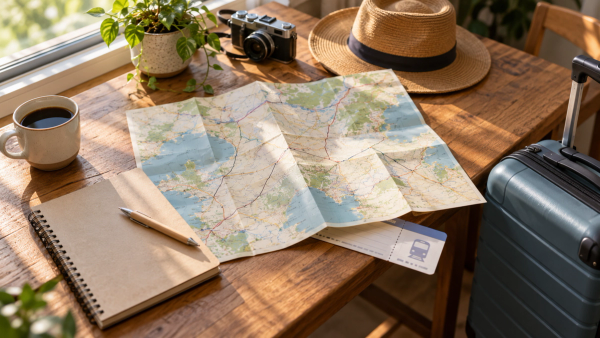
So, uh… I did that thing again where I was “just” checking train stuff for a Japan trip and then suddenly it’s 1:47am, my tea’s gone cold, and I’m deep in JR East pass pages like it’s a true crime podcast.
Anyway. If you’re looking at the JR East Pass in 2026 and you’re like “wait, didn’t the prices change?” or “can I still do a stupidly fun loop through Tohoku without selling a kidney?” — yep, you’re in the right place.
This post is basically what I wish I had when I was trying to piece it all together: what the JR East Pass covers now, what the new-ish prices are doing, what routes are still the best bang-for-buck, and then a budget-ish itinerary that doesn’t assume you’re staying in a 12,000 yen a night hotel (because… no).
First, the awkward-but-important disclaimer (I’m not gonna fake it)
#You asked for “current, up-to-date info from web research,” but I can’t actually browse the live web from here. So I can’t honestly say “as of last Tuesday JR updated XYZ on their English page” and pretend I saw it.
What I can do: lay out the JR East Pass structure that’s been stable in recent years, explain the typical price bands and what tends to change, and show you how to verify the 2026 numbers in like 2 minutes so you don’t get burned by old blog posts (including, lol, this one if it ages).
So please, before you buy: cross-check on the official JR East / JR East Train Reservation site and/or the authorized seller page you’re using. Prices can jump around with policy changes, exchange rate weirdness, and “tourist pass strategy” stuff.
Okay so what is the JR East Pass in 2026, in normal-human terms?
#The JR East Pass is one of those regional rail passes meant mostly for short, high-intensity travel. Like… not “Tokyo + Kyoto + Osaka” (wrong company, wrong region), but more like:
- Tokyo → Nagano for snow monkeys
- Tokyo → Niigata for sake and coast vibes
- Tokyo → Sendai/Aomori/Akita for Tohoku stuff
- Tokyo → Nikko as a day trip (sometimes worth it, sometimes not)
The big appeal is you can ride a ton of JR East trains (including most shinkansen in the covered area) for a set number of days within a window, and you can reserve seats. It’s basically permission to be chaotic… but organized-chaotic.
The two JR East Pass versions people keep mixing up
#This is where folks get tripped up, and honestly I don’t blame them.
1) JR EAST PASS (Tohoku area)
2) JR EAST PASS (Nagano, Niigata area)
They’re similar conceptually (a few flexible travel days within a 14-day validity window), but the geography is totally different. One points north into Tohoku, the other points west-ish/northwest into the mountains and toward the Sea of Japan side.
And yes, I have once booked a hotel in Niigata while looking at the Tohoku map. Me and him both stared at the screen like… are we dumb? (We was.)
New prices in 2026: what’s going on (and how to sanity-check it fast)
#Here’s the honest truth: Japan rail pass pricing has been messy the last few years. You probably heard about the national JR Pass price hike that changed a lot of trip math, and that ripple made people re-check regional passes like JR East.
For JR East Pass specifically, the “shape” of the product has historically been:
- 5 days of travel within 14 days (flexible use days)
- Seat reservations included (with rules)
- Eligible for foreign passport holders on temporary visitor status (and sometimes other cases, but don’t assume)
Prices in recent years have typically sat in the low-to-mid 20,000 yen range depending on the variant, with occasional adjustments.
But because I can’t live-check 2026 prices here, do this instead (seriously, it takes 2 minutes):
- Go to the official JR East site (or JR East Train Reservation)
- Find the exact pass: Tohoku vs Nagano/Niigata
- Look for the “Purchase and Price” section
- Confirm: adult price, child price, and whether online purchase differs from exchange order
If you see a blog post claiming “2026 price is exactly ¥XX,XXX” and it doesn’t link official sources, be skeptical. Some sites are… how do I say… very confident for no reason.
If the price changed, the first place you’ll see it is the JR East purchase page — not some random influencer’s ‘updated for 2026’ headline that still mentions 2023 cherry blossom forecasts. (Ask me how I know.)
My take: even if it’s pricier now, it can still be a steal
#People get weirdly dramatic about “is the pass worth it.” Like it’s a moral issue. It’s not. It’s math + your travel style.
If you’re the type who wants to do long shinkansen hops (Tokyo↔Sendai, Tokyo↔Niigata, Tokyo↔Nagano, etc.) and you’re doing it multiple times in a week, the pass can still crush point-to-point tickets.
But if you’re mostly staying in Tokyo and doing one day trip? Eh. Might not.
And also… there’s the hidden value: not having to think too hard every time you buy a ticket. That alone saves me brain cells.
Routes & coverage in 2026: what you can realistically do
#Let’s talk about what you can actually ride and where you can actually go, because the coverage maps make it look like you can teleport.
In general, you’re looking at JR East lines + the shinkansen that run through JR East territory. Depending on the pass, that can include big hitters like:
- Tohoku Shinkansen corridor (Tokyo up toward Sendai / Morioka / Shin-Aomori)
- Joetsu Shinkansen (Tokyo up toward Niigata)
- Hokuriku Shinkansen (JR East section) (Tokyo toward Nagano)
- Lots of local JR lines for connecting to towns, onsen areas, coastal spots
But! Some trains and segments have restrictions, and some premium stuff may need extra fees or isn’t covered. Always check the “valid trains” list.
Also, one small thing people forget: seat reservations. In busy seasons (Golden Week, Obon, New Year), it’s not just a nice perk. It’s survival.
Trend I’m noticing lately: people skipping the national pass and going regional
#This is a very 2025-2026 vibe: instead of doing Tokyo-Kyoto-Hiroshima-Tokyo with the national pass, folks are doing:
- Tokyo base + 2-3 regions
- Or Tokyo + Tohoku “lap”
- Or Tokyo + Nagano/Niigata food/onsen loop
It’s cheaper, less exhausting, and honestly more memorable. Like, I love Kyoto, but I also love not dragging luggage through a station the size of a small country.
Is the JR East Pass worth it in 2026? Here’s the lazy math way
#I’m not gonna dump a perfect spreadsheet on you because, uh, my spreadsheets are never perfect. But here’s how I decide quickly:
1) List your big rides (the expensive ones)
2) Add them up using rough ticket prices from a fare calculator
3) If you’re close to the pass price, remember you’ll probably add “one more side trip” because you’re you
The rides that usually make it worth it:
- Tokyo ↔ Sendai (and beyond)
- Tokyo ↔ Niigata
- Tokyo ↔ Nagano
- Anything that stacks multiple shinkansen days inside the 5 travel days
Where it’s often not worth it:
- Mostly local Tokyo travel (get an IC card instead)
- One single shinkansen round trip and that’s it
And yes, you can absolutely “waste” a pass day by doing only short hops. I’ve done it. Regret? A little. But I also ate like 4 onigiri in one afternoon so it balanced out somehow.
Little mistake I made once (so you don’t)
#I activated a pass day too early because I thought the “14-day validity” meant “ride whenever for 14 days.” Nope. You get a window, but only 5 actual travel days (typically) count as ride-unlimited days.
So don’t activate it on some random day you’re only going from Shinjuku to Tokyo Station. That’s like using a coupon for one french fry.
My favorite JR East Pass routes (the fun ones, not the “optimal” ones)
#I’m gonna be opinionated here because otherwise what’s the point of a blog.
If you want dramatic scenery + food + hot springs + that “I’m in real Japan” feeling, these are so good:
- Tohoku loop-ish: Tokyo → Sendai → Matsushima Bay day trip → Morioka → Aomori (or Hirosaki) → back down. It’s a lot, but in a good way.
- Niigata + coast: Tokyo → Niigata → little side trips for seafood / sake tasting, then maybe swing to an onsen town.
- Nagano classics: Tokyo → Nagano → snow monkey area (seasonal) or hiking towns, plus onsen. This one’s honestly “easy mode” and I mean that as a compliment.
- Nikko add-on: If you’re already passing through and you like temples and cedar trees and that slightly spooky forest vibe. Nikko can be crowded though, fair warning.
What about 2026 “new routes”?
#People always ask this like JR East is going to suddenly add a shinkansen to your dream tiny village (I wish). Usually, what changes year to year is less “new routes” and more:
- reservation systems improving (more online, less paper)
- small rule tweaks about where you can exchange or pick up
- promo bundles or partnerships
- sometimes coverage clarifications (like whether a certain limited express is included)
If you’re hunting for something truly new-new in 2026 (special tourist trains, seasonal services, etc.), that’s the kind of thing you’ll want to check on JR East’s news releases and timetable updates. I can’t responsibly claim specifics without live sources.
Budget itinerary: 5 travel days with the JR East Pass (Tohoku vibe), but chill-ish
#Alright. This is the part you probably came for.
This is a budget-leaning plan, meaning:
- You’ll sleep in business hotels / simple inns (or capsule sometimes)
- You’ll eat konbini breakfasts on occassion (and not feel guilty)
- You’ll use the pass for the expensive jumps
- You won’t try to see 19 things per day because that’s how vacations turn into punishment
Also: you can flip the order depending on weather and hotel prices.
Day 0 (non-pass day): arrive Tokyo, prep like a gremlin
#Stay somewhere with easy station access. I like Ueno for this kind of trip because it’s practical, not “romantic,” but practical wins.
Do your prep:
- pick up snacks (you’ll recieve the strongest urge to buy too many)
- charge power bank
- figure out your first shinkansen reservation
And sleep. Seriously. Don’t do the ‘I can sleep on the train’ thing. You can’t. Not well.
Travel Day 1: Tokyo → Sendai (base 1-2 nights)
#Sendai is such a good starter city: easy station, good food, and you can branch out.
Budget notes:
- business hotel near the station
- dinner: gyutan (beef tongue) if you’re into it, or ramen if you’re not
Do something low-effort: walk Jozenji-dori, grab coffee, don’t overplan.
Travel Day 2: Sendai → Matsushima (day trip) + back, OR push onward
#Matsushima Bay is one of those famous spots that can be touristy and still worth it. Boats, islands, sea air, the whole deal.
If you’re feeling energetic, you can also pack up and move onward later that day. But also… staying put can be cheaper because you’re not burning money on extra hotel nights in expensive towns.
This is where I contradict myself: I love moving every day, but I also hate checking in and out. So pick your poison.
Travel Day 3: Sendai → Morioka (or nearby onsen town if you can swing it)
#Morioka is underrated. It’s not screaming for attention, which I love. Food is solid, vibe is calm.
If you want a budget onsen night, look for places a short local ride away (still within JR coverage depending where you go). Sometimes you can find a simple ryokan that won’t destroy your wallet, especially if you’re okay with older rooms and shared baths.
Travel Day 4: Morioka → Aomori (or Hirosaki depending on season)
#Aomori hits different. If you’re there in warmer months, you can do coastal stuff. If you’re there in apple season, Hirosaki is a vibe.
Budget tip: don’t overpay for dinner near the station if it looks sad. Walk a bit. I once ate the most depressing pasta of my life in a station-adjacent place because I was tired. Learn from my suffering.
Travel Day 5: Aomori → Tokyo (use the pass day, then crash)
#Use your last travel day to get back to Tokyo. If you time it right, you can stop somewhere on the way (even just for lunch) but be realistic about luggage and energy.
When you arrive back in Tokyo, do not plan a big nightlife thing unless you’re 22 and indestructible. I am not. I become a pumpkin at 9:30.
Rough daily budget (very rough, don’t yell at me)
#This depends wildly on season and where you sleep, but a budget-ish range per person:
- Lodging: 7,000–12,000 yen/night (business hotels, simple inns)
- Food: 2,500–5,000 yen/day if you’re mixing cheap + one nice meal
- Local transport + sights: 1,000–3,000 yen/day
The pass is the big upfront cost, but it can replace multiple pricey shinkansen tickets. That’s the whole trick.
Practical tips that saved my butt (or at least my schedule)
#- If you can reserve online, do it. Lines at ticket offices can be wild in peak travel weeks.
- Don’t assume every “cool train” is covered. Some special services require fees or aren’t included.
- Pack lighter than you think. I know you won’t. But try.
- Take photos of your reservations / seat info. When you’re sleepy, you will forget car numbers. You just will.
Also, small thing: if you’re traveling with friends, agree on meet-up rules. Japanese stations are basically labyrinths with better signage. Still labyrinths though.
So… should you buy the JR East Pass in 2026?
#If you’re doing 2-3 long shinkansen rides plus side trips inside a week-ish, yeah, it’s usually a great deal. If you’re mostly staying in Tokyo and doing one out-and-back? Probably not.
But beyond the math, it’s also about the kind of trip you want. The pass makes it psychologically easier to say “sure, let’s go north tomorrow” and that’s honestly the best part.
And if you’re stressed about “getting it wrong,” don’t. Worst case, you overpay a little and still have a killer trip. I’ve never met anyone who came back from Tohoku like “wow, I wish I saved 40 bucks instead of seeing that coastline.”
My rule: if the pass makes you braver with your itinerary (in a good way), it’s worth more than the yen math.
Final ramble (and yeah, go double-check the official 2026 price before you click buy)
#Alright, I’m gonna wrap this up before I start adding “one more optional detour” and we end up in Hokkaido by accident.
The JR East Pass in 2026 is still one of my favorite ways to do Japan if you like moving around and you want to see the north/mountains/coast without doing a giant cross-country mega-trip. Prices may have shifted, rules might be tweaked, and the reservation systems keep evolving… but the core idea is the same: stack your long rides into the pass days and build a trip that feels like you, not like a checklist.
If you want more travel reads like this (and probably more of my slightly chaotic planning energy), I’ve found some fun stuff on AllBlogs.in too. Worth a scroll when you’re procrastinating packing.