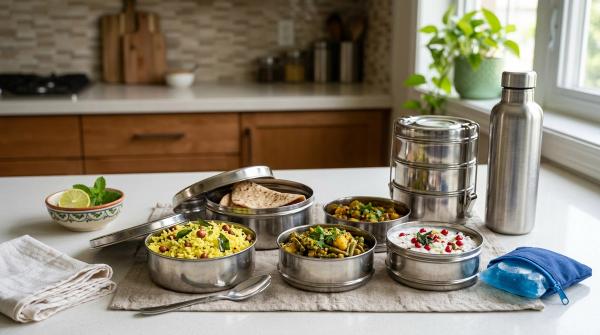
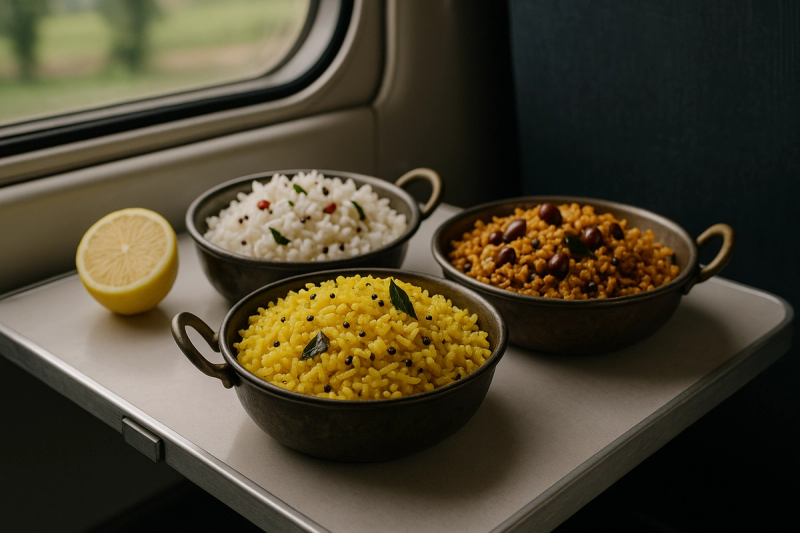
I have a weirdly strong relationship with train food. Not pantry-car cutlets exactly, though those have their own charm when you're half asleep and the chai is too sweet. I mean the food people carry from home, wrapped in steel dabbas, banana leaves, old takeout boxes, whatever is available at 5:20 in the morning when a family is trying not to miss Platform 4. And if there is one category that absolutely rules Indian train journeys, it's seasoned rice. Specifically lemon rice, tamarind rice, and coconut rice. These three are like the holy trinity of practical, comforting, slightly nostalgic travel food. I’ve eaten all three on actual trains, on station benches, in autos rushing to catch trains, and once, embarrassingly, standing near the washbasin area because my berth had become an unofficial family picnic zone.
So this is not one of those fake-neutral posts where I say all options are equal and it depends. No. It depends, sure, but also some rice travels better than others and some hold up after six hours in a backpack wayyyy better. If you’ve ever opened a lunch box at noon and been hit with either heaven or regret, you know what I mean.
My first real train-rice memory, and why I still judge all travel food by it
#I remember this one trip from Chennai when me and my cousins were headed out on an early morning train and my aunt packed lemon rice in a giant stainless steel carrier. Proper south Indian style, with curry leaves, mustard seeds, roasted peanuts, green chilies, and that bright turmeric-yellow that basically announces itself before the lid is even off. No curd, no gravy, no fuss. She kept saying, 'This will stay good, don't worry.' And she was right. By the time we ate it, maybe four hours later, it had settled into itself. The sourness was deeper, the peanuts were still crunchy, and every grain had flavor. That, to me, is the benchmark. Train food isn't supposed to be delicate. It's supposed to survive real life.
The best train rice is not just the tastiest one fresh. It's the one that still tastes good after being packed, shaken, delayed, and eaten with slightly unwashed hands while the train is doing that side-to-side wobble.
What actually makes a rice dish good for train travel?
#People overcomplicate this, honestly. You don't need foam boxes and molecular gastronomy and all that. You need rice that won't spoil quickly, won't turn gluey, and won't make your entire bag smell like a sad accident. The old-school logic still holds up in 2026 even with all these fancy travel meal startups and vacuum-packed 'regional bowls' popping up online. The basics are still basics.
- Low moisture helps. Drier, separate grains usually travel better than soft, steamy rice.
- Acidity helps too, which is why lemon rice and tamarind rice are such classics.
- Tempering matters more than people think — mustard seeds, curry leaves, chilies, hing, dals, nuts, all of that adds flavor and texture that survives the journey.
- Fresh coconut is delicious but also, um, a bit risky in heat if you pack it badly or keep it too long.
- Short ingredient list is usually smarter for travel. Less chance of things going weird.
There's also a modern angle now. In 2026 a lot of food conversations are around gut-friendly meals, less ultra-processed stuff, and regional comfort food done intelligently. You see chefs and home cooks leaning back into traditional rice dishes, but with small upgrades like using hand-pounded rice, millet-rice blends, cold-pressed oils, or roasted seed toppings instead of only peanuts. Cute idea. Sometimes tasty. But for train travel? Reliability beats trendiness most days.
Lemon rice: the cheerful overachiever
#If this were a school competition, lemon rice would be that annoyingly capable kid who wins debate, sports day, and also has neat handwriting. It just does almost everything right. It tastes bright, it keeps well, it doesn't usually get heavy, and it can be made fast. I kinda love it for that. Some people call it too simple, but I think that’s missing the point. Simplicity is a feature here, not a flaw.
Good lemon rice for travel should be made with cooled rice, not freshly steaming rice that turns mushy after mixing. The tempering should be generous. I like chana dal and urad dal for crunch, mustard seeds, curry leaves, slit green chilies, turmeric, peanuts or cashews depending on mood and budget, and enough lemon juice to be noticeable but not face-scrunching. Also salt matters a lot more than people admit. Slightly under-salted lemon rice on a train is just depressing.
And here's the thing — lemon rice actually improves for a little while after packing because the flavor settles. It doesn't become more glamorous, but it becomes more cohesive. Very dependable. If your train is under 8 hours and the weather is reasonably okay, this is usually my safest recommendation. Especially for morning departures.
Where lemon rice wins, and where it doesn't
#It wins on freshness, portability, and broad appeal. Kids eat it. Elders eat it. Picky cousins eat it after saying they won't. But... if badly made, it can go bitter from too much lemon pith or harsh from raw turmeric vibes. Also if someone squeezes lemon over hot rice and packs it immediately, the texture can become weirdly clumpy. I've seen this happen. Tragic, honestly.
Tamarind rice: the long-distance champion and my personal favorite, probably
#Okay so if the trip is long, if the weather is hot, if delays are likely, if you are even slightly anxious about food safety — tamarind rice, no contest. Puliyodarai, pulihora, puliyogare, whatever version you grew up with, this is the heavyweight champion of train travel. The tamarind acts like flavor armor. The oil helps. The spice helps. Everything about it says, 'I was made for this.'
I might be biased because the best train meal of my life was tamarind rice eaten somewhere after Villupuram from a banana-leaf parcel that had gone warm in the nicest way. The rice was dark, glossy, packed with roasted peanuts, and the pulikachal had that deep, slightly jaggery-rounded sourness that sticks around in your memory for years. Not kidding. I still think about it.
The technique matters loads. Really good tamarind rice isn't just tamarind dumped into rice. The paste or reduction has to be cooked down properly with sesame oil, mustard seeds, curry leaves, red chilies, hing, turmeric, and often a spice mix that can include coriander, fenugreek, sesame, pepper, and chana dal depending on the regional style. That concentrate coats the grains and gives serious shelf stability compared to softer rice dishes. This is one of those old culinary systems that modern food packaging people would call 'smart preservation through acidity and fat,' but grandmothers figured it out ages ago.
- Best for: long daytime journeys, warm weather, uncertain meal timing
- Texture after hours: usually still excellent if the rice was cooked grain-separate
- Flavor curve: often better after resting 3 to 6 hours
- Possible downside: can feel intense if you want something light or if the maker overdoes fenugreek
In 2026, with so many people rediscovering regional pantry staples, tamarind rice has had a bit of a glow-up online. I've seen small brands selling ready puliyogare mixes with single-origin tamarind and wood-pressed gingelly oil, which is a little extra but not gonna lie, some of them are pretty good. Still, homemade wins. Every time.
Coconut rice: delicious, fragrant, and slightly chaotic for travel
#Now we come to coconut rice, which I adore and distrust in equal measure. Freshly made coconut rice is beautiful. Soft white rice, grated coconut, green chilies or red chilies, curry leaves, cashews, maybe a little ginger, maybe a whisper of lemon, maybe not. It smells amazing. It feels comforting in a very particular way. But for train travel? Hmm. This is where I get cautious.
Fresh coconut has moisture and natural fats, which is exactly why it tastes lush and exactly why it can be less forgiving if packed in heat for too long. In cooler weather, on shorter trips, totally fine if made carefully and packed well. But in Indian summer? On a delayed train? In a backpack shoved under a berth? I don't know man. That's a gamble I don't always wanna take.
I've had one excellent coconut rice travel experience and one mildly upsetting one. The excellent one was a short morning ride in Karnataka, eaten within two hours, with roasted cashews and a touch of pepper. Lovely. The upsetting one involved afternoon heat and slightly stale coconut and let's just say everyone became very quiet after two bites. Nobody wanted to be rude. We all knew.
Can coconut rice be made more travel-friendly?
#Yes, somewhat. Use freshly grated coconut that's very fresh, obviously. Roast it lightly to reduce raw moisture. Keep the rice loose, not sticky. Add a stronger tempering. Pack it after it cools. And really, truly, eat it sooner rather than later. Some newer home cooks are using desiccated coconut or toasted coconut flakes for travel versions in 2026, and while purists may roll their eyes, it honestly makes sense if you're optimizing shelf life. Is it exactly the same? Nope. Is it practical? Kinda, yeah.
So... which rice is actually best for train travel?
#If you forced me to rank them with no loopholes, here's my answer.
- Tamarind rice for long journeys, hot weather, and maximum safety + flavor retention
- Lemon rice for shorter to medium trips, easy crowd-pleasing, and overall versatility
- Coconut rice for short rides only, cooler conditions, and when deliciousness matters more than durability
But because life is messy, there are exceptions. A brilliantly made lemon rice can beat average tamarind rice. A carefully toasted coconut rice eaten quickly can be more satisfying than both. Also your own nostalgia changes everything. Food logic is real, but memory is stronger. The rice your mother packed will often win, even if objectively it was a little too salty. That's just how it is.
A quick note on restaurants, food trends, and why home-packed still wins
#There are a lot more regional rice bowls on menus now than even a few years ago. Casual South Indian spots in major cities have leaned into 'heritage rice' specials, and some new-format cafés are doing lunchbox-style tamarind or lemon rice with podis, appalams, and pickle on the side. Nice trend, actually. Also, train-station food retail has become more polished in many places, with app-based ordering and branded meal boxes being way more common by 2026 than they used to be. Convenient? Definitely. Better than a well-packed home dabba? Ehh... not usually.
I love restaurants, don't get me wrong. I've had strong lemon rice at small Bangalore darshinis and really solid puliyodarai at temple-style counters in Chennai. A few newer regional restaurants are taking these dishes seriously instead of treating them as side items, which I appreciate. But train food has a different mission. It needs soul, yes, but also logistics. Home kitchens understand that instinctively. They season for travel, not for plating.
My very non-scientific packing rules that have saved many journeys
#- Cool the rice before closing the lid. Steam trapped inside is the enemy.
- Use a wide container if possible so the rice doesn't compress into a brick.
- Add nuts after tempering properly so they stay crunchy longer.
- Skip raw onion completely for travel rice. Just... trust me.
- Banana leaf lining is elite if you have it. Smells good, feels right, reduces stickiness a bit.
- For tamarind rice, make the paste stronger than you think, because rice mutes flavor over time.
- For lemon rice, mix when the rice is just warm or cool, not piping hot.
- For coconut rice, pack small portions and eat first.
None of these are revolutionary, I know. But these tiny things are the difference between lunch that feels homemade and lunch that feels like punishment.
Final verdict from someone who has eaten rice out of too many steel boxes
#So yeah, if your question is 'Best rice for train travel: lemon vs tamarind vs coconut?' my heart says tamarind rice, my practical side says tamarind rice, and my backup answer is lemon rice. Coconut rice is the beautiful wildcard — lovely, fragrant, worth eating, but not my default recommendation unless the trip is short and the packing is careful. If you're sending food with kids, older parents, or anyone likely to eat late, tamarind rice is just safer and more satisfying. If you want something lighter and happier, lemon rice is such a good call. Coconut rice is for when the journey itself feels gentle.
Anyway, maybe I'm overthinking train rice. Actually no, I'm not, because some foods deserve overthinking. Train meals become memories weirdly fast. Years later you won't remember seat numbers or PNRs, but you'll remember the smell when the lid opened, the crackle of peanuts, the sour tamarind hit, the little fight over who got extra cashews. That's the stuff that stays. If you like these kinds of food rambles and very specific obsessions, go poke around AllBlogs.in too — lots of fun reading there.