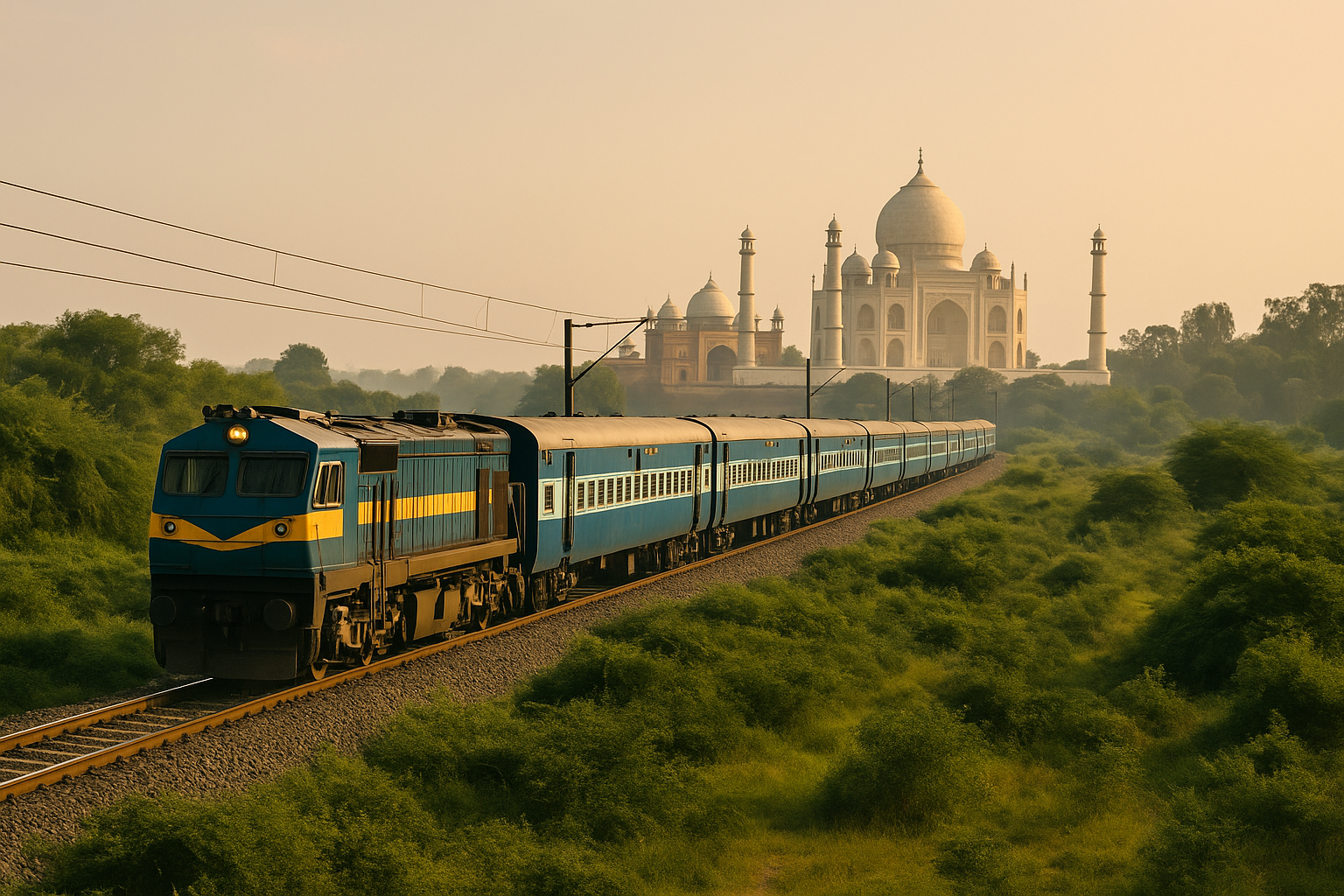
Some trips in India are exciting in that chaotic, why-did-I-do-this way. Flights delayed, cabs overcharging, bus rides that test your spine, hotel check-ins turning into mini arguments. And then there’s train travel. Not always perfect, obviously. Indian Railways can still humble you. But if you build your trip around trains first, and everything else around that, travel gets weirdly calmer. More breathable. That’s kinda how I’ve started doing it now, especially for scenic routes where the journey is half the point anyway.
I’m saying this as someone who used to plan the exact opposite way. I’d pick the destination first, then panic-book whatever got me there fastest. Big mistake. These days, if I want a low-stress India trip, I look at rail connectivity before I look at reels, hotels, even weather sometimes. Trust me, it changes the whole mood of the trip. You arrive less irritated, you spend less on transfers, and you actually see the country instead of just hopping between airports and paying 900 rupees for stale sandwich coffee combo nonsense.
Why I started travelling rail-first in India
#It happened gradually. One trip to Konkan side, one to the hills, one slow overnight train where I slept surprisingly well and woke up to green fields and chai voices at 6 am... and I was like, okay, this is it. This is the version of travel I actually enjoy. Not every route is scenic, no. Not every coach is peaceful either. But compared to constant airport runs and long road transfers, trains feel way less mentally exhausting.
Also, and this matters if you travel often inside India, rail-first is easier on the wallet. A decent 3AC ticket on many routes can cost less than one airport cab in a metro, which is honestly a bit absurd if you think about it. Sleeper still works for a lot of budget travellers, though personally I prefer 3AC or Vande Bharat chair car for comfort, safety, charging points, and just... less drama. For solo women travellers and families, AC classes generally feel more manageable, specially on overnight journeys.
My simple rule now: if a destination has a good train route and a station within sensible distance, I seriously consider rail before anything else.
What “rail-first” actually means, because it’s not just romantic train-window stuff
#Rail-first doesn’t mean every single kilometre must be by train. That sounds nice on paper but can get impractical fast. What it means is this: choose destinations where the train gets you most of the way comfortably, then keep the last-mile road journey short and easy. So instead of flying to Bagdogra and doing a long road haul to Darjeeling, maybe you take the train till New Jalpaiguri and continue. Instead of doing a full road trip to Goa from Bengaluru or Mumbai, you take the train and save your energy for beaches, food, and doing absolutely nothing.
- Pick places with major railway stations nearby, not 5-hour taxi rides away
- Prefer direct trains or one clean connection, otherwise stress comes back
- For overnight routes, book 2AC or 3AC if budget allows. Sleeper is cheap, yes, but not always restful
- For day journeys, window-side chair car routes are gold if the scenery is good
- Try reaching in daylight if the final stretch is in hills or remote areas
My favourite scenic, low-stress rail trips in India
#Okay this is the fun part. These are not the only rail trips worth doing in India, obviously. But these are the ones I keep recommending to friends who want beauty without too much logistical headache. A few are super popular, a few are slightly under-discussed, and all of them work well when you want the trip to feel softer, slower, less annoying.
1) Konkan Railway route for Goa, Ratnagiri, Sindhudurg vibes
#If you’ve never done the Konkan line in monsoon or just after, yaar, please put it on your list. The route itself is the experience. Tunnels, red soil, coconut trees, sudden rivers, green everywhere like someone turned saturation too high. I’ve done bits of this route more than once and never really get bored of it. You can base yourself in Goa, sure, but honestly Ratnagiri, Kudal, and Sindhudurg side can be more peaceful if you’re trying to avoid the full party-crowd chaos.
Best months? October to February for comfort, June to September for mad green beauty if you don’t mind rain disruptions and damp clothes that never dry properly. Accommodation ranges a lot. In Goa near stations like Madgaon or Thivim, budget stays can start around ₹1200-₹2000, decent mid-range hotels ₹3000-₹6000, and beach resorts way above that. In Ratnagiri and smaller Konkan towns, homestays and simple hotels are often more reasonable. Local food is a huge win here: fish thali, solkadhi, kombdi vade, ghavne. Eat local, not just cafe pasta nonsense.
2) New Jalpaiguri for Darjeeling, Kalimpong, Kurseong
#This one works beautifully if you plan it right. Train to NJP, then shared cab or reserved taxi up to the hills. I know technically Darjeeling itself isn’t reached by the main broad-gauge route, but the rail-first logic still holds because the hard part is done comfortably. If you have time, the Darjeeling Himalayan Railway toy train stretch is touristy, yes, but still charming in a slightly old-world, creaky way.
March to May and October to December are usually the sweet spots. Monsoon is lush but landslides and delays can happen, so keep buffer time. Budget rooms around Darjeeling can still be found near ₹1500-₹2500 in off-peak periods, while nicer heritage or view properties can jump to ₹5000-₹9000 and beyond. Try local stuff, not just momos on repeat, though yes the momos are great. Thukpa, aloo dum, churpee-based snacks, and small bakeries in the hills are half the joy. One small tip people ignore: from NJP, leave early in the day. Night hill rides after a long train trip are not fun. At all.
3) Jammu Tawi or Shri Mata Vaishno Devi Katra side for mountain-edge travel
#A lot of people think of this route only in religious terms, but even beyond pilgrimage, train access to Jammu and Katra has made mountain-border travel way more approachable. The views begin changing gradually and there’s this sense of moving from plains into a different rhythm. Security is generally tight around stations and major routes, which honestly reassures many travellers. Still, always check current local advisories and weather before planning farther road movement in Jammu region, specially in winter or during sensitive periods.
Katra has loads of hotels across budgets, from around ₹1000 for basic rooms to ₹4000-₹7000 for cleaner family stays. Jammu has broader options. If your plan is low-stress, keep it simple: train in, one or two nights, local sightseeing or onward base, and don’t overstuff the itinerary. Sometimes less is better. Actually, often.
4) Udaipur by train from Delhi, Jaipur, Ahmedabad side
#Udaipur feels made for slower entry. Coming by train somehow suits the city more than flying, maybe because the mood shift is gradual. Lakes, old havelis, softer pace, less of that business-trip energy. There are decent rail options from major north and west Indian cities, and once you reach, the station isn’t absurdly far from the main areas, which I appreciate because after a journey I don’t want a one-hour negotiation with taxi bhaiya.
The best time is roughly October to March. Summers can be punishing. Budget hostels and guesthouses often start around ₹800-₹1800, mid-range heritage stays around ₹2500-₹6000, and luxury can go very, very high because well... Udaipur likes being fancy. For food, don’t leave without trying local Rajasthani thali, pyaaz kachori, and if you eat at old-city rooftop places, go in evening when the city starts glowing. It sounds filmi, but it’s true.
5) Kerala by rail: Kochi, Alappuzha, Kozhikode, Kannur
#Kerala is one of the easiest states to do rail-first, and that’s a huge reason I keep going back. Stations are frequent, towns are connected well, and you can combine train + short auto/cab/ferry transfers without losing your mind. I’ve done Kochi to Alappuzha and up north too, and this kind of travel just works. You don’t have to be in constant planning mode. That itself is luxury, honestly.
October to February is ideal for most people. Monsoon is stunning in Kerala, no doubt, but can be sticky and intense. Accommodation is available at pretty much every level. In Fort Kochi, simple homestays may start around ₹1200-₹2200, boutique places around ₹3500+, and in Alappuzha you’ll see everything from budget lodges to expensive houseboats. Quick note on houseboats: prices vary massively by season and inclusions, often from ₹6000 for basic day/overnight options to much higher for premium private ones. Compare properly. Some are lovely, some are just floating disappointment.
Routes that are scenic in a very different way
#Not every beautiful train trip in India is dramatic mountains and bridges. Some are quieter. More about rhythm. Tamil Nadu delta routes with temple towns, winter trains through Rajasthan, early morning stretches in Odisha, even central India in the right season when fields are green and lakes suddenly appear. I think people sometimes chase only the “Instagram scenic” routes and miss the slower beauty of ordinary landscapes seen from a train window with cutting chai in hand. That’s still travel. Maybe the best kind.
- For desert and heritage mood, look at Jodhpur, Jaisalmer, Udaipur-connected routes
- For coastal + food-heavy trips, Konkan and Kerala are easiest wins
- For hills, combine major railheads like NJP, Kathgodam, Jammu, Chandigarh with short onward road journeys
- For temple-town circuits, Tamil Nadu and parts of Karnataka work surprisingly well by train
Booking tips that save you from the usual stress
#This part is boring until it saves your trip. If you’re planning rail-first travel in India, book trains before hotels in high-demand seasons. Not after. Especially around long weekends, summer vacations, Durga Puja, Diwali, Christmas-New Year, and major regional holidays. Tatkal exists, yes, but depending fully on it is a gamble and I’m too old for that kind of adrenaline now.
Use official IRCTC channels or trusted apps linked to it. Check boarding station carefully. Triple-check date. I have once booked the right train for the wrong month, so please learn from my stupidity. For scenic routes, day trains can be worth paying a bit extra for, because what’s the point of sleeping through all the good bits? On overnight routes, lower berth is more convenient for older parents, but side lower can be nice if you’re solo and okay with slightly more movement around you. Pack chain lock, power bank, tissues, one light shawl even in AC coach, and your own water bottle. Pantry food is okay on some routes, random on others.
Safety, comfort, and what’s changed lately
#Rail travel in India has become easier in some ways. Major stations are better lit than before, digital boards are clearer, app-based food delivery to seats works on many routes, and premium trains have improved punctuality on certain sectors. Women travelling solo are doing rail trips more confidently now, which is good to see. Still, practical caution matters. Keep valuables close, avoid flashing expensive gadgets at night, and if something feels off, speak up early to the TTE, coach attendant, or Railway Protection Force helpline. Don’t do that thing where we Indians keep adjusting-adjusting until it becomes a bigger issue.
For families, senior citizens, and first-time train travellers, I’d say choose routes with arrival in the morning or afternoon, book known hotel chains or well-reviewed homestays near the station area, and avoid back-to-back transfers. The whole point of a low-stress trip is not proving how much discomfort you can tolerate. Also, station redevelopment is happening in many cities, which means better facilities sometimes... and temporary confusion other times. So reach a bit early and keep screenshots, not just internet-dependent bookings.
How I plan a low-stress rail trip now
#Very simple, actually. I pick one base, maybe two max. I leave buffer hours on arrival day. I don’t plan tourist spots for the first half-day. I eat near the hotel, take a walk, maybe do one sunset point or one local market and that’s enough. This sounds obvious but loads of us still do the opposite. Train reaches at 8 am, and by 9:15 we’re chasing sightseeing cabs like maniacs. Why. Who are we trying to impress.
- Day 1 should be light, always
- Stay near the area you’ll actually spend time in, not just near the cheapest room
- Use trains for long distance, autos/cabs only for final local hops
- Keep one empty slot in the itinerary for weather delays or just mood
- If travelling in monsoon, add backup indoor plans and flexible cancellations
Food, station rituals, and the small things that make rail travel feel like India
#You know what I love most? It’s not even the famous landscapes. It’s the in-between bits. Chai at a station where the air feels different from the city you boarded in. Cutlet on a paper plate. Idli near one platform, bread omelette on another, poha somewhere else, and suddenly you’ve crossed into a new food region without needing a cultural lecture. That’s the magic of trains here. The country shifts slowly enough for you to notice.
Just be a little smart with food. Eat fresh, hot items. On long routes, I often carry thepla, fruits, dry snacks, or curd rice depending on where I’m starting from. E-catering on many trains is genuinely useful now from branded outlets and known local vendors, though availability depends on route. And yes, drink the chai. Obviously. Maybe not ten times. But at least once when the weather is right and the train has paused somewhere random and beautiful.
Final thoughts on seeing India by rail without burning out
#If your idea of a good trip is checking 14 attractions in 2 days, this style may feel too slow. But if you want India to feel less like a logistical battle and more like an actual experience, rail-first travel is honestly one of the best ways to do it. Scenic, affordable, a little nostalgic, occasionally messy, but still deeply rewarding. You see more. You rush less. You arrive with some energy left. And weirdly, that changes what you notice once you’re there.
I still take flights sometimes, of course. Sometimes they make sense. But for a lot of domestic trips, trains have given me the version of travel I was probably looking for all along — calmer, richer, and more connected to the places in between. If you’re planning your next India trip and want it to feel beautiful without being a headache, start with the railway map. Seriously. Btw, if you like this kind of practical-but-personal travel writing, have a look at AllBlogs.in too, there’s some good stuff there.