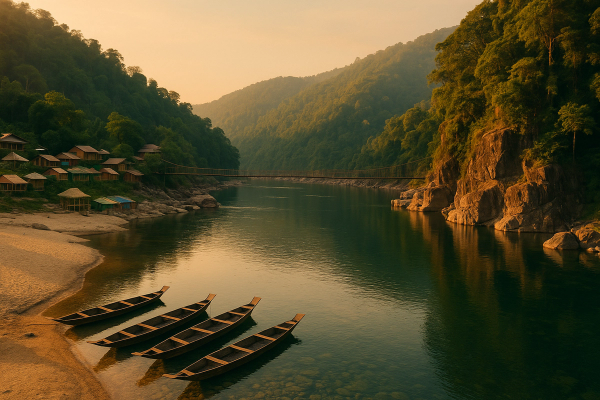
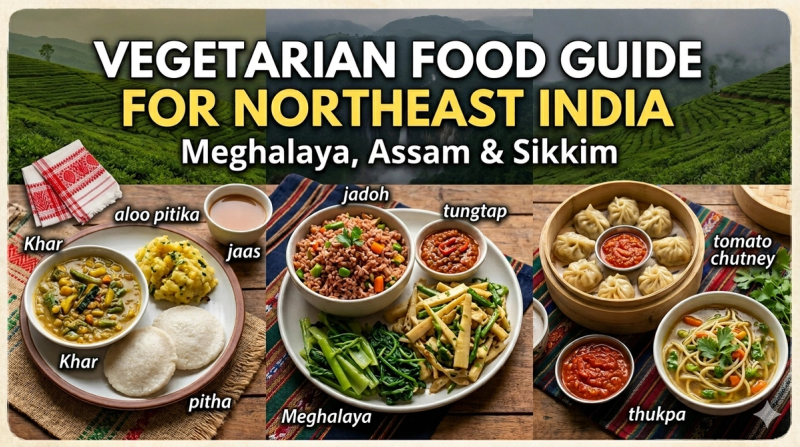
I used to think Northeast India would be tricky for vegetarians. Not impossible exactly, but one of those places where you survive on plain rice, tea, and wishful thinking. I was very, very wrong. After spending time across Meghalaya, Assam, and Sikkim, eating in homestays, tiny cafés, monastery canteens, roadside stalls, and a couple of surprisingly polished new restaurants, I came back with the sort of food obsession that annoys your friends because you keep saying stuff like, “No but the fermented bamboo shoot there was DIFFERENT.” And honestly? If you travel for food, this region is just wild in the best way. Misty hills, market mornings, cardamom-scented tea, noodle soups in the cold, giant thalis, little pickle jars on tables... it all gets under your skin a bit.
Also, a quick real-world note before we get into the dreamy stuff. Vegetarian travel in Northeast India in 2026 is easier than it used to be. Not because every place has gone meat-free, that would be silly, but because travel has shifted. More homestays now ask about dietary preferences in advance. Younger café owners in Shillong and Gangtok are doing farm-forward menus. Assam’s tea estate stays are leaning into local produce experiences. And across tourist hubs, digital maps/reviews, WhatsApp ordering, UPI payments, and better menu labeling have made it way less awkward to ask, ‘Is this actually vegetarian or just looks vegetarian?’ I still asked twice. You should too.
First things first: what vegetarian food in the Northeast actually looks like
#A lot of people hear “Northeast India” and flatten it into one food culture, which is like saying all of Europe eats the same breakfast. Nope. Meghalaya, Assam, and Sikkim are all doing their own thing. Ingredients overlap sometimes, but the mood of the food changes as you move. Meghalaya gave me clean flavors, lots of rice, smoky and fermented notes, and some beautiful produce-led meals if you know where to look. Assam felt generous and grounding — thalis, tenga-style ideas adapted for veg, greens, pitika, sesame, duck-egg-less versions of local dishes at home kitchens if you ask. Sikkim, meanwhile, was the easiest of the three for me as a vegetarian traveler, mostly because Tibetan, Nepali, and local Himalayan food traditions make room for so many satisfying meatless things. Momos, thukpa, phagshapa-inspired veg riffs in newer cafés, churpi-based dishes, nettles, squash, buckwheat, millet... yeah, I ate well.
My dumb old assumption was that vegetarian food here would feel like a compromise. It didn’t. Most of the time it felt like I’d finally stopped ordering the wrong thing in India and started paying attention.
Meghalaya: Shillong cafés, Khasi markets, and the surprise of finding quiet vegetarian gems
#Shillong was where my trip sort of clicked. I arrived cold, slightly damp, and cranky because hill-weather + luggage + traffic = not cute. Then I had one of those perfect travel lunches where suddenly the whole city becomes lovable. It was in a café that cared about local ingredients without being preachy about it. That’s a 2026 food trend I noticed all over the Northeast, by the way — not gimmicky “fusion” for Instagram, but menus that mention where the mushrooms came from, which farm grew the squash, whether the pickle is house-fermented, all that. Shillong especially has this younger food scene now where coffee, live music, and local produce are all in conversation with each other.
For vegetarians, Shillong is probably your easiest base in Meghalaya. Around Police Bazaar you’ll find standard Indian vegetarian food if you get nervous, but the more interesting stuff is outside the obvious comfort zone. Look for cafés doing local vegetables, smoked chutneys, wild mushrooms in season, red rice bowls, and noodle soups. I had a plate of roasted vegetables with a sesame-heavy dressing and local greens one evening when rain was hitting the windows sideways, and I swear it tasted better because the whole city smelled like wet pine. Another morning I ended up at a market-side stall eating a very simple breakfast — rice, dal, a potato thing with chilies, and tea so sweet it almost reset my soul. Nothing fancy. Still one of my favorite meals.
What to eat in Meghalaya if you’re vegetarian
#- Jadoh can sometimes be adapted, but usually it’s not veg, so don’t assume. Ask clearly.
- Pukhlein — a sweet, fried rice-flour snack. Great with tea, honestly dangerous.
- Tungrymbai is traditionally fermented soybean and can be vegetarian, but check how it’s prepared.
- Local vegetable stews, sautéed greens, foraged mushrooms in season, and rice-based breakfasts are where I found the most joy.
- Pukhlein and black tea after a rainy walk in Shillong... yeah, I’d go back just for that.
One important thing in Meghalaya, and maybe this is obvious, but food is often deeply tied to household cooking rather than restaurant menus. So if you’re staying in a homestay near Shillong, Cherrapunji/Sohra, or Mawlynnong, speak up early. Me and my bad planning nearly missed some amazing meals because I assumed they’d know what I meant by vegetarian. They didn’t, not exactly. Once I explained no meat, no fish, no stock, the host in Sohra made me this homestyle dinner with rice, dal, local squash, beans, chutney, and a mushroom dish that had so much flavor it was almost rude. It wasn’t on any menu. It was just what was fresh that day. Those are the meals I remember most.
A small detour into markets, because markets tell you the truth
#I’m one of those annoying travelers who thinks markets are basically museums where you can snack. In Northeast India that instinct pays off. In Meghalaya, I loved wandering local bazaars just to understand what people are actually buying and cooking. Same in Assam and Sikkim. You see heaps of lai saag, bamboo shoots, tree tomatoes in some places, squash blossoms, fermented products in reused jars, sticky rice, tiny bananas, herbs I still can’t name with confidence. And in 2026, there’s this interesting overlap happening — traditional markets are still very much alive, while younger chefs and food entrepreneurs are treating them like the backbone of a more thoughtful regional food movement. Farm-to-table sounds very brochure-y, I know, but here it often just means: the chef knows the auntie selling the greens.
Assam: the place that made me fall in love with simple food again
#Assam was softer on me somehow. Wider skies, slower meals, more of that feeling where lunch is not a performance, just a proper lunch. I spent time in Guwahati first, then moved through smaller places with tea gardens and family-run stays, and if Meghalaya made me curious, Assam made me hungry in a very steady everyday way. Vegetarian food here isn’t always shouted about, but it’s there, especially if you care about traditional sides and not just headline dishes. I ate so many versions of pitika — mashed vegetable preparations, often smoky or mustardy or green-chili bright — that I started judging every potato dish after that. There were tenga-inspired veg curries with tomatoes and lemony sourness, dal with a clean tempering, banana flower preparations, pumpkin, herbs, black sesame touches, and rice that actually tasted like something, which sounds dumb but you know what I mean if you know.
In Guwahati, you can absolutely find straightforward vegetarian restaurants, South Indian chains, and thali spots. Handy, yes. But my best Assam meals happened when I stopped trying to “find veg food” and instead tried to find Assamese food that could be made veg. Big difference. At a heritage-style restaurant, I asked if they could build me a veg Assamese thali around what was fresh, and they did this spread with rice, dal, aloo pitika, xaak, khar-inspired veg preparation, fried brinjal, tomato chutney, and a light sour curry. It was balanced in a way that made me eat too fast. Then regret it. Then order tea.
If you’re vegetarian in Assam, remember this
#- Ask for an Assamese veg thali instead of only looking for generic “veg restaurant” signs.
- Pitika is your friend — aloo pitika, bengena pitika, and seasonal versions can be fantastic.
- Khar can be vegetarian, but not always the way you expect, so ask what base is used.
- Tea estate stays often do beautiful produce-based meals if told in advance.
Tea tourism in Assam has become more polished recently, and in 2026 a lot of estates and boutique stays are packaging food into the experience more intentionally. Tea pairing dinners, garden breakfasts, local cooking sessions, foraging walks with cooks, that sort of thing. Sometimes these things can feel fake-fancy, but I had one genuinely lovely experience where breakfast included fresh poori, potato sabzi, local fruit, estate-grown tea, and homemade jaggery-sweetened yogurt. Later the cook showed me how they do a simple mixed-veg preparation with minimal spices so the produce still tastes like itself. That sounds obvious and yet somehow we all forget.
Sikkim: probably the easiest and maybe my favorite for vegetarian travelers
#Then there’s Sikkim, which honestly had me from the first steaming plate of veg momos in Gangtok. I know, I know, saying “I loved the momos” is almost painfully predictable. But clichés become clichés because sometimes they’re true. Sikkim felt built for the kind of traveler who wants comfort food and mountain views at the same time. Gangtok has grown up a lot as a food city. MG Marg and the surrounding lanes now have everything from old-school momo joints to vegan cafés, bakeries doing millet cookies and sea buckthorn drinks, and newer restaurants that are reworking Himalayan ingredients in more modern ways. Some of it is trend-driven, sure, but some of it is just really delicious.
Veg momos, cheese momos, spinach-cheese momos, mushroom momos — all good, all valid. Thukpa was my cold-evening staple, especially after long walks and even longer traffic delays. I also ate gyathuk, shyaphaley-style vegetarian snacks, phaley, fermented leafy greens, gundruk soups, kinema in a couple of places, and more churpi than my stomach probably wanted. Around Gangtok and in smaller towns heading toward places like Ravangla or Pelling, I noticed more cafés talking openly about sustainability, local sourcing, low-waste kitchens, and seasonal menus. Again, 2026 trend alert, but not annoying. More like practical mountain common sense dressed up in nicer menu language.
My personal Sikkim comfort-food list
#- Veg momos with proper fiery chutney, not the weak sweet one
- Thenthuk or thukpa on a foggy evening
- Gundruk soup when your body is tired from travel
- Fresh breads, butter tea if you’re curious, and local café cakes that are weirdly excellent
- Anything with mushrooms when they’re in season. Seriously.
One random memory I keep replaying: I was in Gangtok, freezing a little because I had once again overestimated my jacket, and I ducked into a small place off the main drag. Ordered thukpa, then veg momos because apparently self-control was not on the menu. There was condensation on the window, a kid doing homework in the corner, and the owner casually telling me which places still make things “properly” and which ones had become too touristy. That’s the thing with food travel. You think you’re there for the dish and then some tiny human detail stays with you instead.
Practical tips, because romance is nice but hunger is real
#So here’s the actually useful part. In all three states, vegetarian travelers should be specific. Say no meat, fish, egg if that matters to you, and ask about stock or dried fish because those can sneak in. In bigger towns, many places understand instantly. In smaller places, not always. Learn a simple line in Hindi or local language support if possible, and keep it friendly, not dramatic. Also, don’t expect every famous regional dish to have a vegetarian version. Some won’t. That’s okay. Eat the excellent dishes that are naturally vegetarian or joyfully adaptable instead of trying to force every cuisine into your comfort blueprint.
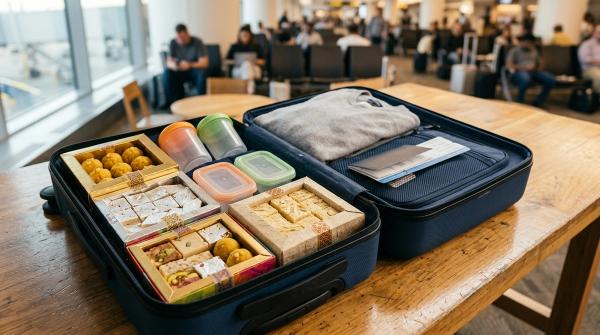
Another thing: plan around weather and distance. Northeast travel takes time. Roads curve, fog happens, landslides happen, and suddenly your lunch plan is a packet of chips and regret. I started carrying fruit, roasted peanuts, local bread, and those little bakery buns you get in hill towns. In 2026, food delivery and app-based ordering has improved in larger hubs like Guwahati, Shillong, and Gangtok, but once you’re moving between scenic places, old-school planning still wins. Ask your host to pack something. Trust me on this one.
| State | Best vegetarian base | What to try | What to watch out for |
|---|---|---|---|
| Meghalaya | Shillong | Pukhlein, tungrymbai if veg, local greens, mushrooms, rice meals | Ask clearly about non-veg additions and stock |
| Assam | Guwahati + tea estate stays | Veg Assamese thali, pitika, xaak, khar-style veg dishes | Many places don’t label veg in detail |
| Sikkim | Gangtok | Veg momos, thukpa, gundruk, kinema, mushroom dishes | Touristy spots can be overpriced and less authentic |
So... is Northeast India good for vegetarians? Yeah, but maybe not in the way you expect
#If by “good for vegetarians” you mean sanitized, clearly labeled, endlessly customizable, metro-style dining with fake meat burgers on every corner — not really, except in a few urban pockets. But if you mean rewarding, memorable, rooted in place, full of produce, fermentation, grain, smoke, warmth, and cooks who can make three vegetables taste like a complete worldview... then yes, absolutely yes. Meghalaya made me pay attention. Assam reminded me that plain food isn’t boring food. Sikkim fed me like it knew I was tired. That sounds dramatic, maybe it is, but travel does that to you. Or to me anyway.
I came back craving very specific things: the sweetness of pukhlein with hot tea, aloo pitika with rice and lime, steaming broth in a chipped bowl in Gangtok, a homestay dinner in Sohra where the clouds were literally sitting outside the window. Not every meal was amazing, obviously. I had one tragic plate of bland noodles and one expensive café salad that felt like punishment. But overall? This region is one of the most interesting vegetarian food journeys in India right now, especially if you like your travel a little slower and your meals connected to weather, landscape, and actual people.
Anyway, if you’re planning a food-first trip through Meghalaya, Assam, and Sikkim, go hungry but go curious. Don’t chase only the obvious “must eat” lists. Talk to hosts, ask what’s seasonal, wander markets, accept that the best lunch may be the one with no signboard. That’s where the magic usually is... and yeah, I’m still thinking about all of it. If you want more scrappy, food-obsessed travel stories like this, have a look at AllBlogs.in.