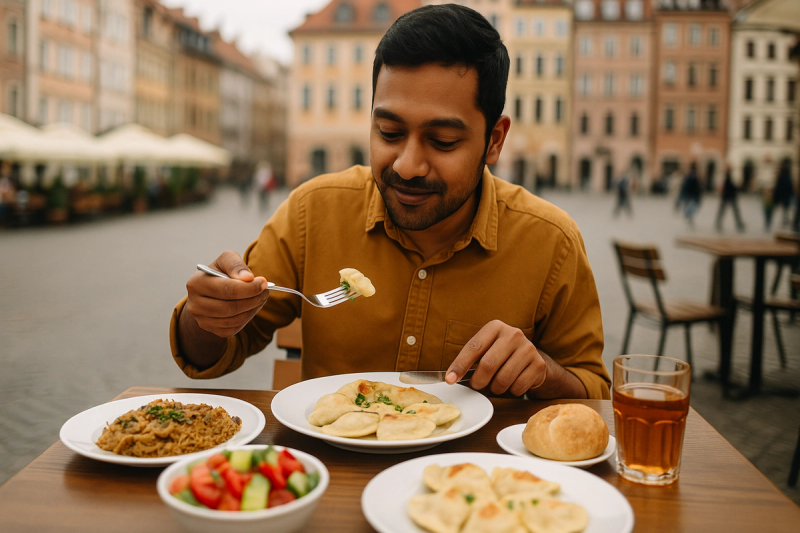
I’ll be honest, before my first Poland trip I had this slightly outdated idea in my head that the country would be tough for vegetarians. Lots of meat, sausages, heavy soups, not much else. And if you’re Indian, especially the kind of traveler who instinctively asks "bhai, isme anda toh nahin hai?" before every bite, Poland can feel a bit intimidating at first. But wow, I was wrong in a pretty fun way. Not totally wrong, because yes, traditional Polish food is often meat-forward, but modern Poland in 2026 is a whole different story. Cities like Warsaw, Kraków, Wrocław, Gdańsk and even Poznań have a seriously good vegetarian and vegan scene now, and not in that boring salad-only way. I mean proper food. Pierogi stuffed with cheese and potato, sour rye soups adapted without meat, beetroot dishes, forest mushroom things, cottage-cheese pancakes, artisan breads, craft coffee, plant-based bakeries, and these modern Central European tasting menus that somehow make cabbage feel glamorous. Who knew.
What made it extra interesting for me as an Indian traveler was this weird little emotional journey between comfort and curiosity. Some days I wanted full desi food because the weather was cold and my soul needed masala. Other days I wanted to lean all the way into Polish flavors and figure out what local vegetarian eating actually looks like. That balance, I think, is the sweet spot. Poland isn’t a place where you should only hunt for Indian restaurants, though there are a few decent ones. It’s better when you let the local cuisine surprise you a bit... and then maybe follow it up with chai somewhere later.
First things first - is Poland easy for vegetarians from India?
#Short answer, yes. Easier than a lot of people still assume. In the bigger cities, very yes. In smaller towns, manageable with a bit of planning and a few key phrases. One reason is that Poland’s vegan movement has grown massively over the last few years, and that momentum has carried right into 2026. You’ll notice more plant-based menus, more oat milk than you’d expect, more vegan pastry counters, and restaurants that clearly label allergens and dietary preferences. There’s also a wider trend in European travel right now toward local, seasonal, lower-waste dining, and Poland has leaned into that in a really cool way. Fermented vegetables, sourdough baking, regional produce, mushrooms, buckwheat, potatoes, apples, berries, and dairy if you eat it, all of that shows up beautifully.
- Look for the words: wegetariańskie = vegetarian, wegańskie = vegan
- If you don’t eat egg, ask: "Bez jajka?"
- If you don’t eat meat or fish stock, ask: "Bez mięsa, bez ryby, bez bulionu mięsnego?"
- For no lard or animal fat, say: "Bez smalcu" because yeah, that matters more than you’d think
This is the thing that catches Indian vegetarians sometimes. A dish may look veg but could be cooked in meat broth or served with bacon bits because, well, Europe. Not always, but enough that you should ask. I got overconfident in a mountain town once and ordered what I thought was a harmless soup, and then the waiter gently explained there was sausage stock involved. Slightly tragic in the moment, useful forever after.
The Polish vegetarian foods you should actually seek out, not just settle for
#If you do dairy, Poland can be fantastic. If you’re fully vegan, still very good, just a touch more selective in traditional places. My favorite reliable dish was pierogi ruskie, which despite the name has nothing to do with Russia in the way most tourists assume. It’s a classic Polish dumpling stuffed with potato and twaróg cheese, sometimes onion too, and when it’s made well... man. Soft, chewy, comforting, a little sweet from the onion if caramelized right. Total cold-weather happiness. Just check they’re not topped with bacon. Some places automatically do that, which feels rude to the dumpling honestly.
Then there’s barszcz, the beetroot soup. The clear version can be vegetarian, especially when served with tiny mushroom dumplings called uszka. It’s earthy, slightly sweet, a bit tangy, and weirdly elegant. Żurek, the famous sour rye soup, is usually not vegetarian in classic form, but in trendier cafes and plant-forward restaurants I found modern veg versions built on fermented rye starter and mushrooms. Big 2026 food trend in Poland, by the way, is chefs revisiting old peasant or monastery recipes and making lighter vegetarian versions without making them feel fake. I loved that. It didn’t feel like they were copying meat dishes badly, it felt like they were rediscovering ingredients that had always belonged there.
- Pierogi ruskie - potato and cheese dumplings, ask for no bacon topping
- Pierogi z kapustą i grzybami - cabbage and mushroom dumplings, very good in winter
- Placki ziemniaczane - potato pancakes, often with sour cream or mushroom sauce
- Naleśniki z serem - crepes with sweet cheese filling, more snack/dessert but lovely
- Kopytka - potato dumplings, sometimes vegetarian, depends on the sauce
- Kasza gryczana - buckwheat, often served in surprisingly tasty modern bowls
- Zapiekanka - open-faced baguette street food, easier to find veggie versions now than before
- Obwarzanek krakowski - Kraków’s ring-shaped bread, kind of cousin to a bagel
One thing I didn’t expect to enjoy so much was how mushroom-heavy Polish cuisine gets, especially in autumn-ish months and in places that care about seasonality. Forest mushrooms, chanterelles, porcini, creamy sauces, dumpling fillings, scrambled eggs if you eat them, toasted bread, all of it. For Indian travelers used to punchy spice, Polish flavors can seem subtle at first, but if you slow down a little there’s a lot going on. Sour, fermented, smoky, buttery, dill-y, peppery. Not loud, but not bland either. Different thing.
Where I ate best: Warsaw, Kraków, Wrocław, and a surprise in Gdańsk
#Warsaw was probably the easiest city overall. It felt genuinely modern, international, and very aware of plant-based eating. The coffee scene is huge, brunch culture is strong, and there are plenty of restaurants where nobody looks confused if you ask detailed ingredient questions. I found some of the best vegetarian Polish reinterpretations there, the kind of places where they pickle everything, plate food beautifully, and still keep it cozy instead of pretentious. There are also Indian restaurants in Warsaw if you need a break, but honestly I’d save at least a couple meals for local places doing seasonal veg menus. In 2026, Warsaw’s food scene is very into fermentation, low-waste cooking, regional produce from Mazovia, and plant-based tasting menus. Sounds fancy, is sometimes fancy, but also delicious.
Kraków felt more romantic and a little more traditional, which I mean as a compliment. Between old-town tourist traps there are some very solid vegetarian spots, plus milk bars and casual cafes where you can piece together a cheap meal if you know what to order. I had one rainy afternoon there with tomato soup, potato pancakes, tea, and cheesecake in a tiny place with steamed-up windows, and I swear I nearly considered moving to Poland for like twelve minutes. Also Kraków is great for bakery culture. Bread, buns, poppy seed pastries, sernik, drożdżówki... dangerous city if you have no self control, which I apparently do not.
Wrocław was my sleeper hit. I don’t know why people don’t hype it more to Indian travelers. The town is beautiful, walkable, studenty in a good way, and the vegetarian options were easy to find. I noticed more globally influenced menus there too, where Polish ingredients show up in bowls, sandwiches, ramen-ish soups, and modern bistro food. Purists may roll their eyes at that. I liked it. After a week of heavy-ish food, having buckwheat with roasted veg, herby sauces, and local cheese felt kind of perfect. Also, if you travel like me, meaning you walk too much and forget to drink water, Wrocław is forgiving because there’s always somewhere nice to sit with coffee and cake and rethink your life.
And Gdańsk... okay, I expected seafood to dominate and it does, especially around touristy zones. But I found some lovely vegetarian options there too, particularly in modern cafes and restaurants around the old town and Wrzeszcz. There’s a Baltic-coastal freshness to some menus now, with sea buckthorn drinks, dill, cucumber, new potatoes, berries, sour cream, and fresh breads. Not everything was deeply traditional Polish, but it felt local to the place. That matters to me more than rigid authenticity, honestly.
About milk bars, because every budget traveler asks
#Yes, you should try a bar mleczny, or milk bar, at least once. These are old-school Polish canteens, budget friendly, very local-feeling, and sometimes unexpectedly good. Historically they weren’t all vegetarian exactly, despite the name. They served cheap home-style food, often with dairy, flour, soups, dumplings, and meat too. In 2026, a few still feel frozen in time, while others are a little polished up for younger crowds. For Indian travelers, they can be great value, but this is where asking questions becomes super important. Menus may be only partly translated, and ingredients are not always obvious.
- Go at off-peak hours if you hate queues because lunch can get chaotic fast
- Pick known vegetarian-safe basics first: pierogi ruskie, cheese pancakes, vegetable salads, potato dishes
- Ask specifically about broth, bacon, and lard. Seriously, ask every time
- Carry cash or card both, though most places now take cards pretty much everywhere
The best vegetarian strategy in Poland isn’t trying to make every traditional dish fit your diet. It’s learning which dishes already do, which can be adapted, and when to just skip something and order the dumplings again.
What Indian vegetarians might struggle with a little
#Let me just say it plainly. If you’re coming from India and you love strong spice, Poland may feel mild. That’s not a flaw, just a palate adjustment. I started carrying a tiny sachet of chaat masala in my day bag by day four. No shame. Also, breakfast can be a weird meal if you’re expecting poha or dosa-level comfort. A lot of hotel breakfasts are bread, cheese, eggs, salad bits, yogurt, fruit. Fine, but not thrilling after a while. I ended up loving bakery breakfasts plus coffee, and once in a while I’d seek out Middle Eastern or Indian spots for something warmer and more savory.
Another thing is that the word vegetarian doesn’t always map perfectly across cultures. Some people may think fish is separate. Some may forget chicken broth counts. Some genuinely want to help but don’t know every kitchen detail. So be patient, but also be specific. I found that once I slowed down and explained clearly, people were usually kind about it. Younger staff in cities often speak good English too, which helps loads.
A few very practical food tips that would’ve saved me minor drama
#- Use Google Translate camera mode on menus. Not glamorous, very effective
- Search not only for “vegetarian restaurant” but also “vegan bakery”, “Polish dumplings”, and “milk bar” nearby
- Reserve for popular dinner spots in Warsaw and Kraków, especially weekends. Poland’s urban food scene is busy now
- Sunday trading rules still affect shopping rhythms, so don’t assume every grocery option is open late
- Zabka convenience stores are lifesavers for fruit, yogurt, hummus, sandwiches, and emergency snacks
- If you want Indian groceries or proper masala, larger cities have them, but don’t rely on finding them casually everywhere
And one small trend I noticed in 2026 that I really liked: more train stations and travel hubs in Poland now have better coffee, plant milk options, and actually decent grab-and-go vegetarian food. Not perfect, but better than the old sandwich-and-sadness situation. This matters if you’re doing city-hopping by rail, which you absolutely should because Poland’s train network is pretty useful for travelers.
What I’d recommend eating in each season, because weather changes everything
#Winter and cold months? Go full comfort mode. Dumplings, hot beet soup, sour rye soup if you find a veg version, potato pancakes with mushroom sauce, baked apples, cheesecake, tea after tea after tea. Spring gets lovely with lighter dairy, herbs, radishes, and fresher market produce. Summer is surprisingly good for vegetarians in Poland because berries, cherries, tomatoes, cucumbers, young potatoes, and outdoor cafe culture all come alive. I had chilled soups and lazy garden lunches that felt almost Mediterranean in mood, just... more dill. Autumn though, that was my favorite. Mushrooms, pumpkins, plum pastries, deeper flavors, foggy mornings. A bit cinematic, if I’m being dramatic, which I probably am.
So, should Indian vegetarians travel to Poland for food?
#Absolutely yes. Not because Poland is the easiest vegetarian destination on earth, because it isn’t. But because it’s interesting. It rewards curiosity. It has enough infrastructure now that you won’t starve, and more importantly, enough depth that you won’t be stuck eating fries and Margherita pizza the whole trip. The best meals I had there were not copies of Indian food and not awkward “veg options” added as an afterthought. They were genuinely Polish, seasonal, comforting, and specific to place. That’s what you want from travel food, right? Something that teaches you where you are.
If I could sum it up in one slightly messy sentence, it’d be this: Poland for Indian vegetarians is a country of very good dumplings, unexpectedly excellent bakeries, thoughtful modern plant-based cooking, occasional broth-related trust issues, and lots of delicious reasons to keep wandering. Go hungry, ask questions, carry a snack, and don’t panic if the first menu confuses you. It gets easier fast. And if you’re the kind of person who plans trips around meals, um, yeah, you’ll probably have a pretty great time. I did. I’m still craving those pierogi even now. For more food-and-travel rambling like this, have a look at AllBlogs.in.