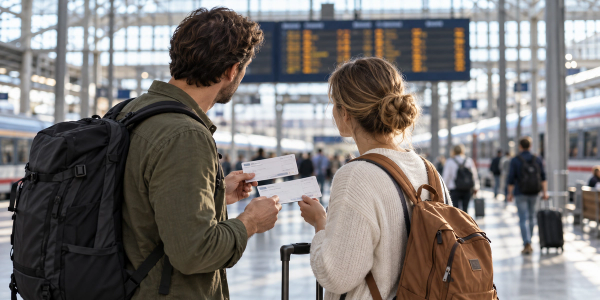
So, quick confession before we start. I didn’t become a “digital nomad” because of some inspirational quote on Instagram. I became one because Bangalore traffic broke my soul and my boss said, “As long as you deliver, work from wherever.” I took that VERY literally.
Since then I’ve worked out of shacks, pod hostels, co-living spaces, random cafés where the Wi‑Fi password is longer than my attention span, all that. And over the last few years, I’ve tried a bunch of countries that are actually practical for Indians — not just dreamy Pinterest boards. Visa, budget, safety, dal-chawal cravings, everything.
If you’re an Indian remote worker planning your 2026 base (or just dreaming while stuck in office right now), here’s my honest take on the best countries for us. No fancy jargon, just what actually worked, what sucked, and what I’d do differently next time.
1. Thailand – The OG Starter Pack for Indian Digital Nomads
#Let’s start with the obvious. Thailand is like that comfort show you keep going back to. You kinda know what to expect, but it still hits.
For Indians, it’s honestly one of the easiest places to start the whole work-from-abroad thing. Direct flights from Mumbai, Delhi, Bangalore, Chennai, decent visa options, and you can survive easily on a mid‑range Indian salary without eating instant noodles every day.
Typical monthly budget I’ve done there (working seriously, not full-time vacation mode): around ₹70k–₹1.1 lakh, including rent, food, local travel, co‑working, random bubble teas I didn’t need.
Where to base yourself:
- Chiang Mai – chilled vibe, tons of digital nomads, reliable Wi‑Fi, cheaper than Bangkok, less humid, lots of cute cafés where everyone is pretending to work but scrolling reels
- Bangkok – more city life, amazing metro, best food scene, great hospitals (important if your stomach is like mine and protests every alternate week)
- Koh Phangan / Phuket – if you want beaches + work; just don’t get tempted by the parties too much or your deadlines will cry
Visa wise, Thailand keeps tweaking things, but Indians generally manage with tourist visas and longer stays by doing extensions or trips in and out. For longer serious stays, keep checking for new digital nomad or long-term visas, they’ve been talking about flexible options for remote workers to attract more of us.
Best time to go: November to Feb. March onwards, some places get HOT and you start questioning all your life choices just walking to 7‑Eleven.
Food wise, you’ll survive. There’s enough vegetarian and enough spice. In Chiang Mai I legit found a small Indian dhaba where the owner was from Gujarat and charged me less because I spoke to him in broken Hindi + Gujarati mix. That man is a hero.
2. Vietnam – My Unexpected Favourite on a Budget
#Vietnam surprised me. Like, A LOT. I went thinking “ok one month, let’s see” and stayed almost three. If you’re earning in INR and want to stretch it while still having good quality of life, Vietnam is honestly a beast.
Ho Chi Minh City (Saigon) especially is like if Mumbai and Bangkok had a baby that loves coffee and scooters. The energy is crazy. You can sit in a café from 9 to 6, work peacefully, and nobody chases you out, because everyone else is doing the same.
Approx monthly costs I had in Saigon:
- Decent studio in a serviced apartment: ₹25k–₹35k (yes, proper AC, Wi‑Fi, cleaning, often washing machine also)
- Food: ₹15k–₹25k depending how fancy you go and how often you cave in to Indian food cravings
- Co‑working or café culture: ₹6k–₹10k (many just work from cafés, coffee is strong enough to power a rocket)
Wi‑Fi is generally really good in cities like Saigon, Hanoi and Da Nang. I’ve done video calls with my client in Gurgaon while sitting near a random street food cart, no lag, only background noise of traffic and my slurping noodles.
Visa wise, Vietnam has been opening up more and more e‑visa options. Indians can usually get an e‑visa online if you plan properly, and the process is way smoother now than it used to be. Just don’t do last minute jugaad here, do it properly, triple check your dates and entry points.
Best months: roughly November to April for most places if you wanna avoid heavy rains. Da Nang and Hoi An can get stormy later in the year, so time it a bit.
Btw, if you’re vegetarian, first week might be tough. Lots of fish sauce sneaks into everything. But once you figure the phrases and a couple of veg-friendly spots, you’ll manage. Also, Indians own some restaurants in the main city areas now, so dosa craving also sorted.
3. Indonesia (Bali & Beyond) – Not Just for Influencers
#I’ll be honest, I used to make fun of people going to Bali. "Oh you’re going to ‘find yourself’ or just to photograph floating breakfast?" Then I stayed 2 months near Canggu and I shut up very fast.
For remote work, Bali is actually pretty solid. Amazing co‑working spaces, huge community of freelancers, entrepreneurs, even a lot of Indians building startups quietly over smoothies and sambal.
Where to stay if you’re working:
- Canggu – surfer/nomad central, tons of co‑working spaces, good cafes, but traffic is insane and it’s getting pricey
- Ubud – more green, rice fields, yoga, slower pace, great to focus on deep work (also rainy days are perfect for coding or writing)
- Sanur / Uluwatu – quieter, more beach, still catching up on digital nomad infra but really nice if you hate crowds
Monthly budget in Bali totally depends on your lifestyle. You can do ultra budget with homestays and warungs (local eateries) under ₹70k, or easily blow ₹2 lakh if you go full “luxury villa with private pool and every meal on Instagram”.
The good thing is Bali and other parts of Indonesia have been openly trying to attract remote workers. They’ve talked about long-term digital nomad style visas, and already you have options like long stay / social visas through agents, or regular tourist visas with extensions. Immigration is stricter now about people working with local clients without permits, but if your work is for Indian or foreign companies online, the scene is generally ok as long as your paperwork is clean and you’re not doing anything shady.
Best time: Roughly April to October for the drier season, but I stayed through some rainy weeks and honestly it was still fine. Just carry a good rain jacket and don’t plan long scooter rides during storms, unless you want free exfoliation from raindrops.
And yes, Indian food is VERY available. Even south Indian. I had idli-sambar in Ubud with a view of rice fields. My ancestors did not see this coming.
4. Georgia – Visa-Free Haven with Major Chill Vibes
#Now let’s move out of Asia for a bit. One country that’s become kinda legendary among Indian remote workers is Georgia. Not the US one, the small country at the crossroads of Europe and Asia, with mountains that look straight out of a wallpaper pack.
Why do Indians love it? One simple thing: visa-free entry (for now) for up to a year for Indian passport holders, if you meet their conditions. That alone is like… gold. No constant visa runs, no complicated paperwork every month, you can just stay put and actually focus on your work and life.
Tbilisi, the capital, has slowly turned into a mini nomad hub. Cute old town streets, wine everywhere, decent internet, chill locals. You won’t find as many Indians as in Bangkok or Bali, but that’s changing fast. I met a couple from Pune running their IT business entirely from there, just stepping out to eat khachapuri between calls.
Cost wise, Tbilisi is still cheaper than a lot of Europe. You can find a nice 1BHK in a good neighborhood for something like ₹35k–₹55k per month, depending on location and season. Groceries and local food are reasonable, imported stuff is pricier. Co‑working spaces are growing, but many people just work from home or from cafés with solid Wi‑Fi.
Weather is the real wildcard. Winters can be properly cold for us desi folks. Like, your Bangalore sweater will cry. But summer and autumn are gorgeous. Spring also nice but brings some rain.
Safety wise, I felt quite ok walking around even late in the evening. Just normal city awareness needed. Taxis are cheap through apps, and you don’t get that classic “Indian tourist, let’s overcharge” vibe as badly as in some places.
One thing though… Indian food options are limited. There are some Indian restaurants in Tbilisi now, but don’t expect the comfort level of Dubai or London. Learn to cook basic dal, you’ll thank me later.
5. Portugal – Europe Feel, Chill Pace, Remote Worker Friendly
#If you want that European city + beach + good coffee life, Portugal is honestly one of the best bets right now. I couldn’t afford long-term life in many Western European countries on my Indian clients, but Portugal felt that sweet middle ground. Still not cheap-cheap, but value for what you get.
Lisbon and Porto are both big remote-work hubs. Tons of co‑working spaces, events, startup people, and yes, a LOT of Indians as well, especially in tech and consulting. You can literally hear Hindi and Malayalam on trams some days.
Portugal has introduced proper digital nomad style visas and also remote work / D7 type schemes for people earning from abroad. They keep tweaking the rules, but overall, they clearly WANT remote workers, including from countries like ours, as long as you can show stable income and health insurance etc.
Cost wise, Portugal is more expensive than Southeast Asia or Georgia for sure, but cheaper than say Germany or the Netherlands. In Lisbon, a decent room in a shared apartment can be around ₹50k–₹75k, and a small studio much higher depending on area. Porto and smaller cities can be slightly cheaper.
Public transport is good, internet is excellent, safety is solid. Weather is also quite friendly for us, not crazy extreme. Summer can get hot but not like brutal desert style, and winters are mild compared to Northern Europe, though houses can feel cold if not well insulated.
For food, you’ll manage. There are Indian grocery shops in the bigger cities, many Indian and Nepali restaurants, and local food is quite nice if you’re ok with seafood and bread. Biggest lifestyle plus for me was simply being in Europe with a slower pace. No hectic rush-rush vibe, people actually enjoy their evenings.
Only downside: you need to plan visas well, show documents, maybe use a consultant if paperwork freaks you out. It’s not a last-minute backpack decision country, it’s a “let me sit with a cup of chai and sort these forms” type of move.
6. UAE (Especially Dubai) – For Serious Money + Indian Comfort Zone
#Ok, I know, Dubai is not what people imagine when they hear “digital nomad”. No hammocks, no hostels, no monthly rent under ₹20k. But, hear me out.
For Indians who want to earn well, network like crazy, and still be a short flight from home, UAE is actually a very practical remote work base. Especially now with them pushing remote working visas and easier residence options for skilled folks.
Dubai has insane infrastructure. Blazing fast internet, world-class co‑working spaces, events almost every week, and more Indian food than many Indian cities honestly. You won't miss home food, that’s for sure. I’ve had better chole bhature in Dubai than in half the malls in Delhi, no jokes.
But yeah, it’s expensive. Think:
- Shared flat – ₹70k–₹1 lakh per month in a decent area
- Studio – way higher, depending on location
- Eating out regularly – adds up fast unless you find the more local, older Indian / Pakistani joints
The logic of using UAE as a base works well if: your income is strong (clients abroad, higher paying projects), you want some tax advantages depending on how you structure things legally, and you enjoy urban life. It’s also one of the safer places in the region, with really good healthcare and extremely diverse expat communities.
Weather is the killer though. Summers are just… no. You go from AC room to AC car to AC mall like a video game, outside is for 10 seconds only. Winters are lovely though, and the outdoor scene picks up big time.
7. Malaysia – Low-Key Underrated, Especially Kuala Lumpur & Penang
#Malaysia doesn’t appear on Instagram as much as Bali or Thailand, but for actual working Indians it’s honestly such a solid option. I spent a month in Kuala Lumpur and another in Penang, and I kept thinking, “Why do more of us not come here?”
Kuala Lumpur is super modern, with proper metro, malls, great healthcare, big Indian community, and a lot of familiarity. You walk into Brickfields and it legit feels like a mashup of Chennai and Mumbai. South Indian food everywhere, temples, saree shops, the works.
Cost wise, it’s more affordable than Singapore and a bit like Bangkok level depending on how you live. You can find a nice condo with a gym and pool in KL in the ₹35k–₹60k range per month if you look well and maybe share.
Penang is slower, more heritage, more food‑focused, still decent Wi‑Fi, and less crowded. Great place to focus on deep work or writing. I had some of my most productive weeks there because there’s nothing too crazy pulling your attention every night.
Malaysia’s visa situation for Indians is usually manageable with e‑visas / tourist visas, and they keep updating options to attract long-term visitors and talent. Just always check the latest rules before you book your tickets, because these things change faster than flight prices sometimes.
Best time to go depends on which side of Malaysia you’re going to, because monsoon patterns differ, but generally you can find good windows most months if you plan properly.
8. Mexico – For When You’re Ready to Cross the World
#Now, this one is not the easiest from India, but I’m still adding it because more and more Indian nomads are ending up here, especially freelancers making good USD income.
I spent one crazy month in Mexico City and another in Playa del Carmen with a friend who was already based there. The lifestyle is… addictive. Late dinners, music everywhere, super friendly people, and a huge digital nomad scene in places like Mexico City, Playa, Tulum etc.
From a work perspective, internet is surprisingly solid in major cities and popular coastal towns. Co‑working spaces are common, cafés are laptop‑friendly, and timezone wise it’s decent if your clients are in the US or Latin America. If your clients are all in India, the late night calls will murder your sleep schedule though, not gonna lie.
For Indians, the visa situation is doable but needs planning. You usually need to get a visa in advance, show documents, and maybe mention tourism rather than remote work like most people do, since many countries still don’t have clear legal categories for "I work online for another country". There’s also a temporary resident route if your income or savings are above their threshold, which some remote workers use.
Costs: Mexico City can be mid‑range. Not rock bottom cheap, not super expensive. You might find a decent room in a shared flat in popular areas for something like ₹45k–₹70k per month. Beach towns can be pricier because of tourists.
Food is amazing if you eat meat. Veg is a little more tricky but not impossible. Spice level is respectable, not that bland European sprinkle. Just be cautious with street food in the first few days, or carry your trusted Digene, up to you.
Practical Stuff Indians Don’t Talk About Enough
#Ok, country list aside, there’s some real talk needed if you’re an Indian planning this life in 2026 and beyond.
1. Visa Reality Check – Our passport has improved a bit in rankings, but it’s still not super powerful. Many “top digital nomad countries” are easy for Europeans, not so easy for us. Always check official embassy or immigration websites, not just some random blog. Rules for Indians can be totally different from what your American or German friend experiences.
2. Income Stability – This life looks sexy on reels, but when your client delays payment and rent is due in euros or dollars, your heart rate goes to the moon. Try to have:
- At least 3–6 months expenses saved
- Multiple clients or one very stable job
- International-friendly bank / card + maybe a backup card
3. Health & Insurance – I used to skip travel insurance. Then I watched one friend in Bali get into a scooter accident and his bill was more than his entire 2 months budget. Since then, I never travel without some basic health insurance that covers me abroad. Doesn’t have to be super fancy, but don’t go without anything. We Indians do this overconfidence thing with health, then regret later.
4. Homesickness & Culture Shock – First month is fun. Third month, your mom’s aloo paratha will appear in dreams. It happens. Make a routine. Call home regularly. Cook some Indian food. Find desi communities (they’re everywhere honestly). It helps.
5. Safety & Scams – In most of the countries I mentioned, I felt generally safe. But as an Indian, sometimes people assume you’re either super rich or super desperate, both can attract weird attention. Just stay aware, don’t flash cash, don’t carry your passport everywhere unnecessarily, and don’t trust every WhatsApp or Telegram group promising “easy visa extension” for cash.
How I Actually Work While Traveling (Not Just Pose with Laptop)
#Sometimes I get DMs like, “Bro how do you even get work done with beaches around?” Answer is: I have no choice. Deadlines don’t care about sunsets.
What’s worked for me:
- I pick one base for at least 1–2 months instead of hopping every 3 days. Slow travel is cheaper AND you actually do your work.
- I choose my stay mostly based on Wi‑Fi reviews. Looks can be fake, but bad internet is very real.
- I try to align my work hours roughly with India time, so my clients don’t feel I’ve vanished to Mars.
- I keep one local SIM with data + one international roaming setup from India as backup. Hotspot has saved my life mid‑Zoom call multiple times.
Honestly, some days are just like any other boring office day. Laptop, coffee, meetings. Difference is, when I shut down at 6, I can go to a night market or a beach instead of just sitting in traffic on Outer Ring Road.
So, Where Should You Go First?
#If you’re still reading till here (respect!), you’re probably seriously thinking of this life. So here’s my very biased but honest suggestion based on different types of Indians I’ve met on the road:
If you’re:
- On a tight budget, first time leaving India, want something familiar but exciting – Thailand or Vietnam.
- Want long stay with minimal visa drama – Georgia is a blessing.
- Craving beaches + community + slightly spiritual/yoga vibes – Bali (Indonesia).
- Want Europe experience + maybe long-term move – Portugal.
- Earning well and want maximum infrastructure + Indian comfort – UAE (Dubai).
- Already making solid USD and want to shake things up – Mexico or other LATAM spots.
You don’t have to get it perfect on the first try. My first month as a "digital nomad" I messed up my visa dates, under‑budgeted, over‑worked, and still somehow had the time of my life. You adjust. You learn. You figure what kind of place and pace works for you.
The main thing is: don’t wait till everything is perfectly sorted. It never will be. Start with one month, one country, one experiment. Worst case, you come back with stories. Best case, you just quietly don’t come back full-time.
Wrapping Up (Before I Miss My Next Flight)
#So yeah, those are the countries that, in my experience, make the most sense for Indian digital nomads in 2026 and probably for a good few years after that, unless some government suddenly decides “no laptops allowed” or something.
Each place has its own drama, its own charm, and its own hidden Indian community quietly grinding away in co‑working spaces, living this weird but beautiful in‑between life. Not fully tourist, not fully local, but something in the middle.
If you’re planning your first remote‑work trip and want more detailed breakdowns, itineraries, or just some honest desi perspective on this whole scene, I’ve shared more stories and guides on AllBlogs.in – go check it out when you’re done daydreaming. Or, actually, keep daydreaming… that’s how most of my trips started anyway.