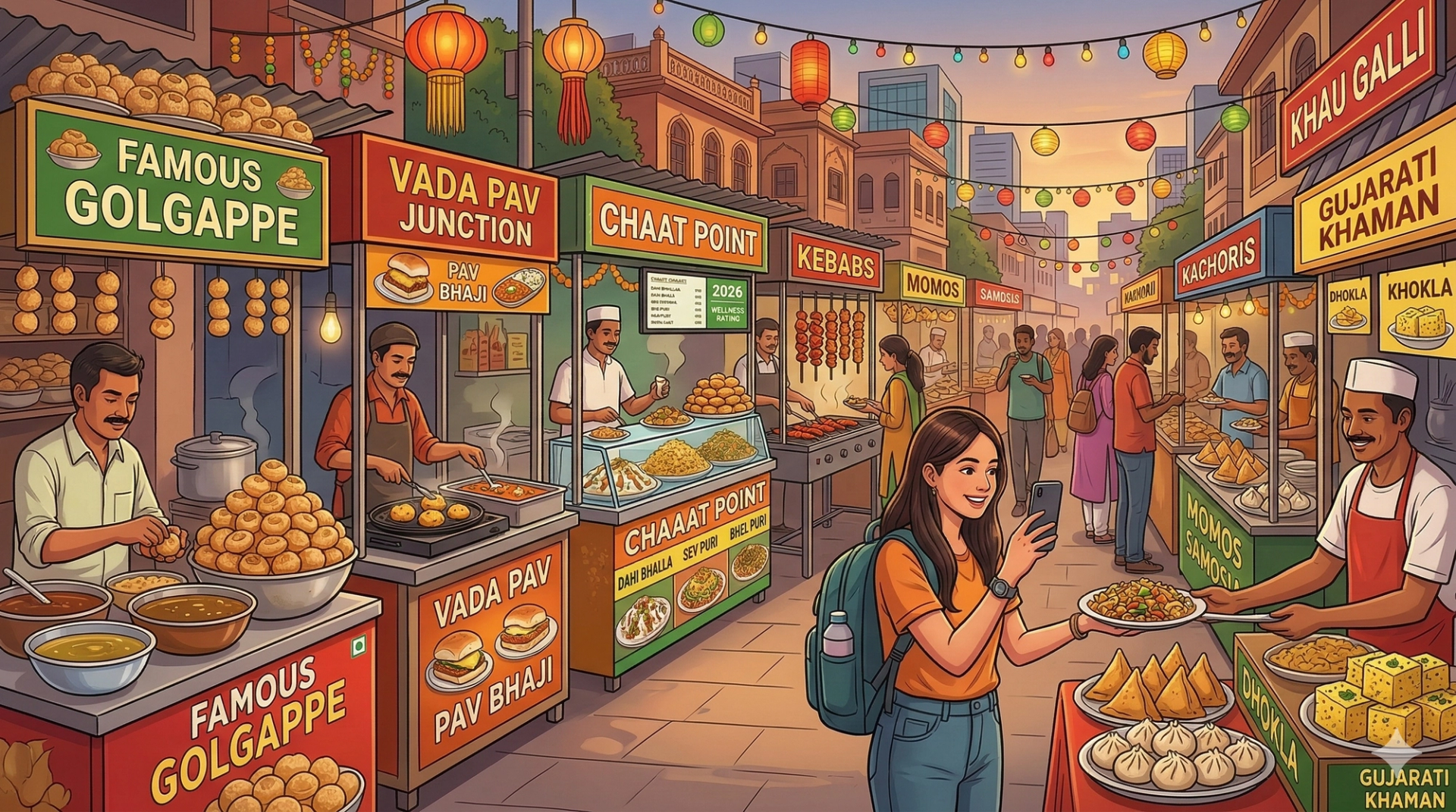
I didn't expect 2026 to become my accidental year of snack-chasing, but, well, here we are. One work trip became two food detours, then suddenly me and my backpack were zigzagging across India basically planning train routes around kachori, chaat, kebabs, buns, tea stalls, and those tiny carts where somebody's uncle is making the best thing you've ever eaten for like 40 rupees. People keep talking about "experiential travel" and "culinary immersion" this year, which sounds very LinkedIn-ish honestly, but in India it does mean something real. Snack tourism is not just a cute trend anymore. It's a legit way to travel the country. Cities are now promoting food walks harder, state tourism boards are pushing local snack maps, heritage markets are seeing renewed footfall, and even younger travelers who used to just do cafes and rooftop bars are back in old bazaars with paper plates in hand. I loved that. It felt alive.
And yeah, before somebody says it, I know street food in India has always been a thing. Obviously. But 2026 feels different. More organized in some places, more proud of regional identity, more hybrid too. UPI payments at stalls that still use hand-painted boards. Millet crisps next to old-school jalebi. Specialty chai carts doing single-origin tea, which sounds ridiculous until you taste it and go ohhh... okay. I noticed cleaner stalls in major food lanes, more visible filtered-water setups, and a lot more women-led food popups and micro-kitchens feeding into the street scene. Not everywhere, no point pretending it's all polished, but enough that you can feel a shift.
Why "snack tourism" works so stupidly well in India
#Because snacks here are not side characters. That's the whole thing. In a lot of countries, snacks are filler. In India, snacks can be breakfast, gossip, an argument, a family ritual, a midnight regret, a train-platform memory, a reason to miss your bus. They're tied to neighborhoods, caste histories, migration, festival calendars, monsoon moods, and local produce. You don't just eat pani puri, you eat this city's pani puri, on this lane, from this person, at this exact chaos-o-clock in the evening. That's why I think street food trails beat restaurant checklists almost every time.
- Delhi for layered chaat culture, kebabs, kulchas, old market snacks
- Mumbai for all-day eating, vada pav trails, Irani bakery nostalgia, beach-side bites
- Kolkata for kathi rolls, telebhaja, puchka, old sweet shops that make you emotional for no reason
- Indore for the late-night snack insanity at Sarafa and breakfast that starts before you're mentally alive
- Ahmedabad for fafda-jalebi, khaman, maska buns, and that sweet-salty-soft-crunchy thing Gujarat nails
- Lucknow and Hyderabad if you want your snack trail to drift gloriously into kebab territory
- Bengaluru, Pune, Goa for newer chef-led street concepts, regional revival menus, and younger food crowds
Delhi: where my snack trail got gloriously out of hand
#I started in Delhi because honestly if you're testing your appetite, Delhi will test it back. Old Delhi still hits like nowhere else. Chandni Chowk in the morning is one thing, in the evening another beast entirely. I did the usual mistake of saying "I'll just sample a few things" and then immediately overordered at the first stop. Natraj Dahi Bhalla near Chandni Chowk was, yes, crowded, yes, hyped, and yes annoyingly worth it. The dahi bhalla was cloud-soft, properly chilled, with that sweet-tangy-spiced balance that kind of shuts your brain up for a second. Then Daulat ki Chaat, because winter-ish mornings and Delhi air somehow matter here. It looks like sweet foam made by a magician with bad sleep habits. Fleeting, delicate, weirdly romantic.
From there I wandered toward Paranthe Wali Gali, which, okay, is touristy and not every parantha there will change your life. Some are more about the story than the bite. But nearby lanes and old halwai shops are where the magic keeps happening. I had bedmi poori and aloo sabzi for breakfast one day in a standing-only spot where the owner didn't bother with friendliness and I respected him more for it. In Jama Masjid area, Karim's still pulls people, but I had one of my best evenings hopping between smaller kebab joints and stalls doing seekh, shami, and roomali in the smoke and traffic and azaan and honking and everything all at once. It was messy. Perfect, basically.
My most memorable food moments in India this year weren't fancy. They were the ones where I had to elbow gently through a crowd, hold a flimsy plate with one hand, and trust the person frying something in front of me knew exactly what they were doing.
Mumbai: snack city, commuter city, no-nonsense city
#Mumbai might be the easiest city in India to build an entire trip around snacks. It doesn't judge you for eating every two hours. In fact it encourages it. I did a vada pav crawl that started in Dadar and ended, somehow, with me on Marine Drive holding a second sandwich I absolutely did not need. Ashok Vada Pav still has a loyal crowd, and for good reason, but one thing 2026 taught me is don't get too obsessed with only the "famous" names. Some tiny neighborhood stalls are doing brilliant versions with fresher pav, crisper batter, and chutneys that have actual personality. The current trend I saw a lot was regional chutney riffs and better-quality buns, plus vendors openly accepting digital payments like it's the most normal thing in the world now. Which it is.
Then there was Mohammed Ali Road, where snack tourism sort of melts into meat tourism and late-night appetite chaos. Outside Ramadan it's still worth exploring, but during the festive season the energy is just bonkers. I also loved the old Irani bakery circuit... brun maska, kheema pav, mawa cakes, chai that fixes your soul a little. Kyani & Co still gets all the nostalgia posts, though I honestly had one of my favorite bakery stops at a less talked-about place where the bun maska was less photogenic but more buttery, more real. Also, Juhu beach snacks? People love to sneer at them, but when the bhel is fresh and spicy and the sea breeze is doing its thing, please. Let me be happy.
Indore at night is a snack fever dream, and I mean that as praise
#If you only know one dedicated street food destination in India for 2026, make it Indore. I know, I know, everyone says this now. But Sarafa Bazaar at night is still one of the wildest edible spectacles I've seen anywhere. A jewelry market turning into a massive night food bazaar should not work this well and yet it absolutely does. Crowds start building late, families come out, college kids pile in, tourists hover, and then the smells start ambushing you from all sides. Bhutte ka kees, garadu, khopra patties, sabudana khichdi, dahi bade, jaleba the size of your emotional baggage. It rules.
I remember standing there with a plate of bhutte ka kees, this soft-spiced grated corn cooked down with milk and masala, and thinking wow this is exactly why snack trails beat generic sightseeing. You taste the region. You taste climate and farming and habit. Indore also leans into cleanliness and food branding more than many places, which maybe helps explain why it's repeatedly in conversations around urban food tourism and public hygiene. Not saying every stall is spotless, don't be naive, but as a visitor I found the food lanes relatively approachable. Morning-wise, Chappan Dukan has become more curated, a bit more polished than old bazaar wandering, but it's still fun if you want concentrated snacking without too much planning.
Kolkata gave me the most emotional snacks, somehow
#Maybe it's the pace of the city, maybe it's the old shops, maybe I was just tired and sentimental, but Kolkata really got me. Puchka here is a different religion, sorry. The tamarind hit feels sharper, the spice sneaks up, and the vendors have this swagger I enjoyed. Kathi rolls, obviously, are a whole trail by themselves. Nizam's remains part of the conversation because history matters, but the best approach is to compare. Egg roll, chicken roll, mutton roll, double egg if you're feeling reckless. I also spent an embarrassing amount of time chasing telebhaja in the late afternoon when the city starts smelling fried in the best possible way. Beguni, peyaji, alur chop with tea while rain threatens? Pretty close to heaven, actualy.
And sweets, okay, that's not technically snacks in the savory trail sense but don't make me separate them. Kolkata's sweet shops still function as neighborhood anchors. Balaram Mullick & Radharaman Mullick keeps innovating without becoming gimmicky, which is harder than it sounds. I also saw a lot more younger travelers doing curated sweet-and-savory heritage walks in north Kolkata this year. That's another 2026 trend for sure, smaller hyperlocal food walks led by historians, home cooks, or photographers rather than giant generic tour companies. Way more intimate. Way less cringe.
Ahmedabad, Lucknow, Hyderabad... and the delicious problem of too many good trails
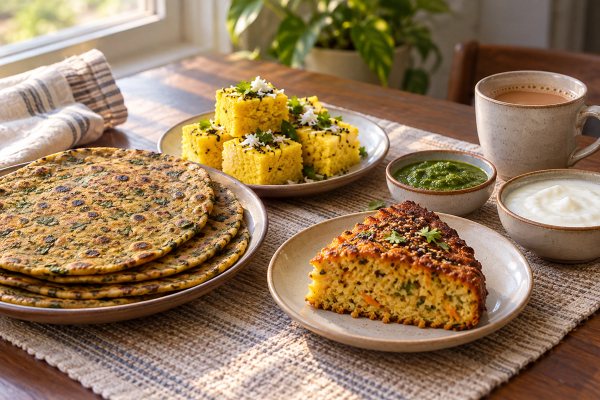
#Ahmedabad surprised me, even though it probably shouldn't have. Manek Chowk after dark still does that market-to-food-hub transformation thing people love, and yes it's touristy, and yes I still had a great time. But my better snack memories came in the morning: fafda-jalebi with raw papaya sambharo, soft khaman, handvo slices, and those cheerful little farsan shops where you walk in for one thing and leave carrying enough snacks for a train compartment. Gujarati snack culture has range. It can go sweet, spicy, steamed, fried, fermented, all before lunch.
Lucknow was subtler but deeply satisfying. Tunday is iconic for a reason, though kebab pilgrimages in Lucknow should include side-lane places and old bakeries too. Nihari-kulcha breakfasts aren't exactly "light snacking" unless your definition of snack is spiritually flexible, which mine is. Hyderabad gave me mirchi bajji, lukhmi, osmania biscuits and chai breaks that turned into full conversations with strangers. Around Charminar, food and crowd and history blur together in a way that's exhausting and exhilarating at once. You kind of surrender to it.
What's new in 2026: the street food scene is changing, but not losing itself
#This part interested me maybe more than it should've. Across cities I kept noticing a few patterns. First, digital payments are now fully normal at a huge number of stalls, not just in metro centers but in secondary cities too. UPI has made spontaneous eating easier, especially when you're carrying less cash and making ten tiny transactions in one evening. Second, there is definitely stronger interest in regional revival foods. Younger travelers are actively seeking old recipes, millet-based snacks, seasonal specialties, community-specific dishes, things beyond just the Instagram top 10. Third, hygiene signaling matters more now. Vendors advertise RO water, gloves, filtered ice, even QR-linked menus in some urban food clusters. Is it universal? Lol no. But the shift is real.
I also ran into snack popups inside railway stations, airport-linked regional food kiosks, and boutique stays offering guided market breakfasts instead of generic buffets. Tourism boards and local founders seem to have finally realised people don't only travel for monuments, they travel to eat around monuments. In cities like Bengaluru and Pune, chef-led street food festivals are also feeding attention back into traditional vendors, which can be good... though sometimes it gets a bit too curated and expensive for my taste. Still, if the result is more respect for local snack traditions, I'm not gonna complain too much.
A few things I learnt the hard way, with chutney on my shirt
#- Go early for breakfast snacks and go late for market snacks. Midday can be weirdly dead or stale.
- Follow crowds, but not blindly. A giant queue can mean fame more than flavor.
- If oil smells tired, walk away. Your stomach deserves better.
- Carry tissues, hand sanitizer, and zero dignity. You will drip something.
- Ask what locals eat in this weather. Seasonal snacking is a whole science in India.
Also, tiny opinion that maybe not everyone agrees with: don't over-plan every bite. I know map lists are useful, I make them too, but the best snack trails happen when you leave room for random. A guy on a scooter tells you to try the kachori two lanes down. A tea vendor points you toward the woman selling fresh poha at dawn. You hear sizzling, you turn left. That's the stuff. One of my favorite breakfasts on this whole trip was in Jaipur, unplanned, just a paper plate of pyaaz kachori and chai so hot I nearly burned my mouth off. Worth it.
If you're building your own India street food trip, here's how I'd do it
#I'd pick 3 or 4 cities max, otherwise you spend half your life digesting on trains. Delhi plus Indore is fantastic if you want contrast, old imperial chaos versus snack-specialist energy. Mumbai plus Ahmedabad works if you love urban speed and western India flavor shifts. Kolkata plus Lucknow is for people who like history with their carbs. And if you can add one southern stop, Hyderabad is a smart choice because it bridges snack culture and serious meat culture really nicely. I'd stay near older neighborhoods where walking is easy, do one formal food walk early in the trip to get confidence, then freestyle after that. Keep one meal a day deliberately unbooked. Trust me on this one.
So yeah, snack tourism in India in 2026 feels bigger, smarter, and more exciting than people give it credit for. It's not just about stuffing yourself, though, uh, there was plenty of that. It's about seeing how a country tells stories through things served on leaf plates, steel saucers, newspaper, tiny glasses, banana leaves, hands. Some stalls are famous, some are falling apart, some are adapting with QR codes and millet menus, some refuse to change a single thing. Good. Let them all coexist. That's what makes the trail interesting. I'm home now and still craving puchka, bhutte ka kees, a properly savage Delhi chaat, and one more unnecessary vada pav. If you're even a little obsessed with food and travel, go. Go hungry. And if you want more rambling food-trip stories after this, have a look at AllBlogs.in.