So… I didn’t fly to India in 2026 with some grand spiritual plan. I mean, I said I was going for “culture” and “architecture” like a normal person, but honestly? I went because I wanted to shop for ingredients the way locals do. Not souvenirs. Not magnet nonsense. Groceries.
And yeah, I know “grocery tourism” sounds like a TikTok trend (because it kinda is), but it’s also the most real way to understand a place. You see what people actually cook on a Tuesday night. You learn what they snack on when they’re tired. You learn what’s expensive, what’s cheap, what’s seasonal, what’s treasured.
Also, in 2026, food travel is having this… moment. Everyone’s doing market walks, farm stays, hyper-local popups, and those cooking classes where you pick herbs at 7am and pretend you’re not dead inside. India’s right in the middle of that wave, and the country just gets it. Markets feel like live theater. Grocery stores range from old-school kirana shops to squeaky-clean quick-commerce dark stores (more on that in a sec).
Anyway, this post is basically my notebook: what I bought by region, what I regret not buying (sob), and what you should absolutely stuff in your bag—assuming you leave room for clothes. I didn’t.
First, what grocery tourism in India looks like in 2026 (quick, before we get delicious)
#Couple things that felt very “2026” on this trip:
1) Quick-commerce is everywhere in big cities. Blinkit, Zepto, Swiggy Instamart… you can get coriander, ice cream, and batteries in like 10 minutes. It’s kinda magical and also mildly terrifying. I used it once in Bengaluru when I was too sunburnt to go outside, and yes, I ordered coconut water like a weak little baby.
2) But the real grocery tourism is still markets. The chaos. The bargaining. The guy weighing turmeric with one hand and yelling at his cousin with the other.
3) There’s a bigger push for GI-tagged stuff (Geographical Indication) and regional traceability now. You’ll see sellers bragging about origin: “this is Alleppey cinnamon” or “this chilli is Byadgi” and they’re not joking.
4) Travelers are doing “ingredient trails” now. Like, instead of a generic food tour, you do a “pepper trail” in Kerala or “millet trail” in Karnataka. Millets are still having their glow-up since that whole International Year of Millets thing kicked off, and by 2026 they’re not just health-food… they’re cool again.
Ok. On to the good parts. The stuff you buy.
North India (Delhi + Punjab vibes): spice blends, pickles, and the best damn lentils
#Delhi hit me like a wall of sound and masala. I stayed near Connaught Place for a couple nights, and then did the classic Old Delhi wander where you pretend you know where you’re going. Spoiler: I didn’t.
If you’re doing grocery tourism in Delhi, you basically end up circling Khari Baoli (Asia’s biggest spice market, and yep it still is in 2026). Even if you’ve seen a million spice aisles before, this place is like stepping into the inside of a biryani.
What to buy up north (and what I bought like an idiot with no restraint):
- Kashmiri chilli powder (for color more than heat). A vendor straight up told me, “Madam, this is lipstick for food.” Accurate.
- Chole masala and rajma masala blends from a trusted shop. Not the dusty supermarket kind. The kind that smells alive.
- Black cardamom (badi elaichi). Smoky, weird, addictive.
- Urad dal and chana dal from a proper pulses seller. The quality jump is real, like you can see it.
- Aam ka achar (mango pickle) and lehsun achar (garlic pickle) from Punjab-side shops. I ate garlic pickle in my hotel room with plain curd and felt like a genius.
Food moment: I had chole bhature in Old Delhi (yeah, touristy, but idc) and it was the kind of meal that makes you want to take a nap in the street. After that, buying chole masala felt like buying a memory, cheesy as that sounds.
If you want to understand a city, don’t start with the fancy restaurant. Start with what people put in their dal.
Rajasthan (Jaipur + a random detour to Jodhpur): mathania chillies, ker sangri, and snacks that survive the apocalypse
#Rajasthan is where I learned the joy of food that’s built for heat and scarcity. Like… the cuisine is basically survival + flavor.
Jaipur’s markets (Johari Bazaar area) are obviously famous for jewelry and textiles, but the snack shops are sneaky good. And in Jodhpur I wandered into a little grocery place where the owner insisted I try 4 different papads before I even said hello. Me and him went back and forth like it was wine tasting.
What to buy in Rajasthan:
- Mathania red chilli (from around Jodhpur). It’s got this deep, warm heat that tastes “round,” not sharp.
- Ker sangri (the desert bean + berry veg mix). Buy it dried or pickled. It’s so Rajasthan it hurts.
- Bajra (pearl millet) flour or ready mixes. Bajre ki roti with ghee… don’t fight it.
- Lasun chutney (garlic chutney), usually sold as a dry powder. Warning: it will make you antisocial for a day. Worth it.
- Bikaneri bhujia / sev from reputable brands or local makers. Great for topping literally everything.
Tiny opinion: some packaged snack stuff can be overly salty now because brands are competing hard, but the small-batch snacks in local shops still win. Every time.
Also, I bought these thick papads that looked like frisbees. I carried them for 2 weeks and they didn’t break. Indestructible queen behavior.
West India (Mumbai + Konkan): Goda masala, kokum, and the namkeen rabbit hole
#Mumbai grocery shopping is dangerous because you’ll start with “just a few things” and then suddenly you’re carrying three types of poha and a mystery packet labeled only in Marathi.
I did a market wander near Dadar, then ducked into a modern supermarket for air-conditioning (no shame). Mumbai in 2026 feels like two worlds stacked on top of each other. Old fish markets, new gourmet aisles, vegan mayo next to traditional farsan. It’s chaos but in a fun way.
What to buy in Maharashtra/Konkan:
- Goda masala (the Maharashtrian blend). It’s sweetish, warm, and makes vegetable dishes taste like someone’s grandma is in the room.
- Kokum (dried rinds or kokum syrup). This is non-negotiable. Kokum solkadhi in summer is basically medical care.
- Malvani masala if you like coastal spice blends. Works amazing on fish, but also on potatoes, honestly.
- Poha (thick and thin). You will think poha is poha until you try different cuts.
- Shengdana chutney powder (peanut-garlic). Sprinkle on everything. Like, everything.
Food moment: I had a proper Maharashtrian thali one afternoon and the usal had that goda masala perfume. Later, when I opened the packet at home, it smelled like that lunch, plus Mumbai traffic, plus my sweat. Memory capsule, lol.
Side tangent: Mumbai has gone big on “regional plates” in the last year or two—Konkan popups, Malvani seafood tastings, old-school Irani café nostalgia menus. It’s not new-new, but in 2026 it feels more mainstream, less niche.
Goa: single-origin cashews, bebinca-ish cravings, and the vinegar that changed my cooking
#Goa is where grocery tourism becomes… dangerous in a different way. Because you’re relaxed. You’re near the beach. You think, “Sure, I’ll buy a bottle of feni for cooking.” Next thing you know, you’re negotiating for 2 kilos of cashews like it’s a serious business meeting.
What to buy in Goa:
- Cashews, obviously. Try to find ones labeled by origin/area and fresh roast date. In 2026 there’s more of that “single-origin” vibe, and honestly you can taste the difference.
- Goan vinegar (often coconut vinegar). This one thing made my home pickles and marinades better. I’m not even exaggerating.
- Xacuti or cafreal spice mix (some shops sell house blends).
- Kokum is also big here, especially in summer drinks.
I didn’t buy bebinca (layered Goan dessert) because it doesn’t travel great unless it’s sealed well, and I was already pushing it with my luggage. I did, however, buy these tiny packaged dodol-like sweets and ate them on the train like a gremlin.
South India (Tamil Nadu): filter coffee gear, Chettinad spice, and snacks I hid from myself
#Tamil Nadu was where my grocery list went from “fun” to “serious.” Chennai has this practical, no-nonsense energy and the food shopping matches. I spent a whole morning hunting for the right kind of coffee powder and then another hour debating a brass filter like I was buying a car.
What to buy in Tamil Nadu:
- Filter coffee powder (look for blends with chicory if you like it traditional).
- A stainless steel filter. It’s the most useful souvenir I bought. Also it makes you feel like you have your life together.
- Chettinad spice mix or components: fennel, star anise, kalpasi (black stone flower), and good cinnamon. Chettinad cooking is spicy but also super aromatic, like it hits your nose first.
- Tamarind (seedless blocks). South Indian tamarind is a whole different attitude.
- Appalam / vadam (fry-at-home crisps). I bought like 6 packs and then panicked about oil at home. Still worth it.
Food moment: I had a Chettinad pepper chicken at a small place (not fancy, kinda loud, perfect) and it was the first time I really understood pepper as more than “heat.” It was floral, earthy, almost citrusy? I came home and immediately ruined one batch trying to recreate it. The second batch was better. Growth.
Kerala: pepper, cardamom, coconut everything… and why I fell hard for banana chips
#Kerala is basically grocery tourism heaven because spices aren’t a theme, they’re a lifestyle. I did a couple days around Kochi and then went inland a bit (not far, but enough to see the landscape change).
In 2026, spice farms are doing more curated experiences—pepper harvesting demos, tasting flights (yes, pepper tasting flights… I know), and little farm shops that look like they’ve been Instagram-trained. Some of it feels touristy, sure, but the ingredients are legit.
What to buy in Kerala:
- Black pepper (fresh, bold). Buy whole peppercorns, not powder.
- Green cardamom (if you can afford it, because it’s still pricey). The aroma is unreal.
- Coconut oil (food-grade). I know coconut oil is divisive, but for Kerala dishes it’s essential.
- Banana chips (especially the thin, salty kind fried in coconut oil). I ate them for breakfast one day. Not my finest moment, but also… maybe it was.
- Curry leaves (dried for travel, fresh if you can cook soon). Good curry leaves change everything.
One night I had appam and stew and it was so gentle and comforting that I wanted to cry a little?? Like, food can do that. And then the next day I was sweating over a spicy fish curry thinking, “Yep, this is also love.” Contradictory, but true.
Karnataka (Bengaluru + Mysuru-ish): millets, Byadgi chilli, and the sweet situation
#Bengaluru in 2026 is still the capital of “new India food stuff” in my head. There’s innovation, but also traditional foods that never left. And the grocery scene reflects it: super polished stores, plus old markets where you can buy jaggery that looks like a rock.
What to buy in Karnataka:
- Ragi (finger millet) flour or ready dosa mixes. Ragi mudde is iconic, but even ragi dosa at home is a win.
- Byadgi chilli (deep red color, mild heat). Great for sambar and curries when you want color without destroying your mouth.
- Bisi bele bath mix (or buy the spices to make your own). It’s comfort food in a spoon.
- Mysore pak (if you’re near Mysuru). Buy small quantities unless you have self-control, which I don’t.
- Sandalwood soap is not grocery, ok, but it lives in the same shopping bag and I’m mentioning it anyway.
Trendy 2026 thing: a lot of places are leaning into millet-forward menus that don’t feel like “diet food.” Like, millet ramen is a thing, millet cookies, millet everything. Some of it is gimmicky, but some is actually good. I had a ragi-based snack that was basically like spicy granola and I weirdly loved it.
Telangana + Andhra: chilli country, gongura, and the pickle that attacked me (in a good way)
#If you like heat, you’re going to have a spiritual awakening in this region. If you don’t like heat… well, you’ll still have an awakening, it’ll just involve tears.
I spent time in Hyderabad and I swear the grocery aisles there are like: rice, rice, rice, pickles, pickles, CHILLI, more rice.
What to buy in Telangana/Andhra:
- Gongura pickle (sorrel leaves). Tangy, sharp, addictive.
- Avakaya (Andhra mango pickle). It’s intense. Treat it with respect.
- Curry leaf podi and gunpowder (milagai podi) for idli/dosa.
- Tamarind again, because this region uses it like a personality trait.
- Quality red chilli powder from trusted sellers. Andhra chilli heat is not a joke.
Food moment: I had a thali where every single item was somehow spicier than the last, and I kept eating because it tasted so good even while my face melted. That’s the danger. It’s delicious enough that you don’t stop.
Also, if you’re flying, double-bag the pickles. I’m begging you. My bag smelled like avakaya for days. Not mad, just… aware.
East India (West Bengal): mustard oil, panch phoron, and sweets that don’t play around
#Kolkata is a whole mood. I walked into a market there and immediately got overwhelmed—in a good way—by fish, flowers, sweets, and mustard oil all happening at once.
What to buy in Bengal:
- Mustard oil (if you can transport it safely). It’s pungent and makes everything taste like Bengal.
- Panch phoron (five-spice mix: usually fenugreek, nigella, cumin, fennel, mustard). You can mix it yourself, but buying a fresh blend is easier.
- Kasundi (Bengali mustard sauce). Put it on sandwiches, eggs, roasted veg… it slaps.
- Gobindobhog rice (if you can find it and you’re into fragrant rice). It’s small-grain and very beloved.
Sweet situation: I can’t even talk about mishti without getting emotional. I bought sandesh in a little box thinking I’d “save it.” Lol. I ate it on the way back to the hotel. No regrets.
Random note: Kolkata’s food scene in 2026 has more chef-driven Bengali menus than when I visited years ago—less “only classics,” more seasonal takes, but still very rooted. I like that. Some purists will hate it. I’m not a purist, I’m hungry.
Northeast India (if you can, please go): smoked things, fermented things, and the best ‘what is that’ shopping ever
#Ok, confession: I didn’t get enough time in the Northeast this trip and I’m still annoyed at myself. But I did manage a short stop where I found a small grocery shop with stuff I almost never see outside the region.
What to buy in the Northeast (and yes, check airline rules + packaging):
- Smoked chillies and smoked fish (where available). The smokiness is intense and gorgeous.
- Fermented bamboo shoot (often sold packed). It’s funky. Like, FUNKY. Use it in small amounts first.
- Perilla seeds (in some areas). Nutty, aromatic.
- Local sticky rice varieties if you can find vacuum packs.
This region’s flavors are such a reminder that “Indian food” is not one thing. It’s like… a whole universe. Sometimes even I forget that until I’m standing in front of a shelf thinking, “Uh, what do I do with fermented bamboo again?”
If you’re the type who likes trying weird new pantry stuff, you’ll have the time of your life here.
What NOT to buy (or at least, what I messed up buying)
#Let me save you some pain.
- I bought fresh paneer once thinking I could keep it cold. Reader, I could not.
- I bought way too many glass bottles (vinegar, syrups, oils). My suitcase weight was… rude.
- I bought spice powders without labeling them. Then at home I had three identical brown powders. Was one garam masala? Was one sambar powder? Who knows. Me, apparently not.
Also, careful with extremely fragrant stuff (hing/asafoetida, certain pickles). It will perfume your entire luggage. Some people love that. Some people have roommates who don’t.
Packing + buying tips that would’ve helped me (learn from my chaos)
#I’m gonna do a semi-list, but not like… a perfect list, because life isn’t perfect and neither is my suitcase strategy.
- Bring zip pouches and extra bags. Double bag pickles. Triple bag if you’re scared.
- Buy whole spices more than powders. They stay fresh longer, and grinding at home makes you feel like a wizard.
- Ask for small quantities. Vendors will usually do it, and you’ll get more variety.
- If you’re shopping in hot weather, don’t buy stuff that hates heat unless you’re cooking that day.
- In cities, mix it up: do one old market, one modern store. You’ll get both the romance and the practicality.
And um, money tip: set a grocery budget. I didn’t. I blacked out in the spice market and woke up with 900 grams of cardamom.
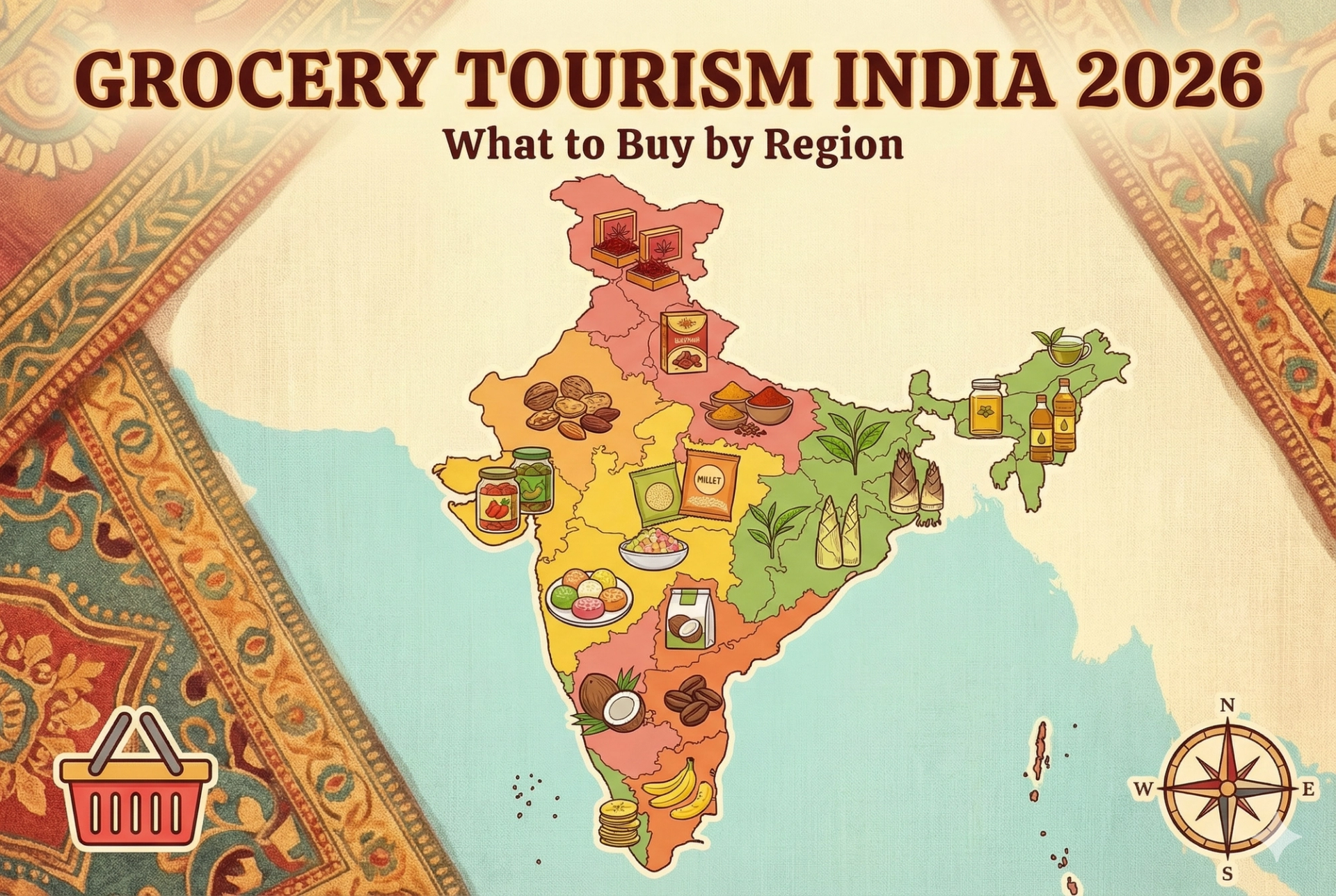
My 2026 “by region” cheat sheet (what to bring home, no overthinking)
#If you just want the highlights without my rambling:
North (Delhi/Punjab): chole/rajma masala, black cardamom, good dals, Punjabi pickles
Rajasthan: mathania chilli, ker sangri, bajra, garlic chutney powder, papad
Maharashtra/Konkan: goda masala, kokum, poha varieties, peanut chutney powder
Goa: cashews, coconut vinegar, cafreal/xacuti spice mix
Tamil Nadu: filter coffee + filter, Chettinad spices, tamarind, appalam/vadam
Kerala: pepper, cardamom, coconut oil, banana chips, curry leaves
Karnataka: ragi/millets, Byadgi chilli, bisi bele bath mix, Mysore pak
Telangana/Andhra: gongura, avakaya, podis, serious chilli powder
West Bengal: mustard oil, panch phoron, kasundi, gobindobhog rice
Northeast: smoked + fermented specialties (bamboo shoot, chillies), local rice
There. Screenshot that in your brain.
Ending thoughts (and why groceries beat souvenirs, sorry not sorry)
#I came home with no fancy handicrafts, no miniature Taj Mahal, nothing that screams “I went to India.” But I did come home with a kitchen that now smells like pepper and cardamom when I open the cupboard.
And here’s the thing: when I cook with this stuff, I’m back there for a second. Back in a market aisle with someone calling me “madam” and handing me a pinch of something to smell. Back on a sweaty afternoon eating something too spicy and pretending I’m fine. Back in a hotel room eating pickle with curd because I couldn’t wait.
Grocery tourism is intimate. It’s not polished. Sometimes it’s confusing and you buy the wrong thing and your hands smell like garlic for two days. But it’s real. And India—especially in 2026, with this mix of modern convenience and deep regional food pride—might be the best place on earth to do it.
If you’re into this kind of food-travel ramble, I’ve been finding a bunch of fun reads and trip ideas on AllBlogs.in lately too (and yeah, I’m still planning my next market run).