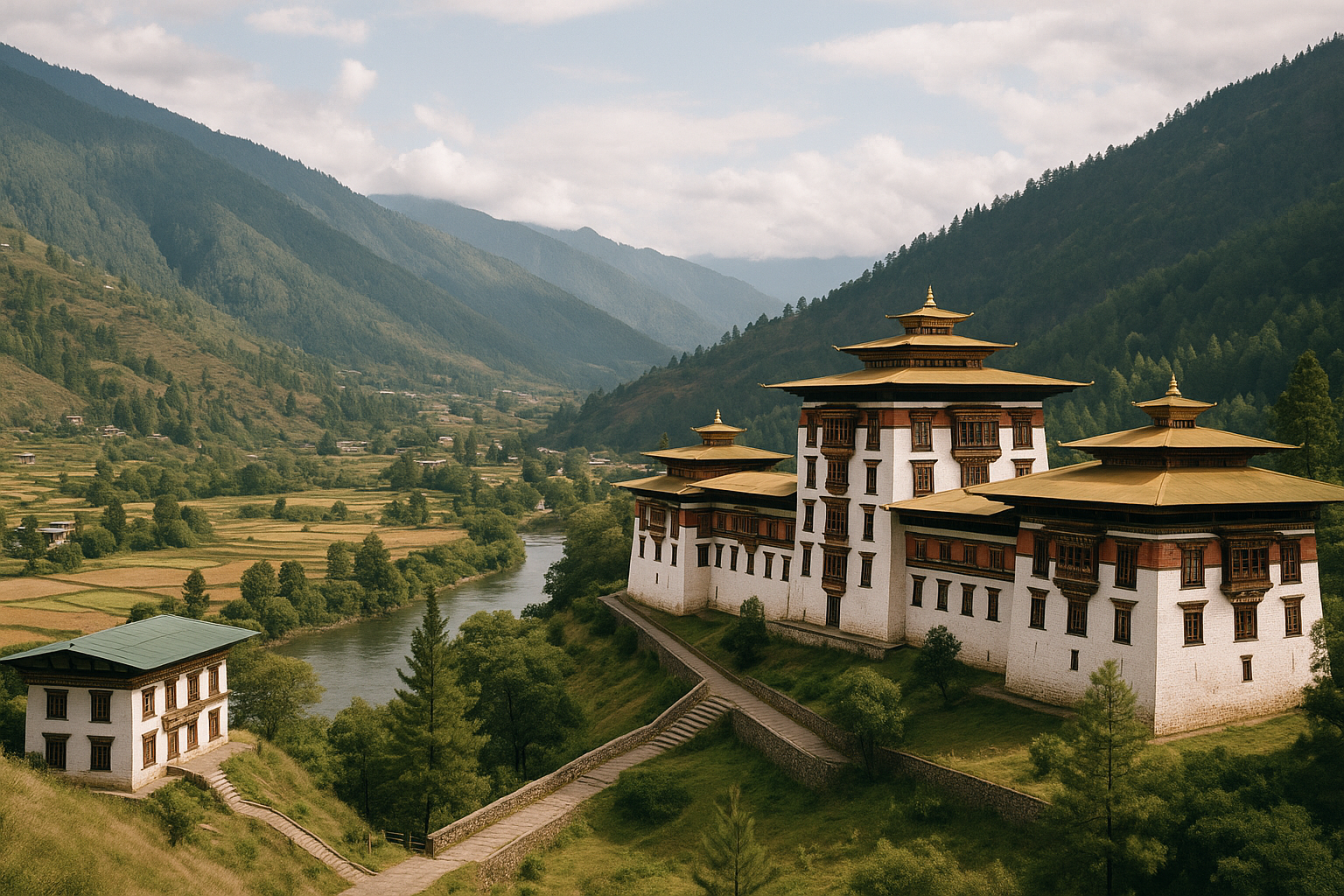
So, I finally did it. After years of seeing that classic Tiger’s Nest photo on Instagram and hearing friends say “yaar, Bhutan is different only”, I actually went. And honestly, they were right. Bhutan is not your regular touristy hill station vibe like Shimla or Manali. It’s calmer, stricter in some ways, and way more focused on this whole sustainability thing which, tbh, I didn’t fully get until I was actually there.
If you’re planning Bhutan travel in 2026, especially from India, and you care even a little bit about eco-friendly stays, responsible tourism and all that — or you just don’t want to screw up your first trip like I almost did — this is for you.
Quick reality check: Entry rules & costs for Indians
#Let’s get the boring but important stuff out first, because Bhutan is quite strict about who enters and how. For Indians, we don’t need a visa, but we do need a permit and we have to pay the Sustainable Development Fee (SDF). This is Bhutan’s way of keeping tourism controlled and funding local development instead of becoming another overcrowded Himalayan circus.
Right now, Indians pay a reduced SDF per person per night (the exact figure has been changing a bit in recent years, so double-check on the official Bhutan Tourism website before you book). You can enter via:
- Phuentsholing border (from Jaigaon side in West Bengal) – the classic overland route
- Paro Airport – easiest if you’re flying from Delhi/Kolkata/Bagdogra when flights are running
I went overland via Phuentsholing from Siliguri. Took a shared cab from Siliguri to Jaigaon, walked across the border (which is weirdly chill, like from noisy Indian bazaar into peaceful Bhutan side) and then sorted my permit there. For permits beyond Thimphu and Paro, like Punakha or Haa Valley, you need an extension – your hotel or local agent can help. Honestly, just book a registered guide or at least a local travel agency. Bhutan likes things organised, not jugaad style.
Best time to visit Bhutan (and what I messed up)
#Most people will tell you: go in spring (March–May) or autumn (Sept–Nov). They’re right. Clear skies, nice views, festivals, blooming valleys, all that postcard stuff. Winters (Dec–Feb) are cold but super clear, and you get less crowds. Monsoon (June–Aug) is… well, rainy, landslides sometimes, but everything looks so insanely green.
I went in late October. Days were pleasant with a jacket, nights got properly cold, but the sky was unbelievable. Zero pollution. I could literally see the Milky Way from my farmstay near Paro. Only mistake I made: I underestimated how quickly it gets cold after sunset. Pack layers, not just one fancy thick jacket, especially if you’re planning to do treks or stay in eco-lodges away from city centres.
Sustainable stays in Bhutan – what it actually feels like
#Okay, so Bhutan talks a lot about Gross National Happiness and sustainability and carbon negativity. I thought it was mostly branding. But when you stay there, you can see they’re really trying. A lot of stays are small, family-run, and built in traditional Bhutanese style with wood and stone. Heating is controlled, plastic use is limited, and food is often local and seasonal. Not perfect, but way ahead of most of us.
From an Indian point of view, here’s basically what you get:
- Budget guesthouses and homestays: ₹2500–₹5000 per night for a decent double, sometimes including breakfast
- Mid-range eco-lodges and boutique hotels: around ₹6000–₹12000 per night
- Luxury resorts (think COMO, Six Senses, Aman and other fancy ones): ₹25,000 upwards per night (easy), some go totally crazy high
I personally tried to keep it mid-range and local. In Thimphu and Paro, I stayed in small hotels with solar heating and proper waste management. Outside the main towns, I tried farmstays where families cooked for us, we helped in the fields (okay, "helped" is a strong word, I mostly just clicked photos) and they served homemade ara (local alcohol) in the evening.
If you want your Bhutan trip to feel different from a regular hill station holiday, pick at least one night in a village homestay or farmstay. That’s where the real Bhutan shows up.
My 5-Day Bhutan Itinerary (Thimphu–Punakha–Paro)
#Now coming to the fun part. If you’ve got about 5 days in Bhutan, this is a very doable plan. Not rushed, not too chill either. This is pretty much how my own trip went, with some tweaks and small regrets.
Day 1 – Arrival & Thimphu: first impressions
#Whether you enter from Phuentsholing or land in Paro and drive, you’ll probably end up in Thimphu first. It’s the capital but still feels like a quiet hill town compared to our cities. No traffic lights, just one traffic cop managing the junction like some kind of slow, elegant dance.
What I did:
- Checked into a small eco-friendly hotel a little uphill from the city centre – simple wooden rooms, solar water heating, huge windows
- Walked around Norzin Lam (main street), picked up hot momos, watched locals in ghos and kiras doing their usual shopping
- Visited the Buddha Dordenma in the evening – that massive golden Buddha overlooking Thimphu, with stunning sunset views
Tip: Thimphu is at around 2,300 meters, so if you’re coming straight from plains, don’t try to do any serious trekking on Day 1. Just chill, drink suja (butter tea) if you’re brave, and let your body adjust.
Day 2 – Thimphu local exploring & cultural side
#This day is great for understanding a bit of Bhutan beyond the usual tourist checklist. Also, Bhutan is quite safe, even for solo women travellers. I saw several groups of female tourists walking around in the evening without any stress, and locals are generally very respectful.
Places you shouldn’t miss:
- Tashichho Dzong – administrative and monastic centre, lights up beautifully at night
- Folk Heritage Museum – gives you an idea of traditional Bhutanese homes, rural life, and how people lived before modern infrastructure
- Centenary Farmers’ Market (if it’s open on your days) – loads of local veggies, chillies, cheeses, and random stuff
For lunch, I tried ema datshi (chilli and cheese curry), some red rice, and suja. I’m from India, I’m used to spice, but this chilli hit different only. Spicy but addictive. Vegetarian travellers will be pretty happy here. Non-veg options are also there, but don’t expect 10-page menu like we get in Indian restaurants.
Day 3 – Thimphu to Punakha: valleys, rivers & that iconic bridge
#Drive from Thimphu to Punakha is honestly one of the highlights. You cross Dochula Pass, which on a clear day gives you Himalayan views that make you go silent for a bit. There’s a cluster of 108 chortens (stupas) at the top, and the whole area feels like someone literally pressed the pause button on life.
In Punakha:
- Visit Punakha Dzong – probably the most beautiful dzong in Bhutan, sitting at the confluence of two rivers. It’s insanely photogenic, but behave respectfully inside.
- Walk (or wobble) across the Punakha Suspension Bridge – long, slightly scary, but amazing views of the river and valley
- Optional short hikes around nearby villages – I did a small walk through the fields, met farmers, saw kids in school uniform waving like it was some parade
Stay options here range from simple guesthouses to proper fancy river-side resorts. I picked a modest eco-lodge with basic rooms, solar water heating and locally sourced meals. No TV, limited wifi, but a sky full of stars outside. Worth it.
Day 4 – Punakha to Paro: slow roads & farmstay life
#Next morning we drove to Paro. Roads are mostly good but narrow, so driving is slow. Which is fine. Bhutan is not a place you rush through. You look out, see farmers working on terraced fields, random prayer flags fluttering, kids walking long distances to school, and you just… breathe a bit slower.
In Paro, instead of staying right in the town, I picked a farmstay a little outside. Wood-fire heating, simple rooms, shared meals with the family. At night, we sat in the kitchen around the bukhari, talking about India, Bhutan, Bollywood (of course), and how tourism has changed their village.
Btw, here’s something cool – many farmstays in Paro grow their own veggies, use very little plastic, rely on solar, and compost waste. It’s not labelled as "eco" in some fancy way, it’s just how they live. You’ll pay around ₹3000–₹6000 per night for these kind of stays, depending on facilities and meals.
Day 5 – Paro & Tiger’s Nest hike (Taktsang Monastery)
#This is the day everyone posts on Instagram. Tiger’s Nest. And trust me, it’s worth the hype. But also, it’s not a casual walk like your evening park round. It’s a proper uphill hike, and at that altitude, you’ll feel it. I saw super fit folks panting and aunties in sneakers calmly overtaking them. So ya, anything can happen.
Some real talk tips:
- Start early – like 7–8 am. Later it gets crowded and the sun gets harsh.
- Wear proper shoes. I saw one guy in slippers, looking fully regretting life.
- Carry water and maybe some snacks, but don’t litter. Bhutan is strict about cleanliness.
- Respect the monastery rules: no photography inside, modest clothing, silence.
When you finally reach that famous viewpoint where Tiger’s Nest is literally hanging off the cliff, it hits you. The wind, the prayer flags, the sound of the waterfall below, the white monastery walls against the rock. I just stood there thinking, ya, this was worth every step and every curse word in my head on the way up.
If you still have time that day, explore Paro town, visit Paro Dzong and the National Museum, and just wander. Have some thukpa, more momos (obviously), and maybe a local craft beer if you like.
Food, money & small things nobody tells you
#A few random but very useful points from an Indian traveller POV:
- Currency: Bhutanese Ngultrum (BTN) is equal to Indian Rupee, and Indian notes work in most places (except sometimes ₹2000 and very old notes). Still, better to carry a mix of INR cash and use ATMs in Thimphu/Paro if needed.
- Network: Indian SIMs work on roaming in some areas, but not everywhere. I used local wifi most of the time. It’s decent, not blazing fast.
- Food: Lots of rice, chillies, cheese. Vegetarian options are quite good. If you can handle spice, try ema datshi, kewa datshi (potato & cheese), and red rice. Non-veg folks can go for pork, chicken, beef dishes.
- Alcohol: You get local drinks like ara and Bhutanese beers. But don’t go wild. Bhutan is very calm, and public drunken behaviour looks extra stupid there.
- Safety: Honestly, I felt safer in Bhutan than in many Indian cities. People are polite, crime rate is low, and there’s a strong sense of community.
One thing that surprised me – most people speak pretty good English along with Dzongkha, and many also understand Hindi thanks to Indian movies and TV. So communication is easy. But try to learn a few local words, it really makes people smile.
How to keep your Bhutan trip truly sustainable
#Bhutan is already doing a lot on the sustainability side, but as visitors, we can either support or mess it up. And I don’t think any of us wanna be that tourist, right.
Some simple things that go a long way:
- Carry a refillable water bottle instead of buying plastic bottles again and again
- Pick local homestays, farmstays and Bhutanese-owned hotels over big chain properties when you can
- Buy handicrafts from local artisans, not just mass-produced stuff
- Don’t blast loud music on hikes or in quiet valleys – Bhutan is not Goa
- Follow dress codes inside dzongs and monasteries, and don’t take photos where it’s not allowed
It’s all small-small things, but they keep Bhutan feeling like Bhutan and not another overcrowded hill holiday destination.
Would I go back to Bhutan in 2026 and beyond?
#100%. I feel like I barely scratched the surface. There’s Haa Valley, Bumthang, long treks, more festivals, and quieter corners I didn’t even get time to think about. For a 5-day first-timer trip, Thimphu–Punakha–Paro is perfect. But if you can stretch it to 7–8 days, do it. You won’t get bored, I promise.
Bhutan is one of those rare places where the government is actually trying to protect its culture and environment instead of blindly chasing tourist numbers. As an Indian traveller, it’s close, familiar in some ways, but also strangely different and very grounding.
If you’re planning your own Bhutan travel 2026 trip, especially with sustainable stays and a short 5-day itinerary, I really hope this gave you some real, practical sense of how it feels on the ground. And if you want more Indian-style travel stories, itineraries and random honest opinions, I keep finding good stuff on AllBlogs.in – worth checking out when you’re planning your next escape.