Cambodia surprised me. Like properly surprised me. I went in thinking it would be just an Angkor Wat trip with a few cheap hostel nights, some tuk-tuks, maybe one night market and done. But nah, it turned out to be one of those countries that stays in your head after you come back to India. It’s affordable, easy enough for first-timers in Southeast Asia, and honestly pretty comfortable for Indian travellers if you plan even a little bit. This 5-day Cambodia budget travel guide for Indians is basically the kind of plan I wish someone had handed me before I booked my flights in a hurry at 1 am.
Also, let’s clear one thing. Cambodia is not expensive if you do it smart. Flights from India can be the priciest part, especially if you book late, but once you land there, food, stays, local transport and even intercity buses can fit a modest budget. I met backpackers doing it ultra-cheap, and also families spending more for comfort. So this guide sits somewhere in the middle, proper budget travel but not the painful kind where you suffer all day and pretend it’s “an experience”.
Why Cambodia works so well for Indian budget travellers
#First thing, the vibe feels manageable. It’s not too chaotic, not too polished either. For Indians, that balance is nice. You still get street life, bargaining, noisy markets, random little food stalls, and people trying to sell you things... but it usually doesn’t feel overwhelming the way some places can. Siem Reap especially felt easy. Walkable in parts, tourist-friendly, lots of budget hostels and hotels, and enough food options that even if you’re not very adventurous with eating, you’ll be fine.
- Indian passport holders usually find Cambodia pretty accessible, with e-visa and visa-on-arrival options often used by travellers. Still, check the latest official rules before flying, because these things change and airport staff won’t care that some blog said otherwise.
- US dollars are widely used in Cambodia, though local currency riel is everywhere too. This actually made budgeting simpler for me.
- Hostel beds in Siem Reap can start around $5 to $10, and decent private budget rooms are often around $15 to $30 if booked early.
- Street meals and simple local food can cost $2 to $5, while cafe-style meals in tourist zones go higher.
- Tuk-tuks are everywhere, and for short distances they’re convenient, but always agree on the fare or use an app if available.
And yes, if you’re wondering about safety, I felt mostly safe in tourist areas. Basic common sense applies. Keep an eye on your phone, avoid isolated areas late night, don’t flash too much cash, and if someone is being too pushy, just walk off. Siem Reap and Phnom Penh both had plenty of solo travellers, women travellers too. Petty scams exist, but violent trouble is not what most visitors deal with.
Best time to visit Cambodia if you’re coming from India
#The best months, in my opinion, are roughly November to February. Less brutal weather, lower humidity compared to peak summer, and temple exploring becomes way more bearable. I went when it was warm but still manageable, and by noon I was already sweating like I’d climbed Vaishno Devi with luggage. Cambodia heat is no joke. March to May can get seriously hot. Monsoon months, usually around May to October, mean greener views and fewer crowds sometimes, but sudden rain can mess with plans. Still, budget travellers might actually like shoulder season because hotel prices can dip a bit.
My biggest Cambodia lesson? Start your sightseeing ridiculously early. By 11 am the sun will humble you very fast.
A realistic budget for 5 days in Cambodia from India
#This part matters, because half the internet throws random numbers and calls it a budget guide. Here’s a more realistic range for Indians doing a 5-day trip, excluding shopping madness and luxury stuff. Flights from India to Cambodia vary a lot depending on city and season, but if you’re flying from Delhi, Kolkata, Mumbai, Chennai or Bangalore with a stop, you might find return fares somewhere in the ballpark of ₹18,000 to ₹32,000 if booked at a good time. Sometimes lower during sales, sometimes annoyingly higher.
| Expense | Budget Range for 5 Days |
|---|---|
| Return flights from India | ₹18,000 - ₹32,000 |
| Visa and travel paperwork | ₹2,500 - ₹4,500 approx |
| Stay budget hostel/private | ₹2,500 - ₹10,000 |
| Food | ₹3,000 - ₹7,000 |
| Local transport + tuk-tuks | ₹2,000 - ₹5,000 |
| Angkor pass and attractions | ₹3,000 - ₹6,500 |
| Misc + SIM + buffer | ₹2,000 - ₹4,000 |
So, total? Roughly ₹33,000 to ₹69,000 depending on flights and comfort level. A careful backpacker can do it lower. Someone wanting private AC rooms and easier transport will go a bit above. Compared to many international trips, that’s still pretty solid value, especially when you think you’re getting UNESCO temples, history, food, riverfront cities and all that.
My 5-day Cambodia itinerary for Indians who want max value
#Day 1: Arrive in Siem Reap, settle in, don’t overdo it
#I’d strongly suggest landing in Siem Reap if this is your first Cambodia trip and you only have 5 days. It just makes life easier. The city is built around tourism, so within one afternoon you can sort your SIM, withdraw cash, book a tuk-tuk for the next day and find dinner. On my first evening I made the mistake of trying to “cover” Pub Street, the night market, and some riverside lanes after a travel day. Dumb move. By 10 pm I was dead tired and half-irritated for no reason.
Keep Day 1 light. Check into a hostel or budget hotel near the city center. Walk around Pub Street if you want some buzz, but eat early and sleep. If you’re Indian and craving familiar flavours after flying, there are Indian restaurants in Siem Reap, and a few are actually pretty good, not just tourist-trap paneer floating in orange gravy. But I’d say mix it up. Try Khmer curry, fried rice, grilled meats, mango salads, fresh coconut, and simple noodle soups. Cambodian food is milder than Thai food generally, so if you like less-spicy meals, you may actually enjoy it more than expected.
Day 2: Angkor Wat sunrise, Angkor Thom, Ta Prohm... the big one
#This is the day everyone dreams of and also underestimates. Start insanely early. Like 4:30 or 5 am early. Buy your Angkor pass as per the current official pricing before or on the day depending on timing, and keep your shoulders covered because temple dress rules are taken seriously at some sites. I booked a tuk-tuk the night before through my hostel and split the cost with two other travellers, which made it much cheaper. Good decision, because doing all this in the heat without planning is just asking for a meltdown.
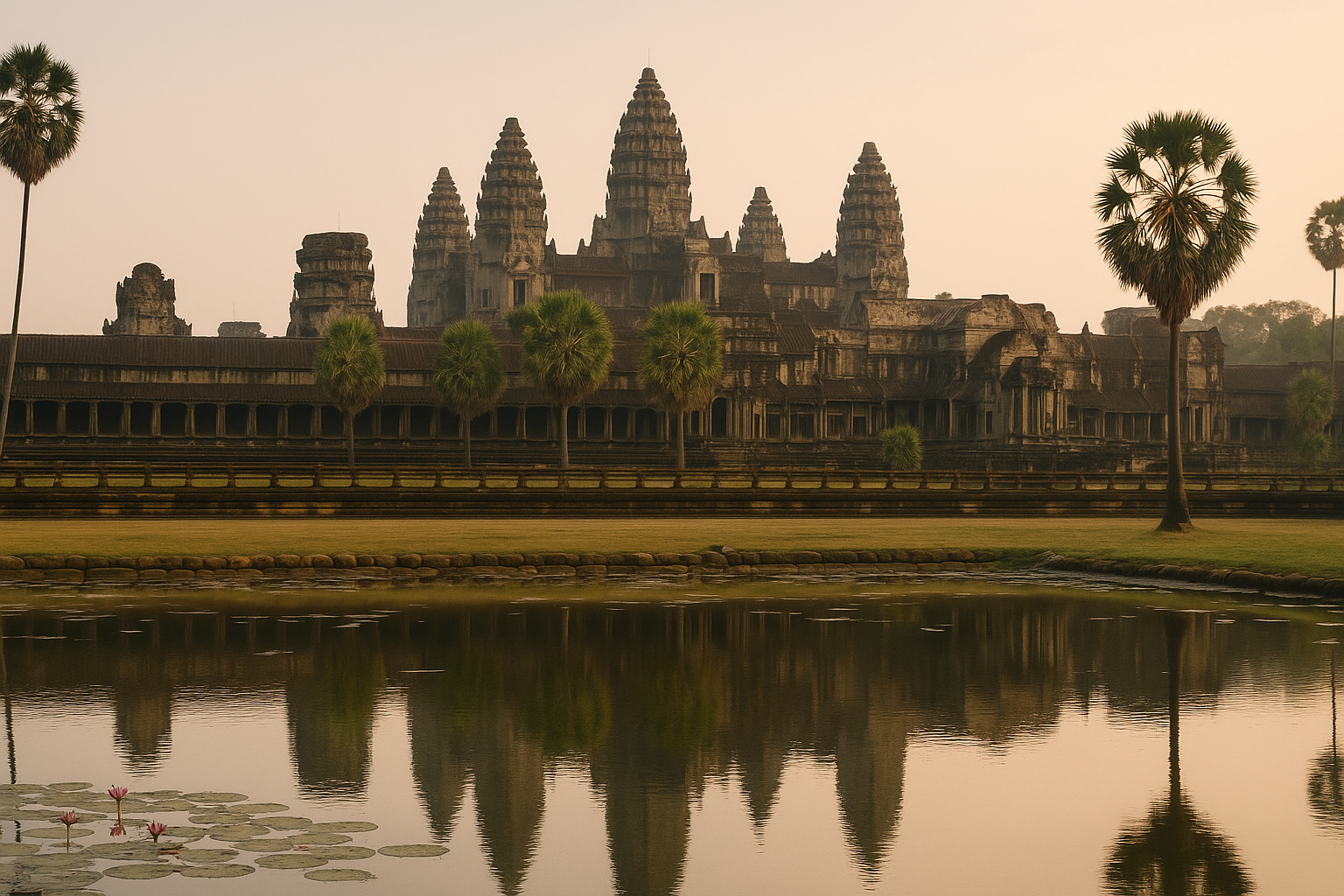
Sunrise at Angkor Wat is touristy, yes. Crowded too. And still worth it. There’s this weird quiet before the sky changes, and then everybody starts shuffling for the best reflection photo. A bit annoying, a bit magical. After that, move smartly. Don’t spend too long only at Angkor Wat. Continue to Angkor Thom, Bayon with those giant stone faces, then Ta Prohm where the trees are wrapping around ruins like some fantasy movie set. By then you’ll be tired, sweaty, maybe cranky, but also kinda stunned.
- Carry water, sunscreen, cap, and something salty. I got mildly dehydrated and had to sit like an idiot near a stall for twenty minutes.
- Wear proper shoes. Not fancy sandals that slip every two seconds.
- If your budget allows, a guide for a few hours can add real context. Otherwise read up a bit before going, or it all blurs into “old stones, nice trees” by afternoon.
By evening, get a massage or just crash. Seriously. Don’t plan too much after temple day.
Day 3: More Siem Reap, local life, floating village or hidden corners
#A lot of guides tell you to rush off after Angkor, but I think that’s a mistake. Siem Reap has more than just the famous temples. This is a good day for slower travel. You can visit a local market, try Cambodian coffee, explore Wat Preah Prom Rath, or head to the Angkor National Museum if you want historical context that honestly would’ve helped me before temple day, not after. Anyway.
If you want something different, consider a floating village visit near Tonle Sap Lake, but choose carefully. Some tours feel too commercial and awkward. Ask your hotel or recent travellers which villages are being handled more responsibly. Another option, and this one I liked more, is renting a bicycle or taking a tuk-tuk to quieter temple areas like Banteay Kdei or Pre Rup if you still have temple energy left. Sunset from some of these spots is beautiful and a little less chaotic than the obvious places.
Night time in Siem Reap can still be budget-friendly. There are cheap beers, street snacks, souvenir stalls, and random live music corners. I bought way too many fridge magnets, no regrets.
Day 4: Bus to Phnom Penh and riverside evening
#On Day 4, take a morning bus or van to Phnom Penh. Overland travel is way cheaper than domestic flights and usually what budget travellers choose. Travel times can vary, roads can be bumpy in parts, and not every company is equal, so book with known operators and read recent reviews. Don’t just pick the cheapest one because ₹200 saved is not worth six hours of suffering, trust me.
Phnom Penh feels different from Siem Reap. More hectic, more urban, less postcard-pretty. But I kind of liked that. It felt more lived-in, less curated for tourists. Once you arrive, stay near the riverfront, BKK1, or another central area depending on your budget. Budget hostels exist here too, and private rooms in guesthouses are not hard to find. In the evening, walk along Sisowath Quay, watch people exercising or just hanging out, and grab dinner. There’s a nice mix of Khmer food, cafes, and yes, Indian restaurants if by now you’re missing dal badly.
Day 5: Phnom Penh history day, then fly back or extend if you can
#This day is heavier emotionally. Visit the Royal Palace if open, and if you want to understand Cambodia beyond the Instagram side, include the Tuol Sleng Genocide Museum and, if time allows, the Killing Fields memorial site outside the city. Not an easy visit. Not fun. But important. I almost skipped it because, you know, holiday mood and all, but I’m glad I didn’t. It gives real depth to the country you’re moving through.
If history-heavy travel is not your thing, keep it lighter with Central Market, Wat Phnom, some cafe time, and souvenir shopping. Then head to the airport or continue onward if you’ve got extra days. Honestly five days is enough for a good intro, but not enough enough. Cambodia has that effect.
Where to stay on a budget in Cambodia
#In Siem Reap, look for stays around Pub Street area if you want to be central, but not right on the loudest lane unless you enjoy trying to sleep through late-night music. Slightly outside the core is often cheaper and quieter. Hostels with pools are weirdly common there, and in that climate, it’s a blessing. Budget private rooms with AC and breakfast are also easy to find if booked a little ahead. Phnom Penh has lots of budget guesthouses, but check reviews carefully for cleanliness and neighborhood feel. Photos can lie a lot. Like a lot.
- Dorm beds: around $5 to $12 depending on season and quality
- Budget private rooms: roughly $15 to $30
- Mid-range comfort: around $30 to $60, often very good value compared to many countries
One thing Indian travellers should note, AC matters here. Don’t try to save tiny money by skipping it unless you’re truly hardcore. I am not. I thought I was. I was wrong.
Food tips for Indians in Cambodia
#This was easier than I expected. Breakfasts are simple, fruits are great, coffee is decent, and vegetarian food is possible though you need to ask clearly. Say no fish sauce, no oyster sauce, no meat broth if you are strict vegetarian, because “vegetable” can still mean stock or sauce in the dish. Indian food is available in both Siem Reap and Phnom Penh, but don’t eat only that. Cambodia has some lovely mild curries, rice dishes, spring rolls, grilled skewers, and soups. Fresh fruit shakes are everywhere and very useful in the heat.
If you’re a budget traveller, local eateries and market food will save money, but use your judgement. Busy stalls are usually better. Food that’s sitting sadly in the heat for hours... maybe no. I didn’t get seriously sick, just one slight stomach issue after being overconfident with iced drink from a random place. Could’ve been anything, but still.
Practical tips Indians should know before going
#Get travel insurance. I know, boring advice, but one delayed bag or clinic visit and you’ll stop rolling your eyes. Buy a local SIM at the airport or in town if rates are better. Keep some small US dollar notes because change matters. Use ATMs attached to banks when possible. Dress modestly in temples. Start days early. And keep digital plus printed copies of passport, visa, hotel bookings, return ticket, all that basic stuff your future stressed self will thank you for.
One more thing, bargaining exists but don’t turn every $1 purchase into a battle scene. As Indians we love negotiating, me too obviously, but sometimes the difference is tiny and the seller is earning very little. Do it fairly. Also, tuk-tuk drivers often become your accidental local guide, photographer, weather advisor and therapist for the day, so if someone is genuinely helpful, tip a little if you can.
Is Cambodia worth it for a short budget trip from India?
#Absolutely yes. Especially if you want your first or second international trip to feel exciting but not impossible. Cambodia gives you history, culture, affordability, good people, easy backpacker infrastructure, and enough comfort that you’re not constantly stressed. It’s not as shiny as some other Southeast Asian destinations, maybe that’s why I liked it more. It felt real. A little rough in places, very warm, sometimes chaotic, but real.
If you follow this 5-day Cambodia budget travel guide for Indians, you’ll cover the essentials without doing that horrible rushed style where you spend more time packing and checking out than actually seeing the country. And if you can add one or two extra days, even better. I’d go back, no doubt. Maybe slower next time, with fewer magnets and more sunsets. Anyway, if you like practical travel stories written in a normal human way, have a look at AllBlogs.in too.