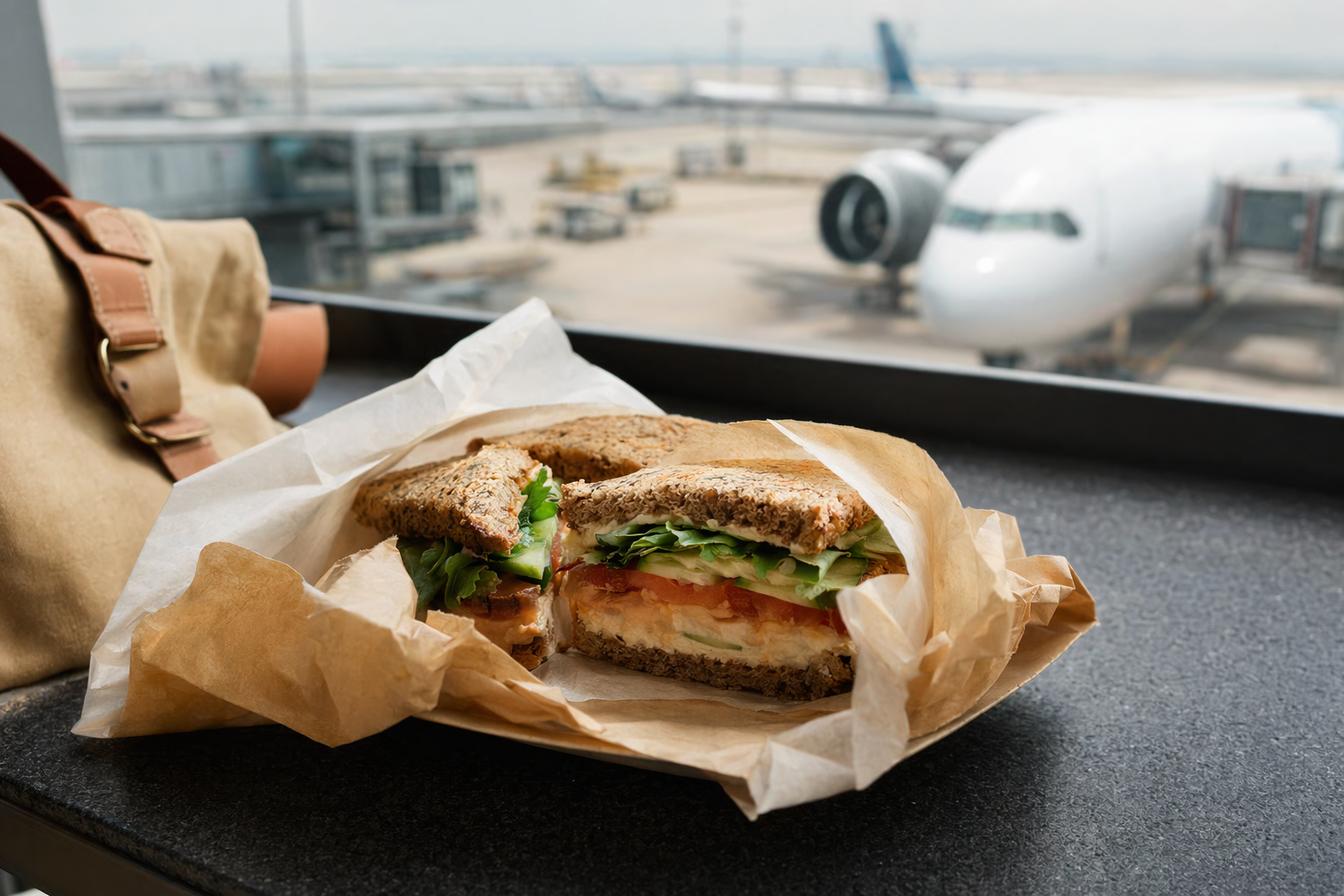
I have a weirdly emotional relationship with airport sandwiches. Some people collect fridge magnets, some people buy tiny spoons, I apparently build entire travel memories around bread, cheese, and whether a jar of chili crisp is going to get confiscated at security. Glamorous? Not really. Useful? Very. Especially if, like me, you’re the kind of person who would rather spend money on dinner in Lisbon, ramen in Tokyo, or a proper market crawl in Mexico City than pay $18 for a sad airport turkey wrap that tastes like it was assembled during a corporate team-building exercise.
The thing nobody tells you when you start traveling for food is that airports are basically the first test of your culinary seriousness. You can be the person who shows up with a limp protein bar and regrets everything by boarding group four, or you can be the person unwrapping a beautiful little sandwich at the gate while everyone around you starts looking at their phones and pretending they’re not jealous. But there’s a catch, of course. Security rules. Spreads. Sauces. Jams. Soft cheeses. Hummus. The stuff that makes sandwiches actually worth eating is exactly the stuff that gets you side-eyed by airport security if you pack it wrong.
The Basic Rule: Sandwiches Are Fine, Spreads Are the Sneaky Problem
#Let’s get the boring-but-important bit out of the way. In the U.S., TSA generally allows solid food through airport security in carry-on bags. A sandwich? Fine. Bread? Fine. Hard cheese, cured meats, roasted vegetables, crackers, cookies, a whole bag of almonds you bought at the last minute because you panicked? Usually fine. The issue starts when your sandwich has anything that counts as a liquid, gel, cream, paste, or spread. That means peanut butter, jam, jelly, hummus, cream cheese, mustard, mayo, pesto, soft dips, honey, Nutella-style spreads, aioli, salsa, yogurt, and that fancy whipped feta you lovingly made at midnight before a 6 a.m. flight.
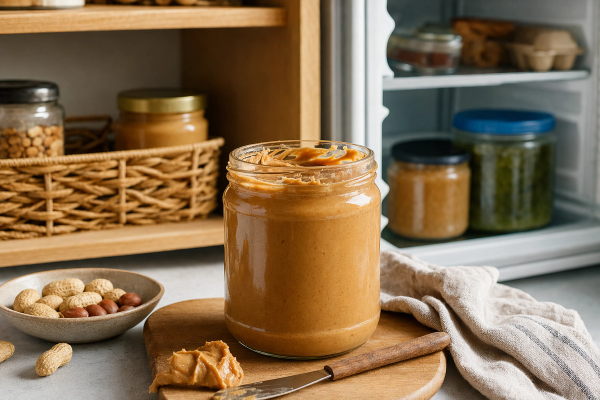
If those spreads are packed separately, they need to follow the 3-1-1 rule: containers of 3.4 ounces, or 100 milliliters, or less, all fitting in one quart-size bag. That’s the standard carry-on liquids rule. And yes, peanut butter counts. This is the one that still annoys people the most. I have seen grown adults become philosophers in the security line over peanut butter. “But it’s not a liquid!” they say. And spiritually, I agree. Legally, in the airport security sense, it behaves like a spreadable paste, so into the 3-1-1 world it goes.
- Solid sandwich ingredients are usually okay in your carry-on: bread, crackers, hard cheese, cured meats, cooked eggs, roasted veggies, firm tofu, nuts, dried fruit.
- Spreadable or creamy stuff is the problem: hummus, peanut butter, jam, pesto, cream cheese, mayo, mustard, salsa, dips, honey, yogurt, soft goat cheese.
- If you pack spreads separately, keep each container at or under 3.4 oz / 100 ml and put them in your liquids bag.
- TSA PreCheck is great, but it does not magically turn your 8-ounce tub of baba ganoush into a solid object. I wish.
My First Great Sandwich Confiscation, and Yes I’m Still Salty
#Years ago, before I became the very annoying person who reads security rules before packing lunch, I was flying from New York to Barcelona with a connection that was too tight for comfort and too long for happiness. I had made this gorgeous sandwich at home: crusty bread, roasted eggplant, arugula, manchego, and a fat smear of romesco sauce. I was extremely proud of it. Like, I showed it to my roommate before leaving. That proud.
Security pulled my bag aside. The officer was perfectly polite, honestly nicer than I deserved because I was already doing that nervous traveler thing where you smile too much. He found the little container of extra romesco I’d packed “just in case,” because apparently I thought I was catering the flight. It was bigger than 3.4 ounces. Gone. The sandwich itself survived because the sauce was already spread inside, but my extra sauce got tossed and I acted like I had lost a family heirloom. I still ate the sandwich near the gate, and it was still excellent, but every bite had a little grief in it.
That trip taught me the most important airport sandwich lesson: don’t pack a tub of anything spreadable unless it’s tiny, checked, frozen solid at screening, or you’re emotionally prepared to say goodbye. And even the frozen thing has caveats. Ice packs and frozen items are generally allowed if they are frozen solid when screened. If they’re melted, slushy, or half-liquid, they can get treated like liquids. So your frozen pesto cube idea? Clever, maybe. But if you get stuck in traffic and it turns into green soup before security, that’s between you and the airport gods.
The Sandwich Strategy I Use Now, After Too Many Food-Travel Lessons
#These days, I build travel sandwiches like I’m planning a small expedition. Not in a fussy way, although maybe my friends would disagree. I just think about texture, smell, security, and how sad I’ll be if it sits in my backpack for four hours. A good airport sandwich has to survive. It has to handle being squished under headphones, a book, and whatever duty-free chocolate I swore I wasn’t going to buy. It also has to be considerate. Nobody wants to sit beside the person eating a tuna-and-onion bomb at 30,000 feet. I love food deeply, but I also believe in cabin peace.
My go-to formula is: sturdy bread, something salty, something fresh-but-not-wet, and a spread that’s either already thinly applied or replaced by an ingredient that doesn’t count as a paste. Olive oil brushed into bread works better than a drippy sauce. Hard cheeses travel better than brie. Cured meats are easier than saucy chicken salad. Pickled vegetables are amazing, but drain them like your life depends on it. And greens? Arugula is the champ. Lettuce goes limp and depressing so fast.
- Choose bread with backbone: baguette, ciabatta, focaccia, sourdough, seeded rolls. Soft white bread turns into edible luggage padding.
- Use spreads inside the sandwich, not in big extra containers. A thin layer of mustard or pesto already on the bread is less likely to cause drama than a separate pot.
- Wrap tight in parchment, then foil or a reusable wrap. Plastic bags make steam, steam makes soggy bread, soggy bread makes me personally upset.
- Keep it cool if needed, but remember ice packs must be frozen solid when you reach security.
- For international flights, be very careful with meat, dairy, fresh fruit, and vegetables. Customs rules can be stricter than airport security, and you may need to declare food on arrival.
Security Versus Customs: The Part People Mix Up All the Time
#This is where travelers get tripped up. Airport security and customs are not the same thing. Security cares about whether you can bring something onto the plane safely. Customs and agriculture rules care about whether you can bring food into a country without introducing pests, diseases, or restricted animal products. So yes, you might get your ham sandwich through security in Chicago, but that doesn’t mean you should stroll into another country with leftover pork and an apple in your backpack like it’s no big deal.
Fresh fruit is especially sneaky. I have watched people forget bananas, apples, oranges, even tiny airline snacks tucked into a bag, and then suddenly they’re filling out forms or tossing things in bins before arrival inspections. Australia and New Zealand are famously strict. The U.S. is strict with many meats, plants, seeds, and produce too. The EU has rules around animal products from outside the bloc. Japan has restrictions on meat products. Basically, if you are crossing borders, eat the sandwich before landing or know the rules and declare what you have. Declaring is not embarrassing. Getting fined for a forgotten clementine is the travel story nobody wants.
My personal rule now: if a sandwich contains meat, dairy, eggs, or fresh produce, it gets eaten before arrival. If it survives the flight, it usually goes in the bin before customs unless I’m 100% sure it’s allowed.
The Best Travel Sandwiches I’ve Packed, Ranked by How Proud I Was at the Gate
#There was the Lisbon sandwich, which I ate on a bench at Heathrow after a long layover and still think about sometimes. I had bought pão from a bakery near Campo de Ourique, added aged São Jorge cheese, roasted peppers, and a little tin of sardines that I opened very carefully and very far away from other humans. Actually, don’t open sardines at the gate unless you can find a quiet corner. I’m not a monster, but I have made monster-adjacent choices. Portugal has this way of making simple things taste bigger than they are: good bread, olive oil, salt, fish. That’s it. That’s the magic.
Then there was the Copenhagen sandwich, which was less sandwich and more tidy Scandinavian architecture. Rye bread, butter, hard cheese, cucumber slices patted dry, and a boiled egg with flaky salt. I’d been eating smørrebrød all week, those open-faced beauties that look like someone designed lunch with a ruler and a poem, and I wanted to carry a little version of that onto my flight. It held up shockingly well. Dense rye is a travel miracle. Also, Danish airport food is often not bad at all, but my budget by that point was, uh, emotionally fragile.
My Mexico City airport sandwich was chaos but beautiful. I had a torta-inspired thing with telera bread, panela cheese, avocado mashed directly into the bread, pickled jalapeños drained on a napkin, and leftover roasted mushrooms from a market lunch. Avocado is a bit of a gray-feeling ingredient because if it’s mashed separately in a tub, it can read like a spread, but inside a sandwich it’s usually just part of the food. Still, don’t bring a giant container of guacamole through and act shocked. Guacamole is delicious, not invisible.
Spreads I Love, and How I Pack Them Without Getting Roasted by Security
#Spreads make the sandwich. I know some minimalist will tell you all you need is bread and cheese, and I respect that person, but I do not wish to live like that every day. The trick is to use strong-flavored spreads in tiny amounts. A teaspoon of chili crisp can change an entire sandwich. A thin slick of miso butter, if kept cold and used carefully, is incredible with roasted sweet potato. A bit of harissa with carrots and feta? Gorgeous. But again, container size matters if it’s separate.
| Spread or filling | Carry-on security vibe | How I pack it |
|---|---|---|
| Peanut butter | Counts as a spread/paste if separate | Use a 3.4 oz or smaller container, or spread it thinly on bread before leaving |
| Jam or jelly | Counts as gel/spread | Tiny packet or pre-spread inside sandwich |
| Hummus | Counts as paste | Small 100 ml container max, or skip and use whole chickpeas with olive oil and spices |
| Cream cheese | Counts as spreadable dairy | Use a thin layer inside, keep cold, don’t pack a big tub |
| Mustard/mayo | Liquid/gel rules if separate | Save condiment packets or use tiny travel containers |
| Pesto | Paste/sauce | Pre-spread lightly, or freeze small portions and make sure they stay frozen solid |
| Hard cheese | Usually solid food | Wrap well, avoid super stinky varieties on crowded flights |
| Honey | Liquid/gel | Tiny packet only, unless checked |
Airport Food Is Getting Better, But I Still Pack My Own
#One of the fun things about traveling lately is that airports are finally realizing people don’t want every meal to be a mystery panini under a heat lamp. Big hubs have been leaning harder into local food identities: hawker-style options at Singapore Changi, Turkish breads and grilled meats at Istanbul Airport, better sushi and bento culture around Tokyo airports, proper bakery counters in Paris and Copenhagen, taco and torta spots in Mexican airports, and more regional coffee instead of only the global chains. Even U.S. airports are trying, sometimes successfully, to bring in local names rather than generic “concepts” with Edison bulbs and $24 burgers.
The 2026 food-travel mood, at least from what I’m seeing on the road, is very snack-forward and very local. People want things they can carry, photograph, share, and still feel like they tasted the city. I’m seeing more travelers hunt for airport bakeries, regional packaged snacks, better non-alcoholic drinks, specialty coffee, spicy condiments, and small-batch chocolate. There’s also a bigger push toward plant-based options and low-waste packaging, which is great when it’s done well and not just a cardboard bowl of cold quinoa with three chickpeas looking lonely.
Still, I pack my own sandwich whenever I can. Not because I’m against airport food. I’m absolutely not. I have had excellent airport meals. But bringing your own food gives you control over timing, budget, and cravings. If your flight is delayed, you’re not trapped in a line for a mediocre wrap. If your gate changes, you’re not sprinting with soup. If you land late, you’re not starting a beautiful food trip with hanger and regret.
My Favorite Destination-Inspired Airport Sandwich Ideas
#I like making sandwiches that match where I’m going or where I’ve just been. It makes the boring parts of travel feel connected to the delicious parts. Flying to Italy? I’ll do focaccia with mortadella, aged provolone, and roasted red peppers, but I drain the peppers like crazy. Coming home from Japan? I’ll make a tamago-style egg sandwich if I have time, though mayo-heavy fillings need careful cooling. Heading to Greece? Pita with grilled halloumi, cucumber, olives, and herbs, but no loose tzatziki unless it’s in a tiny container. Morocco-inspired? Roasted carrots, preserved lemon chopped very fine, hard cheese, and a whisper of harissa. A whisper, not a full jar. Security does not care about your poetic relationship with harissa.
For long-haul flights, I avoid anything too wet, too garlicky, or too fragile. I also avoid giant sandwiches because, honestly, eating a huge crumb-shedding masterpiece in an economy seat is not cute. You want compact. You want polite. You want something you can eat in two stages if the beverage cart comes by and traps your elbows.
- Tokyo-ish egg sandwich: milk bread, firm egg salad, just enough mayo, salt, maybe chives. Keep it chilled and eat early.
- Lisbon-ish sardine roll: crusty bread, sardines or tuna, roasted peppers, olive oil, parsley. Eat before boarding if it’s aromatic.
- Paris picnic sandwich: baguette, comté, cornichons, butter, ham if you’ll eat it before crossing customs.
- Mexico City market torta: telera, panela or Oaxaca-style cheese, roasted mushrooms, pickled jalapeño, avocado inside the sandwich.
- Copenhagen rye stack: dense rye, butter, hard cheese, cucumber dried well, boiled egg, dill.
Cooling, Wrapping, and the Tiny Details That Save Lunch
#Food safety is not the sexiest travel topic, but neither is spending your first night in Naples lying on a hotel bathroom floor because your chicken sandwich had a tropical backpack vacation. If your sandwich has meat, eggs, mayo, soft cheese, or anything that needs refrigeration, keep it cold. Use a frozen gel pack, but remember it needs to be frozen solid at screening. Put the sandwich near the ice pack in an insulated pouch. Eat perishable sandwiches within a reasonable window. I’m not giving medical advice here, just common sense from someone who has made dumb choices and learned.
Wrapping matters more than people think. Parchment first, because it controls moisture. Foil second, because it gives structure. A rubber band if you’re fancy, or if your bag is a disaster like mine. I label things sometimes, especially if I’m traveling with friends and one sandwich has nuts or one has meat. Also, cut sandwiches in half before you leave home. Trying to tear a baguette with your hands in seat 32A while your neighbor is asleep is how crumbs become a lifestyle.
What Not to Pack Unless You Enjoy Airport Drama
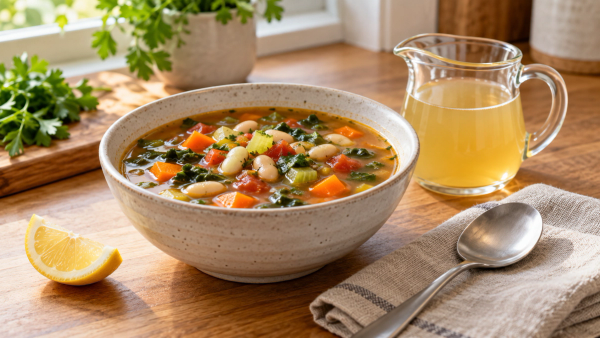
#There are foods I love deeply and refuse to bring through security in carry-on unless I’ve planned them properly. Soup, obviously. Big tubs of yogurt. A jar of local honey. Chili oil. Full-size peanut butter. Big containers of hummus. Saucy leftovers. Curry. Stew. Anything that leaks. Anything that smells like it could start a diplomatic incident. And yes, technically some things may be allowed in checked luggage depending on destination rules, but then you have to think about breakage, temperature, customs, and whether your suitcase will smell like garlic oil forever.
One time in Istanbul, I bought this beautiful jar of pistachio cream and forgot it was in my tote. I had carry-on only. Rookie mistake, except I was not a rookie, which made it worse. The security officer held it up, and we both knew. I considered eating it right there with a plastic spoon, because I am not above that, but boarding was close and dignity still had one finger on my shirt collar. So I surrendered it. I still think about that pistachio cream. Travel grief comes in many forms.
Packing for Different Kinds of Trips
#For domestic flights, I’m more relaxed. I’ll bring a breakfast sandwich, cheese, fruit, crackers, maybe little condiment packets. For international flights, I get stricter and plan to finish everything before landing. For early morning flights, I pack the night before but keep the sandwich in the fridge and add delicate greens in the morning. For budget airline flights, I pack more snacks because you never know when the food options will be one sad muffin and a credit card machine that doesn’t work. For food-focused trips, I leave bag space for edible souvenirs, but only the ones that travel legally and safely: sealed spices, chocolate, coffee, tea, packaged cookies, dry pasta, tinned fish where allowed, that kind of thing.
If you’re traveling with kids, the rules can have exceptions for baby food, formula, breast milk, and toddler drinks in reasonable quantities, but tell the officer and keep them accessible. If you have medical dietary needs, same idea: pack clearly, keep documentation if needed, and check the airport authority’s current rules before you go. Security staff are not there to ruin your snack life, but they do need to see what’s in your bag.
A Quick Little Checklist Before You Leave for the Airport
#- Is every separate spread, dip, sauce, paste, or creamy thing 3.4 oz / 100 ml or less if it’s going in carry-on?
- Are your condiment containers sealed tightly and in your liquids bag?
- Is your ice pack completely frozen solid before security?
- Will this sandwich smell okay in a crowded gate area or airplane cabin?
- Are you crossing an international border with meat, dairy, fruit, vegetables, seeds, or other restricted foods?
- Can you eat it before customs if you’re not sure?
- Did you pack napkins? Because somehow everyone forgets napkins.
Final Thoughts From a Person Who Has Loved and Lost Many Sandwiches
#Airport sandwich rules sound boring until they stand between you and a beautiful lunch. Once you understand the difference between solid foods and spreadable things, it’s actually pretty easy. Keep sauces tiny. Pre-spread when it makes sense. Use sturdy bread. Don’t bring giant jars in carry-on. Eat restricted foods before landing internationally. Declare when required. And for the love of all good travel meals, don’t pack a leaky container of garlic sauce loose in your backpack unless you want your passport to smell like a kebab shop until retirement.
For me, packing a sandwich is part of the trip now. It’s a little edible souvenir, or a preview of where I’m headed, or just a way to feel human during the strange in-between hours of travel. Airports can be stressful and fluorescent and wildly overpriced, but a good sandwich has this calming power. You unwrap it, take a bite, and suddenly the delay doesn’t feel quite so personal. Anyway, that’s my deeply held sandwich philosophy. If you’re into food trips, airport survival snacks, and slightly obsessive culinary travel rambling, have a wander through AllBlogs.in sometime — lots of tasty rabbit holes over there.