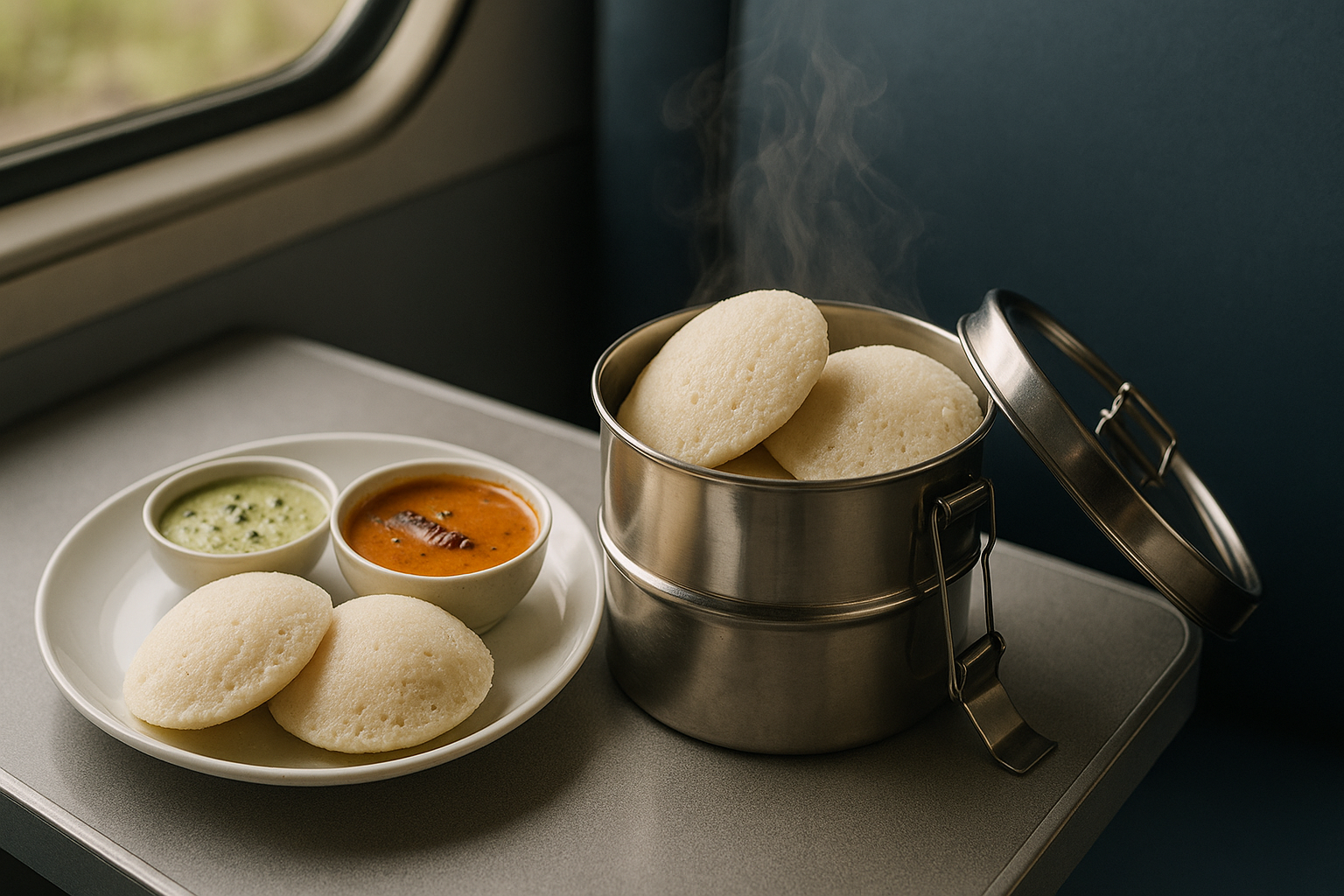
I’ve packed idli for train journeys more times than I can count, and not in some cute curated tiffin way either. I mean proper Indian train travel. Platform chaos, warm steel bottles, aunties opening foil packets at 6:20 in the morning, somebody’s kid asking for chips, chai smell floating in, all of it. So when people ask me, can you pack idli for train travel in summer safely, my answer is basically yes... but not blindly. Idli is one of the better things to carry, actually, especially compared to curd rice, coconut-heavy chutney, mayo sandwiches, paneer rolls, cut fruit, that kinda stuff. But summer is brutal, and food safety isn’t something to be chill about when you’re stuck between stations and your stomach starts making regrettable noises.
I should say this upfront, because there’s so much random advice online that sounds confident but is kinda messy. The main issue in summer travel is time and temperature. Cooked food kept in the so-called danger zone, roughly between 5°C and 60°C, lets bacteria grow faster. And trains in Indian summer? They are not exactly a refrigerated environment, even when the coach feels okay-ish. So the question isn’t just is idli safe. It’s how long, what did you pack with it, how fresh was it when packed, and did you trap moisture like a maniac. That matters more than people think.
Why idli is actually one of the safer train foods
#See, idli has a lot going for it. It’s steamed, not greasy, not super messy, and if made properly it’s mildly acidic because of fermentation. That acidity can help a bit, though no, it does not make it magic. It’s also low-oil and doesn’t seperate into weird layers in a lunch box the way some curries do. My grandmother always said idli travels better than dosa because dosa gets soggy and sad, and she was 100 percent right. Cold idli may not be thrilling, but it’s still edible. Cold soggy dosa feels like punishment.
- Steamed foods are generally less risky than creamy, dairy-rich, or meat-heavy foods for unrefrigerated short travel
- Idli is compact, easy to portion, and less likely to spill all over your bag and your dignity
- Plain idli, podi idli, or lightly tempered idli hold up better than chutney-loaded versions
- It’s filling without making you feel heavy, which weirdly matters on hot train days when your body is already annoyed
Also, and this is my own strong opinion, idli tastes way better on trains than it has any right to. Maybe it’s the nostalgia. Maybe the hunger. Maybe Indian Railways air adds some seasoning from the universe, who knows.
But summer changes the whole game
#In cooler months I’m a little more relaxed. In May and June? Nope. Summer means heat, humidity in some regions, long platform waits, delayed departures, and tiffins sitting around before anyone even starts eating. If you make idli at 6 am, leave home at 8, board at 10, and eat at 2... that’s already a long stretch in warmth. It might still be fine if packed correctly, but the margin for error shrinks a lot. The Food Safety and Standards Authority of India, like most food safety guidance globally, pushes the usual idea that perishable cooked food shouldn’t sit unrefrigerated too long, especially in hot conditions. Two hours is the common cautious benchmark, and in very hot weather one hour is the stricter line people mention. Real life is messier, yes, but that benchmark exists for a reason.
If your idli smells sour in a bad way, feels sticky or slimy, or the chutney has started seperating and looking tired, please don’t do bravery. Just throw it out.
The safest way I pack idli for a summer train trip
#After one spectacularly bad decision involving coconut chutney on a Chennai afternoon train years ago... never again... I changed my system. Now I do this pretty much every time, and it’s worked well. Not perfect, but solid.
- Make the idli fresh, but cool it fully before packing. This is huge. If you pack hot idli into a closed box, steam gets trapped, moisture builds up, and that damp warmth is exactly what you don’t want.
- Use plain idli or podi idli. I toss them lightly in idli milagai podi with sesame oil or ghee after cooling. The seasoning helps flavor and the surface stays less wet.
- Skip coconut chutney for summer travel unless you have an ice pack and plan to eat very soon. Coconut chutney spoils fast, esppecially in heat. Peanut chutney powder is safer. Dry podi is best.
- Pack in a clean steel tiffin or food-grade airtight box lined very lightly with banana leaf or parchment if you want. Not too tight, though. Crushing warm idli makes them gummy.
- Eat within 4 to 6 hours for best safety and quality if you’re carrying it without cooling. Earlier is better. If the day is insanely hot, I try to finish within 3 to 4 hours. That’s just me being careful after learning the hard way.
If you really, really want a side, take dry chutney powder, pickle in a tiny leakproof container, or a small pack of roasted peanut podi. Some people carry tomato thokku, and yes it keeps better than coconut chutney because of oil, salt, and acidity, but even then I only trust it for a moderate window if it was made fresh and handled cleanly.
What not to pack with idli in summer, please listen to me on this one
#I know people love the full breakfast setup, but train food packing is not the place to be emotionally attached to every side dish. A lot of the trouble comes from the accompaniments, not the idli itself.
- Fresh coconut chutney - delicious, but high-risk in summer if not kept chilled
- Curd-based dips - same problem, maybe worse
- Sambar - can sour quickly, spills easily, and turns the whole meal into a stress event
- Cut onions on the side - they get funky fast in heat
- Wet masala coatings if you’re keeping the food for many hours
I remember one trip from Bengaluru to Madurai, me and my cousin packed mini idlis with sambar because we thought we were geniuses. For the first two hours, amazing. By lunchtime, the container smelled... off. Not horrible, just enough to make you suspicious. We still talk about how close we came to ruining the trip before it even started. Since then, dry pack only for summer. Boring? Maybe. Worth it? absolutely.
A quick thing about fermentation, because people get confused
#Idli batter is fermented, yes. That does not mean cooked idli can sit forever. Fermentation helps the batter develop flavor, some acidity, better texture, and there’s ongoing interest in fermented foods even now in 2026 because gut-health stuff is still everywhere. Every cafe menu wants to tell you something is fermented, cultured, probiotic-adjacent, artisan, whatever. But once idli is steamed and then held warm for hours, spoilage risk depends on storage conditions, contamination, moisture, and temperature. So don’t use the word fermented like a protective shield. Science does not care about our optimism.
If your train journey is long, do this instead
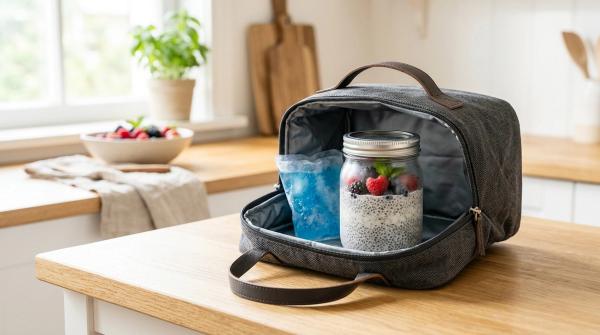
#For really long summer journeys, like 8 hours plus before you plan to eat, I wouldn’t rely on plain room-temp idli unless you have some cooling setup. A small insulated lunch bag with a frozen gel pack helps a lot. Honestly these days there are nicer compact ones than before, and in 2026 the whole lunch gear market has gone kinda wild. Leakproof steel bento boxes, phase-change cooling pouches, vacuum snack jars, all very slick and Instagram-y. Some of it is gimmicky, some of it is genuinely useful. If you’re travelling with kids or elderly folks, a decent insulated bag is actually worth the money.
Another practical option is to carry idli for the first meal only, then switch to station-bought hot food from reliable vendors or app-based railway food delivery at major stops. This has become way more common now. E-catering on trains is not exactly a niche thing anymore, and food aggregators plus railway-linked delivery services have made it easier to order from known chains or local restaurants to your seat at selected stations. Is it flawless? no. But better than gambling on 9-hour-old coconut chutney, for sure.
My favorite travel version: podi idli, slightly crisped first
#This is the one I keep coming back to. I steam the idlis, cool them completely, then cut them in half or quarters and toss them very lightly in sesame oil and molaga podi. Sometimes I even let them sit on a tawa for like one minute, not to fry, just to dry the surface a little and give tiny toasty edges. That little step makes a difference. They hold shape better, taste better cold, and don’t feel damp. You can pop one into your mouth without needing a whole ceremony around it. Train food should be practical, yaar.
There’s also a broader food trend angle here that I kinda love. More chefs and home cooks right now are talking about texture stability and travel-friendly Indian food, not just presentation. You see it in modern South Indian cafes doing podi croissants, gunpowder buns, dehydrated chutney dusts, shelf-stable condiments, all that fusion madness. Some of it is silly. Some of it actually teaches us something useful, like dry flavorings often travel better than wet ones. Old-school tiffin wisdom meeting new packaging logic. Nice when that happens.
Restaurants and idli trends I’ve been noticing lately
#I know this post is about train travel, but food people like me always take side roads. Lately there’s been a fresh wave of South Indian breakfast places leaning into regional specificity instead of generic “dosa-idli filter coffee” menus. I’m seeing more spots talk about Kanchipuram idli, Thatte idli, millet idli, button idli tossed in podi, jackfruit-season specials, stuff like that. Millet is still hanging on in 2026 menus because people want lighter, higher-fiber options, though personally I think some millet idlis are too dense if badly made. Good ones are lovely. Bad ones taste like a healthy compromise you resent.
A couple newer cafe-style openings in major cities have also pushed South Indian breakfast into the all-day category with better coffee, cleaner seating, and proper takeaway packaging. I’m not naming every single place because openings change fast and hype moves even faster, but in cities like Bengaluru, Hyderabad, Chennai, Mumbai, Delhi... there’s definitely more attention now on premium tiffin formats and regional chutneys. Which is fun, though honestly my favorite idli still comes from low-key places with steel plates and zero branding.
So how long is idli actually safe on a train in summer?
#Here’s the blunt version, based on food-safety common sense and a lot of lived experience. Plain idli, cooled properly, packed clean, no wet chutney, no dairy side, and kept out of direct heat is usually the safest in the first few hours. I personally aim to eat it within 4 hours in summer. Up to 6 hours can be okay in some situations, but quality starts dropping and risk goes up, especially in very hot weather. Beyond that, I don’t love recommending it unless it was kept chilled in an insulated bag with ice packs.
| Idli packing style | Best eaten within | Risk level in summer |
|---|---|---|
| Plain cooled idli in clean box | 3-4 hours | Low to moderate |
| Podi idli with little oil | 4-6 hours | Low to moderate |
| Idli with tomato thokku | 4 hours | Moderate |
| Idli with coconut chutney | 1-2 hours | Higher |
| Idli with sambar | 1-2 hours | Higher |
| Idli kept chilled in insulated bag with ice pack | 6-8 hours | Lower, if still cool |
Little signs I check before eating packed idli
#- Does it smell clean and mildly fermented, not sharply sour or stale?
- Is the surface dry-soft, not sticky, slimy, or sweaty?
- Did the box stay reasonably cool, or was it baking near the window for hours?
- Are the accompaniments still looking normal, not watery, bubbly, or weirdly seperated?
And yes, I know some people say “I’ve eaten worse and survived.” Same. That’s not a food safety framework though, that’s just luck wearing sunglasses.
My final answer, from one train-food obsessive to another
#So, can you pack idli for train travel in summer safely? Yes. Plain idli or podi idli is one of the smartest homemade options you can carry, as long as you cool it fully, pack it hygienically, avoid coconut chutney and sambar, and eat it within a sensible time. If the trip is longer, use an insulated bag or save idli for the first leg of the journey. Don’t overcomplicate it. Don’t trust heat. And don’t let nostalgia convince you that spoiled chutney is worth the risk... it really, really isn’t.
Honestly, some of my sweetest food memories are still these simple travel breakfasts. Soft idli, podi on fingertips, paper cup chai, someone asking which station is next. No fancy plating, no trend report, no dramatic reel music. Just good food that behaved itself on the journey. That’s enough for me. If you’re into this kind of practical-food-meets-memory rambling, you’ll probably enjoy browsing more stuff on AllBlogs.in.