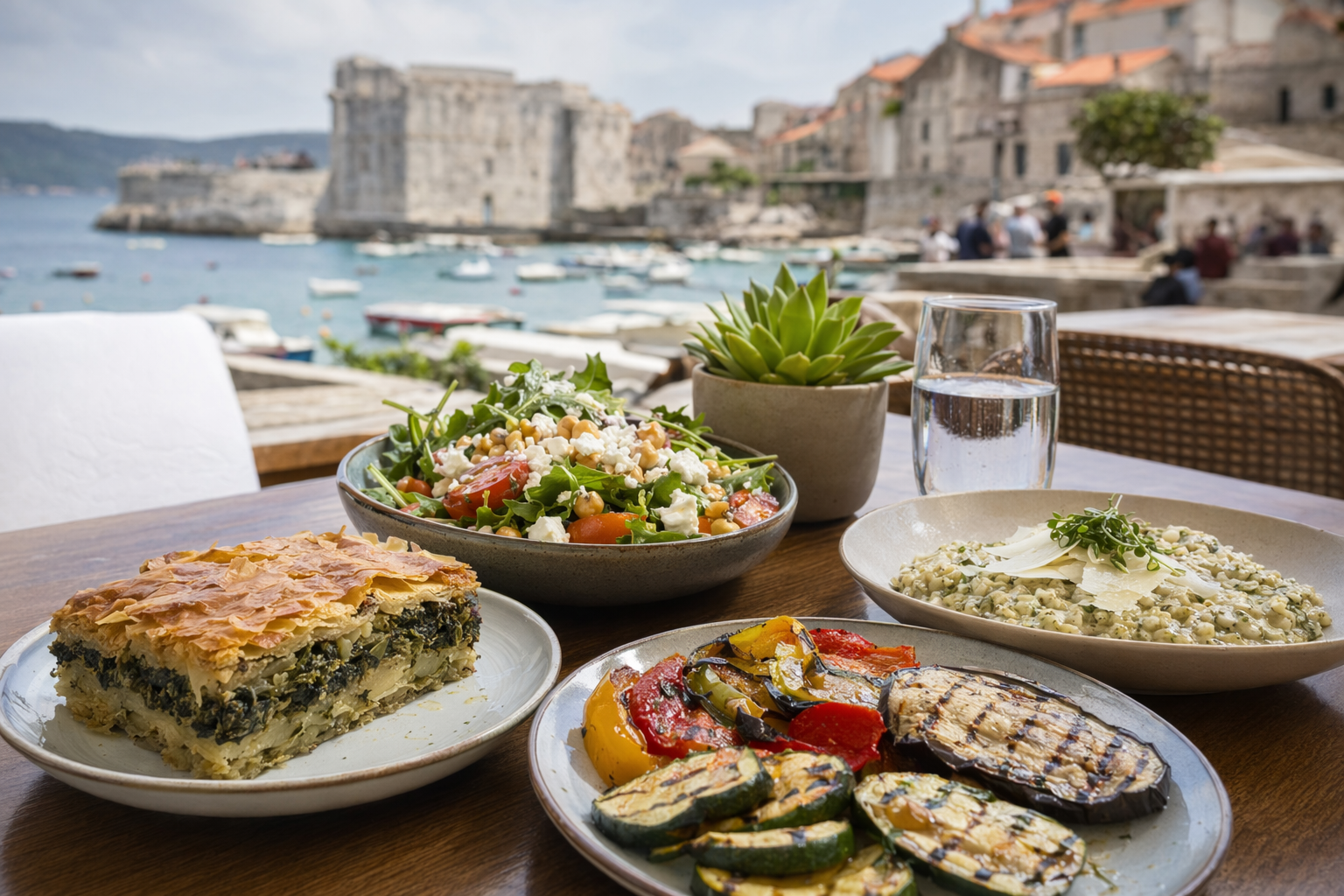
The first thing I learned: don’t panic, you won’t starve
#Before I went to Croatia and Slovenia, I had this slightly dramatic Indian-vegetarian fear in my head. You know the one. Like, what if everything has ham hidden inside it, what if “vegetable soup” means chicken stock, what if I end up eating only fries and supermarket bananas for 10 days. Honestly? I was wrong. Not completely wrong, because you do need to ask questions, but wrong enough that I now feel silly about the amount of thepla I packed. Croatia and Slovenia are not India-level easy for vegetarians, obviously, but they are much kinder than people make them sound. Especially if you love bakeries, cheese, mushrooms, truffles, markets, potatoes, soups, and that whole Central European-meets-Mediterranean food mood.
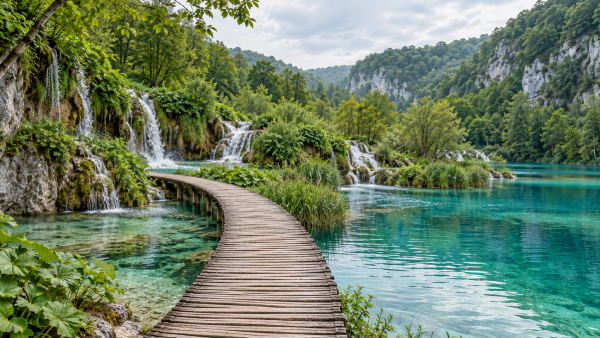
My route was Zagreb, Plitvice, Split, Dubrovnik, then up into Slovenia through Ljubljana, Lake Bled, Bohinj and a little coastal Piran detour. It was one of those trips where food slowly becomes the map. I still remember sitting near Zagreb’s Dolac Market with a warm cheese pastry and coffee, watching locals buy flowers and strawberries like it was a very serious life mission. Later in Ljubljana, I ate buckwheat dumplings with mushrooms on a rainy afternoon and thought, okay, this region understands comfort food. It’s not always spicy. Actually most things are not spicy at all. But if you stop expecting masala and start enjoying butter, herbs, olive oil, pumpkin seed oil, fresh bread and proper dairy, it gets fun.
Croatia for Indian vegetarians: bakeries, markets and the “ask twice” rule
#Croatia is a bit uneven for vegetarians, in my opinion. Zagreb was easiest, Dubrovnik surprisingly decent, Split was okay if you plan, and small road-trip towns needed more backup snacks. Along the Adriatic coast, menus are very seafood-heavy. Inland, you get more meat, sausages, stews. But there’s also a secret vegetarian friend hiding everywhere: pekara, the bakery. Croatian bakeries saved me so many times that I started recognizing them from half a street away. Cheese burek, spinach burek, plain bread rolls, potato pastry, sweet walnut rolls, jam pastries, all those flaky things that make crumbs on your black jeans. Very annoying, very worth it.
The “ask twice” rule is basically this: if a dish looks vegetarian, still ask whether it has meat stock, ham, bacon, fish, or lard. Soups can be tricky. Bean dishes can be cooked with smoked meat. Vegetable risotto can be made with seafood stock in coastal places, though not always. Even pasta with truffle sauce can have bits of prosciutto added because someone thought, why not make it more delicious for meat-eaters. For us, not so much. I learned to say “vegetarijanac” in Croatian and then also clarify “bez mesa, bez ribe” which means without meat, without fish. If you’re Jain or strict no egg, no onion-garlic, then it gets more complicated, I won’t lie. You’ll want apartments with kitchens, Indian restaurants as rescue points, and supermarket meals.
Zagreb was my soft landing, and Dolac Market was the real breakfast
#Zagreb felt like a city that wakes up slowly but eats properly. Dolac Market, right near the main square, became my morning ritual. There were piles of fruit, peppers, tomatoes, local honey, cheeses, nuts, and these old ladies who looked like they could judge your entire cooking ability by how you pick a cucumber. I bought bread, kajmak-style creamy dairy, figs, and berries, then made a picnic on a bench. Was it a glamorous breakfast? No. Was it better than paying for a sad hotel buffet where the only vegetarian thing is cornflakes? Absolutely.
For proper meals, Zagreb has some dependable vegetarian and vegan places. Vegehop is often mentioned by veg travelers, and Zrno Bio Bistro has a more organic, plant-based vibe. I liked that Zagreb didn’t make vegetarian food feel like an apology. You can also find Indian food around the city if you’re craving dal-chawal energy after too much bread and cheese. I did one dinner at an Indian place because my body was basically shouting for cumin. It wasn’t exactly like home, but when you are cold and tired, even slightly mild chana masala can feel emotional.
- Try štrukli in Zagreb if you eat dairy and egg. It’s a baked or boiled cheese pastry, soft and rich, and very much not diet food.
- Look for mushroom dishes, especially in cooler months, but still ask about stock.
- Supermarkets like Konzum, Spar and DM are useful for yogurt, fruit, hummus, nuts, bread, instant noodles, muesli bars and baby-food style backups if you’re desperate. Don’t laugh, I’ve done it.
Dalmatian coast: gorgeous views, slightly suspicious soups
#Split and Dubrovnik are beautiful in that postcard way, where the sea is so blue it looks edited. Food-wise, I had to work a little harder. Coastal Croatian menus love fish, squid, prawns, octopus, and all the seafood risottos. If you’re vegetarian, you’ll see pasta arrabbiata, pizza margherita, grilled vegetables, salads, and sometimes a vegetarian risotto. The trick is not to get bored. I started treating each meal like a small negotiation. “Can you make this without ham?” “Is this soup with vegetable stock?” “Can I get extra vegetables?” Some waiters were lovely, some looked at me like I had asked them to rebuild the kitchen.
But then, Dubrovnik gave me one of my happiest meals at Nishta, a vegetarian and vegan restaurant inside the old town area. I had a curry-ish bowl there, not Indian exactly, more global veg comfort, and after several days of bread-cheese-olive repetition, I almost hugged the plate. Dubrovnik is expensive, especially inside the old walls, so I wouldn’t eat every meal there, but for one satisfying vegetarian dinner it felt worth it. In Split, I survived happily on bakery breakfasts, pizza, grilled veg plates, and one very good salad that had roasted peppers and cheese and olive oil doing all the work.
Soparnik, the humble Dalmatian dish I didn’t expect to love
#If you see soparnik, try it. It’s a traditional Dalmatian chard pie, usually made with a thin dough, Swiss chard, onions, parsley, olive oil and garlic. It’s simple, almost too simple when you read the description, but warm soparnik with a little olive oil is such a nice vegetarian snack. It reminded me of a less dramatic, less spicy cousin of stuffed paratha, if that makes any sense. Not the same texture, not the same flavor, but the same feeling of “greens inside carbs equals happiness.” Ask about the exact recipe though, because variations exist and some places may brush with different fats.
I also ate a lot of blitva, which is chard with potatoes, often served as a side dish. On paper it sounds plain. In reality, when it’s cooked with good olive oil and garlic, it becomes the thing you keep stealing from the corner of your plate. Pair that with grilled vegetables, bread, and a tomato salad, and you can build a meal even in seafood restaurants. It’s not exciting every single time, but it works. And sometimes while travelling, “it works” is enough, especially if the view is the Adriatic at sunset and not your office wall.
Istria: truffles, pasta, olive oil and vegetarian joy if you ask properly
#Istria was the Croatian region that made me think, wait, vegetarians should come here more. It has Italian influence, inland hill towns, olive oil, wine, mushrooms, and truffles. The pasta shapes like fuži and pljukanci often come with truffle cream sauces, wild asparagus, mushrooms, or tomato-based sauces. Again, check for prosciutto, because it appears like that one relative who shows up uninvited. But once you get a clean vegetarian pasta, it’s glorious. Creamy, earthy, rich, and the kind of food that makes you slow down.
I had a truffle pasta in a tiny town where the waiter spoke limited English and I spoke exactly three useful Croatian words, so we did the universal language of pointing, smiling, and mild anxiety. I asked “no meat?” he nodded, I asked “no fish?” he laughed, and then I worried for 12 minutes anyway. The pasta arrived with shaved truffle and no suspicious pink bits. Beautiful. I still think about it when I make boring weekday pasta at home and pretend black pepper is truffle. It is not.
If you are doing a Balkans or Adriatic route and thinking about budgets, bakeries and market meals become your best friends. I had a similar strategy later when reading up for Montenegro, and this guide on Montenegro Food Costs: Bakeries, Markets & Budget Meals is honestly useful if you’re extending your trip down the coast. The food pattern changes, but the survival logic is the same: bread, dairy, seasonal produce, local snacks, and one nice sit-down meal when the wallet allows.
Slovenia felt easier, greener and a little more veggie-aware
#Slovenia surprised me. I knew it would be pretty, because every photo of Lake Bled looks like someone designed it to sell postcards, but I didn’t expect the food to be so comfortable for vegetarians. Ljubljana especially has a younger, more international, slightly eco-conscious food scene. You’ll find vegan cafés, falafel, Indian food, Asian bowls, bakeries, farmers markets, and local restaurants that actually understand vegetarian requests. Not everywhere, but enough.
Ljubljana Central Market was my first stop because apparently I cannot enter a European city without going directly to the vegetable stalls like some auntie with a tote bag. The market spreads around the river and colonnade area, with produce, bread, cheese, flowers, and during warmer months there’s also the popular Friday food market called Open Kitchen, though you should check the current schedule before planning your entire stomach around it. I found pumpkin seed oil there and became slightly obsessed. It’s dark green, nutty, intense, and Slovenians put it on salads, soups, potatoes, probably emotions too. I bought a small bottle and guarded it in my backpack like it was perfume.
Ljubljana meals that made me stop missing home for a minute
#One rainy evening I had buckwheat štruklji with mushrooms. Štruklji are rolled dumplings, sometimes sweet, sometimes savory, often filled with cheese, walnut, tarragon, apple, or other fillings. The buckwheat-mushroom version had that earthy mountain taste that makes you want to wear a sweater and discuss forests. It wasn’t spicy, not even close, but it had depth. Slovenia uses a lot of buckwheat, potatoes, cabbage, beans, dairy, mushrooms, and seasonal vegetables, which means vegetarians can do well if they avoid meat-stock traps.
There’s also jota, a sauerkraut or turnip stew with beans and potatoes, but be careful because it often has pork or sausage. Same with ričet, barley stew, which may look vegetarian until it isn’t. Žganci, a sort of buckwheat spoonbread or porridge, can be vegetarian depending what it’s served with. Potica, the rolled festive cake, is usually vegetarian if you eat egg and dairy, and the walnut one with coffee is dangerous because one slice becomes three. I have no regrets, except maybe the fourth slice.
- Useful Slovenian phrase: “Sem vegetarijanec” for male speaker or “Sem vegetarijanka” for female speaker, then add “brez mesa in rib” which means without meat and fish.
- If you’re vegan, say “vegansko” and still ask about butter, cheese, eggs and honey. Dairy is everywhere.
- If you don’t eat alcohol in sauces, ask. Wine reductions and liqueur in desserts can pop up.
Lake Bled, Bohinj and mountain food: pretty views, hearty plates
#Lake Bled is dreamy, yes, but it’s also touristy in that everyone is walking around with cameras and the famous cream cake, kremna rezina. The cake has custard, cream and pastry, so vegetarians who eat egg and dairy can try it. Vegans, not usually. I had mine after walking around the lake, and maybe hunger made it better, but it tasted like soft clouds and sugar. Very old-school dessert. Very not Indian. Still excellent.
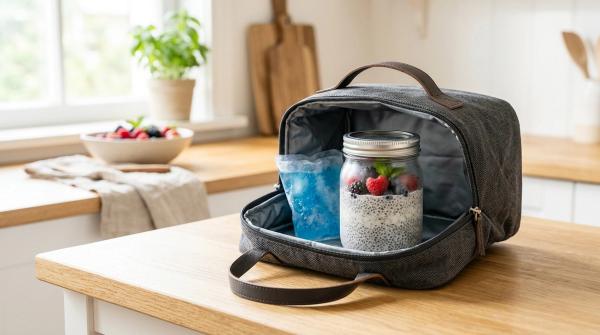
In Bled and Bohinj, vegetarian options can narrow depending where you eat. Mountain huts and traditional inns lean meaty. But I found cheese štruklji, mushroom soup, potato dishes, salads, and pasta. The one thing I’ll say is don’t arrive starving at 3 pm assuming every kitchen is open. Some places close between meal times or reduce service, especially outside peak season. Carry nuts, fruit, protein bars, or something from a bakery. I carried khakhra from home and ate it by Lake Bohinj like a proud Gujarati stereotype, even though I’m not Gujarati. Travel makes us all become snack people.
Piran, on the coast, felt like Slovenia borrowing a little Adriatic mood from Croatia and Italy. Seafood rules there too, but Italian-style food helps. Pizza without meat, pasta with tomato, gnocchi, salads, grilled vegetables, and gelato. I had a simple tomato pasta near the water and it was not life-changing, but the sunset was doing overtime, so the whole meal became memorable. This happens a lot in travel. Average food plus perfect place equals a story you keep.
Indian vegetarian comfort: when you need dal, not another cheese pastry
#Let’s be honest, after a week in Europe, many Indian vegetarians start craving food that tastes like home. Not “fusion curry bowl” home, actual tadka, dal, rice, pickle, maybe something spicy enough to wake up the soul. Ljubljana had some Indian restaurant options, and Zagreb too. Tourist-heavy Croatian coastal cities also have Indian or South Asian restaurants here and there, but I would check recent timings and reviews because restaurants change, especially in seasonal destinations. Don’t assume the place you saw online is open in winter.
My approach was simple: eat local vegetarian food most of the day, then do one Indian or Asian meal every few days when my spice levels dropped dangerously low. I carried small sachets of masala chai, a travel spoon, ready poha, and a tiny bottle of achaar. The achaar was slightly risky in luggage, but emotionally necessary. If you’re the kind of traveller who has struggled through meat-heavy menus in places like Central Asia, you’ll recognise the planning mindset. I had the same “what can I safely order?” brain while reading guides like Bishkek Vegetarian Food Guide for Indian Travelers and Tashkent Vegetarian Food Guide for Indian Travelers, because honestly, vegetarian travel is half appetite and half strategy.
What to pack from India, but don’t overdo it like I did
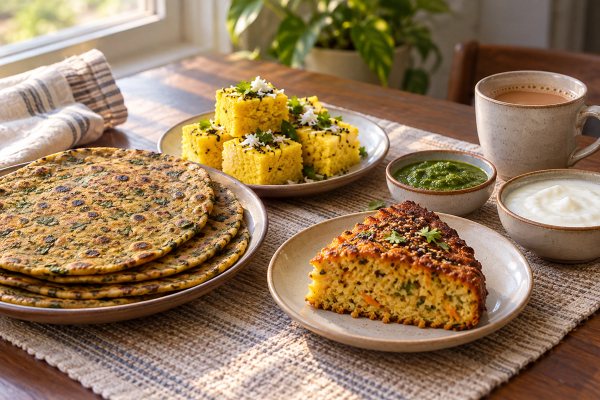
#- Pack thepla, khakhra, dry snacks, ready poha or upma cups, and maybe cup noodles if you eat them. But don’t fill half your suitcase unless you’re travelling with kids or very strict food rules.
- Bring a small masala pouch. Even plain boiled potatoes become exciting when you add chaat masala. This is not a joke, this is survival wisdom.
- Carry protein backups if you’re not eating many lentils: roasted chana, nuts, protein bars, peanut butter sachets. Europe has cheese, yes, but cheese is not a complete personality.
- If you are Jain, vegan, or no egg, book apartments sometimes. A kitchen changes everything. You can make rice, dal packets, salad, pasta, or just tea at midnight when restaurants are closed.
How to order without becoming that stressed tourist
#I hate making a fuss in restaurants, but I’ve learned that quiet confusion is worse. Be polite, be specific, and don’t use only the word “vegetarian” because interpretations vary. In both Croatia and Slovenia, many people speak English in tourist areas, but not always in smaller towns. I used Google Translate, pointed at ingredients, and smiled a lot. Sometimes I felt awkward. Then I remembered I’d rather be awkward than accidentally eat fish stock.
The key phrases are simple: no meat, no fish, no chicken, no ham, no seafood. Ask about soup stock. Ask if beans are cooked with sausage. Ask if pasta sauce has prosciutto. For cheese, strict vegetarians may want to ask about animal rennet, although in casual restaurants it can be hard to get a clear answer. If you’re okay with standard dairy abroad, life is easier. If not, lean vegan. Vegan restaurants and dishes are actually clearer because they avoid dairy and egg too.
My personal rule: if I can’t confirm the soup, I don’t order the soup. Sad, but it has saved me more than once.
My favorite vegetarian food moments from the trip
#The best meals were not always the fanciest ones. Actually, most were not. A warm spinach burek eaten on a bus station bench in Zagreb while my suitcase kept rolling away. Fresh figs and salty cheese from Dolac Market. Soparnik in Dalmatia, cut into messy squares, with olive oil on my fingers. Truffle pasta in Istria that tasted like the forest got expensive. Pumpkin seed oil on a Ljubljana salad, so nutty and strange that I kept dipping bread into the leftover green puddle. Kremna rezina in Bled after walking till my legs complained. These are the things that stick.
And then there were failures. A “vegetable soup” that smelled suspiciously like chicken, so I abandoned it. A pizza where I forgot to ask about ham and had to send it back, feeling terrible. A mountain inn where the only safe thing was fries and cabbage salad. One bakery pastry that looked like potato but was meat, which I luckily checked before biting. Travel food is like that. You win, you mess up, you learn to ask better next time.
A practical mini food map for Indian vegetarians
#If I had to simplify the whole Croatia-Slovenia vegetarian food scene for Indian travellers, I’d say this: Zagreb and Ljubljana are your comfort cities. Dubrovnik and Split are manageable but touristy and seafood-heavy. Istria is wonderful if you like pasta, truffles and olive oil. Bled and Bohinj are beautiful but plan snacks. Piran is scenic and Italian-ish enough to survive. Plitvice is not where you experiment, carry food. Markets are your friend. Bakeries are your emergency department. Indian restaurants are your emotional support system.
For breakfasts, do bakeries, yogurt, fruit, muesli, coffee. For lunch, find local vegetarian dishes or pizza/pasta. For dinner, choose a proper vegetarian-friendly place, Indian restaurant, or an apartment meal. Don’t underestimate supermarket dinners either. I had one very satisfying meal of bread, tomatoes, cheese, olives, hummus and strawberries in my room after a long travel day. Was it authentic local cuisine? Not exactly. Was it peaceful and cheap and eaten in pajamas? Yes, and sometimes that is the highest form of luxury.
So, would I recommend Croatia and Slovenia for Indian vegetarians?
#Yes. With planning. Croatia needs a little more caution, Slovenia feels easier, and both reward you if you stay curious instead of only searching for Indian food. You won’t get the spice punch of home unless you go looking for it, but you’ll get fresh produce, excellent bread, dairy-rich comfort food, mountain mushrooms, Adriatic olive oil, truffle pasta, market picnics, and desserts that make you forget your step count. For me, that’s enough reason to go back.
If you’re a strict vegetarian, vegan, Jain, or travelling with parents who need proper Indian meals, plan more carefully and book places with kitchens. If you’re flexible with dairy and egg, you’ll have a much easier time. And if you’re like me, slightly overexcited by markets and always carrying emergency snacks, Croatia and Slovenia can become a really sweet food adventure. Not perfect. But delicious in its own quiet way. I’m already dreaming of another Ljubljana market morning and one more plate of Istrian truffle pasta. For more casual food-travel rambles and practical trip ideas, I’d definitely keep an eye on AllBlogs.in.