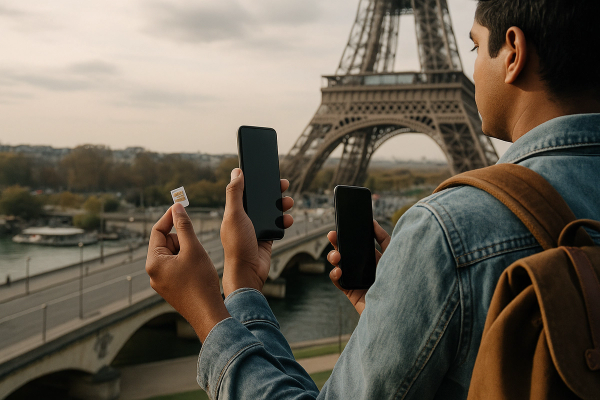
I’ll be honest, when I was planning my first proper Europe trip from India, plug adapters felt like the most boring item on the packing list. Passport, forex card, jackets, Schengen docs... all that looked important. Adapter? Haan haan, le lenge. Big mistake. On my second day itself, my phone battery dropped to 3% in a café near Prague Old Town, and the charger I had packed from home just... didn’t fit. Not even slightly. That was the moment I realised this tiny plastic gadget can decide whether your day goes smooth or goes fully bakwaas.
So this guide is basically what I wish someone had explained to me in simple Indian-traveler language before I landed in Europe with one random universal adapter from Amazon and way too much confidence. If you’re going from India to Europe, especially covering multiple countries, you really do need to understand plug types, voltage, hotel charging situations, trains, airports, and all the annoying little differences no one tells you properly. And no, not every European country uses exactly the same plug. People say that casually online and it’s only half true.
First things first: will Indian chargers even work in Europe?
#Mostly yes, and this is the good news. India uses 230V supply at 50Hz, and most of Europe also runs around 220V to 240V at 50Hz. So for most modern devices Indians carry, like phone chargers, laptop chargers, camera chargers, smartwatch chargers, even many trimmers, the voltage is usually not the problem. The plug shape is the problem. Check your charger brick and you’ll usually see something like “Input: 100-240V, 50/60Hz”. If it says that, you’re generally safe to use it in Europe with the correct adapter.
Where people mess up is with heat-based appliances. Hair straighteners, old curling rods, some travel kettles, old immersion rods, cheap grooming tools bought from local markets in India... these can be risky if they’re not dual voltage. If your device says only 220V-230V, it may still work in much of continental Europe, but I still wouldn’t be careless. And if you’re going to the UK or using some weird hotel setup with low-quality sockets, just don’t gamble. Personally, I stopped carrying any bulky appliance and just use hotel hairdryer or travel-size dual-voltage stuff.
The main plug types Indian travelers should know, without making your head spin
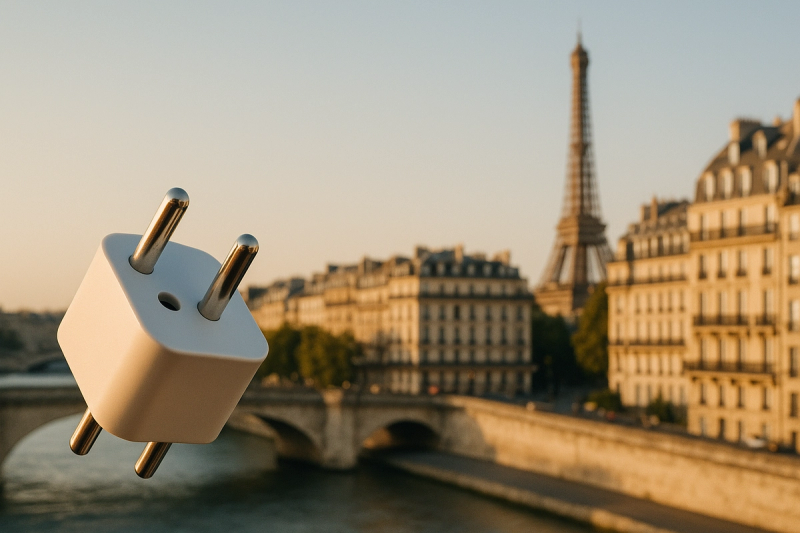
#Okay, so here’s the simple version. In most of continental Europe, the plugs you’ll run into are Type C and Type E/F. Type C is that slim two-pin round plug, the one many universal adapters support. Type E and Type F are also round-pin systems, used in places like France, Germany, Spain, Netherlands, Austria, Portugal and a lot more. In real life, one good Europe adapter usually works across these countries if it supports the standard Schuko style properly.
- Type C: common in many European countries, works for low-power devices and often fits many sockets
- Type E/F: very common across mainland Europe, best if your adapter specifically says Europe or Schuko compatible
- Type G: this is the UK, Ireland, Malta, Cyprus style. Totally different. Big three rectangular pins. Your mainland Europe adapter usually won’t fit here
- Type J, L, and a few variations: Switzerland, Italy and some niche situations can be slightly different, though many hotels are now flexible with multi-standard sockets
The biggest trap? Thinking “Europe means one adapter”. Nope. If your trip is Paris + Amsterdam + Rome, you can usually manage with a good continental Europe adapter, though Italy can be a bit picky sometimes. If your trip includes London or Dublin, you absolutely need a UK Type G adapter too. Switzerland is another one where I’d suggest carrying a universal adapter instead of assuming your regular Europe plug will always fit. Some places do, some don’t. It’s annoying, but that’s the truth.
What adapter I actually recommend buying from India
#Honestly, don’t buy the cheapest no-brand one just because it says “works in 150 countries”. I did that once. It got loose in the socket, heated up a little, and I spent the whole night checking if my phone was even charging. Not ideal when you have an early train to Vienna. Buy a solid universal travel adapter from a known brand, preferably one with 2 USB ports or USB-C, plus one AC socket. If you’re carrying laptop, phone, watch, earbuds, maybe power bank too, those extra charging ports are a lifesaver.
But — and this is important — a universal adapter is not the same as a voltage converter. People mix this up all the time. Adapter changes the shape so your plug can physically fit. Converter changes the voltage. Most travelers from India only need the adapter, not a heavy converter, because modern electronics are dual voltage anyway. Unless you insist on carrying some random appliance from home, in which case... bhai why.
If you’re visiting only mainland Europe, carry one good Type C/E/F compatible adapter. If your route includes the UK or Ireland, carry a separate Type G too. That tiny extra purchase saves stupid levels of stress.
Countries where I had zero issue, and countries where I had to think a bit more
#Germany, France, Netherlands, Belgium, Spain, Portugal, Austria, Czech Republic, Hungary... mostly smooth for me with a decent Europe adapter. No drama. Trains, hotels, cafés with charging points, airports, all manageable. Italy was mostly fine too, but once in a budget stay in Florence the socket looked like it belonged to another century and my adapter sat weirdly. It worked after some jugaad-ish angle setting, but yeah, not confidence inspiring.
The UK was the total opposite because the plug is completely different. If you land there first and don’t have the right adapter, forget charging anything unless your hotel receptionist is nice enough to lend one. Switzerland also deserves a small warning. A lot of Indian travelers club it with regular Europe mentally, but its sockets can be different enough that a universal adapter is safer. Trust me, this is one of those tiny planning things that matters more than it should.
Airport, train, hotel charging reality... not the fantasy version
#A lot of us imagine Europe as this super seamless charging heaven where every train seat has power, every airport has charging bars, and every hostel has six outlets beside the bed. Um, no. Better than India in some places, worse in some others, and very mixed overall. Newer long-distance trains often have charging sockets, yes. Airports usually do too. Hotels generally have enough, but older buildings in central Europe can have limited outlets, awkward placements, or sockets hidden behind heavy furniture for some reason.
Hostels are where adapter strategy really matters. In a few budget hostels I stayed in, each bed had either one universal-style outlet or one local socket and that’s it. If you have phone, power bank, camera battery, and smartwatch, suddenly one adapter is not enough. That’s why I now carry one adapter plus a compact extension cube or mini charger hub, as long as it’s safe and not some jugaad fire-risk thing. One wall socket turns into multiple charging points, and then you stop fighting your own electronics.
How many adapters should you carry? My answer changed after one got left in a hostel
#Earlier I used to carry just one. Very minimalist, very cool, very stupid. Now I carry two if I’m doing a 10-day+ Europe trip. One main universal adapter, and one backup regional adapter depending on the route. Why? Because adapters get left behind, borrowed by travel partners, become loose, or just stop working. Also, if two people are travelling together and both have multiple devices, one adapter becomes irritating really fast.
- Solo traveler with just phone + power bank + maybe laptop: one good adapter can work, but backup is smart
- Couple or friends sharing room: two adapters minimum, no debate
- Family trip: carry at least two adapters and one multi-port charger
- If one part of your itinerary is UK/Ireland and rest is mainland Europe, carry both plug styles from India itself
And please buy before departure. Airport shops in Europe will happily sell you adapters at prices that feel like legal robbery. I once saw one at a major station for the equivalent of what could buy me a decent lunch plus coffee plus pastry. Lesson learned.
Power banks, eSIMs, and why battery anxiety is worse in Europe than I expected
#This may sound dramatic, but battery matters more in Europe because you’ll depend on your phone for literally everything. Maps, train platforms, tram tickets, museum entry QR codes, hostel check-in messages, translation, weather, restaurant timings, digital boarding passes, eSIM management, all of it. A dead phone in a new European city is not cute travel-core, it’s just stressful. Specially in winter when battery drains faster and sunset comes early.
Carry a good power bank in cabin baggage only, because airline rules. Most airlines are strict about lithium batteries not going in check-in. Also, if you’re using eSIM data for Europe, battery can drain a bit faster than usual because of constant roaming/network switching across borders. On one Central Europe route, my phone was chewing battery all day between maps and train apps. Since then I always leave the hotel with 100% charge plus one power bank. Sounds basic, but yeah, basic things save trips.
A quick word on accommodation, because socket access weirdly depends on where you stay
#If you’re booking Europe on a budget, your charging setup changes based on accommodation type more than people think. Hostels in cities like Budapest, Prague, Lisbon, Krakow, and Berlin can range from around €20 to €45 for a dorm bed depending on season, location, and how fancy the place is getting. Budget hotels often start around €70 to €130 in many cities, though capitals and summer weekends can jump way higher. Apartments are great for longer stays because you get more plug points, a kitchen, and less fighting over outlets.
The newer business hotels usually win for charging convenience. Bedside sockets, USB ports, desk plug points, all nice. Older charming stays inside heritage buildings? Beautiful, romantic, and somehow the only useful socket is near the floor behind a lamp. That’s why reviews matter. I now search hotel reviews with keywords like “socket”, “charging”, “outlet near bed”, which sounds obsessive but has saved me from irritation many times.
Best time to visit Europe if you hate crowds but still want easy travel and charging comfort
#This isn’t exactly an adapter topic, but it affects your experience a lot. For Indian travelers, late spring and early autumn are honestly the sweet spots for much of Europe. Think April to June and September to early October for many cities. Weather is usually decent, public transport is running smoothly, and you’re not fighting peak summer crowds everywhere. Summer is fun, obviously, but expensive, packed, and some older rooms get warm enough that you want all devices charged because you may be out longer than planned.
Winter travel is magical in places with Christmas markets, but daylight is short and batteries drain faster in cold weather. Also some small cafés may not appreciate you camping by the only socket for an hour while your phone revives. Safety-wise, Europe is still generally very manageable for Indian tourists, but pickpocketing in busy tourist zones remains the classic issue. Keep your phone secure while charging in stations or airport corners. Don’t just plug in and wander off. Sounds obvious, but tired travelers do silly things.
Should you buy an adapter in Europe instead?
#You can, but I wouldn’t plan on it unless you forgot. Electronics stores, airports, supermarkets, even some souvenir shops stock adapters in tourist-heavy areas. But selection can be random, prices higher, and after a long flight the last thing you want is a side quest to hunt one down before charging your phone. Buy in India, test it at home, then pack it in your cabin bag. Done. Peace of mind.
One more thing people ask a lot — can you use hotel bathroom shaver sockets? Sometimes, but don’t rely on them. Those are often low-power or designed for very specific usage. I’ve seen travelers try weird charging hacks there and then act surprised when nothing works. Stick to normal room sockets.
My actual packing formula now, after enough trial and error
#This is what I carry now for most Europe trips and it’s been working really well. One quality universal adapter. One backup Europe or UK-specific adapter depending on route. One multi-port GaN charger if I’m carrying phone, laptop, earbuds, watch. One power bank. Two charging cables minimum because cables fail more than adapters, honestly. And I keep all of it in one small pouch so I’m not doing treasure hunt in the hotel room at midnight.
- Universal adapter from a reliable brand
- Separate Type G adapter if visiting UK or Ireland
- Fast charger with multiple ports
- Power bank in cabin baggage
- Extra cable because somehow one always acts up at the worst time
If you’re on honeymoon or a slower family holiday, maybe this sounds too technical. But if you’re city-hopping, taking budget flights, changing trains, relying on online bookings, then charging setup is part of trip planning now. Europe travel is very digital. You can totally travel light, just don’t travel underprepared.
Final thoughts from one Indian traveler who learned this the slightly annoying way
#So yeah, the short version is this: most Indian electronics will work in Europe because voltage is usually compatible. What you need is the right plug adapter, and maybe more than one if your route includes the UK, Ireland, or Switzerland. Don’t assume all of Europe uses one socket. Don’t buy the flimsiest adapter online. Don’t wait till arrival. And don’t underestimate how much a charged phone matters when you’re standing in a new city trying to find your tram platform with 4% battery and cold fingers.
I know plug adapters are not the glamorous part of travel content. Nobody dreams of them while planning Europe. But weirdly, this small thing affects your maps, money, bookings, photos, family calls, everything. Get it right once and you probably won’t even think about it again. Get it wrong and your whole trip gets little pockets of stress you really didn’t need. Anyway, hope this saves you some hassle and at least one panic-charge situation. If you like practical travel posts like this, have a look at AllBlogs.in too, there’s some solid stuff there.