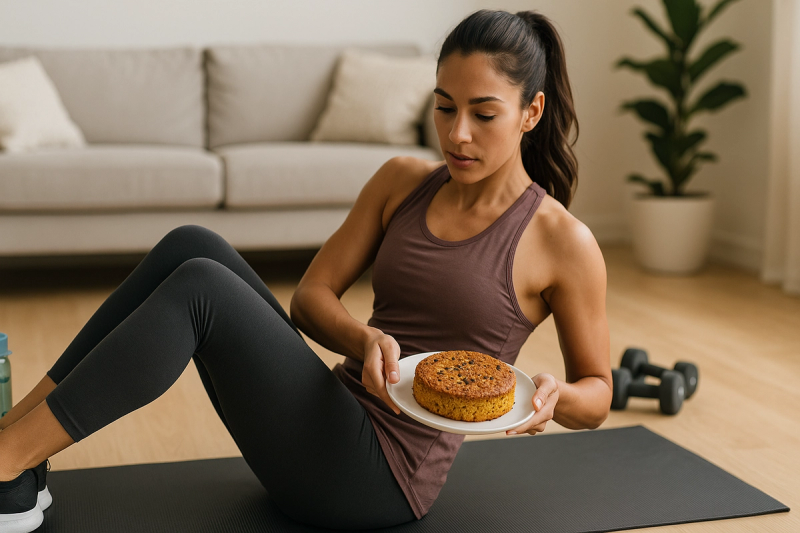
I’ll be honest, I didn’t expect handvo to become one of my weight-loss comfort foods. It always felt like one of those “healthy but secretly heavy” dishes, you know? Like, tasty... but maybe not something you lean on when you’re trying to cut back. Then I started actually paying attention to portions, ingredients, protein, fiber, all that stuff, and um, turns out handvo can fit pretty well into a weight-loss routine if you make it smart. Not magic. Not a cheat code. Just a solid, filling food that doesn’t leave you prowling around the kitchen 45 minutes later looking for biscuits.
Also quick reality check before we get into it: no single food causes fat loss on its own. Weight loss still mostly comes down to a sustainable calorie deficit, enough protein, good sleep, movement, and not doing anything so extreme that you quit by Thursday. Current nutrition guidance still supports that boring-but-true idea in 2026, even with all the glucose hacks, gut-health trends, CGM chatter, and high-protein-everything taking over wellness feeds. Handvo can help because it’s satisfying and nutrient-dense, not because it’s some miracle fat-burning snack.
So what even is handvo, nutritionally speaking?
#If you grew up around Gujarati food you already know, but for everyone else, handvo is basically a savory baked lentil-and-rice cake, usually made with bottle gourd or other veg, yogurt, spices, and that iconic tempering on top with mustard seeds and sesame. The exact recipe changes a lot house to house. That’s important, because the calories can swing a LOT depending on how much oil is used, how much rice vs dal, whether there’s sugar, whether it’s pan-cooked or baked, all of it.
A pretty typical homemade piece, around 100 grams, often lands somewhere around 180 to 260 calories. I know that’s a wide range, but that’s the truth with mixed dishes. A larger cafe-style serving with more oil can climb to 300 calories or more. Protein is usually moderate, maybe 6 to 10 grams per 100 grams depending on the dal ratio. Fiber can be decent too, especially if there’s plenty of lauki, carrots, spinach, peas, or grated zucchini in there. Compared with, say, white bread toast or a fried snack, handvo usually keeps me full much longer.
For weight loss, handvo works best when you treat it as a balanced meal base, not as a random extra you eat on top of everything else.
Why I think handvo is actually kinda underrated for fat loss
#What helped me was realizing satiety matters more than willpower. That sounds obvious now, but I spent years trying to “be good” on meals that had no staying power. A tiny smoothie. Two crackers and hummus. Sad little things. Then I’d overeat later and act confused about it. Handvo, especially when I make it with extra dal and veg, has this combo of protein + fiber + actual chewiness that makes my brain go, okay yes, we ate. That matters.
And this lines up with current research trends too. Recent nutrition conversations in 2025 and 2026 keep circling back to higher-protein, higher-fiber meals for appetite control, blood sugar stability, and better adherence. Not in a weird diet-culture way, but in a practical one. Foods that digest slower and feel substantial can make it easier to maintain a calorie deficit without feeling deprived all the time. Handvo can do that, especially if you tweak the recipe a bit.
- Lentils add protein and fiber, which can support fullness
- Vegetables increase volume without adding a ton of calories
- Fermentation may improve flavor and digestibility for some people
- It’s easy to portion, which honestly helps more than people admit
- You can pair it with protein-rich sides instead of eating it plain
Calories in handvo: the part people always wanna know first
#Here’s the practical version, not the fake-perfect version. If you’re trying to lose weight, assume handvo is moderate in calories, not low-calorie. That’s not a bad thing. It just means portion size counts. Two thick wedges with lots of oil poured in the batter and on the pan? Yeah, that can get surprisingly calorie-dense. One medium wedge with a bowl of plain Greek yogurt or homemade dahi and salad? Totally different meal outcome.
| Serving | Estimated calories | Protein | Notes |
|---|---|---|---|
| Small piece, 60-70 g | 110-170 kcal | 4-6 g | Good snack size |
| Medium piece, 100 g | 180-260 kcal | 6-10 g | Typical homemade range |
| Large serving, 150 g | 270-390 kcal | 9-15 g | Easy to underestimate |
| Healthy high-protein version, 100 g | 170-230 kcal | 8-12 g | More dal, less rice, more veg |
That table is still an estimate, obviously. If your family recipe uses extra sesame oil, peanuts, sugar, or serves it with a generous tadka and chutney, count higher. If it’s mostly dal and veg and baked with minimal oil, count lower. I started weighing a few portions just to get my eyes calibrated, and wow... humbling experiance. In a good way though. Once I stopped guessing, I made better choices without feeling restricted.
The nutrition side nobody should ignore
#Handvo has a lot going for it beyond calories. Lentils and fermented batters can provide B vitamins, iron, magnesium, potassium, and plant compounds. Add bottle gourd, methi, spinach, carrots, or cabbage and you’ve got more micronutrients plus fiber. Sesame seeds add some healthy fats and minerals too. Is it a “superfood”? Eh, I dunno, that word gets thrown around way too much. But it is a legit wholesome meal when made thoughtfully.
One thing I appreciate more now is the blood sugar angle. In 2026 there’s still a big focus on glycemic response, especially with more people using glucose monitors out of curiosity, not just for diabetes. While individual responses vary, mixed meals with protein, fiber, and fat usually hit slower than refined carb-heavy snacks. Handvo made with more dal and veg, and less polished rice, tends to be a steadier option than many breakfast cereals, white toast breakfasts, or fried namkeen-type snacks. If you have diabetes or prediabetes though, don’t just go by vibes, please. Check portions and talk with your clinician or dietitian.
Where handvo can go wrong for weight loss... because yeah, it can
#I love handvo, but let’s not pretend every version is automatically slimming. Sometimes it’s basically a dense carb cake with just enough lentil to feel virtuous. Been there. Also the “it’s homemade so it doesn’t count” mindset? Absolutely not, and me and my late-night kitchen self had to have that conversation a few times.
- Too much oil in the batter or pan can quietly push calories up fast
- A high rice-to-dal ratio lowers protein density
- Huge portions are easy because it feels healthy and light even when it isn’t
- Sweet chutneys and fried sides can turn it into a much heavier meal
- Eating it alone without extra protein may leave some people hungry sooner
Also, if you’ve got digestive issues, beans and lentils can be a mixed bag. Fermentation helps some folks, but not everyone. If you have IBS or are sensitive to certain fibers, start with a smaller portion and see how you feel. Wellness internet loves saying foods are either angelic or toxic, and actual bodies are just... messier than that.
My favorite healthy handvo tweaks that don’t ruin the whole point
#This is the part I got slightly obsessive about for a while. Not in a fun way either. I was trying to “healthify” everything until it tasted like punishment. So now my rule is simple: improve the recipe without making it sad. Handvo should still taste like handvo.
- Use more dal than rice, or at least shift the ratio in that direction
- Add grated bottle gourd, zucchini, carrot, cabbage, spinach, or methi for more volume
- Bake instead of shallow-frying when possible
- Measure oil with a spoon instead of free-pouring... this one hurts but helps
- Mix in extra protein like besan, soy granules in small amounts, or even skyr/Greek yogurt on the side rather than inside
- Keep the tempering small but flavorful, because a little goes a long way
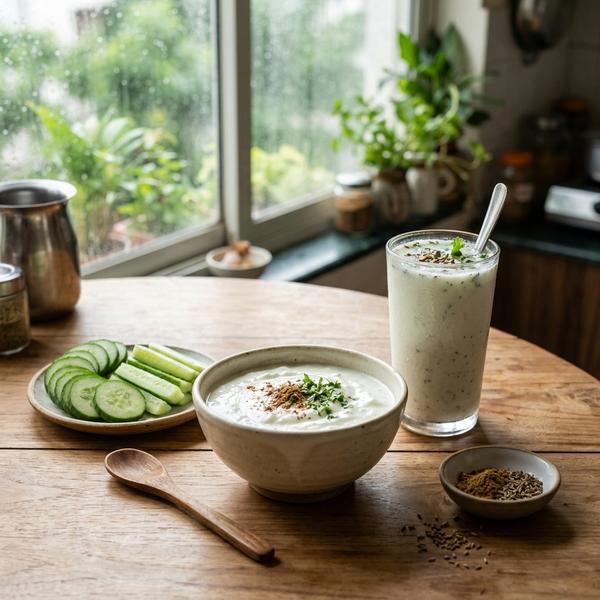
- Serve with mint-coriander chutney or plain dahi instead of sugary chutneys
Lately I’ve also seen a lot of 2026 wellness people talking about “protein pairing” instead of trying to force every food to be high-protein by itself. I actually like that idea. So if handvo on its own is moderate protein, cool, pair it with yogurt, kefir, tofu scramble, or even a side of sprouts. Way easier than turning every traditional dish into some weird gym-food remix.
A realistic weight-loss plate with handvo
#This helped me more than any macro calculator, honestly. I just stopped building meals around vibes and started building plates. If I’m having handvo for lunch, I usually do one medium slice, a big crunchy salad or sautéed veg, and a protein side. If I’m extra hungry after a workout, maybe one and a half slices. If I’ve been sitting all day and barely moved, maybe a smaller portion. Not because movement earns food, just because appetite and energy needs aren’t exactly the same every day.
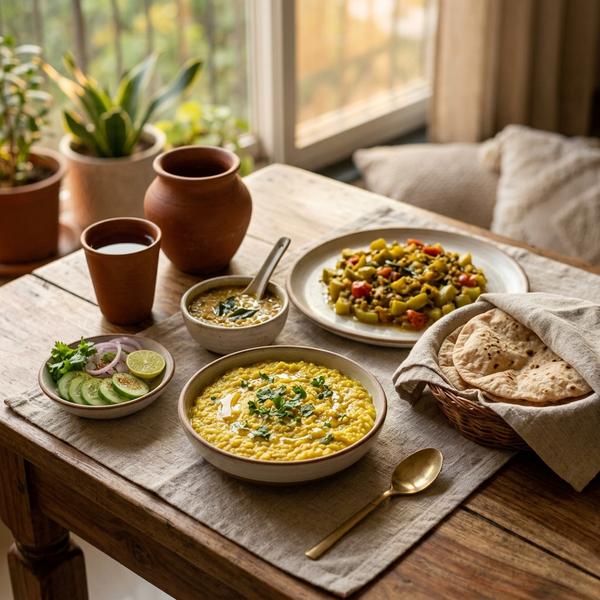
A good plate could look like this: one 100 to 120 gram slice of handvo, one bowl cucumber-tomato-onion salad with lemon, one bowl plain dahi or high-protein yogurt, and maybe some roasted chana later if needed. That meal tends to land in a very manageable calorie range while still feeling like actual food. Which, sorry, is a hill I’ll die on. Weight-loss meals need to feel like food.
What current wellness trends get right, and what they get kinda wrong
#So, in 2026 there’s a lot of talk about gut health, fermented foods, plant diversity, anti-inflammatory eating, glucose balance, and muscle-preserving fat loss. Some of that is useful. Some of it gets marketed to death. Handvo actually fits nicely into a few evidence-based parts of those trends: it can include fermented batter, legumes, diverse plants, and satisfying carbs. But that doesn’t mean more is always better, or that it somehow overrides total calorie intake.
The muscle-preservation part is a big one right now, especially for women in their 30s, 40s, and beyond. Newer public health and sports nutrition conversations keep emphasizing protein plus resistance training during weight loss so you lose more fat and hang on to lean mass. So if handvo is part of your routine, just make sure the rest of your day includes enough protein too. A lot of us grew up on carb-heavy vegetarian meals and then wonder why we’re hungry all the time. I say this with love because, uh, that was me.
Who should be a little careful with handvo
#Most people can enjoy it just fine, but there are a few caveats. If you have celiac disease, traditional handvo made with wheat-containing ingredients or cross-contamination is an issue, so check carefully. If you have kidney disease and are on a potassium or phosphorus restriction, lentil-heavy dishes may need portion guidance from your dietitian. If you’re trying to manage sodium, watch packaged mixes and restaurant versions because they can be sneaky salty. And if your goal is weight loss but you also have a history of disordered eating, please skip the obsessive calorie math if it messes with your head. Structure helps, obsession usually doesn’t.
Healthy eating should make your life more stable, not more chaotic.
A few easy handvo ideas I actually make on busy weeks
#I’m not one of those meal-prep people with twelve matching glass boxes, lol. I try, then Wednesday happens. But handvo does store well, which is maybe my favorite thing about it.
- Breakfast version: small slice of handvo with plain yogurt and fruit on the side. Sounds odd, tastes good.
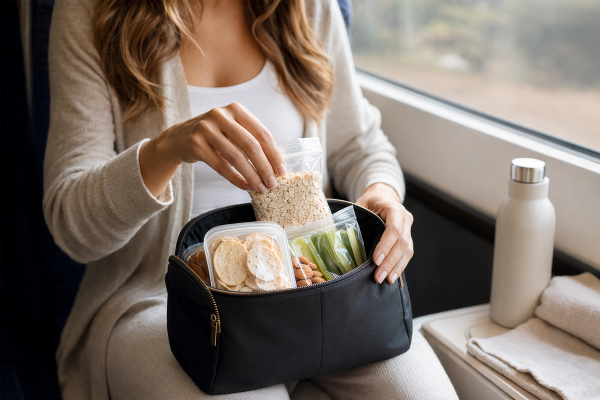
- Lunchbox version: handvo cubes, salad, mint chutney, roasted peanuts or edamame.
- Post-workout-ish meal: handvo plus a protein smoothie or skyr if I know the meal itself is lower in protein.
- Soup-and-handvo dinner: one bowl veggie soup, one medium slice handvo. Cozy, filling, not too much.
- Mini handvo muffins: easier portion control, also weirdly cute.
One thing I remember from last year, actually, was making a giant tray with lauki, carrot, spinach, and extra chana dal before a hectic week. I thought I’d get bored of it. Didn’t. By day three it tasted even better, and I didn’t order takeout twice, which is a small miracle in my house. Sometimes weight loss is less about “perfect metabolism” and more about having decent food ready before you get dramatic and hungry.
My honest take: is handvo good for weight loss or not?
#Yeah, I think it can be. Pretty good, actually. But only in the real-world sense. Not the clickbait sense. It’s good for weight loss if it helps you stay full, enjoy your meals, and keep calories reasonable overall. It’s not good for weight loss if you treat “traditional” as automatically low-calorie, eat three giant wedges, and then add fried sides because it’s the weekend and calories don’t exist on weekends... which, sadly, they still do.
If I had to sum it up, I’d say handvo sits in that sweet spot between nourishing and practical. It has fiber. It has some protein. It can be made lighter without losing its soul. And in a wellness world that keeps trying to sell us expensive powders and impossible routines, there’s something really comforting about a simple homemade dish doing a perfectly decent job.
Final thoughts, from one person figuring it out as they go
#If you’re trying to lose weight and still eat foods from your culture, please don’t let anyone make you feel like you have to abandon all of it and live on egg whites and sadness. Traditional foods can absolutely fit. Handvo is a great example. Tweak the ratio, mind the oil, build a balanced plate, and be honest about portions. That’s it. More or less. Well, plus sleep, stress, steps, resistance training, hydration... annoying but true.
And if your progress feels slow, join the club. Mine always is. But slower habits I can repeat have worked better than every dramatic reset I’ve ever tried, and I’ve tried some dumb ones, believe me. Anyway, if you like this kind of practical wellness chat with a bit less nonsense, check out more health posts over on AllBlogs.in.