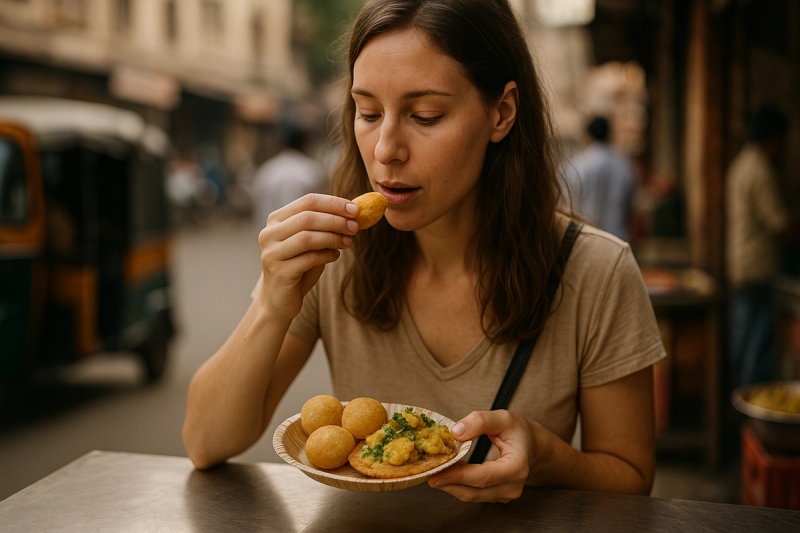
How I Learned to Eat Street Food in India Without Wrecking My Stomach
#I’ll be honest, the first time I landed in India I had two completely opposite thoughts fighting in my head. One was omg I’m about to eat the best food of my life. The other was, very quietly but very persistently, what if I spend the next week in a bathroom somewhere in Jaipur. If you’ve traveled in India, or even just daydreamed about it, you probably get that tension. The street food is a huge part of the country’s soul. It’s lively, cheap, insanely regional, and honestly some of the best bites I’ve had anywhere. But yeah, eating safely matters. A lot.
Over a few trips, from Delhi to Mumbai to Ahmedabad to Kolkata and down south into Bengaluru and Kochi, I kinda figured out a system. Not a perfect one, because travel never is, but a practical one. And the funny thing is eating safe street food in India isn’t really about avoiding street food. It’s about learning how to read a stall, a crowd, a cooking setup, and your own limits. Once I stopped thinking in this dramatic all-or-nothing way, things got much easier. Also much tastier.
First thing - street food in India is not one thing
#This sounds obvious, but people still talk about “Indian street food” like it’s one giant category. It’s not. Chaat in Delhi is a different universe from kathi rolls in Kolkata, which is different again from vada pav in Mumbai or kothu parotta in Chennai. Safety-wise that matters too. Some foods are deep-fried fresh and served piping hot, which is usually easier on nervous traveler stomachs. Others rely on chutneys, yogurt, cut fruit, crushed ice, or pre-boiled potatoes sitting around in the heat, and those need a bit more caution.
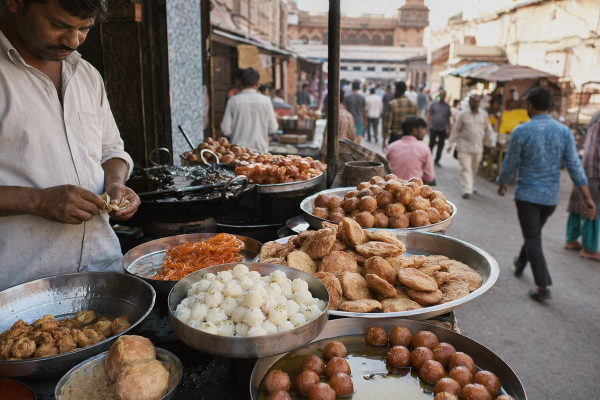
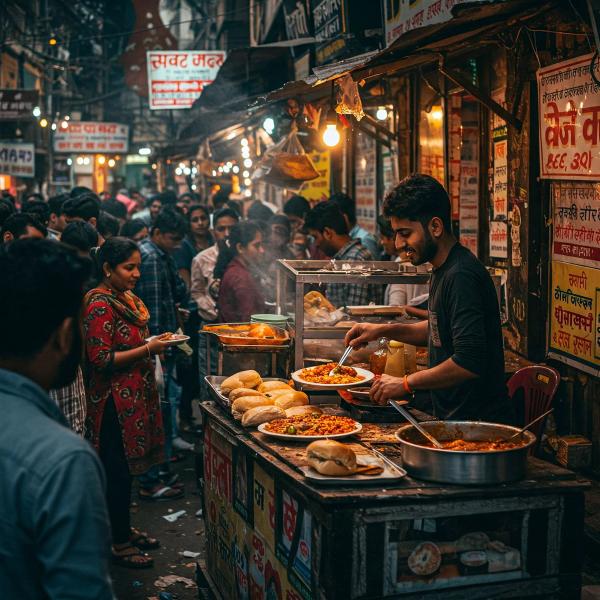
I remember standing in Old Delhi near Chandni Chowk, absolutely hypnotized by the swirl of jalebi batter hitting hot oil, then crossing a lane and seeing pani puri water sitting in giant matkas while a hundred people reached in and out around the setup. Both were iconic. But one felt like a smarter first move for me that day. Hot, fried, fresh from oil? Yes please. Shared flavored water on day two after a red-eye flight? Maybe let’s not get heroic.
- My boring-but-useful rule: start with food that is cooked fresh, served hot, and handled as little as possible after cooking
- Second rule: if locals are lining up in steady numbers, not just tourists filming it, that’s usually a really good sign
- Third thing, and I learned this the hard way in Goa once, don’t mix five risky foods in one evening just because you feel invincible
How I pick a stall in real life, not in some idealized travel-guide way
#People always say “go where it’s busy,” and yeah, that’s true, but it’s not enough by itself. Busy can also mean chaotic, sloppy, or just overhyped. What I actually look for is turnover. Is the vendor constantly making new batches? Are samosas coming out of the fryer every few minutes? Is the dosa batter actively being spread on the tawa? Are plates being rinsed in reasonably clean water or is there a sad gray bucket situation happening? Are ingredients covered? Does the person handling money also mash your food with bare hands? I know, super romantic, but these details matter.
In Mumbai, I had some of the safest-feeling street food of my trip near Dadar and later in Girgaum because the stalls were just... efficient. Fast hands, fresh batches, no lingering. Vada pav moving nonstop. Pav bhaji slapped onto the tawa and served screaming hot. And in Ahmedabad, around Law Garden night market, I noticed the busiest snack stalls often had one person taking cash and another person cooking, which sounds tiny but actually reduces contamination a bit. You start noticing these things after a while. You become that person staring at hand-washing setup before ordering sev puri. A little annoying, maybe, but alive.
The safest beginner foods, in my opinion anyway
#If it’s your first week in India and you want the street food experience without rolling dice too hard, I’d start with dishes that are high-heat, high-turnover, and low-water. Stuff like vada pav, freshly fried pakoras, hot jalebi, dosas straight off the griddle, uttapam, egg rolls, freshly grilled kebabs from busy places, momos that are steaming and served immediately, and aloo tikki right off the tawa. Not risk-free, nothing is, but generally easier. I’d put fresh sugarcane juice, cut fruit from random carts, pani puri from unknown stalls, and chutney-heavy items lower on the beginner list unless you’ve found a super reputable vendor.
The goal isn’t to eat scared. It’s to eat smart enough that you can keep eating tomorrow.
Water, ice, chutneys... this is where a lot of people get caught
#Okay, this part’s less sexy, but here’s where many travelers mess up. It’s not always the spicy food. It’s often the water. That includes ice, uncooked rinsed herbs, watery chutneys, pani in pani puri, and juices diluted with water. I mostly stick to sealed bottled water or water at hotels and cafés with reliable filtration. And yes, I check the bottle seal. Every time. Feels paranoid till it doesn’t.
One local friend in Delhi laughed at me for avoiding pani puri at first, then admitted she also only eats it from a handful of trusted vendors. That made me feel better weirdly. Even Indians are selective, depending on the city and stall. There’s no shame in being picky. In fact, that’s kind of the whole strategy.
- If a chutney looks like it’s been sitting uncovered in the sun for hours, I skip it
- If a drink has ice and I can’t tell where that ice came from, nope
- If fruit is pre-cut and attracting flies, I keep walking no matter how pretty it looks
- If I really want pani puri, I ask a local, hotel host, or food guide for a specific vendor they trust
A few places where I felt the street food scene was especially worth it right now
#Delhi is still the big dramatic headline city for street food, and honestly deserved. Chandni Chowk remains madness in the best way, with old legendary shops and tiny lanes full of snacks, sweets, kebabs, and parathas. But lately I’ve noticed more travelers branching beyond the old classics into neighborhoods with curated food walks and smaller hyperlocal experiences, which I love. Mumbai too is having this constant food-energy moment, not new exactly, but sharper. People are doing early-morning market tours, coastal cuisine detours, and late-night snack crawls that mix old-school stalls with newer hygienic street-food-style counters.
Ahmedabad surprised me the most. The night food culture there is huge, vegetarian street food is ridiculously varied, and it felt easier for cautious eaters to navigate because so much is cooked hot to order. Kolkata, meanwhile, still owns my heart for kathi rolls and telebhaja, though I’m more selective there with water-based street snacks. And in the south, Bengaluru’s growing obsession with regional food trails means you can now find really thoughtful food experiences that cover darshinis, military hotels, filter coffee spots, and street carts in one go. Kochi and Hyderabad also keep popping up in 2026 travel chatter for travelers chasing regional flavor instead of just “famous food.” Good. About time, honestly.
2026 food travel trends I actually noticed on the ground
#A lot of travel writing throws around the word trend and means basically nothing, but there are a few things that do feel current in 2026. One is that travelers are way more interested in regional specificity now. Not just “eat curry in India,” thank god. People want Bohri food in Mumbai, old Delhi nihari at the right hour, Ram laddoo from the right lane, Indori poha-jalebi breakfasts, Tamil tiffin done properly, that sort of thing. Another trend is hygiene-conscious street food recommendations becoming part of mainstream travel planning. More boutique stays, hosts, and local guides now keep shortlists of trusted stalls, and honestly that has saved me more than once.
Digital payments are everywhere too, which changes the experience in small but useful ways. Lots of vendors in bigger cities take UPI or QR-based payments, and while international visitors can’t always use the same systems as locals, the broader effect is real: some stalls are more organized, prices are clearer, and there’s less messy cash handling than before. Also there’s a noticeable rise in “street food but cleaner” spin-offs - food halls, market-style courts, and upgraded kiosks serving classic snacks with better filtration, gloves, and visible kitchens. Purists hate this. I sort of get it. But for cautious travelers or families, it can be a great gateway before diving into the real street.
My most useful routine, especially for the first 4 or 5 days
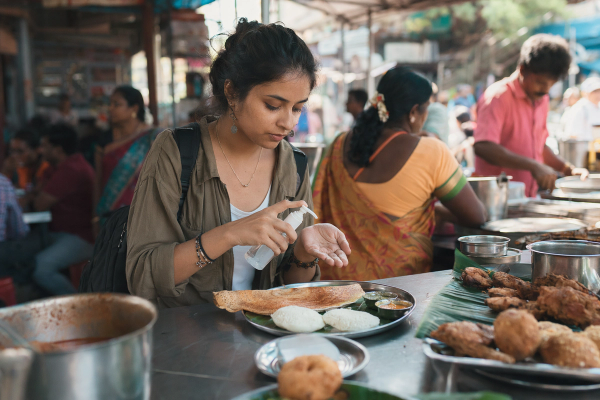
#This is so unglamorous, but it works. Day one, I eat lightly and mostly hot cooked food. Day two, I still avoid raw stuff. I carry tissues, hand sanitizer, and usually some oral rehydration salts because dehydration sneaks up fast in Indian heat. I don’t do a giant spicy food binge the minute I arrive. Learned that lesson in Jaipur when me and my overconfidence had mirchi bada, lassi, rabri, kachori, and kulfi in one afternoon. Incredible memory. Terrible evening.
I also try to eat street food at places and times when turnover is naturally high. Breakfast stalls in the morning rush can be great. Evening snack markets too. A random in-between hour when food has been sitting around? Less ideal. And this sounds a bit fussy, but I watch the first few orders before I place mine. Are they reheating leftovers or making fresh? Is the oil dark and tired-looking? Are they wiping plates with a cloth that’s seen things no cloth should see? Tiny signals. Huge difference.
What I keep in my bag now, always
#- Hand sanitizer, obviously
- Tissues or wet wipes because not every stall has napkins and some have... one napkin for the whole universe
- Bottled water with an intact seal
- Basic stomach meds and oral rehydration salts
- A little patience so I don’t impulse-order from the first shiny cart I see
What to do if you do get sick, because yeah, it can happen
#Even if you’re careful, travel stomach happens. New microbes, heat, fatigue, overeating, too much dairy, bad luck, all of it. If it’s mild, I usually rest, hydrate, keep food simple, and don’t pretend I’m on some heroic food mission. Bananas, rice, toast, curd if your stomach tolerates it, plain dosa, that kind of thing. If there’s fever, blood, severe dehydration, or it keeps going, get medical help. Big cities in India have excellent hospitals and clinics, and travel insurance is not the place to be cheap, seriously.
I know this post is about adventure and flavor and all that, but one of the best travel skills is knowing when to pause. Missing one food market is better than losing three whole days of your trip. There will be more snacks. India practically insists on that.
The best meal I almost didn’t eat
#One evening in Kolkata, I nearly skipped a tiny roll stall because the lane looked chaotic and I was tired and being weirdly cautious. But there was a line of office workers, constant turnover, eggs cracking nonstop, skewers on heat, and the cook moving with that kind of confidence you can’t fake. So I stayed. Got a hot egg-chicken kathi roll wrapped straight off the griddle, ate it standing under a flickering sign, and for a second the whole city sort of clicked into place. That’s the thing. Safe street food isn’t just about avoiding illness. It’s about not missing the life of the place.
India through restaurants is wonderful, sure. But India through street food is closer to the pulse. The morning tea stall, the railway-platform cutlet, the dosa cart outside an office block, the old sweet shop spilling onto the pavement, the late-night kebab smoke in a crowded lane. You don’t need to be reckless to be part of that. You just need to pay attention.
My practical, slightly imperfect final advice
#So if I had to boil all this down, I’d say this: eat hot food cooked in front of you, choose stalls with fast turnover, be extra careful with water and ice, ease into raw or water-based snacks, ask locals for specific recommendations not vague ones, and listen to your body instead of your ego. Don’t let fear stop you from trying India’s street food, because that would be honestly kinda tragic. But don’t let wanderlust turn your common sense off either. There’s a sweet spot between paranoid and reckless, and once you find it, wow... India is one of the greatest food journeys on earth.
I’m still thinking about the jalebis in Delhi, the vada pav in Mumbai, the buttery pav bhaji that absolutely ruined me for all other pav bhaji, the smoky rolls in Kolkata, the dosas that crackled at the edges in Bengaluru, and a plate of sev usal in Gujarat that I still can’t properly explain. Travel gives you monuments and views and photos, sure. But food gives you memory in a different way. Messier. More human. More delicious. If you’re into this kind of food-and-travel rambling, um, go wander around AllBlogs.in sometime. There’s good stuff there.