Best Shoulder-Season International Trips from India: the places that felt smarter, calmer, and honestly more fun
#If you ask me, shoulder season is where the real magic is. Not peak crowds, not dead-off-season either. Just that sweet in-between window when flights are a bit less painful, hotel prices stop acting crazy, and places feel more human. As an Indian traveler, I’ve started planning more of my international trips in these months because, yaar, why spend extra just to stand in lines with everyone else? And with travel getting easier again, more direct flights from India, better visa systems in some countries, and loads of Indian tourists going abroad for short breaks, this is honestly the best time to do it.
By shoulder season I mean stuff like March to May or September to November, depending on the country. Weather is usually decent, sometimes even better than peak season. I’ve done a few of these trips myself, and a couple surprised me way more than I expected. Like, some places looked ordinary on Instagram but felt amazing on ground. Others were hyped, but shoulder season kinda saved them because they were less hectic. So this isn’t some textbook list. It’s more like what I’d tell a friend over chai if they said, “Bhai, where should I go outside India without making the whole trip too expensive or too exhausting?”
1) Vietnam in spring or autumn — easy to love, easy from India too
#Vietnam is one of those countries I keep recommending because it just works for Indian travelers. Budget works. Food works, mostly. Internal transport works. And the vibe is fast but not overwhelming. I went during that shoulder window between harsh summer and crowded holiday periods, and honestly it hit the sweet spot. In Hanoi the weather was cool enough to walk around Old Quarter without melting. In Da Nang and Hoi An, it was warm, yes, but still manageable. And in Ho Chi Minh City you sort of accept that there’ll be humidity and just move on with your life.
Current practical bit: Vietnam has become even more attractive because of relaxed visa processes for many travellers and strong tourism infrastructure. For Indians, you should still check the latest e-visa rules before booking, obviously, but planning is much easier now than it used to feel a few years back. Typical mid-range hotels in Hanoi or Da Nang can fall roughly around INR 2,500 to 6,000 per night depending on area and season, while hostels and basic stays are cheaper. Domestic flights with VietJet or Vietnam Airlines can save a lot of time if you're covering north and central together.
- Best shoulder months: March-April and October-November
- What felt worth it: Hanoi cafe hopping, Hoi An evenings, Ba Na Hills if you don’t mind touristy stuff, and a Ha Long or Lan Ha Bay cruise if budget allows
- Food for Indians: plenty of veg options if you search a bit, plus Indian restaurants in Hanoi, Da Nang, HCMC are easy enough to find now
- Small warning: always ask if broth or sauce has fish sauce/meat if you're strict vegetarian... it sneaks in
One thing I loved was how affordable it still felt compared to many other international trips. I had one ridiculously good banh mi from a roadside place and then, not even joking, later that night ate at an Indian restaurant because sometimes your heart just wants dal. No shame in it.
2) Georgia — mountain views, wine country, and that weirdly comforting feeling Indians get there
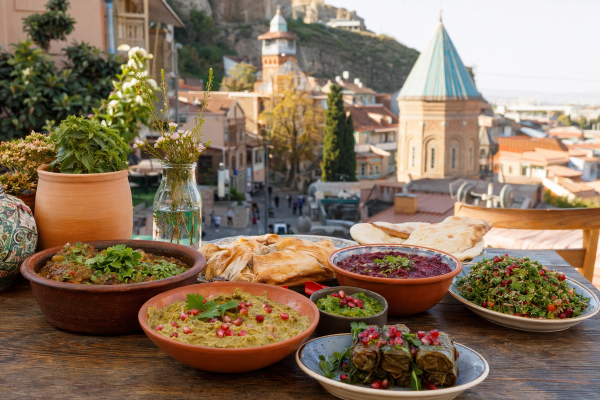
#Georgia has become super popular from India, and for good reason. Tbilisi is pretty, a little rough around the edges in a nice way, and not absurdly expensive if you plan well. Shoulder season is, in my opinion, the best way to do it. Late spring gives you green hills and open roads without full summer rush, while early autumn has harvest energy and gorgeous colours. I went expecting just a quick city-and-mountains trip, but the food and landscape got me. Also, somehow, a lot of Indians feel comfortable there quickly. Maybe because people are warm in a non-fake way.
Accommodation in Tbilisi can range from about INR 3,000 for simple guesthouses to INR 7,000 or more for nice boutique stays in central areas. Gudauri and Kazbegi prices jump depending on weather and weekends. Indian restaurants are very easy now in Tbilisi, but please don’t only eat butter chicken there, you’ll miss out badly. Try khachapuri, lobio, fresh breads, local cheeses if you eat them. For vegetarians, Georgia is actually more doable than people assume. Not perfect, but doable.
Georgia in shoulder season felt like someone turned the volume down on tourism just enough. The mountains were still dramatic, the city still lively, but I wasn’t fighting crowds every ten minutes. That alone changed the whole trip.
A useful note here: road trips to Kazbegi can be weather-sensitive, especially in colder transitions, so always keep one buffer day. Don’t do that hyper-Indian thing where we try to squeeze six places in four days and then complain we saw nothing properly. Me and my friends did that once on another trip and it was chaos.
3) Thailand beyond the obvious peak months — still great, still maybe the easiest first international trip
#Yes yes, Thailand is obvious. But obvious doesn’t mean bad. It’s still one of the best shoulder-season international trips from India because flights are frequent, Indian food is everywhere if needed, visa policies have become more traveller-friendly at different times, and you can shape the trip how you want. Party, family, shopping, beach, temple, luxury, backpacking... sab mil jayega. I’ve gone in both near-rainy shoulder months and cooler transition periods, and I actually prefer the slightly off-peak timing. Fewer crowds in Phuket old town, better hotel deals in Krabi, and Bangkok malls are less of a battlefield.
The trick with Thailand is choosing the right coast and not assuming weather is same everywhere. Andaman side and Gulf side can differ, so check before locking islands. Bangkok and Chiang Mai are easier almost year-round with some heat and rain adjustments. Mid-range hotels in Bangkok can be around INR 3,500 to 8,000, while good budget stays are lower. In Krabi or Phuket, shoulder deals can be really good if you book a little ahead but not too insanely early.
- Bangkok in shoulder season for food, shopping and shorter queues at major spots
- Chiang Mai if you want cafes, temples and a slower pace
- Krabi for scenic beaches without full-blown holiday madness
- Phuket if you choose area carefully and avoid thinking the whole island is one giant party street
One rainy afternoon in Bangkok I ended up ducking into a tiny cafe near Ari and had one of those random travel moments that stays longer than any famous attraction. That’s shoulder season for me, basically. Plans loosen up, the place starts breathing a little.
4) Japan in the in-between months — expensive-ish, yes, but so worth doing smartly
#Japan is not exactly the cheapest option for Indians, let’s be real. But if you go in shoulder periods instead of the biggest cherry blossom rush or year-end crowds, it becomes more manageable and honestly more enjoyable. I did a trip around late autumn and parts of it felt unreal. Clean air, yellow-red leaves, efficient trains, convenience stores that somehow feed you better than some airports ever will. Even the quiet was memorable. Indians tend to think Japan means super complicated, but it’s actually very smooth if you prepare a bit.
Recent travel demand to Japan from India has gone up a lot because of better connectivity and stronger interest in East Asia. You’ll still want to watch visa paperwork and embassy timelines carefully. Shoulder months like late May, October and November can work very well depending on what regions you’re covering. Budget business hotels in cities such as Osaka or Tokyo may start around INR 5,000 to 8,000, while better central stays quickly go higher. Rail passes are not always the automatic best deal anymore, so calculate route-by-route. Seriously, don’t buy passes blindly because some influencer said so.
- Best for first-timers: Tokyo + Kyoto + Osaka, but add one slower place if you can
- Underrated joy: Japanese breakfast from convenience stores when you have early train departures
- For Indian vegetarians: possible, but requires homework and patience
- Safety: one of the places where I felt very secure even walking late, but basic travel common sense still applies
Also, this may sound silly, but carrying a few ready-to-eat Indian packets can save your mood if you have dietary restrictions. I know, I know, people act snobbish about this. Ignore them. Do what keeps the trip smooth.
5) Turkey in spring or fall — dramatic, delicious, and better when it’s not peak summer
#Turkey had been on my list for ages and shoulder season is exactly when I’d tell most Indians to go. Istanbul in extreme summer can get crowded and tiring, while Cappadocia in the shoulder months feels more balanced weather-wise for walking around, sunrise viewpoints, and those famous balloon mornings. Not guaranteed, by the way. Balloons depend on conditions and can get cancelled, so don’t build your emotional stability around one ride. Still... when it works, wow.
Indian travelers usually do Istanbul, Cappadocia, maybe Antalya or Pamukkale. That’s a solid route. Mid-range stays in Istanbul can sit around INR 4,000 to 9,000 depending on district and how fancy you want to get. Cappadocia cave hotels can be a splurge, but shoulder season sometimes gives better rates than peak periods. Food is one of Turkey’s strongest points. Kebabs, mezze, breads, sweets, tea every few minutes basically. Vegetarians can manage, though menus may need decoding. Safety-wise, Turkey remains a major tourist destination, but keep an eye on local advisories, demonstrations, and regional sensitivities before traveling.
My small tip? Don’t just photograph Istanbul, sit with it. Take a ferry, drink tea, watch people, listen to the call to prayer mixing with traffic and seagulls. It gets under your skin a bit. In a nice way.
6) Bali and Indonesia beyond the honeymoon clichés
#A lot of Indians still talk about Bali like it’s only for honeymoons or those floating-breakfast Instagram reels, but that’s such a small slice of it. Shoulder season in Bali can be fantastic because you avoid some of the packed holiday weeks while still getting decent weather windows. Ubud feels greener, Canggu is busy but not impossible, and places like Sidemen or Nusa Lembongan can still feel softer and slower. If you want a trip that can be spiritual, beachy, stylish, budget, luxury, all mixed up... Bali does that weirdly well.
From India, flights usually connect through Southeast Asian hubs unless you get a good route. Stay prices vary wildly. You can find guesthouses around INR 2,000 to 4,000, stylish villas much higher, and really good boutique places in between. Scooters are common, but if you’re not confident, please don’t force it just because everyone online says to. Traffic there is not the place to discover your biking confidence. Hire a driver for day tours. It’s more relaxing anyway.
- Best shoulder windows: April-June and September
- Go beyond Bali if possible: Yogyakarta for culture, Komodo if budget allows, or Lombok for a different pace
- Indian food availability: quite good in tourist zones
- Trend worth noting: wellness retreats and workation-style stays are still growing there
The thing that stayed with me most wasn’t a beach club, honestly. It was an early morning walk through rice fields when everything was quiet except birds and some distant scooter noise. That softer side of Bali is still there, but you have to want it.
A few places I think are especially smart picks from India right now
#If you want the shorter version, here it is. Vietnam for value. Georgia for scenery plus comfort. Thailand for ease. Japan if you can stretch budget and plan well. Turkey for culture-food-landscape combo. Bali/Indonesia for mood and flexibility. I’d also keep an eye on countries like Kazakhstan, Uzbekistan, Sri Lanka, and Azerbaijan for shoulder-season travel because connectivity from India has improved in phases and Indian tourists are exploring beyond the usual Southeast Asia circuit now.
| Destination | Best shoulder months | Typical mid-range stay/night | Why it works for Indians |
|---|---|---|---|
| Vietnam | Mar-Apr, Oct-Nov | INR 2,500-6,000 | Affordable, food options, easy city hopping |
| Georgia | May-Jun, Sep-Oct | INR 3,000-7,000 | Scenic, visa appeal, comfortable for Indian travellers |
| Thailand | May-Jun, Sep-Oct | INR 3,500-8,000 | Frequent flights, easy planning, all budgets |
| Japan | May, Oct-Nov | INR 5,000-8,000+ | Safe, efficient, memorable seasonal beauty |
| Turkey | Apr-May, Sep-Oct | INR 4,000-9,000 | Great mix of history, food and landscapes |
| Bali/Indonesia | Apr-Jun, Sep | INR 2,000-6,500+ | Flexible travel style, wellness and beaches |
Stuff I’d genuinely check before booking, because shoulder season is not automatically perfect
#This part matters. Shoulder season sounds romantic, but it can also mean surprise showers, odd ferry cancellations, fluctuating hotel rates, and attractions under maintenance. So yeah, do a little homework. Always check visa rules from official sources, not random reels. Look up local transport strikes or weather patterns. Save offline maps. Keep travel insurance, especially for countries where medical care can get expensive fast. And if you’re traveling with parents or kids, don’t make over-ambitious itineraries. People underestimate travel fatigue so much.
- Book refundable stays for the first night or two if your route depends on weather
- Keep one buffer day on mountain or island-heavy trips
- Use an international card plus some cash, don’t rely only on one payment method
- For Indian food cravings, mark a few backup restaurants in advance... this sounds extra, but helps
Another thing, and maybe this is just me getting older, but slower travel wins. I used to think seeing more countries made me a better traveler. Nonsense. Now I’d rather do one country properly in shoulder season than rush through three airports and remember nothing except baggage tags.
So, which one should you pick?
#If it’s your first international trip from India, I’d say Thailand or Vietnam. Lowest friction, mostly. If you want Europe-ish feel without doing full Europe budget damage, Georgia is a lovely pick. If food and culture are your thing, Turkey can be such a rewarding trip. If you want the kind of journey that stays in your head for years, Japan does that. And if you want a more emotional, slower, aesthetic kind of break, Bali or wider Indonesia can really hit the spot. There isn’t one perfect answer, which is annoying but true.
For me, the best shoulder-season trips are the ones where a place still feels alive, but not overrun. You can actually talk to people. Sit in cafes. Wander. Make mistakes. Change plans. Find that one street, one meal, one viewpoint you never had on your saved Instagram folder. That’s the good stuff, the stuff that makes a trip feel like yours. If you’re planning one soon, I’d honestly start with flight prices first, then weather, then visa ease, and then shape the destination around that. Works better than forcing a dream place in the wrong month.
Anyway, that’s my very real, slightly biased list for the best shoulder-season international trips from India. If you like this kind of practical-but-personal travel writing, have a look at AllBlogs.in too. I end up discovering some pretty useful reads there when I’m in my overplanning phase.