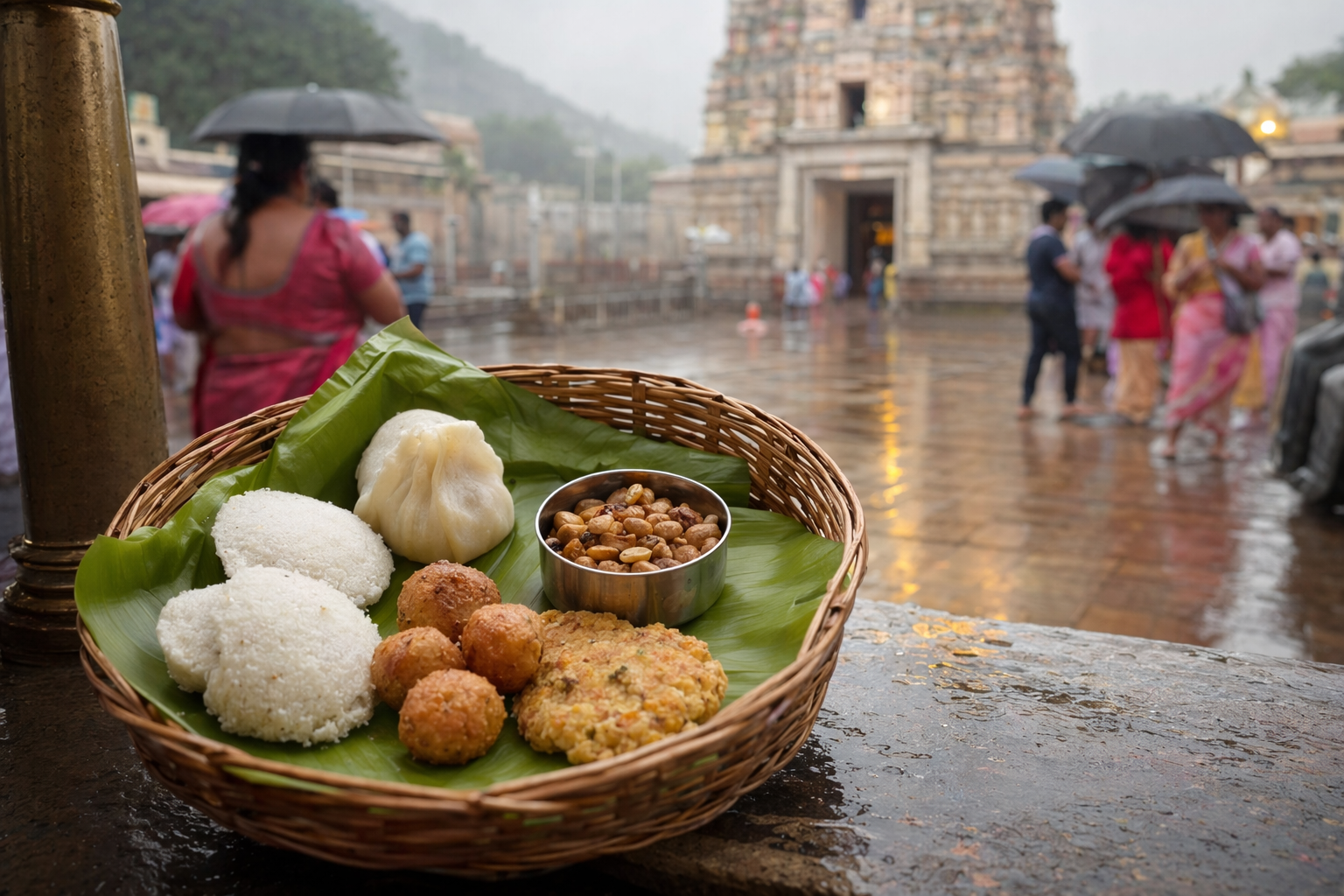
There is a very specific kind of hunger that happens in an Indian temple queue during monsoon. It’s not normal hunger. It’s wetter, crankier, more spiritual somehow, and it usually arrives exactly when the line stops moving. I’ve felt it in Tirupati with damp socks, in Puri while smelling khaja from three lanes away, outside Kashi Vishwanath after a night train, and once in Shirdi when my umbrella turned inside out and I seriously considered eating the emergency chikki meant for later. Which I did. Obviously.
Temple travel in India has always been food travel for me. The prasad, the chai stalls outside, the banana leaf meals, the old sweet shops that open before sunrise, the railway platform idli, that one aunty who pulls out lemon rice from a steel dabba like she’s feeding half the queue... it’s all part of the pilgrimage. But monsoon changes the game. Food spoils faster, paper packets turn soggy, queues get longer because rain slows everything down, and suddenly your romantic idea of eating hot pakoras near a temple tank becomes a small hygiene negotiation with your stomach.
First, a Small Truth: Temple Queues Are Not Picnic Spots
#I know, I know. We all want to pack like we’re going on a school trip. But most big temples have rules. Some don’t allow food beyond certain security points. Some allow only sealed water bottles, some don’t even like bags, and some require you to deposit everything in lockers. At places like Tirumala, Vaishno Devi, Kashi Vishwanath, Shirdi, Guruvayur, Somnath, and Siddhivinayak, the queue system can be strict and it changes depending on crowd, festival days, security alerts, and honestly sometimes just the mood of the day.
So my rule now is simple: carry snacks for before the queue, after the queue, and while waiting outside. Don’t assume you can munch inside the main barricaded queue. Ask at the cloakroom or security check. If the guard says no, don’t argue. I’ve seen people try to debate with temple security about why their homemade thepla is spiritually harmless. It never ends well.
The Monsoon Problem: Food Gets Weird Fast
#Monsoon in temple towns is beautiful, but also slightly chaotic. The stone floors shine, the lamps look extra golden, the jasmine smells stronger, and every lane has that fried-food-in-rain perfume. But humidity is brutal. Peanuts lose crunch. Murukku gets chewy. Bread gets sweaty. Cut fruit becomes risky. Curd rice, which is otherwise a blessing from the gods, can turn suspicious if it sits too long in a warm bag.
I learned this in Madurai. I had packed curd rice for a long wait near Meenakshi Amman Temple, thinking I was being very sensible and South Indian-grandmother-level prepared. It was lovely at 8 am. By noon, after rain, crowd, heat, and my bag being pressed between two wet umbrellas, it smelt... not evil exactly, but not friendly either. I threw it away and ate hot idlis at Murugan Idli Shop later. Best decision. The podi alone saved my mood.
What I Actually Carry in Temple Queues During Monsoon
#My snack pouch has changed over the years. Earlier I carried whatever sounded tasty. Now I carry what survives rain, crowd, delays, and being squashed under a shawl. I still care about taste, don’t worry. I’m not one of those people who says “just carry energy bars” and then calls it a food experience. No. We are in India. We can do better than sad bars.
- Dry roasted chana or sattu mix in a small zip pouch. Filling, not oily, doesn’t smell strongly, and it won’t make your fingers gross.
- Peanut chikki or til chikki, individually wrapped if possible. It travels well, gives energy, and feels very temple-town appropriate.
- Makhana roasted with a little salt and pepper. This has become super trendy again, especially with the whole millet and traditional snack comeback that’s been going strong into 2026.
- Khakhra, thepla, or plain methi crackers. Thepla is king, but in monsoon I keep it dry and eat it within the same day.
- Bananas, but only if I’ll eat them soon. They bruise easily in crowded queues and nobody wants banana paste in a backpack.
- ORS sachets or electrolyte tablets. Not exciting, but after one sweaty three-hour queue in Tirupati, I became a believer.
- A tiny box of mishri, raisins, or dates. Good for quick sugar, especially if you’re travelling with elders.
Snacks I Don’t Carry Anymore, Even If My Heart Wants Them
#There are foods I love deeply but do not trust in a monsoon temple queue. Samosas wrapped in newspaper? Delicious, but soggy and oily after twenty minutes. Cut mango with masala? I want it, but flies also want it. Sandwiches with chutney? They become damp little regrets. Anything with fresh coconut, paneer, cream, mayonnaise, or wet chutney is a no from me unless I’m eating it immediately.
And please, be careful with street-side pani puri during heavy rain. I’m not being snobbish. I eat street food everywhere. But floodwater splashing near carts, uncovered chutneys, and crowds pushing around can turn a good snack into a travel disaster. Save the chaat for a clean, busy stall where food is moving fast and water source looks safe. My stomach has voted on this issue several times.
The 2026 Food Travel Mood: Pilgrimage Is Getting Snack-Smart
#One thing I’ve noticed on recent trips is how food travel around temple routes is changing. Pilgrimage isn’t just older people in buses anymore. You see solo travellers, work-from-anywhere folks doing darshan between Zoom calls, families booking Vande Bharat connections, and young people making whole reels about prasad and temple-town breakfasts. IRCTC e-catering and station food delivery has made it easier to get proper meals at bigger stations, UPI works almost everywhere now, and a lot of travellers carry compact steel boxes instead of disposable plastic because many temple towns are stricter about waste.
Also, traditional Indian snacks are having such a moment. Millets, makhana, roasted legumes, jaggery sweets, sattvik thalis, regional temple prasads, all that. It’s not just “health food” anymore, it’s travel food. I’ve seen people carry ragi laddoos, bajra crackers, dry fruit panjiri, and vacuum-packed poha mixes. Some of it is marketed very fancy now, with resealable pouches and QR codes telling you the farmer story, which is cute, maybe a bit much, but I like that we’re returning to snacks our grandparents already knew were practical.
Tirupati in the Rain: Laddu Dreams and Lemon Rice Reality
#Tirumala during monsoon is dramatic. Mist hangs over the hills, buses crawl around bends, and every pilgrim seems to be carrying one plastic-covered bag and one private prayer. I love the energy there, but the queue can be long, and food rules are not something to mess around with. You get the famous Tirupati laddu after darshan, of course, and it is one of those prasads that really does taste like memory. Ghee, sugar, cardamom, cashew, that soft grainy bite... I don’t care how many times people say it’s “just a laddu.” It is not just a laddu.
Before joining the line, I usually eat a proper meal. Hot upma, pongal, idli, or lemon rice. Nothing too spicy. I avoid experimenting before long darshan because a temple queue is not the place to discover that your stomach disagrees with extra green chilli. If I need to carry something, I keep chikki, dates, and water. After darshan, I eat properly again. Around Tirupati town you’ll find plenty of Andhra meals, tiffin places, and strong coffee. The joy of hot sambar after a rainy queue is honestly underrated.
Puri: Khaja, Mahaprasad, and the Danger of Overpacking
#Puri in monsoon is my weakness. The sea is wild, the sky is grey, the lanes near Jagannath Temple smell of ghee and flowers, and the khaja shops tempt you from every side. But temple entry and food carrying around the main areas can be sensitive, so I keep my bag light. Eat before, keep a small dry snack if needed, and leave space for what matters: Mahaprasad.
The Mahaprasad of Jagannath Temple is not just food, it’s an entire culture. Rice, dal, vegetables, khichdi, sweets, all cooked in earthen pots in that old temple kitchen system people write books about. Eating it in Anand Bazaar, when available, feels grounding in a way restaurant meals rarely do. It’s simple and huge at the same time. My personal mistake in Puri was eating too many khaja before lunch because “just one more” became five. Then Mahaprasad arrived and I had to make room spiritually and physically.
Vaishno Devi: Dry Snacks Win, Every Single Time
#The Vaishno Devi route teaches you humility. You think you’re fit. Then the climb begins. In monsoon, paths can be slippery, ponchos flap in your face, and tea stalls become emotional support centres. On this route, I don’t carry heavy food. Dry fruits, roasted chana, jaggery, energy bites, and ORS. That’s it. You’ll find food stalls and bhojanalayas along the way, but carrying a small backup is smart, especially if you travel with kids or parents.
I remember stopping for rajma chawal after darshan and feeling like it was the best meal of my life. Was it actually the best rajma chawal? Maybe not. But after rain, climb, chants, tired knees, and cold fingers around a steel plate, it tasted perfect. That’s the thing about pilgrimage food. Context is the secret masala.
Kashi Vishwanath and Banaras: Don’t Let the Chaat Distract You Before Darshan
#Banaras is a test of discipline. You go for darshan and suddenly there is kachori sabzi, malaiyyo in season, tamatar chaat, lassi, peda, chai in kulhads, and those tiny lanes pulling you in every direction. During monsoon, the lanes can be slippery and crowded, so I usually keep my snack bag minimal and my hands free. Wet stone, temple crowds, and hot jalebi syrup are not a graceful combination. Ask me how I know.
My Banaras rule is: darshan first, full food madness after. A small packet of roasted makhana or chana is enough for waiting. Later, go eat kachori sabzi at a busy old shop, drink chai, and if your stomach is brave, try the chaat. Just choose places with high turnover. In monsoon, busy is good. Food sitting sadly in a tray is not.
Shirdi: Simple Food, Big Crowds, and the Chikki That Saved Me
#Shirdi is one of those places where you can underestimate the queue because everything looks organized, and then suddenly you’re inside a slow-moving human river. During monsoon, I keep an emergency snack in my pocket, not deep in the bag. Peanut chikki saved me once when the darshan timing stretched and I had skipped breakfast like a fool. There are many canteens and simple meal options around Shirdi, but again, you don’t want to be hungry inside a long queue.
After darshan, I like eating plain thali food. Dal, rice, sabzi, roti, maybe curd if it’s fresh and served cold. Not glamorous, but comforting. Temple travel doesn’t always need fancy restaurant lists. Sometimes the best thing is hot dal in a steel plate while your clothes are drying on the chair next to you.
My Safe Snack Formula for Monsoon Temple Travel
#If you want the short version, here’s what works for me: dry, sealed, non-messy, vegetarian, low-smell, and easy to finish. I don’t carry anything that needs a spoon unless I’m outside the queue with space to sit. I avoid foods that leave oily fingers because then you’re touching railings, tickets, phone, wallet, everything. I also avoid strong-smelling snacks like garlic mixtures because not everyone in a temple queue wants to smell your masala mood for two hours.
- Eat a proper hot meal before joining a long queue. Idli, poha, upma, pongal, paratha, or plain rice dishes work well.
- Carry one small dry snack, not five. You’re travelling, not stocking a bunker.
- Use resealable pouches or small steel dabbas. Paper packets die quickly in monsoon.
- Keep ORS, water, and any medicines in an easy pocket, especially for elders.
- Check temple rules before carrying food inside. If they say deposit it, deposit it.
- Avoid cut fruits, wet chutneys, curd-based items, cream sweets, and anything that’s been sitting out in humid air.
What About Kids, Elders, and Fasting Travellers?
#This is where planning matters. For kids, carry small portions: banana, dry cereal mix, roasted makhana, plain biscuits, dates, or homemade laddoos. Don’t bring messy chocolate unless you enjoy cleaning melted sadness from fingers and clothes. For elders, keep soft but safe foods like fresh thepla, soft khakhra, soaked-then-dried dates, or small laddoos made with gond, atta, or ragi if they can digest it. And water. Always water.
For fasting days, it gets interesting. Many temple towns sell vrat snacks like sabudana khichdi, singhara atta puri, fruit, peanut laddoos, and sweet potato chaat. During monsoon, I’d choose hot sabudana khichdi from a clean, busy place over pre-cut fruit any day. If carrying from home, roasted peanuts, makhana, dates, dry coconut pieces, and rajgira chikki work beautifully. Just check your own fasting rules because everyone’s family has different definitions of “allowed.” Mine argues every Navratri.
Local Prasad Is Not the Same as Random Outside Food
#I feel strongly about this. If you’re visiting a temple, don’t fill yourself with random packaged junk and then ignore the local prasad tradition. Food is part of the place. Tirupati laddu, Puri Mahaprasad, Palani panchamirtham, Nathdwara peda, Udupi temple meals, Guruvayur prasadam, Kashi peda, Shirdi prasad, Amritsar karah prasad at the Golden Temple if you’re doing a broader sacred food trail... these foods carry stories. They taste different because they belong somewhere.
But prasad also needs respect. Don’t stuff it into a wet bag next to your umbrella. Don’t leave it open where ants can find it. Don’t buy ten boxes from random shops claiming “original temple prasad” unless you know what you’re buying. Official counters exist at many major temples, and it’s better to use them when available. Also, some prasads have limited shelf life. Panchamirtham, laddoos, pedas, coconut sweets, all behave differently in humidity. Ask the seller. They know.
The Best Monsoon Queue Snack Is Sometimes Hot Chai Outside the Gate
#There’s a romance to carrying the perfect snack, but honestly, some of my happiest temple food memories are outside the queue after darshan. Hot chai in rain near Nashik. Fresh idli near Udupi. A plate of poha before Mahakaleshwar darshan in Ujjain. Filter coffee after standing barefoot on cold stone in Rameswaram. These things stay with you.
In 2026, with more travellers chasing food trails and spiritual circuits together, I hope we don’t lose the small joys. Not everything has to be a viral reel. Sometimes the best snack is a 10 rupee banana from a vendor who tells you which lane is less flooded. Sometimes it’s a temple canteen meal served fast, hot, and without drama. Sometimes it’s the chikki in your pocket that stops you from becoming a monster in line.
My Final Packing List, the Realistic One
#For a one-day monsoon temple visit, I pack: one small water bottle if allowed, ORS sachet, roasted chana or makhana, two pieces of chikki, a banana if I’ll eat it early, tissues, hand sanitiser, a small cloth napkin, and a waterproof pouch. If it’s a longer route like Vaishno Devi, I add dates, dry fruits, and maybe a simple thepla roll wrapped properly. That’s enough. Anything more becomes weight and worry.
And before anyone asks, yes, I still eat pakoras in the rain near temples. I’m not made of stone. I just eat them hot, from a busy stall, right there, not after carrying them for three hours in my bag. Same with vada pav, mirchi bajji, kachori, aloo bonda, banana chips, pazham pori, whatever the region offers. Fresh and hot is safer than packed and sweaty. That rule has served me well, mostly.
Temple travel teaches patience, but temple food teaches timing. Eat the wet things hot, carry the dry things sealed, and never underestimate how hungry devotion can make you.
One Last Thought Before You Join the Queue
#Monsoon temple travel in India is messy, fragrant, tiring, and beautiful. Your feet will get wet. Your plan will change. Someone will push, someone will smile, someone will offer you a piece of prasad, and somewhere nearby a tea vendor will be boiling ginger like his life depends on it. Carry safe snacks, yes. Be practical. But don’t become so cautious that you miss the food culture around you. That’s half the journey.
So pack light, eat smart, respect temple rules, choose hot local food over risky cold stuff, and leave space in your bag for prasad. And if you’re collecting food-travel stories the way I do, keep browsing places like AllBlogs.in, because honestly there’s always another temple town, another rainy queue, and another snack worth planning a trip around.