Packing lunch during an Indian summer is a different game altogether.
You may cook everything fresh in the morning, but after that the dabba has to deal with real life: a crowded local train, a scooter ride in the sun, a long walk to college, or a few hours sitting in a warm office bag.
And very often, the first thing to give up is curd.
Dahi is comfort food in so many Indian homes. Curd rice, raita, chaas, lassi, kadhi, dahi dips — all of it feels cooling, familiar, and honestly, very tempting when the weather is unbearable. But in hot and humid weather, curd can turn sour, watery, or even slightly fizzy if it is not kept cold.
So if your office or college does not have a fridge, or if dairy makes you feel heavy and sleepy after lunch, it makes sense to plan a no-curd lunch.
This Food & Recipes guide from allblogs is not one strict recipe. Think of it as a practical, everyday list of no-curd Indian summer lunch ideas for home, office, college, travel, and regular family meal planning.
Quick answer: what can you pack for a no-curd summer lunch?
#For a light Indian summer lunch without curd, go for foods that are dry, cooked well, low in moisture, and taste good at room temperature.
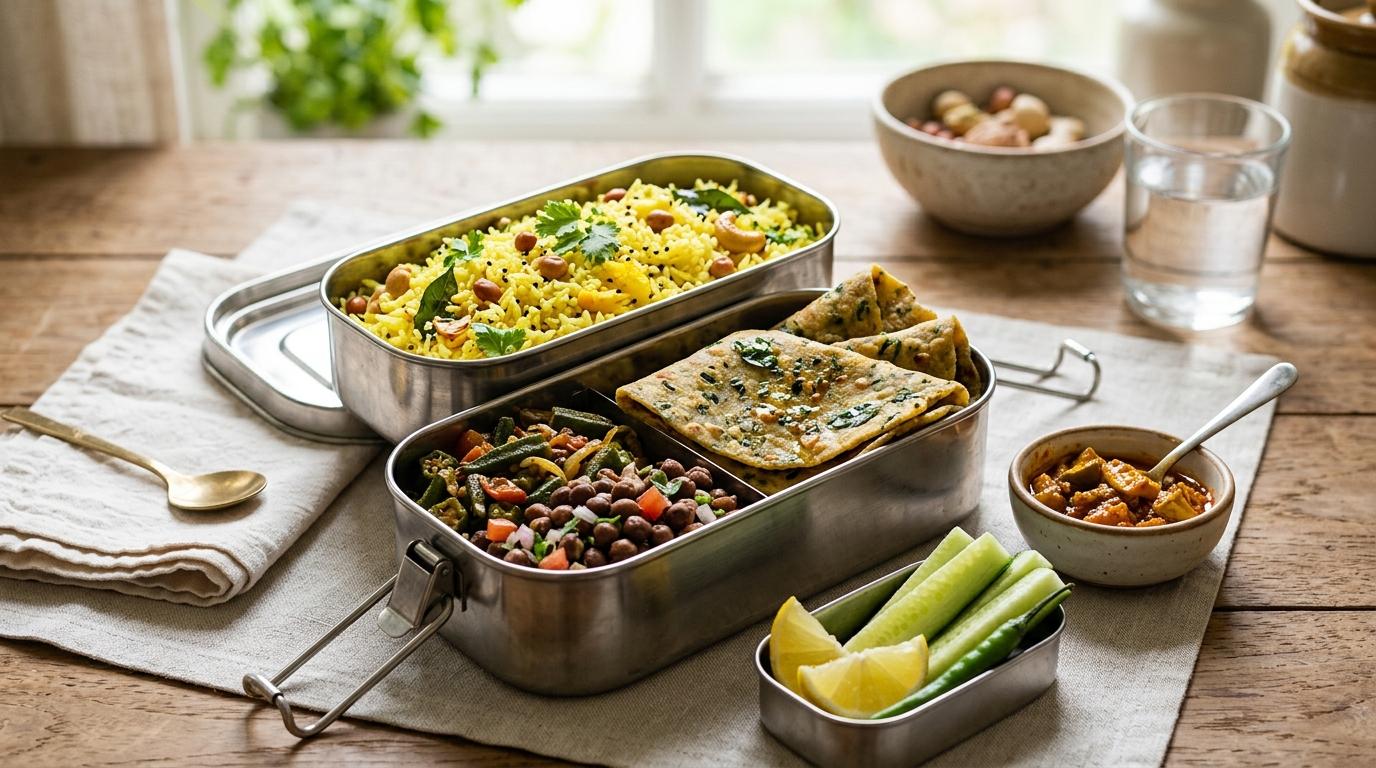
Good options include lemon rice, tamarind rice, raw mango rice, methi thepla, sattu paratha, besan bhindi, jeera aloo, dry poha with peanuts, kala chana chaat, moong dal kosambari without coconut, and besan chilla rolls.
To get that fresh, tangy taste without dahi, use lemon, tamarind, amchur, raw mango, kokum, or pickle masala.
A few simple rules help a lot:
- Keep wet items separate.
- Let cooked food cool before closing the lunchbox.
- Add salt and lemon to salads or chaats only before eating.
- Avoid packing curd, paneer, cut fruit, coconut chutney, eggs, meat, fish, or watery dal unless you can keep them cold.
- If the food is perishable, use an insulated lunch bag with an ice pack.
If there is no fridge, keep lunch simple, dry, and room-temperature friendly.
Why skip curd in a summer lunchbox?
#Curd is not a bad food. In many Indian homes, it is the default summer side dish. A bowl of dahi with rice or roti can feel perfect on a hot afternoon.
The issue is not curd itself. The issue is curd sitting outside for hours in the heat.
Curd ferments faster in warm weather
#Curd is a live fermented food. When it stays in the fridge, it remains pleasant for longer. But in a warm lunchbox, especially one packed early in the morning, it continues to ferment.
By lunchtime, that mild curd may taste too sour. Sometimes it becomes watery, bubbly, or has a strange fizzy feel.
It can smell strong in closed spaces
#A box of sour curd rice or raita can smell quite strong after a few hours. In an office pantry, classroom, or air-conditioned room, that smell becomes even more noticeable.
Even if the food has not fully spoiled, it may not feel nice to eat.
It feels heavy for some people
#Some people eat curd at lunch and feel completely fine. Others feel sleepy, bloated, or uncomfortable after dairy, especially in humid weather.
If that sounds like you, there are plenty of Indian lunch ideas without curd that still feel satisfying. Dry sabzis, tangy rice, stuffed rotis, lentil salads, sattu, poha, and lemon-based drinks are all good options.
Not everyone has fridge access
#Many office-goers and students do not have proper access to a fridge. Even if there is a fridge, the lunchbox may already sit in a bag for two or three hours before reaching there.
So before packing anything for summer, ask one basic question: will this food stay okay until lunchtime?
The safe hot-weather lunch formula
#A good summer lunch should be filling, light, and practical for the way you carry it.
1. Keep the main meal dry
#Dry foods usually travel better than watery foods.
Choose dry sabzi, dry rice preparations, stuffed parathas, theplas, thick dals, roasted vegetables, and chaat-style meals where lemon and salt are added later.
Watery gravies, thin dal, curd-based sides, and wet chutneys can spoil faster in heat. They can also leak, make rotis soggy, and ruin the whole dabba mood.
Dry does not mean boring. You can add plenty of flavour with lemon, curry leaves, roasted peanuts, sesame, amchur, mustard seeds, dry chutney powder, green chilli, coriander, or pickle masala.
2. Use tangy ingredients smartly
#Indian cooking has so many natural souring ingredients. Lemon, tamarind, kokum, amchur, raw mango, and vinegar-based pickles can make food taste bright and fresh without curd.
They add a lovely summer-friendly flavour and may help food stay more pleasant than bland, wet dishes. But do not treat them as a safety guarantee. If something needs refrigeration, it still needs refrigeration.
3. Cool cooked food before packing
#Do not close the lid on steaming hot food.
The steam turns into water droplets inside the lunchbox. Then rice becomes clumpy, rotis turn sweaty, and sabzi becomes soggy.
Let cooked food stop steaming before you pack it. If you are in a rush, spread rice or sabzi on a wide plate for a few minutes. It should not sit out for too long, but it also should not go into the box piping hot.
4. Keep raw and cooked items separate
#Cucumber, onion, tomato, lemon wedges, sprouts, and salad should go in a separate small box.
Raw vegetables release water, especially after salt is added. If you mix them too early, the whole meal can become wet and sad by lunchtime.
For chaat and salads, carry salt, lemon, chutney, or masala separately. Mix everything just before eating.
5. Think about where the lunchbox will sit
#Lunch eaten at home can include more delicate items because the food can stay in the kitchen or fridge.
But a lunch that sits inside a backpack for five hours needs a stricter plan. Ask yourself whether the lunch will sit in a hot bag, whether there is a fridge at work or college, when you will eat, whether the dish is wet or dairy-based, and whether you can carry an insulated lunch bag.
Meal ideas: no-curd Indian summer lunches
#Here are practical Indian lunch ideas without curd for hot and humid days. These are meal combinations, not strict recipes, so adjust the spice, salt, oil, and portions the way your home likes them.
1. Tangy rice meals that taste good at room temperature
#Rice works beautifully in summer if it is not mixed with curd, coconut milk, or watery gravy.
Cook the rice so the grains stay separate. Cool it properly. Then mix it with a light tempering or dry masala.
Lemon rice with peanuts
#Lemon rice is bright, simple, and tastes good even when it is not hot. Use roasted peanuts, curry leaves, mustard seeds, turmeric, green chilli, and enough lemon juice for a fresh taste.
Pack cucumber sticks separately if you want something crunchy. It goes well with roasted papad, dry potato fry, carrot sticks, or a small piece of pickle.
Tamarind rice
#Tamarind rice, pulihora, or puliyogare is a strong no-curd lunch option because it actually tastes better after sitting for some time.
Tamarind, spices, curry leaves, sesame, and peanuts make it satisfying without needing raita. Keep it dry and avoid fresh coconut if the lunch will stay outside without refrigeration.
Raw mango rice
#In early summer, raw mango rice is a lovely lunchbox dish. Grated raw mango gives that sour punch people often miss when they skip curd.
Temper mustard seeds, curry leaves, green chilli, peanuts, and turmeric, then mix with cooled rice. Pair it with dry bhindi, carrot salad without salt, or a lemon wedge to squeeze at lunch.
Tomato-free masala rice
#If tomato rice tends to turn sour in your lunchbox, try a tomato-free masala rice.
Use well-cooked onions, dry spices, curry leaves, peanuts, and maybe peas if you can keep the lunch cool. The important thing is to keep the masala dry. Avoid loose gravy-style bases.
2. Roti and dry sabzi combinations
#Roti-sabzi is still one of the best lunchbox formats for Indian summers. The trick is to choose sabzis that do not release too much water after cooking.
Besan bhindi with roti
#Bhindi travels well when it is cooked dry. Add roasted besan, amchur, chilli powder, turmeric, and a little oil. The besan absorbs extra moisture and gives the bhindi a nice nutty coating.
Pack it with soft rotis or phulkas. Avoid watery onion-tomato bhindi gravy for no-fridge lunches.
Jeera aloo with thepla or roti
#Jeera aloo is sturdy, familiar, and easy to eat without reheating. Keep it simple with cumin, curry leaves, turmeric, green chilli, and dry spices. Skip the wet tomato base if the lunch has to sit out for long.
Karela stir-fry
#Karela is a good lunchbox vegetable because it can be cooked dry and spiced nicely. Pair it with dal paratha, plain roti, or rice. A little amchur or tamarind helps balance the bitterness.
Cabbage, beans, or carrot poriyal without coconut
#Poriyal is light and quick, but fresh coconut can spoil faster in the heat. For a no-fridge lunch, make a coconut-free version with mustard seeds, curry leaves, green chilli, and a little dal in the tempering.
Lauki or tori cooked dry
#Bottle gourd and ridge gourd usually become moist sabzis, but you can still make them lunchbox-friendly. Cook them until most of the water evaporates. Add chana dal only if it is cooked well and the dish is not watery.
3. Stuffed parathas and travel-friendly breads
#Stuffed breads are useful when you want a full meal in one box. They are also easy for students and office-goers who may not have a proper table, microwave, or much time to eat.
Sattu paratha
#Sattu paratha is filling, practical, and very lunchbox-friendly. The roasted gram flour filling can have onion, ajwain, lemon juice, green chilli, coriander, and pickle masala. Keep the filling moist enough to bind, but not wet.
It does not need curd on the side. A small piece of pickle is enough.
Methi thepla without curd
#Many thepla recipes use curd, but you can easily make a curd-free version with methi, spices, oil, and water.
Cook the theplas well, cool them fully, and pack with dry garlic chutney, pickle, or roasted chilli. Just avoid packing them with wet chutney or soggy salad.
Ajwain paratha with dry aloo
#Ajwain gives paratha a nice flavour and makes it feel a little lighter. Pair it with dry aloo, bhindi, cabbage, or karela. This is a good no-microwave lunch because it tastes fine at room temperature.
Dal paratha
#Leftover dal can be kneaded into dough, but be careful in summer. The dal should be fresh, the dough should not be too sticky, and the parathas should be cooked properly. If the dal was watery or had been sitting out for long, do not use it for a hot-weather lunch.
4. Protein-rich lunches without curd
#When curd leaves the plate, many people worry lunch will not be filling enough. You can still add protein through dals, chana, besan, peanuts, sattu, and sprouts. Just pack them carefully in summer.
Kala chana chaat
#Boiled kala chana makes a filling dairy-free lunch. Mix it with onion, cucumber, coriander, green chilli, roasted cumin, and lemon.
Keep salt and lemon separate if you are packing early. Mix them at lunchtime so the chaat does not become watery. If there is no fridge, avoid adding chopped tomato early.
Moong dal kosambari without coconut
#Soaked yellow moong dal can be a refreshing summer dish. Drain it very well. Add cucumber, carrot, coriander, green chilli, and lemon. Skip fresh coconut if the box will sit unrefrigerated.
Besan chilla rolls
#Besan chilla can be rolled with dry chutney, sautéed vegetables, or a thin layer of pickle masala. Avoid paneer stuffing unless you can keep it cold.
Peanut poha
#Dry-style poha with peanuts, curry leaves, mustard seeds, turmeric, and lemon is easy to carry. Make it less wet than breakfast poha. Add lemon at the end and let it cool before packing.
5. Cold Indian dishes for summer, without curd
#Cold does not always mean chilled. For lunchboxes, it often means food that tastes good at room temperature.
Try lemon rice with peanuts, tamarind rice, raw mango rice, coconut-free kosambari, kala chana chaat with salt added later, dry poha with peanuts, sattu paratha, methi thepla, besan chilla rolls, and cucumber or carrot sticks packed separately.
But do not assume a dish is safe just because it looks dry or is vegetarian. Cooked food can still spoil in heat, especially if it is moist, protein-rich, or handled with wet spoons.
Office tiffin ideas for hot, humid days
#Office lunch needs to be more than tasty. It should be easy to eat, not messy, and not fully dependent on a microwave.
Simple office lunch combinations
#Here are no-curd lunch ideas Indian office-goers can actually use:
- Lemon rice, besan bhindi, roasted peanuts
- Methi thepla, dry garlic chutney, cucumber sticks
- Sattu paratha, mango pickle, whole banana
- Tamarind rice, cabbage poriyal without coconut
- Jeera aloo, ajwain paratha, lemon wedge
- Kala chana chaat, thepla, mint water
- Besan chilla rolls, carrot sticks, kokum drink
- Raw mango rice, dry beans poriyal
- Peanut poha, roasted chana, whole fruit
- Dry lauki sabzi, roti, pickle
Pack drinks separately
#If you are skipping chaas and lassi, carry a non-dairy drink separately.
Good options include lemon water, mint water, jaljeera, aam panna, kokum drink, or plain water with roasted cumin and lemon.
Keep very sweet drinks limited if they make you feel more thirsty. Also, wash the bottle properly. Summer bottles can start smelling bad very quickly.
Choose the right lunchbox
#Use separate compartments for dry sabzi, roti, salad, pickle, and lemon.
If you carry chaat, keep salt and masala separate. If you carry rice, let it cool first so it does not sweat inside the box.
A small extra container can honestly save the whole lunch.
No-fridge cautions: what to avoid or keep cold
#No-curd does not automatically mean no-risk.
Hot and humid weather makes many foods spoil faster, especially when they sit in a closed box for hours. You do not need to panic, but you do need to pack with common sense.
Refrigerate these when possible
#If you are carrying any of these, refrigerate them at work or use an insulated bag with an ice pack:
- Paneer
- Tofu
- Boiled eggs
- Meat or fish
- Thin or watery cooked dal
- Coconut chutney
- Fresh coconut dishes
- Cut fruits
- Milk-based sweets
- Creamy chutneys
- Wet sprouts
- Cooked rice mixed with wet vegetables or gravy
Be careful with paneer
#Paneer is fresh dairy. Even if you are avoiding curd, paneer still needs attention. A dry paneer sabzi may look sturdy, but it is still perishable. Keep it cold if lunch will sit for several hours.
Avoid wet onion-tomato gravies
#Cooked onion-tomato masala can turn sour in humid weather, especially if it is loose or too wet. If you want curry, refrigerate it after reaching work and reheat it properly before eating.
For no-fridge lunches, dry sabzi is usually the better choice.
Do not rely only on smell
#Spoiled food often smells sour, but not always.
If your lunchbox sat in direct sun, a hot vehicle, or a warm bag for too long, be careful. When in doubt, it is better not to eat it.
Pack whole fruit instead of cut fruit
#Watermelon, muskmelon, papaya, and mango feel perfect for summer, but once cut, they become more delicate. If there is no fridge, choose whole fruit like banana, apple, orange, guava, or pear.
Final thought
#A no-curd summer lunch does not have to feel like a compromise.
Indian cooking already has so many smart hot-weather ideas: tangy rice, dry sabzis, stuffed rotis, chana, sattu, poha, thepla, lemon, tamarind, and pickle.
The main shift is simple: keep the food dry, pack wet items separately, cool cooked food before closing the box, and refrigerate perishable foods when needed.
That way lunch still feels fresh at 1 PM, even when the weather outside is doing its worst.