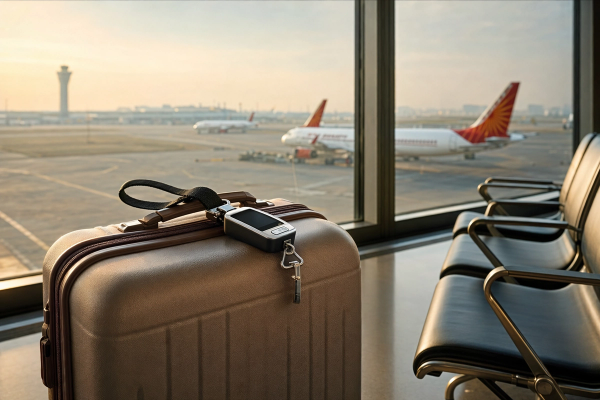
I have carried a lot of ridiculous things while travelling. Pickles wrapped in three layers of newspaper, a packet of fish fry masala that made my entire suitcase smell like someone opened a dhaba inside it, mangoes that got slightly squashed on a bus near Vijayawada. But nothing has tested my food-travel skills quite like chhena poda. If you’ve eaten it fresh in Odisha, you know why. That caramelised top, the slightly smoky edges, the soft grainy chhena inside, that smell of baked sugar and cardamom... uff. It’s the kind of sweet that makes you immediately think, okay, how do I take this home without ruining it? And then you buy too much. Obviously.
My most recent chhena poda carrying adventure was on a Bhubaneswar to Kolkata train trip, after a few days of eating my way through Bhubaneswar, Cuttack, Pahala, and a little detour toward Nayagarh because I’m that person who will change an itinerary for dessert. Odisha is having such a nice food-travel moment right now. In 2026, more travellers are doing these hyperlocal food trails instead of only ticking off monuments, and honestly I love it. People are asking where the sweet came from, who made it, whether it can survive a flight, if there’s a vacuum-packed version, all that. Food souvenirs have become almost as important as photos. Maybe more, because you can eat them.
First, What Makes Chhena Poda So Hard to Travel With?
#Chhena poda is often called Odisha’s baked cheesecake, which is not totally wrong but also not enough. It’s made with fresh chhena, basically cottage cheese, mixed with sugar, sometimes semolina, cardamom, cashews, raisins, and then baked until the outside goes dark and caramelised. The best ones are not dry like cake and not syrupy like rasagola. They sit in this slightly dangerous middle zone. Moist enough to taste heavenly, but that same moisture is what makes packing tricky. Fresh dairy plus heat plus a long journey equals stress. Delicious stress, but still stress.
The thing people don’t always realise is that chhena poda changes with time. Fresh from the shop, it smells buttery and roasted, and the texture is tender. After six or eight hours, it firms up a little, which can actually make it easier to slice and carry. After a full day, if it has been kept cool and clean, it can still be very good. But if you leave it in a warm car boot in May, then no, don’t blame Odisha or the sweet. That’s on you, boss. Odisha summer is not joking around.
My Pahala Stop, Where I Bought Too Much Because I Have No Self Control
#If you’re travelling between Bhubaneswar and Cuttack, Pahala is almost unavoidable if you love sweets. It’s famous for chhena-based sweets, especially hot rasagola, chhena gaja, and yes, chhena poda. The whole stretch has these sweet shops with trays of fresh stuff sitting out, and there’s a smell in the air that is just milk, sugar, frying, smoke, traffic, and happiness. Not very poetic maybe, but true. I stopped there thinking I’ll buy half a kilo. I walked out with two kilos divided between three packets, because the shop guy said, “Train? Take this one, slightly firm. Better for journey.” I believed him like he was my spiritual guide.
One useful thing I noticed in Pahala and also in Bhubaneswar sweet shops is that more places now understand travellers. Earlier, you’d get sweets in a basic cardboard box tied with thread and good luck to you. Now, especially in busier shops, they’ll ask if you’re flying, taking train, same-day travel, next-day travel. Some places offer tighter plastic wrapping, foil trays, branded boxes, and even travel packs. Not everywhere, and not always fancy, but the mindset has changed. Food tourism has pushed local sweet shops to think about shelf life, hygiene, and packaging. Thank god, because my old newspaper-and-prayer method was not sustainable.
Where I Like Buying Chhena Poda in Odisha
#I’m not going to pretend there is one best chhena poda in Odisha, because that’s how you start fights. Everyone has a favourite shop, and every uncle has a story about the “original” one. The dessert is strongly associated with Nayagarh, where the popular origin story says it came from an accidental overnight bake of sweetened chhena in a wood-fired oven. Whether every detail is historically neat or not, the Nayagarh connection is real in people’s hearts. In Bhubaneswar, I’ve had good versions from older sweet shops and popular local chains. Pahala is reliable for road-trip buying. Cuttack also has some serious sweet shops, though I usually get distracted by dahibara aloodum there and lose my focus.
- Pahala, between Bhubaneswar and Cuttack, is probably the easiest stop for travellers who want chhena poda plus other chhena sweets.
- Bhubaneswar is better if you want cleaner packaging, branded boxes, and maybe a shop that understands flight packing.
- Nayagarh feels more like a pilgrimage if you’re nerdy about origin stories and old-school food traditions.
- Cuttack is dangerous in a good way, because you go for one sweet and end up eating chaat, dahibara, bara, and then forget your budget.
The Best Time to Buy It Before Travelling
#Here’s my rule now, learned after one slightly sweaty disaster on a bus to Puri. Buy chhena poda as close to departure as possible, but not so close that the shop gives it to you steaming warm. Warm chhena poda tastes amazing, but packing it hot traps moisture, and then the inside of the box gets wet and weird. I like buying it 2 to 4 hours before travel, when it has cooled fully but still smells fresh. If the journey is short, say Bhubaneswar to Puri or Cuttack, you’re fine with basic packing. If it’s overnight train or a flight plus cab plus waiting around, ask for a firmer, less wet piece.
Also, don’t buy the prettiest softest center piece if you’re carrying it far. I know, heartbreaking. The edge pieces with a good caramelised crust are better travellers. They don’t collapse as easily, they don’t weep moisture as much, and honestly the burnt-caramel edge is the best part anyway. Me and my friend once fought over the corner piece in a hotel room near Master Canteen, and I’m still not sorry. Some friendships are strong enough for this. Some are not.
Packing Chhena Poda for Train Travel
#Indian train travel and chhena poda are actually a lovely match, if you pack smart. Trains have more space than flights, nobody is forcing you to compress your food under a seat like emotional baggage, and you can keep the box near you. I prefer a sturdy cardboard sweet box first, then a layer of butter paper or food-grade paper around the slices, then the whole box goes inside a zip pouch or clean cloth bag. If it’s a long train ride in summer, I carry an insulated lunch bag with a small gel ice pack wrapped in a towel. Don’t put the ice pack directly against the sweet unless you enjoy soggy sadness.
On my Bhubaneswar to Kolkata trip, I kept the chhena poda in my backpack but not at the bottom. That sounds obvious, but you’d be suprised how many people put sweets under books, chargers, and water bottles. Keep it flat. Flat is everything. I opened it around Kharagpur and the whole compartment suddenly became interested in my life. One aunty asked where I bought it, one guy said his mother makes better, and a child stared at it like it was a temple offering. This is another packing tip, actually. Carry extra. Food attracts conversation in trains, and chhena poda is too fragrant to hide.
Packing It for Flights, Which Is Where People Panic
#For domestic flights within India, solid sweets like chhena poda are generally allowed in cabin baggage, but airport security and airline rules can vary, especially if something is very moist, oily, or packed with liquid. Chhena poda is usually easier than syrup sweets because it doesn’t sit in ras. Still, I always check the airline’s current food policy before flying, and if I’m carrying a big quantity, I pack it in checked luggage with proper cushioning. In cabin baggage, keep it in a sealed box that can be opened for inspection without turning into a drama.
The mistake I made once was buying a large round chhena poda and trying to carry it whole on a flight. Romantic idea, terrible execution. It cracked, shifted, and the caramel top stuck to the lid. Now I ask the shop to cut it into thick slabs or rectangular pieces. Slabs pack better. They cool faster too. Wrap each slab in butter paper, then put them snugly inside a rigid container. If there’s empty space, fill it with crumpled food-safe paper so the pieces don’t slide around. Basically treat it like a very tasty fragile object, because it is.
A Tiny Airport Food Trend I Actually Like
#One nice travel trend in 2026 is that airports and railway stations are slowly getting more serious about regional food souvenirs. Not everywhere, obviously, and some places still sell sad sandwiches at luxury prices, but the direction is good. Bhubaneswar airport has become more useful for local packaged foods compared with a few years ago, and across India you now see more state-led stores, regional snack counters, millet products, vacuum-packed sweets, and QR-code labels telling you where something came from. It’s part convenience, part storytelling. I still prefer buying chhena poda from a proper sweet shop, but if you forgot, airport options can save you from returning home empty-handed and being judged by your family.
Road Trips, Buses, and the Hot Car Problem
#Road trips are my favourite way to eat through Odisha, but they are not always kind to dairy sweets. The enemy is not distance, it’s heat. A two-hour drive with the box in air-conditioning is fine. A two-hour drive with the box in the dicky under afternoon sun can ruin everything. Keep chhena poda inside the car, away from direct sunlight, preferably in an insulated bag. If you’re stopping for lunch, don’t leave it in the parked car like I did once near Pipili. The applique shops were gorgeous, I got distracted, and when I came back the box was warm. It was still edible, but the texture had gone loose and sad. I ate it anyway, because waste is a sin, but lesson learnt.
If you’re doing Bhubaneswar to Puri, buy after breakfast, drive with AC, and eat or refrigerate by afternoon. If you’re doing a longer loop, maybe Bhubaneswar to Konark to Puri, don’t buy chhena poda in the morning and expect it to happily survive beach heat, temple queues, and three photo stops. Buy it on the way back or ask your hotel to refrigerate it. Hotel staff in Odisha are usually very sweet about this if you ask politely. Just label your box, because hotel fridges become mysterious places where everyone’s leftovers look important.
How Long Does Chhena Poda Stay Fresh?
#This depends on recipe, moisture, weather, packing, and whether it has been handled cleanly. In cool weather, fresh chhena poda can usually stay good for about a day at room temperature if it’s properly packed. In hot and humid weather, I try to eat it within 6 to 8 hours unless it is refrigerated. In the fridge, it can hold for 2 to 3 days, sometimes more if it was made drier and packed hygienically, but the flavour is best early. Don’t keep opening the box with wet hands, don’t use the same knife you used for something spicy, and don’t leave it uncovered because fridge smells are real. Chhena poda that smells like onion is a personal tragedy.
If the shop says their version lasts five days without refrigeration, ask how. Maybe it’s a drier baked version, maybe it has different sugar levels, maybe it’s vacuum packed. That’s fine, but don’t assume every chhena poda behaves the same. Fresh artisanal sweets are not like factory biscuits. This is part of their charm and part of the headache. I usually ask three questions at the counter: When was it made? Does it need refrigeration? Is this one good for travel? Simple questions, but they save you from carrying a beautiful disaster.
My Actual Packing Kit for Chhena Poda
#I’ve become that person who travels with food packing supplies. Not a full kitchen, relax, but a few useful things. A flat airtight box, two zip pouches, butter paper, a small insulated bag, and sometimes a gel ice pack if I know the journey is long. I used to think this was overkill. Then I watched a box of sweets leak into my cotton kurta bag during a humid train ride, and now I have no shame. Also, pack chhena poda separate from clothes. Even when it doesn’t leak, the smell travels. Nice smell, yes, but you don’t want your shirt smelling like caramel milk during a meeting.
- Ask for fully cooled chhena poda, not hot from the tray, if you’re packing it for more than an hour.
- Choose firmer pieces with caramelised edges for long travel, not the softest center part.
- Use butter paper first, then a rigid box, then a sealed outer bag.
- Keep it flat and don’t put bottles, shoes, books, or random souvenirs on top of it. Yes, people do this.
- For summer travel, use an insulated bag, but avoid direct contact with ice packs.
Can You Carry Chhena Poda Internationally?
#This is where you need to be careful. Many countries have strict rules about dairy products, even if they are cooked or baked. Some places may allow commercially packed foods with labels, some may not allow dairy at all, and some require declaration. Don’t just sneak it in because your cousin said “nothing happens.” Things do happen. Fines happen. Confiscation happens. Sadness happens. If you’re travelling outside India, check the destination country’s customs and agriculture rules before packing chhena poda. For international travel, I would only consider properly sealed, commercially labelled packs, and even then I’d declare it if required.
Honestly, if I’m flying abroad, I usually don’t carry fresh chhena poda unless I’m very sure of the rules. I carry dry snacks instead, like khaja, some types of mixture, or packaged sweets with clear labels. Chhena poda is best enjoyed close to home, close to Odisha, close to the people who know what it should taste like. That sounds sentimental, I know, but food has geography. You can transport it, but you can’t always transport the moment.
What to Eat With Chhena Poda While You’re Still in Odisha
#Please don’t make chhena poda your only Odisha food memory. It deserves attention, but Odisha’s food scene is wider and more exciting than many travellers realise. In Bhubaneswar, I like going for a proper Odia thali at places like Dalma or Odisha Hotel when I want comfort food with dalma, saga, bhaja, badi chura, fish curry if I’m in the mood. Nimantran, the Odisha Tourism restaurant, has also made regional dishes more approachable for visitors. Kanika at Mayfair is more polished and expensive, but good if you want a calmer sit-down meal. Then outside restaurants, the real joy is morning bara-ghuguni, dahibara aloodum in Cuttack, pakhala in summer, chhena jhili if you find a good one, and temple-side khaja around Puri.
The 2026 food travel mood is very much about edible routes, not just restaurants. People are building trips around breakfast lanes, sweet clusters, temple food, tribal markets, and seasonal dishes. Odisha fits this beautifully because its food is still not over-staged for tourists in many places. You can have a genuinely local breakfast and nobody is making it into a performance. That said, hygiene matters. I eat street food, but I also watch turnover, water source, and crowd. If a stall is busy and the food is hot, I feel safer. If something has been sitting sadly under flies since morning, I move on. Romance is good, stomach infection is not.
The best chhena poda is not always the famous one. Sometimes it’s the one the shopkeeper cuts from the darker side, wraps carefully, and tells you to eat before sunset.
A Small Story From Nayagarh That Stayed With Me
#In Nayagarh, I met a sweet maker who had that calm, slightly amused expression of someone who has answered tourist questions for years. I asked about the origin story, the accidental bake, the old ovens, all that. He smiled and said, “Story is story, taste is proof.” I loved that. He gave me a piece that was darker than what I usually buy, almost burnt at the edge, and told me not to compare it with city shop chhena poda. It was denser, less sweet, with a deeper roasted flavour. Not Instagram-perfect. Better than perfect, actually. I ate it outside the shop, standing near my bag, while buses coughed dust into the road. Travel glamour, no?
That piece would not have survived a long journey, I think. It was too fresh, too moist, too alive in that moment. And that’s another thing I’ve learned. Not every great food has to be carried home. Sometimes the best version is the one you eat there, with sticky fingers, before the tea gets cold. Buy a travel-friendly piece separately if you need to bring some for family. But don’t sacrifice the fresh experience just because you’re thinking about packing. Eat first. Pack second. This is my philosophy and also probably why my travel budgets fail.
Common Mistakes I See People Make
#The biggest mistake is treating chhena poda like a dry cake. It’s not. It has dairy, moisture, and a delicate texture. The second mistake is buying from anywhere just because the board says “famous.” Famous is a very flexible word in India. Look for freshness, crowd, smell, and how the shop stores the sweet. Is it covered? Are they using clean knives? Does the piece look moist but not watery? Are flies being managed? I’m not saying become a health inspector, but use your eyes. Your stomach will thank you.
Another mistake is overpacking without airflow when the sweet is still warm. People wrap hot chhena poda in plastic, then wonder why condensation forms. Let it cool. If the shop is rushing, wait a little or ask them for a cooled batch. Also don’t refrigerate it and then keep it sealed in a hot bag for hours, because temperature swings can mess with texture. If refrigerated, keep it cool as consistently as possible. And please, don’t microwave it aggressively later. Gentle warming is okay, but blasting it makes the chhena rubbery. I’ve done it. Regret tastes chewy.
My Favourite Way to Serve It After Travel
#When I bring chhena poda home, I let it sit out for 15 to 20 minutes if it was refrigerated, then slice it with a clean sharp knife. I like it slightly cool or room temperature, not hot. With black coffee, it becomes surprisingly elegant. With chai, it becomes homely. With vanilla ice cream, it becomes a bit fusion and maybe not traditional, but I’m not against happiness. One friend served it with roasted cashews and a tiny pinch of sea salt, and I was annoyed because it was actually brilliant. Food innovations don’t always need lab equipment and foam. Sometimes it’s just a good sweet plus one clever touch.
If the chhena poda got a little dry during travel, don’t panic. Serve smaller slices with tea or warm it very gently for a few seconds. If it got too moist but still smells fresh, refrigerate it uncovered for a short while to firm up, then cover again. If it smells sour, fizzy, or off, don’t be brave. Throw it. I know that hurts, especially when you carried it across half the country, but dairy sweets are not where heroism should happen.
Final Freshness Notes Before You Stuff Your Bag With Sweet Happiness
#So, here’s the real takeaway. Chhena poda can travel, but it needs respect. Buy it fresh, let it cool, choose firmer pieces, pack it flat, protect it from heat, and don’t pretend one rule works for every season. Train journeys are easiest. Domestic flights are manageable if packed properly. Road trips need temperature control. International trips need customs research, not optimism. And if you’re in Odisha, please take time to eat it there too, not only carry it away like a trophy. The place is part of the flavour.
For me, chhena poda has become more than a sweet souvenir. It’s tied to station platforms, Pahala traffic, hotel fridges, chatty aunties in train compartments, and that first bite where the caramel top gives way to soft chhena underneath. Travel does that to food. It makes it messy and memorable. If you’re planning a food trip through Odisha, pack smart, eat widely, ask locals shamelessly, and leave a little space in your bag. Actually, leave a lot. And if you like these kind of food-and-travel stories, tips, and slightly obsessive edible detours, have a wander through AllBlogs.in sometime.