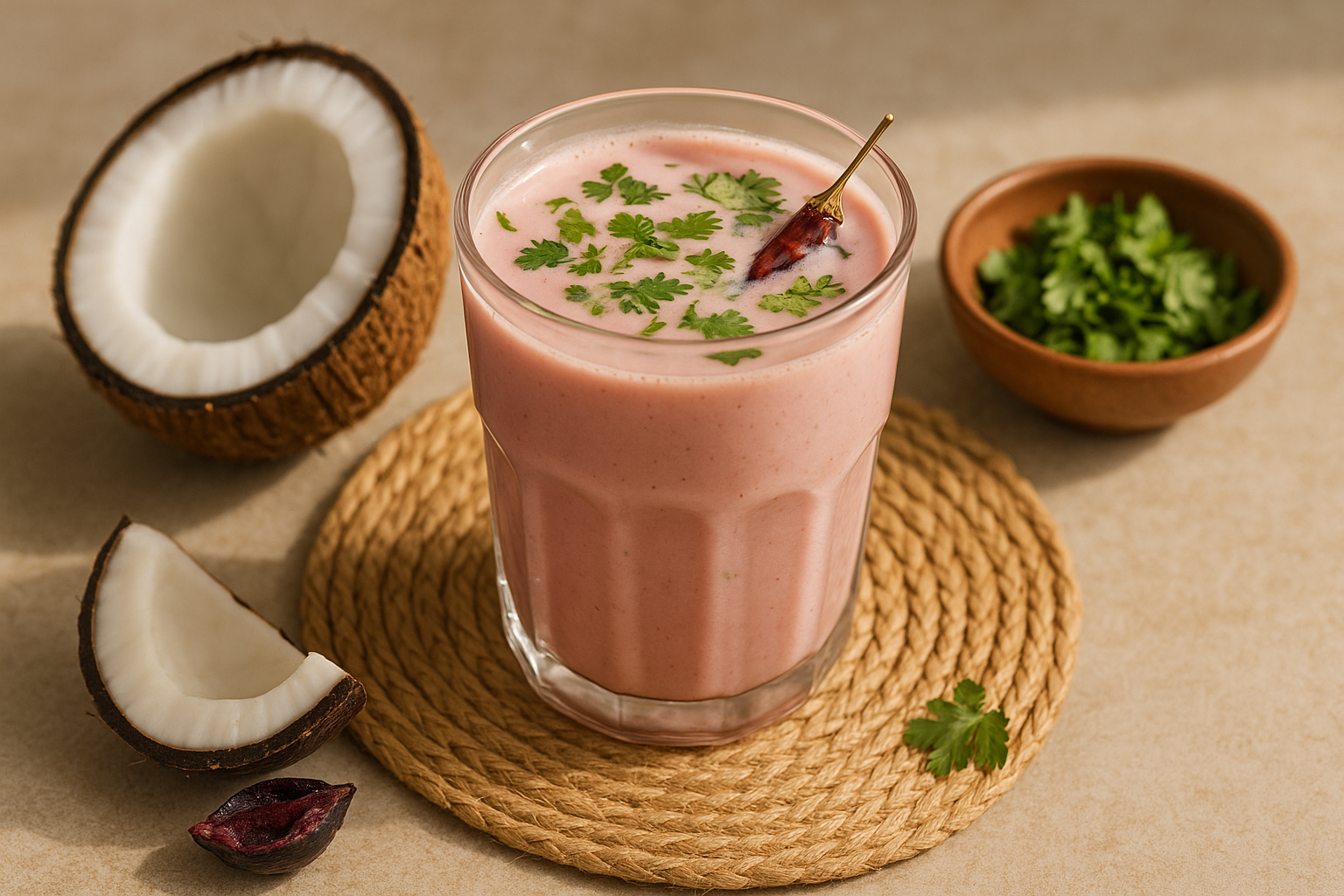
I don’t even wanna sound dramatic here, but sol kadhi kinda saved me from one of those brutal, sweaty, sticky Konkan coast afternoons. You know the kind. Shirt glued to your back, hair doing weird things, and absolutely zero patience left for life. I was in a small coastal eatery near Malvan years ago, tired and overfed after a fish thali, and someone just put this pale pink drink in front of me like it was no big deal. First sip... cold, tangy, coconutty, garlicky, a little spicy, weirdly calming. I remember thinking, wait, why does nobody talk about this enough? Since then, I’ve made it at home a stupid number of times, messed it up too, and honestly I still get excited when that pink color blooms in the bowl. Sol kadhi isn’t just a recipe to me now. It’s relief. It’s summer survival. It’s one of those regional Indian things that deserves way more hype than some over-marketed bottled “gut health” drink, if I’m being honest.
What sol kadhi actually is, in case you’ve heard the name but never had it
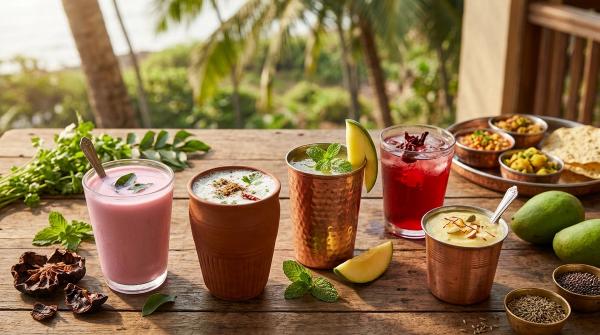
#Basically, sol kadhi is a traditional drink from the Konkan region, especially popular in parts of Maharashtra, Goa, and coastal Karnataka. The classic version is made from kokum and coconut milk, with flavoring from garlic, green chili, sometimes cumin, coriander leaves, and a little salt. Some homes make it thinner like a drink, some make it slightly richer and more sippable with meals, and some serve it almost like a digestive after seafood-heavy lunches. The word “sol” is often linked to the kokum extract, while “kadhi” in this context doesn’t mean the North Indian yogurt-besan kadhi people might be picturing. Very different vibe. Very different taste. And honestly, much prettier too. That naturally blush-pink color? Come on. Gorgeous.
Also, there are two broad styles I keep running into. One is the fresher, milkier coconut-forward version made with freshly extracted coconut milk and soaked kokum. The other is more tempering-heavy, where a tadka or stronger spice profile changes the whole mood. I like both, though if you ask me on a hot day, I’ll always pick the cold, minimal, fresh one. Straight from the fridge. Maybe with rice on the side, maybe after bombil fry, maybe just by itself because adulthood is confusing and lunch can be a glass of pink kokum-coconut magic if you want it to be.
My first proper sol kadhi memory... and why I got mildly obsessed
#I remember when I first tried making it after that trip. Disaster. Absolute disaster, lol. I used way too much garlic because some uncle in a market told me “garlic gives life,” which, okay yes, but not half a bulb in two glasses of kadhi. Then I used canned coconut milk that was too thick and kinda sweet, and the whole thing tasted like a confused smoothie. Not good. But that failure taught me something important, actually. Sol kadhi looks simple, and it is simple, but simple recipes are sneaky. They depend on balance. The kokum has to be pleasantly tart, not mouth-puckering aggressive. The coconut milk should be silky and light. Garlic should whisper a bit, not punch you in the face. I’ve gotten way better now, though every once in a while I still overdo the chili and then pretend that was the plan.
A good sol kadhi should feel cooling, tangy, savory, and just a little mysterious. If it tastes flat, something’s off. If it tastes like pink garlic water, something is very off.
The easy sol kadhi recipe I use at home all summer
#There are fancier ways and there are old-school ways with fresh coconut scraping and all that, and I respect them deeply. But this is the version I actually make on regular weekdays when the fan is on full blast and I can’t be bothered with a huge production. It’s easy, reliable, and tastes proper if your ingredients are decent.
- About 12 to 15 dried kokum petals
- 1 to 1 and 1/2 cups warm water for soaking the kokum
- 1 cup thick coconut milk plus 1 cup thin coconut milk, or dilute thick coconut milk with cold water till it feels light
- 2 to 4 small garlic cloves
- 1 green chili
- A small pinch of roasted cumin powder
- Salt, enough to make it lively
- A little chopped coriander, optional but nice
- Optional tiny pinch of sugar if your kokum is very sharp
First, soak the kokum in warm water for maybe 20 to 30 minutes. Press it a bit so the color and sourness come out nicely. Meanwhile crush garlic and green chili in a mortar-pestle if you have one. Please don’t fully puree it into a paste unless you like raw garlic drama. Then strain the kokum water if you want a smoother drink, or leave it rustic. Mix the kokum extract with the coconut milk, add the crushed garlic-chili mix, cumin powder, salt, coriander. Taste it. Then taste it again after 5 minutes because the garlic blooms a little. Adjust. If it’s too intense, add cold water. If it’s too mild, another kokum petal soak can help. Chill before serving. That’s it. No gas required in the simplest version, which honestly feels like a blessing in peak summer.
A few small things that make a big differnce
#- Use kokum that still smells fruity and deep, not dusty-old. Stale kokum gives sad kadhi.
- Fresh coconut milk tastes best, yes. But good-quality unsweetened canned coconut milk works if you thin it properly.
- Don’t dump in too much garlic all at once. You can always add more. You can’t un-garlic your kadhi. I’ve tried. Not possible.
- Serve it cold, not icy. Too cold and the flavors kind of shut down.
- Let it rest for 10 to 15 minutes before serving so everything settles together a bit.
Some people add a tempering with mustard seeds, curry leaves, and hing. I do that occassionally if I’m serving sol kadhi with a bigger lunch and want it to feel a bit more meal-ish. But if I’m making it for straight-up refreshment, I skip the tadka. The cleaner flavor just hits different.
Benefits of sol kadhi, minus the fake wellness nonsense
#Okay so, let’s talk benefits in a normal-person way. Not in that annoying internet way where every traditional food is suddenly a miracle cure. Sol kadhi is refreshing, hydrating in the practical sense because you’re literally drinking fluid, and often easier to enjoy in hot weather than something heavy. Kokum has long been used in western coastal cooking not just for sourness but also because people associate it with cooling. That traditional belief is a huge part of why sol kadhi shows up so much in summer meals. Coconut milk brings body and satiety, and when the drink is served after a rich seafood or meat thali, a lot of people swear it helps them feel lighter afterward. Digestive? For many, yes, especially because of the kokum, garlic, and cumin combo. But it’s not medicine, just to be clear. It’s a smart, soothing food tradition that makes a lot of sense climatically and culinarily.
A thing I really appreciate is that sol kadhi fits neatly into what food people in 2026 keep calling “heritage wellness” and “regional functional beverages,” which sounds very startup-y but the core idea is true. People are getting tired of generic sugary drinks and are going back to local seasonal stuff that already existed forever. I’ve seen kokum coolers, probiotic-inspired coastal drinks, and sol-kadhi-style café specials pop up on menus and social media reels lately. Some places are even bottling cleaner-label kokum beverages with no weird aftertaste. Nice trend, honestly. Not every traditional thing needs reinvention, but I’m glad younger diners are curious again.
Is sol kadhi healthy? Yeah... mostly, in the way real food is
#If by healthy you mean is it generally lighter than many creamy restaurant drinks and does it fit into a balanced meal, then yes, pretty much. It’s vegetarian, often naturally vegan, gluten-free in its basic form, and can be made without cooking. That checks a lot of modern boxes without trying too hard. Kokum itself is valued for its tartness and traditional cooling reputation. Coconut milk has fats, obviously, so I’m not gonna sit here and pretend it’s zero-calorie fairy water. But in a normal serving, especially when diluted into a drink, it’s just food. Real food. And compared to a lot of ultra-sweet summer beverages, sol kadhi feels way more grounding. Less sugar crash, more ahhh, okay, I can function again.
What to eat with it, because this matters more than people say
#I know some people sip it by itself, and I do too, but with food? Oh wow. Best with a proper coastal meal. Fish fry, prawn curry, surmai thali, bombil, even a spicy chicken sukka if that’s your thing. It also works beautifully with simple rice and a dry sabzi when it’s too hot to eat dal. There’s this lovely contrast where the meal can be spicy, salty, fried, intense... and then sol kadhi comes in like, relax babe, I got this. It sort of resets your mouth. I’ve even had it with jackfruit fritters once and didn’t hate it, though I’m not sure I’d call that a pairing recommendation exactly. More like a weird vacation memory.
Restaurants, food trends, and the 2026 wave of regional Indian drinks
#One thing I’m noticing a lot in 2026 is that regional Indian drinks are finally getting menu space beyond tokenism. Not just fancy aam panna in stemware, but actual interest in kokum, panakam, sattu coolers, fermented rice drinks, and toddy-adjacent flavor inspirations in modern kitchens. New coastal and regional Indian restaurants opening in major cities have been leaning harder into drinks programs that feel rooted, not random. I’m seeing more chefs talk about low-intervention ingredients, less refined sugar, and hyper-local sourcing, which can sound buzzword-y, sure, but when it results in a really balanced kokum-based drink, I’m not complaining. In Mumbai and Pune especially, newer seafood spots and modern Konkani kitchens seem way more willing to put sol kadhi front and center instead of treating it like a side note.
My own restaurant opinion, slightly messy as always: the best sol kadhi is still usually at family-run places and homes, not polished concept restaurants. There, I said it. The fancy places can be fun and all, but sometimes they over-smoke it, foam it, carbonate it, deconstruct it, whatever, and I’m like please just give me the pink thing in a steel tumbler and let me live. That said... when a chef updates it carefully, maybe with fresh coconut extraction, carefully sourced kokum, and really clean seasoning, it can be gorgeous. I contain multitudes, okay. I contradict myself. Both things are true.
Common mistakes that make sol kadhi kinda disappointing
#- Using sweetened coconut milk by accident. It happens. It should not happen, but it happens.
- Making it too thick, almost like a gravy. Sol kadhi should flow.
- Adding too much chili so the cooling effect gets bullied out of the room
- Not enough salt. This is a huge one. Underseasoned sol kadhi tastes boring and watery
- Using old kokum that has lost color and tang
- Serving it immediately without resting, so it tastes disjointed
And one more thing, maybe controversial, maybe not. Don’t pour boiling hot tempering into cold coconut milk unless you know what you’re doing. It can split or at least mess with the texture. Let the tempering cool a touch first. I learnt that the ugly way.
A quick little variation if you want the more traditional from-scratch feel
#When I have time, I make coconut milk from fresh grated coconut. Blend with warm water, squeeze through a muslin or fine strainer, first extract thick, second extract thin. Then I use mostly the second extract plus a little first extract for richness. That version tastes cleaner and somehow more alive. If you’ve got access to fresh coconut and ten extra minutes, it’s worth doing at least once. There’s also a version where the kokum is ground with coconut and spices before straining. Beautiful flavor, but a bit more work and cleanup, which, listen, I’m not always spiritually prepared for.
Why this drink still feels emotional to me, not just tasty
#Maybe this sounds silly, but some foods feel like climate wisdom. Sol kadhi is one of those. It belongs to a coast, to humidity, to seafood lunches, to grandmothers who didn’t need “culinary innovation labs” to know what a body wants in hot weather. Every time I make it, I think about how so many regional Indian recipes evolved because people actually listened to place, season, and appetite instead of trends. And now trends are circling back and acting like they discovered something new. Funny how that works. I’m glad, though. Better late than never. If a viral reel gets one more person to soak kokum and make sol kadhi at home, I’m for it.
Also, very selfishly, I like serving this to friends who’ve never had it. Their face on the first sip is always a little confused, then delighted. “What IS this?” they say. And I get to do my whole speech again. Tangy! Cooling! Coconut! Konkan! Have with fried fish! It’s become a bit of a personality trait, maybe too much, but I can live with that.
Final thoughts, and why you should honestly just make it this week
#If summer where you are feels even half as rude as summer where I am, make sol kadhi. Not because it’s trendy, not because someone online called it a superdrink, but because it tastes amazing and makes a lot of sense. It’s fast, it’s flexible, and once you understand the balance, you can adjust it exactly how you like it. More kokum, less garlic, extra coriander, thinner, richer, whatever. That’s the fun of it. And if you happen to pair it with a spicy coastal lunch, even better. Honestly, some recipes are just recipes. This one feels like a ritual now.
Anyway, that’s my very biased love letter to sol kadhi. If you try it, make it cold and don’t skimp on good kokum. And if you like rambling food stories like this, with all my opinions and accidental kitchen chaos, you can wander over to AllBlogs.in too.