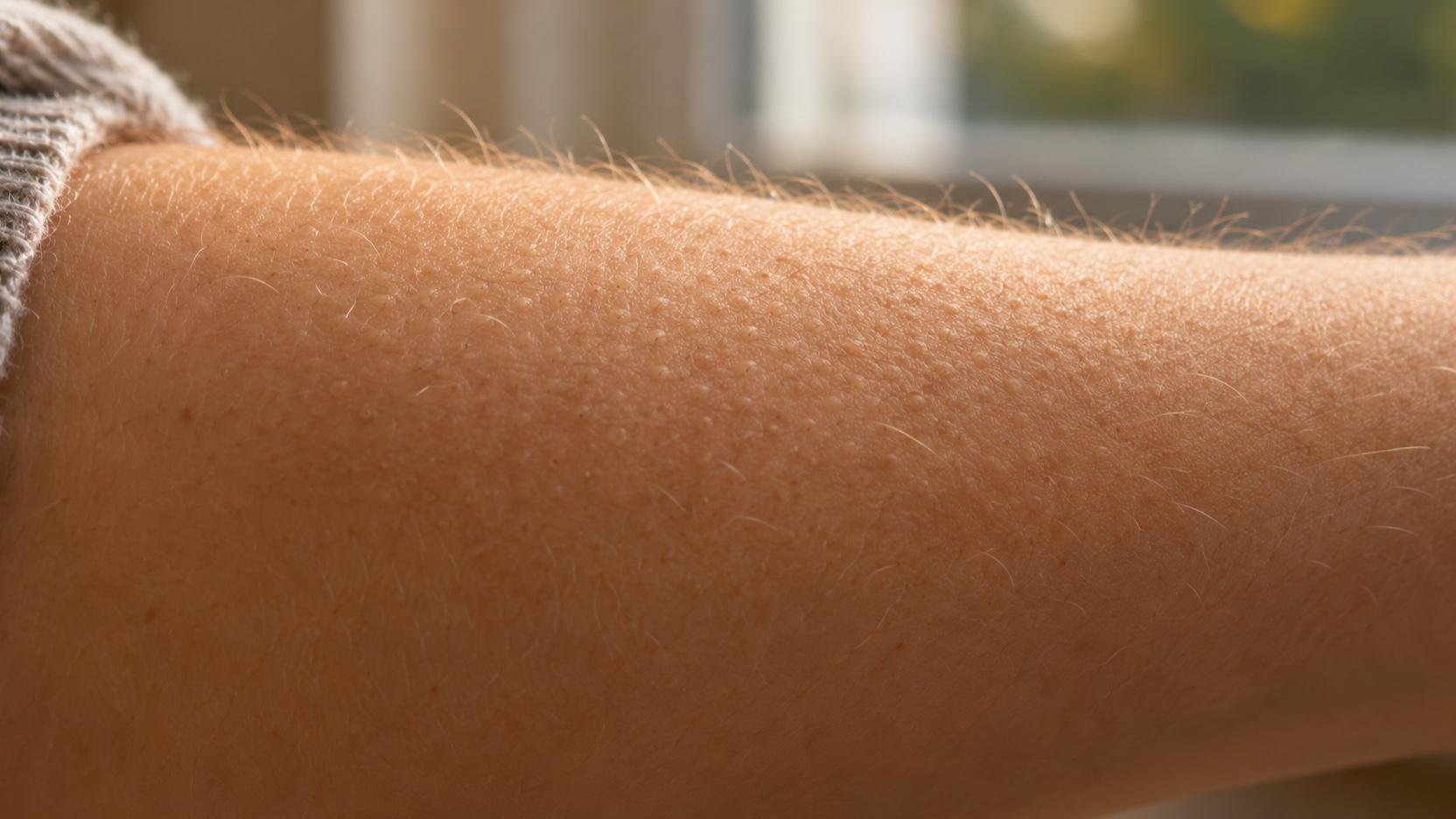
It happens in an instant, often without conscious thought or invitation. A sudden icy gust slips under a doorway, and the skin along your arms instantly erupts into a sea of tiny, raised mounds. A suspenseful horror film reaches its chilling crescendo, and a prickling wave ripples up your spine, leaving your neck hairs standing on end. Or perhaps you are sitting quietly with headphones, listening to a soaring vocal harmony or an orchestral crescendo, when an electric shudder courses through your chest, leaving you breathless with a profound, emotional skin chill.
Medically termed cutis anserina or piloerection, and colloquially known across the world as goosebumps, gooseflesh, or chills, this involuntary bodily reaction is one of the most intriguing paradoxes of human physiology. In furry animals like cats, bears, and chimpanzees, piloerection is a powerful survival adaptation: it puffs up a thick fur coat to trap an insulating layer of warm air during winter freezes, or doubles an animal visible silhouette to intimidate attacking predators.
Yet modern humans possess neither a protective winter pelt nor a terrifying mane. Our body hair is fine, sparse, and virtually invisible—a layer of microscopic peach fuzz that provides no measurable thermal insulation when stood on end. Why, then, does our nervous system retain this primitive reflex with such startling intensity?
Over the past two decades, neurobiologists, evolutionary geneticists, and cognitive psychologists have unraveled the multi-layered secrets of piloerection. Far from being a completely useless anatomical relic, goosebumps bridge our ancient mammalian ancestry with modern neurochemistry. They illuminate how our autonomic nervous system processes raw thermal threats, reveal the deep mesolimbic dopamine circuits that produce emotional and aesthetic frisson, and demonstrate surprising new roles in dermal stem cell regeneration that evolutionary biologists never anticipated.
The Cellular Motor: Arrector Pili Muscles and Dermal Biomechanics
#To understand how a goosebump forms, one must look deep beneath the skin surface into the microscopic architecture of the dermis. Scattered across virtually every square centimeter of human skin—with the exception of our glabrous hairless surfaces such as the palms of the hands and the soles of the feet—are hundreds of thousands of individual hair follicles.
Anchored to each follicle is a dedicated microscopic band of smooth muscle tissue known as the arrector pili muscle:
- Anatomical Attachment: The arrector pili muscle originates in the superficial papillary layer of the dermis and extends obliquely downward, inserting firmly into the connective tissue sheath surrounding the hair follicle bulb below the sebaceous gland.
- Resting Geometry: Under normal, relaxed conditions, human hair follicles sit at an acute, slanted angle relative to the skin surface, typically tilted at roughly 30 to 60 degrees.
- Active Contraction: When the arrector pili muscle contracts, it exerts a mechanical pulling force along its diagonal axis. Because the muscle acts as a microscopic guy-wire, its contraction forcibly pulls the slanted hair follicle upright into a vertical, perpendicular orientation.
- The Characteristic Mounds: Because the upper attachment point of the muscle is anchored directly into the dermal collagen matrix, the violent inward contraction simultaneously pulls the surrounding skin surface downward while pushing the hair follicle bulb upward. This mechanical tug-of-war creates the classic topographical deformity: a tiny raised bump surrounding a central dimple where the hair shaft emerges.
| Tissue Component | Histological Classification | Anatomical Connection | Functional Biomechanical Role |
|---|---|---|---|
| Arrector Pili Muscle | Involuntary smooth muscle bundle | Connects papillary dermis to hair follicle bulb | Contracts obliquely to pull hair shaft upright |
| Hair Follicle Bulb | Epithelial dermal invagination | Anchored deep within reticular dermis or hypodermis | Houses hair root, matrix cells, and dermal papilla |
| Sympathetic Nerve Terminals | Unmyelinated postganglionic autonomic axons | Ensheaths arrector pili smooth muscle fibers | Releases norepinephrine neurotransmitter upon activation |
| Interstitial Dermal Collagen | Dense irregular connective tissue matrix | Surrounds hair follicle and arrector pili complex | Anchors muscular tension, creating visible skin mound |
Because the arrector pili is composed entirely of involuntary smooth muscle, humans cannot consciously decide to contract these microscopic bands. You can deliberately flex your biceps or wiggle your toes, but you cannot willingly flex an arrector pili muscle through executive motor cortex commands. Its activation is governed entirely by the primitive, subconscious command center of the central nervous system: the sympathetic branch of the autonomic nervous system.
The Autonomic Spark: Sympathetic Nerves, Norepinephrine, and Thermal Chills
#The primary physiological trigger for goosebumps is sudden thermal challenge. When ambient temperature drops abruptly, or when cold air strikes warm skin, the body launches an immediate, coordinated defense sequence to prevent hypothermia.
This thermoregulatory cascade begins in the periphery:
- Peripheral Cold Sensing: Specialized thermal receptors located in the epidermis—predominantly sensory nerve endings expressing transient receptor potential melastatin 8 (TRPM8) ion channels—detect rapid drops in temperature.
- Hypothalamic Integration: Sensory action potentials race up the spinal cord to the preoptic area of the hypothalamus, the master thermostat of the human brain. The hypothalamus compares incoming sensory data with internal core body setpoints.
- Sympathetic Nerve Outflow: Recognizing a thermal deficit, the hypothalamus triggers immediate sympathetic outflow from the thoracic and lumbar segments of the spinal cord.
- Norepinephrine Release: Sympathetic postganglionic motor neurons course through the dermis, wrapping directly around the individual smooth muscle fibers of the arrector pili. At their neuromuscular junctions, these nerve terminals flood the tissue with norepinephrine (noradrenaline).
- Intracellular Calcium Influx: Norepinephrine binds to alpha-1 adrenergic receptors located on the surface of the arrector pili muscle cells. This binding stimulates an intracellular signaling cascade that opens voltage-gated calcium channels, flooding the smooth muscle cytoplasm with calcium ions and provoking a sustained, synchronized contraction across millions of follicles.
| Step in Thermal Cascade | Anatomical Site | Neurochemical or Cellular Event | Physiological Consequence |
|---|---|---|---|
| Thermal Detection | Cutaneous epidermal nerve endings | Activation of TRPM8 ion channels by cold | Rapid electrical signaling to dorsal spinal cord |
| Central Processing | Preoptic area of hypothalamus | Comparison against 37.0 C internal setpoint | Immediate command to conserve core thermal energy |
| Sympathetic Firing | Sympathetic chain ganglia | Postganglionic axonal action potential volley | Transmission to peripheral dermal micro-vessels and muscles |
| Muscle Activation | Arrector pili smooth muscle | Norepinephrine binds alpha-1 adrenergic receptors | Calcium influx triggers immediate piloerection |
| Vascular Defense | Dermal precapillary sphincters | Smooth muscle vasoconstriction | Blood shunted away from skin surface to vital internal organs |
Simultaneously, the exact same sympathetic surge triggers widespread peripheral vasoconstriction. Blood vessels in the skin constrict tightly, shunting warm arterial blood away from the exposed surface and deep into internal organs to preserve core body heat. This explains why goosebumps are almost always accompanied by pale, cold-to-the-touch skin: your circulatory and muscular systems are acting in lockstep under a single sympathetic survival protocol.
Evolutionary Echoes: Why Mammalian Fur Traps Heat and Intimidates Predators
#To appreciate why this complex neurochemical machinery exists in modern humans, one must look backward through hundreds of millions of years of mammalian evolution. For fur-covered mammals, piloerection is not a minor cosmetic curiosity; it is a life-or-death survival tool serving two primary functions: insulation and threat display.
Thermal Insulation: The Trapped Air Boundary
#In furry animals—from domestic dogs and cats to arctic wolves and sea otters—the coat consists of two distinct layers: dense, fine underfur and longer, coarser guard hairs. Under normal conditions, these hairs lay flat against the body.
When severe cold strikes, simultaneous contraction of thousands of arrector pili muscles pulls the entire fur coat upright. This transforms a flat, compressed coat into a thick, lofty, three-dimensional barrier:
- Dead Air Trapping: By standing erect, the dense hairs entrap a thick layer of motionless ambient air directly against the animal skin.
- Minimizing Conductive and Convective Heat Loss: Air is an exceptionally poor conductor of thermal energy. By holding this trapped air cushion immobile, the animal effectively wears a high-efficiency biological down jacket that halts heat dissipation into freezing winds.
Psychological Defense: The Aggression Display
#Piloerection also serves an equally vital role in mammalian social dynamics, territorial defense, and predator evasion. When an animal experiences sudden terror, shock, or territorial confrontation, the amygdala fires an emergency fight-or-flight alert, flooding the bloodstream with epinephrine and adrenaline.
The instant contraction of arrector pili muscles produces an immediate transformation:
- Visual Enlargement: A startled cat arches its spine and fluffs its tail into a giant bristling brush; an aggressive dog raises the hackles along its neck and spine; a chimpanzee bristles its entire body hair when displaying dominance.
- Deterring Attackers: In the animal kingdom, physical size is the primary deterrent against predation. By suddenly inflating its visible silhouette by 20 to 50 percent, a cornered mammal convinces a rival or predator that it is substantially larger, more formidable, and far more dangerous to attack.
In modern humans, evolutionary changes stripped away our dense protective fur coats millions of years ago in favor of naked skin optimized for evaporative sweat cooling during prolonged persistence hunting on the African savannah. Yet natural selection rarely deletes functional neurological circuits from scratch if they cause no active harm. The brainstem wiring, sympathetic nerves, and arrector pili muscles remain fully intact—an evolutionary ghost echoing our hairy ancestors.
The Aesthetic Shiver: The Neuroscience of Musical and Emotional Frisson
#While thermal goosebumps are easily understood through the lens of evolutionary biology, human beings experience piloerection in contexts that have nothing to do with freezing drafts or physical predators. We get goosebumps when listening to a haunting cello solo, witnessing a breathtaking athletic triumph, reading an exquisite line of poetry, or watching a transcendent cinematic scene.
In psychophysiology, this phenomenon is termed frisson (a French word meaning aesthetic chill or shiver). Psychologists sometimes refer to it as skin orgasms due to the intense, pleasurable waves of tingling warmth and emotional release that accompany the sensation.
Far from being an imaginary emotional reaction, frisson is a concrete, measurable neurobiological event characterized by:
- Transient Cutaneous Piloerection: Clusters of goosebumps erupting predominantly across the forearms, back of the neck, spine, and shoulders.
- Electrodermal Activity Spikes: A sudden, sharp increase in skin conductance (galvanic skin response), indicating an instantaneous burst of sympathetic autonomic nervous system activity.
- Micro-Thermal Vasomotor Shifts: A temporary subjective chill accompanied by a slight dilation of cutaneous micro-vessels in the upper torso.
- Pupil Dilation and Respiration Changes: Involuntary widening of the pupils and a brief, sharp catch in breathing, mirroring the physiological markers of sudden awe.
What triggers frisson? Decades of empirical musicology and psychological research reveal that aesthetic chills are rarely provoked by generic, background elevator music. Instead, they are reliably elicited by specific acoustic and compositional devices:
- Sudden Dynamic Violations: An unexpected transition from a hushed, delicate solo instrument to an immense orchestral swell.
- Harmonic Suspensions: A composer introduces a tense, unresolved dissonant chord, holding the listener in suspense before resolving into a soaring, triumphant consonance.
- Vocal Cracks and Emotional Range: A singer voice suddenly shifts into a raw falsetto, an unexpected high register, or an emotionally desperate rasp.
- Appoggiaturas: Ornamental notes that clash with the underlying harmony before neatly resolving, creating a momentary sense of tension and aesthetic relief.
The Dopamine Surge: How the Brain Mesolimbic Pathway Triggers Cutaneous Chills
#How does an abstract sequence of acoustic sound vibrations entering the ear canal cause microscopic smooth muscles on the forearm to violently contract? The answer was definitively revealed in 2011 by a team of neuroscientists at McGill University led by Dr. Valorie Salimpoor and Dr. Robert Zatorre.
In a landmark study published in Nature Neuroscience, the researchers used a combination of positron emission tomography (PET) scans and functional magnetic resonance imaging (fMRI) to map the human brain in real time as participants listened to music that reliably gave them chills.
The neuroimaging data revealed a stunning discovery: musical frisson activates the exact same primitive mesolimbic reward circuitry that reinforces survival behaviors like eating high-calorie food, drinking water when dehydrated, or engaging in reproduction.
Crucially, the brain processes aesthetic chills through a distinct, two-phase neurochemical symphony:
Phase 1: The Anticipatory Tension (The Caudate Nucleus)
#As a listener hears a musical theme building toward an anticipated climax, the brain dorsal striatum—specifically the right caudate nucleus—begins actively firing. The caudate is responsible for pattern recognition, prediction, and associative learning:
- Predictive Modeling: The brain continuously attempts to guess what note, chord, or rhythm will arrive next based on internal musical memory.
- Anticipatory Dopamine: During this rising tension, the caudate releases moderate amounts of dopamine, creating a state of eager, almost breathless suspense. The listener feels the chill coming before the musical climax actually arrives.
Phase 2: The Peak Climax (The Nucleus Accumbens)
#The instant the musical resolution strikes—the soaring soprano note, the unexpected key change, the arrival of the bass drop—brain activity abruptly shifts from the dorsal striatum to the ventral striatum:
- Dopamine Explosion: The nucleus accumbens, the primary pleasure center of the human brain, detonates in a massive wave of dopamine release.
- Sympathetic Overflow: Because the nucleus accumbens is tightly interconnected with the amygdala and the autonomic centers of the brainstem, this overwhelming surge of emotional pleasure spills over into the sympathetic nervous system.
- Piloerection Eruption: Sympathetic motor axons fire down the spinal cord, releasing norepinephrine into the skin, contracting the arrector pili muscles, and creating the physical goosebump chill.
| Phase of Musical Frisson | Primary Brain Region | Dominant Neurochemical | Subjective Psychological Sensation |
|---|---|---|---|
| Musical Buildup | Dorsal Striatum (Caudate Nucleus) | Anticipatory Dopamine | Intense curiosity, tension, eager emotional suspense |
| Climax and Resolution | Ventral Striatum (Nucleus Accumbens) | Peak Dopamine Surge | Overwhelming pleasure, emotional release, profound awe |
| Autonomic Overflow | Hypothalamus and Amygdala | Norepinephrine, Endorphins | Physical shiver, hair standing on end, pupil dilation |
| Post-Chill State | Prefrontal Cortex and Insula | Serotonin, Oxytocin | Calm reflection, deep emotional resonance, relaxation |
This neurobiological pathway explains why our understanding of involuntary autonomic reflexes and neurological state transitions consistently shows that deep survival mechanisms can be repurposed by human cognitive architecture to produce profound emotional and aesthetic experiences.
The Stem Cell Discovery: How Cold-Induced Goosebumps Stimulate Hair Growth
#For decades, medical textbooks cited goosebumps as a classic, textbook example of an entirely vestigial evolutionary trait—a useless biological leftover, like the human appendix or wisdom teeth, that serves no active modern physiological purpose.
However, in 2020, a groundbreaking study published in the prestigious journal Cell fundamentally overturned this view. A research team led by Dr. Ya-Chieh Hsu at Harvard University discovered that the arrector pili muscle is not just a passive mechanical lever for erecting hairs; it serves as a critical structural and signaling niche for regenerating hair follicle stem cells.
Using advanced high-resolution imaging and molecular genetics, the Harvard researchers discovered an intricate three-part cellular unit:
- The Sympathetic Nerve: Sympathetic nerve fibers do not simply terminate on the muscle; they wrap around the arrector pili like a ribbon.
- The Muscle Bridge: The arrector pili muscle acts as a physical bridge, connecting the sympathetic nerve directly to the bulge region of the hair follicle, where adult hair follicle stem cells reside.
- The Dual-Action Defense: When exposed to sustained cold, the sympathetic nerve fires constantly. In the short term, its release of norepinephrine contracts the arrector pili muscle to produce immediate goosebumps. In the long term, however, that exact same continuous burst of norepinephrine directly enters the hair follicle stem cell niche.
- Activating Hair Regrowth: The flood of norepinephrine forces quiescent hair follicle stem cells to wake up, proliferate, and initiate a new hair growth cycle, stimulating the production of a thicker, denser hair coat.
In furry mammals, this creates an extraordinarily elegant two-tiered defense against environmental winter: immediate goosebumps trap warm air within seconds, while the exact same biological signal orders the skin to grow a heavier winter fur coat over the following weeks. In modern humans, while our hair coats no longer thicken into winter pelts, the discovery proved that the arrector pili muscle remains an active, vital component of dermatological regenerative biology.
Clinical Perspective: When Piloerection Signals Neurological or Autonomic Dysfunction
#In the vast majority of everyday life, goosebumps are completely benign, fleeting responses to chilly rooms or stirring music. However, because piloerection is an autonomic reflex controlled directly by sympathetic nerves, abnormal or unprovoked goosebumps can occasionally serve as an important clinical diagnostic window into underlying medical conditions.
Physicians evaluate several forms of pathological piloerection:
- Autonomic Dysreflexia: In individuals with high-level spinal cord injuries (typically at or above the T6 thoracic level), a noxious stimulus below the level of injury—such as a distended urinary bladder or bowel impaction—can trigger an unchecked, massive sympathetic reflex discharge. This life-threatening medical emergency causes dangerous spikes in blood pressure accompanied by intense, profuse goosebumps and sweating exclusively above the level of the spinal injury.
- Piloerection in Temporal Lobe Epilepsy: Rarely, spontaneous, involuntary goosebumps erupting down one side of the body can represent an autonomic seizure aura. This occurs when focal epileptic electrical discharges originate in the amygdala or temporal lobe networks that regulate autonomic output.
- Substance Withdrawal Chills: Severe shivering and intense, chronic goosebumps are a classic hallmark of opioid withdrawal. Opioid cessation causes an acute rebound surge of noradrenergic activity from the locus coeruleus in the brainstem, leaving the skin in a continuous, agonizing state of hyper-piloerection—the historical origin of the phrase going cold turkey.
- Hypothalamic Dysfunction: Persistent, unexplained goosebumps in warm environments can signal metabolic or endocrine issues, including acute thyroid dysfunction or hypothalamic lesions that distort internal temperature regulation.
| Clinical Presentation | Typical Physical Pattern | Underlying Pathophysiological Mechanism | Diagnostic Consideration |
|---|---|---|---|
| Normal Physiological Piloerection | Symmetrical, transient, triggered by cold or emotion | Standard sympathetic noradrenergic release | Entirely benign physiological response |
| Autonomic Dysreflexia | Profuse goosebumps and sweating above spinal injury | Unchecked sympathetic discharge due to lower noxious trigger | Medical emergency; immediately check bladder and bowel |
| Autonomic Seizure Aura | Unilateral (one-sided) goosebumps, sudden onset | Focal epileptic discharge in temporal lobe or amygdala | Neurological evaluation, electroencephalogram (EEG) |
| Opioid Withdrawal State | Symmetrical, continuous, accompanied by severe chills | Locus coeruleus noradrenergic hyper-activation | Clinical addiction medicine intervention |
The next time a cold draft causes your skin to bristle, or an exquisite chord progression sends shivers cascading across your shoulders, take a moment to appreciate the extraordinary physiological machinery at work. In that single, fleeting goosebump, your skin is simultaneously whispering an ancient mammalian survival tale and orchestrating one of the most sophisticated neurochemical symphonies known to human science.