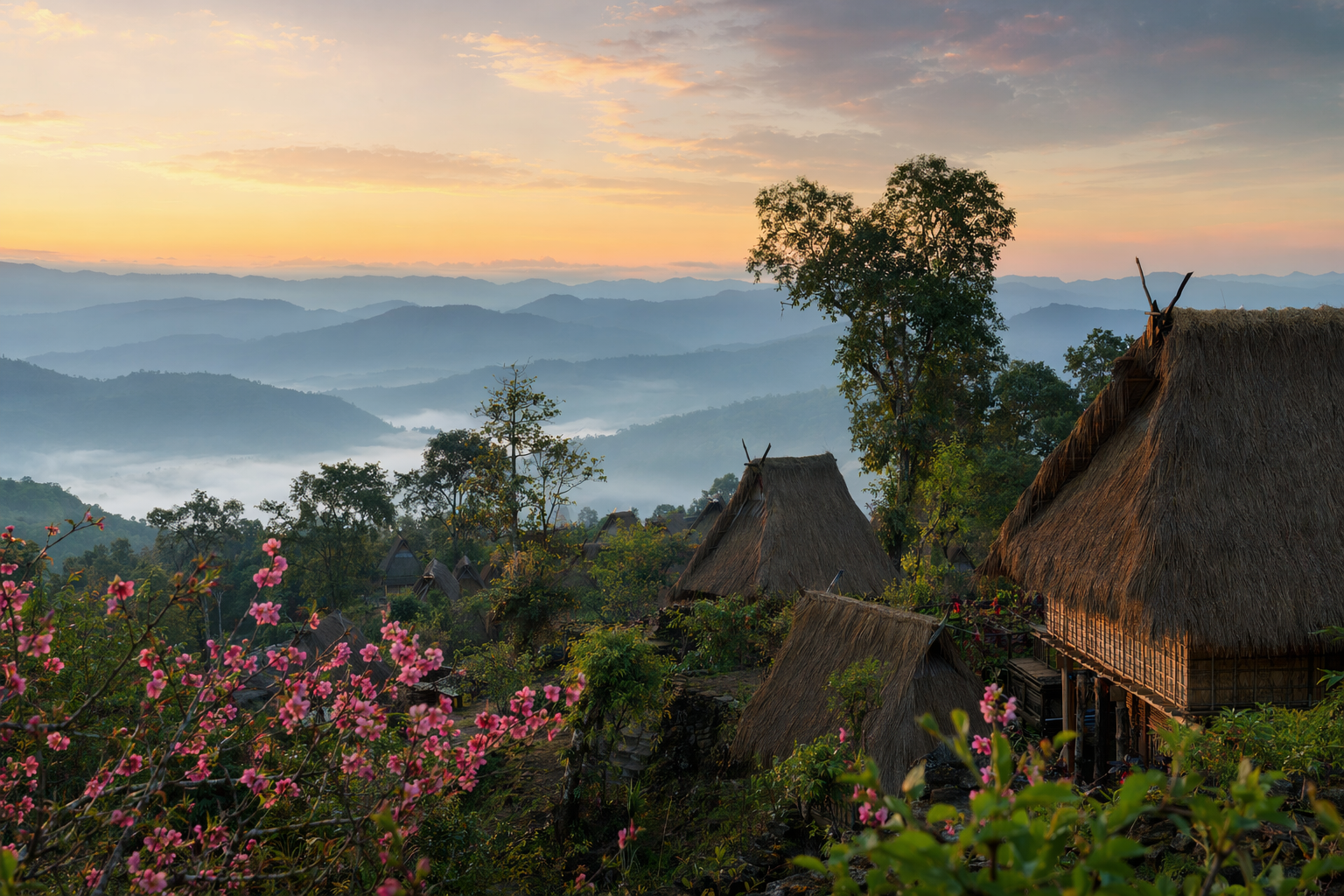
The short answer I give friends when they ask me
#If you ask me the best time to visit Northeast India, I’ll say October to April without thinking too much. This is the safest, prettiest, and most comfortable window for most travellers from India, especially if it’s your first proper Northeast trip. The skies are clearer after monsoon, the hills look washed and fresh, roads are usually more manageable, and you don’t spend half your holiday waiting for a landslide to clear. But, and this is important, Northeast India is not one destination. Shillong weather is not the same as Tawang weather. Majuli in Assam feels totally different from Ziro in Arunachal or Aizawl in Mizoram. So the “best time” depends on what you want: waterfalls, snow, festivals, trekking, food, road trips, or just a peaceful homestay with chai and clouds floating below you. I’ve done Northeast trips in different months, and honestly, every season has given me something. Some good, some headache also. Like that one monsoon bus ride where the driver was calm but my soul had left my body somewhere near a broken hill road.
| Season | Months | Best for | What to watch out for |
|---|---|---|---|
| Post-monsoon autumn | October to November | Clear views, waterfalls still full, road trips, festivals starting | Popular places get booked on weekends |
| Winter | December to February | Snow in high areas, Hornbill Festival, crisp weather, photography | Very cold nights in Arunachal, Sikkim, Nagaland hills |
| Spring and early summer | March to May | Rhododendrons, pleasant hill weather, Assam tea gardens, family trips | Pre-monsoon showers and warmer plains |
| Monsoon | June to September | Meghalaya waterfalls, lush green landscapes, slow travel | Landslides, road blocks, leeches on trails, flight delays sometimes |
October and November: my favourite window, no debate
#October and November are the months I recommend to almost everyone, especially people who are doing Northeast India for the first time. The rains have mostly settled, but the land still has that deep green colour which looks unreal in photos and even better from a roadside tea stall. Meghalaya is gorgeous in this period because the waterfalls are not dry, the living root bridge trails are less slippery than peak monsoon, and Shillong evenings have that sweater-but-not-freezing vibe. Assam feels comfortable too, with better weather for Kaziranga side trips when the park season opens after monsoon, though exact safari openings can depend on flood and park conditions. Arunachal roads also become more practical for routes like Tawang, Ziro, Mechuka or Dirang, though “practical” in the Northeast still means you should keep buffer days. I learnt that the hard way. A 5-hour drive can easily become 8 because some truck got stuck, or a tea break became lunch, or the driver knows a shortcut which is not really a shortcut. But October-November has that magical combination: blue skies, cold mornings, festive feeling, and still not too harsh. If you’re confused between starting with Meghalaya or Mizoram, I’d say read this comparison on Aizawl vs Shillong: Best First Northeast India City, because the first city you choose changes the whole mood of the trip.
December to February: cold, clear, festive, and sometimes brutally beautiful
#Winter in Northeast India is honestly special. The air becomes sharp and clean, and the mountains look like someone increased the contrast setting. In December, Nagaland gets a lot of attention because Hornbill Festival is held every year from 1 to 10 December near Kohima, and it’s one of those cultural festivals that even people who don’t usually attend festivals should try once. You’ll see Naga tribes, food stalls, music, crafts, log drums, smoked meat, rice beer in some local spaces, and that whole carnival energy. But book early because Kohima and nearby homestays fill up and rates jump. Winter is also great for Sikkim and Arunachal if you want snow, especially around higher areas like Tawang, Bum La side, Nathula, North Sikkim routes, and parts of West Sikkim. The catch? Roads can close due to snow or ice, permits may be paused for sensitive routes, and temperatures at night can go properly below comfort level if you’re not carrying layers. I’ve seen people wearing one fashionable jacket and suffering silently at 5 am, pretending everything is fine. Don’t be that person. Carry thermals, gloves, woollen socks, and a decent windproof jacket. In places like Shillong, Aizawl, Kohima and Gangtok, winter is pleasant in the day but cold after sunset. In Tawang or Lachen-Lachung type areas, it’s a different story altogether.
- Winter is best if you like clear views, cosy homestays, hot thukpa, and slow mornings where you don’t rush out before the sun warms the road.
- Book stays early for December in Nagaland and Sikkim, and for Christmas-New Year around Shillong, Cherrapunji, Gangtok and popular hill towns.
- Keep one or two buffer days if your plan includes high-altitude permits, snow routes, or long hill drives. Northeast weather doesn’t care about your office leave balance, sadly.
March to May: underrated, colourful, and easier for families
#March to May is a really nice season if you don’t want extreme cold and you’re travelling with parents, kids, or people who don’t enjoy shivering in the name of adventure. Spring in Sikkim and Arunachal can be beautiful because rhododendrons bloom in many highland areas, and places like Yumthang Valley in Sikkim are famous for spring colours. Ziro in Arunachal becomes soft and green, not the dramatic monsoon green, but a gentler one. Meghalaya in March and April is comfortable for walking around Shillong, Mawphlang Sacred Grove, Laitlum, Dawki and Mawlynnong side, though waterfalls may not be as powerful as monsoon or just-after-monsoon. Assam in April has its own charm because Bohag Bihu, around mid-April, brings music, dance, food, and that new-year festive mood. Tea gardens near Dibrugarh, Jorhat and Tezpur side also feel lovely in this period. The plains can start getting warm by May, especially Guwahati and parts of Tripura, but the hills remain manageable. One thing, though: pre-monsoon rain can show up suddenly. It’s not always a problem, but if you’re doing road trips, keep your luggage covered and don’t plan everything too tight. This is also a good time for people who want better hotel availability compared to December and fewer monsoon disruptions compared to June-August. Basically, spring is the sensible cousin of autumn. Not always dramatic, but very easy to like.
June to September: monsoon is stunning, but please don’t be careless
#Monsoon in Northeast India is both madness and magic. Meghalaya during rains is like another planet. Cherrapunji, Mawsynram, Wei Sawdong, Nohkalikai, Krang Suri, Phe Phe, and all those roadside unnamed waterfalls become wild and alive. Clouds move across the road, bamboo forests shine, and every turn feels like a movie scene. But it’s also the season when you need to be most practical. Landslides are common in many hill states, roads can shut without warning, and treks can get slippery. In Meghalaya’s root bridge trails, stone steps become mossy and leeches are very much part of the package. Arunachal and Sikkim road trips during monsoon can be risky on certain routes because of landslides and washed-out stretches. Assam can face flooding in low-lying areas depending on rainfall and river conditions, so check local updates before heading to Majuli, Kaziranga region, or rural river belts. I’m not saying don’t go. Actually, monsoon Meghalaya is one of the most beautiful things I’ve seen in India. But go with a slow-travel mindset. Don’t plan 5 places in 4 days. Keep rain cover, waterproof shoes or sandals with grip, power bank, cash, and download maps. Network disappears in many pockets, and during hill drives I’ve genuinely thanked myself for saving routes offline. This guide on Offline Maps for Travel: Google vs Apple vs Maps.me is useful if you’re planning self-drive, bike rides, or even shared cab routes where signal keeps playing hide and seek.
My monsoon rule for Northeast India is simple: go for the waterfalls, stay for the slow mornings, and never argue with the weather. If locals say wait, you wait.
State-wise best time, because one answer is not enough
#For Meghalaya, I like October-November and March-April for comfortable sightseeing, while June-August is for hardcore waterfall lovers who don’t mind rain. Shillong, Sohra, Nongriat, Mawlyngbna and Laitlum all feel different depending on the month. For Assam, November to April is broadly better, especially for wildlife, tea gardens, river island stays and city-food exploring in Guwahati. Majuli is calmer in winter, but ferries and river conditions should always be checked locally. Arunachal Pradesh is best from October to April for most tourist routes, with March-May also lovely for valleys and flowers. Tawang in peak winter can be snowy but road conditions decide everything, not your plan. Ziro is pleasant in spring and autumn, while Mechuka is dreamy but needs time. Sikkim works beautifully in March-May and October-December, though North Sikkim routes depend on permits and weather. Nagaland is popular in December because of Hornbill, but October-April is generally nice for Kohima, Khonoma and Dzukou Valley, depending on trail conditions. Mizoram, especially Aizawl, Reiek and Hmuifang, is comfortable from October to March. Tripura is easier in winter too, with places like Unakoti, Neermahal and Jampui Hills feeling less humid. Manipur has beautiful places like Loktak Lake, but travellers should be extra cautious because security conditions have been sensitive since violence escalated in May 2023. Before planning Manipur, check current advisories, speak to local hosts, and avoid affected areas. This is not fear-mongering, it’s just sensible travel.
Permits, safety and latest ground realities you should not ignore
#Northeast travel is much smoother now than what many older relatives imagine, but it still needs a bit more homework than, say, Goa or Jaipur. Indian citizens need Inner Line Permit for Arunachal Pradesh, Nagaland, Mizoram and Manipur. These are usually applied online or through state counters, depending on the state, and hotels or tour operators can often guide you. Sikkim does not need ILP for Indians, but many protected areas like Nathula, Tsomgo Lake, North Sikkim and some border routes need permits arranged through registered operators or local authorities. Foreign travellers have different permit rules in some states, so they should verify separately. For safety, most tourist circuits in Assam, Meghalaya, Sikkim, Mizoram, Tripura and parts of Arunachal are travelled regularly by Indian tourists, solo travellers, bikers, families, everyone. Still, border areas, protest days, bandh calls, heavy rain alerts and landslide zones can affect plans. Ask your homestay owner before starting a long drive. They usually know more than Google. Also, don’t joke around with drones near sensitive zones, don’t photograph military areas, and don’t treat local customs like content props. Northeast people are warm, but they also value respect and privacy. Fair enough, na?
How to reach and move around without losing your patience
#Guwahati is still the main gateway for many Northeast trips because it has strong flight and train connectivity, and from there you can go towards Shillong, Kaziranga, Tezpur, Tawang routes, or deeper Assam. Bagdogra and New Jalpaiguri are common entry points for Sikkim. Other useful airports include Dibrugarh, Jorhat, Dimapur, Imphal, Aizawl, Agartala, Shillong, Pakyong and Itanagar region via Donyi Polo Airport near Hollongi. But flights in hill regions can be weather-sensitive, so don’t book your return from a remote airport with only a tiny gap before some important event back home. Local movement is a mix of shared Sumos, private taxis, buses in some areas, trains in Assam and Tripura, and ferries in river regions. Shared Sumos are the real backbone of hill travel in many states. They’re not luxurious, but they work. Private cabs are more comfortable but expensive: a full-day local taxi in Meghalaya or Sikkim can be around ₹3,000 to ₹6,000 depending on distance and season, while longer intercity hill transfers can go higher. Self-drive is possible in Meghalaya and Assam if you’re confident, but for Arunachal, Sikkim interiors and Nagaland hills, I personally prefer local drivers. They understand road moods, and yes, roads have moods there.
Where to stay and what it usually costs
#Accommodation in Northeast India has improved a lot. Earlier you had to depend on very basic guesthouses in many areas, but now there are hostels in Shillong, Gangtok and Guwahati, cute homestays in Ziro and Majuli, boutique properties around Cherrapunji, tea garden bungalows in Assam, eco-stays in Meghalaya villages, and simple but warm family-run places in Arunachal and Nagaland. Prices change by season, festival and location, but roughly, budget guesthouses and dorms can be ₹600 to ₹1,500 per night. Simple private rooms are often ₹1,200 to ₹2,500. Mid-range hotels or better homestays usually sit around ₹2,500 to ₹5,500. Boutique stays, heritage tea bungalows, luxury resorts or high-demand December properties can easily go ₹6,000 to ₹12,000 plus. Remote homestays may charge per person with meals, often around ₹1,200 to ₹2,500 depending on comfort and location. Don’t judge only by photos. In the hills, hot water, parking, road access and food availability matter more than fancy cushions. Also ask if the property has backup power, especially in monsoon. And please, if you’re staying in a village homestay, don’t bargain like you’re buying socks in Sarojini. These families work hard, and many places include dinner, tea, local stories, and help with guides.
Food changes with season too, and that’s half the fun
#One reason I keep going back to the Northeast is food. It’s not one cuisine, and anyone who says “Northeast food” like it’s a single thing has clearly not eaten enough. In Meghalaya, try jadoh, dohneiiong, tungrymbai if you’re okay with fermented flavours, and simple Khasi-style meals with rice, pork, greens and chutney. In Assam, I love tenga fish curry, khar, pitha, duck curry in some homes, and black tea that actually tastes like tea. Nagaland is heaven for smoked pork, axone, bamboo shoot, king chilli chutney and rice meals, though it can be intense for people not used to fermented food. Sikkim gives you thukpa, momos, gundruk soup, sha phaley, and warm café food in Gangtok after a cold day. Mizoram has bai, sawhchiar, smoked meat, and very comforting home-style food. Tripura has its own flavours, including mui borok dishes, and Manipur is known for singju, eromba, black rice kheer and fish preparations. During winter, food feels heavier and smoky. During monsoon, a hot bowl of noodles at a wet roadside shack tastes like a Michelin star moment, I swear. Vegetarian travellers can manage in cities and tourist towns, but in remote areas, say clearly what you eat and don’t eat. “Veg” can mean different things in different kitchens.
Festivals and experiences worth timing your trip around
#If you like planning trips around culture, Northeast India gives you many good reasons to look at the calendar. Hornbill Festival in Nagaland from 1 to 10 December is the big one for many travellers. Ziro Festival of Music in Arunachal usually happens around September, but dates should be checked before booking flights because they can vary. Shillong’s Cherry Blossom Festival is generally around November and has become quite popular with music, food and city crowds. Bohag Bihu in Assam around mid-April is beautiful if you want to feel local energy rather than just see tourist spots. Ambubachi Mela at Kamakhya Temple in Guwahati happens around June and brings huge crowds of devotees, so it’s powerful but not exactly a relaxed travel period. In Sikkim, Losar and other Buddhist festivals follow lunar calendars, so dates shift. Apart from festivals, popular experiences now include root bridge treks in Meghalaya, village stays in Khonoma and Ziro, tea garden stays in Assam, river island cycling in Majuli, Dzukou Valley trekking, and winter drives to snow points in Sikkim and Arunachal. My suggestion? Pick one anchor experience and build around it. Don’t try to collect all states like stamps in one trip. You’ll come back tired and slightly confused.
My honest best-time picks for different types of travellers
#- First-time Northeast trip: go in October or November. Do Meghalaya plus Assam, or Meghalaya plus Kaziranga side, or Shillong-Cherrapunji-Dawki-Mawlyngbna at a comfortable pace.
- Snow and mountain drama: choose December to February for Sikkim or Arunachal, but keep buffer days and don’t get too attached to fixed routes.
- Waterfall lovers: go to Meghalaya in July, August or September only if you’re okay with rain, delays, slippery trails and wet clothes. The reward is massive, but so is the inconvenience.
- Culture and festival travellers: December for Nagaland, mid-April for Assam Bihu, September for Ziro Music Festival if dates suit, and November for Shillong’s cherry blossom season.
A few small tips I wish someone had told me earlier
#Carry cash. UPI works in many towns now, but remote areas and bad network can make you look foolish at the wrong time. Start drives early because hill roads after dark are tiring and sometimes unsafe. Don’t underestimate distances. A 100 km drive in the plains and 100 km in Arunachal are not the same animal. Pack layers even in “pleasant” months because weather changes fast. Keep medicines for motion sickness if you get dizzy on curves. Ask before taking people’s photos, especially in villages and markets. Don’t litter, please. Northeast India is cleaner than many tourist places in mainland India, but tourism pressure is increasing and you can already see plastic near famous viewpoints. Also, try local guides for treks like Nongriat side, Dzukou Valley, Mawryngkhang, or lesser-known village routes. It keeps money local and saves you from doing something stupid, which we all are capable of, let’s be honest.
So, when should you actually book?
#If I had to choose only one period, I’d book Northeast India between late October and early December. That gives you good weather, green landscapes, festivals beginning, comfortable roads, and fewer monsoon-related shocks. If you want spring colours and easier family travel, March-April is excellent. If you want waterfalls, go in monsoon but go slowly. If you want snow and winter culture, December-February is your zone. The main thing is to respect the region’s scale. Northeast India is not a weekend checklist. It’s hills, rivers, tribes, food, politics, rain, bad roads, beautiful roads, and people who will help you if you’re respectful. Every season has a personality there. Pick the one that matches yours, and leave some empty space in the itinerary for the place to surprise you. That’s where the real trip happens, na. I’ll keep writing more Northeast notes as I sort through old photos and fresh plans, and if you’re planning your own route, you can find more easy travel reads on AllBlogs.in.