So, which city should you pick first?
#If you’re planning your first proper Northeast India trip and you’re stuck between Aizawl and Shillong, I totally get the confusion. On paper both sound like dreamy hill capitals, both are clean compared to many Indian cities, both have beautiful views, and both will make your normal city life feel slightly stupid for being so noisy. But after actually spending time in both, my honest answer is this: Shillong is easier for a first-timer, Aizawl is more special if you’re okay with a little extra effort. Not better-worse exactly. More like chai vs black coffee. Depends what mood you’re in.
Shillong feels like the Northeast city most Indian travellers imagine first. Cafes, live music, waterfalls, pine roads, pretty jackets, Police Bazaar chaos, and those sudden misty evenings where you feel like you’re in some indie film. Aizawl is quieter, steeper, more local in a way, and somehow more emotionally intense. It doesn’t try to entertain you every minute. It just sits on those ridges and makes you slow down. Honestly, I didn’t expect Aizawl to stay in my head so much, but it did.
My quick verdict before we go into the full drama
#For a first Northeast India city, I’d recommend Shillong for most people. Especially if you are travelling with family, friends who want food options, or you don’t want to deal with too much planning. Shillong has better road access from Guwahati, more hotels, more cafes, easier day trips, and that familiar hill-station energy Indians love. You can land in Guwahati, take a shared cab or private taxi, and be in Shillong in around 3 to 4 hours if traffic behaves. That one thing makes a big difference.
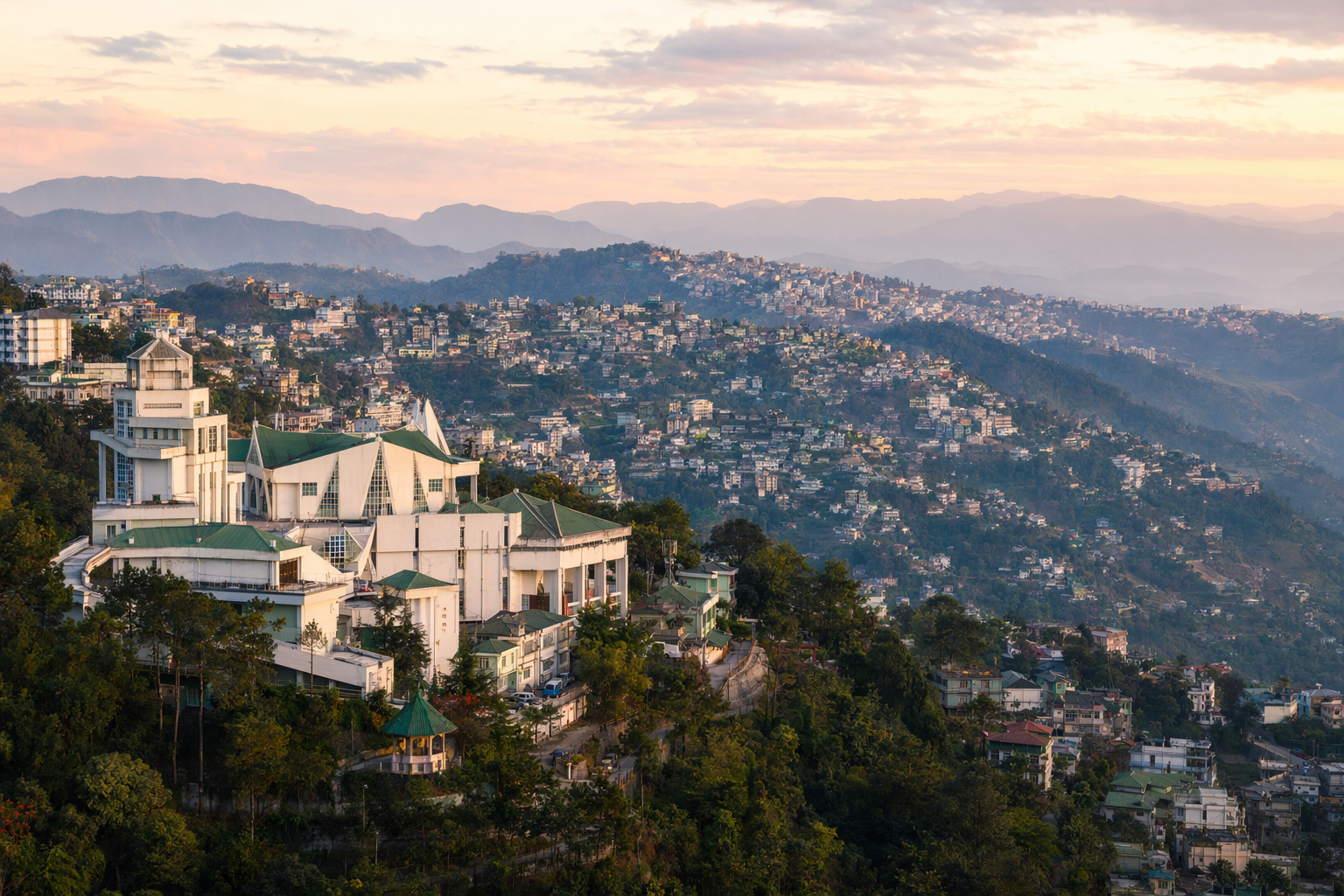
But if you’re the kind of traveller who doesn’t need ten cafes and five Instagram spots daily, Aizawl can be magical. It feels less touristy, more lived-in. The city rises and falls over hills like someone folded a map badly, but in a beautiful way. Roads are narrow, houses stack on slopes, and by evening the whole city lights up like a giant diya thali. Aizawl is not difficult exactly, but it asks for patience. Flights can be limited, the airport is outside the city, road journeys are long, and yes, Indian citizens need an Inner Line Permit for Mizoram. Shillong doesn’t need ILP for Indian travellers.
| Factor | Shillong | Aizawl |
|---|---|---|
| Best for | First-time Northeast trip, families, friend groups, cafes, waterfalls | Slow travel, culture, views, quieter city break |
| Access | Easiest via Guwahati by road, Shillong airport has limited flights | Lengpui airport near Aizawl, flights limited, road from Guwahati is very long |
| Permit for Indians | No ILP needed for Meghalaya | ILP needed for Mizoram, check online or official counters before travel |
| Food scene | More varied, Khasi food plus cafes, bakeries, pubs | Local Mizo food, simple restaurants, less tourist-style dining |
| Budget comfort | More options across budgets | Good options but fewer choices, book earlier |
| First-timer score | Very easy | Rewarding but needs planning |
Getting there: this is where Shillong wins quite clearly
#Let’s be practical. Most of us from mainland India enter the Northeast through Guwahati. And from Guwahati, Shillong is the no-brainer. You come out of the airport or railway station, bargain or book a cab, and off you go through those curvy roads past Nongpoh, tea stops, pineapple sellers, and random cloud patches. Shared cabs are common from Guwahati to Shillong, and private taxis are easy too. Travel time is usually around 3 to 4 hours, though weekends and bad weather can stretch it. If you’re the type who gets motion sickness, sit in front and don’t be heroic.
Aizawl, on the other hand, is not that simple. The nearest airport is Lengpui, around 30 km from the city, and the drive into Aizawl is scenic but winding. Flights exist from cities like Kolkata, Guwahati and Imphal depending on schedules, but connections are not as frequent as Guwahati. Road travel from Guwahati to Aizawl is possible but it is long-long, like properly tiring. From Silchar it is shorter compared to Guwahati, still hilly and time-taking. If your leave is only 4 or 5 days, Aizawl needs smarter planning. For Shillong, you can be a little lazy and still manage.
Also, weather affects both places. In monsoon, landslides and road delays can happen across hill routes. Flights to smaller airports may get affected by fog or rain. So don’t keep your return flight from Guwahati just 5 hours after leaving Shillong, please. I’ve seen people doing that and then panicking in the taxi like the driver has a helicopter hidden somewhere.
Permit, safety and the basic travel updates people forget to check
#Meghalaya is easy for Indian travellers. No Inner Line Permit needed. You just travel like you would to another Indian state, though some areas may have local rules or entry timings, especially village-managed tourist spots. Mizoram is different. Indian citizens need an Inner Line Permit to enter Mizoram. You can usually apply through official Mizoram ILP channels or get it via designated offices and sometimes at entry points or the airport, but don’t leave it to chance. Rules and counters can change, so check before booking. Carry ID proofs, printouts or screenshots, and keep one passport photo just in case. Old-school, but useful.
Safety wise, both cities felt safe to me, including evening walks in main areas. Shillong has more tourist crowd and more commercial buzz, so normal travel common sense applies: don’t flash cash, don’t get into random arguments after drinks, and don’t treat local lanes like your personal photo studio. Aizawl felt very disciplined. People follow traffic manners in a way that made me feel slightly ashamed of our usual mainland chaos. But it’s also a conservative place in many ways. Dress normal, respect Sunday closures, don’t be loud, and ask before photographing people. In Mizoram, alcohol is restricted due to prohibition laws, so don’t land expecting Shillong-style nightlife.
The first impression: Shillong is lively, Aizawl is cinematic
#Shillong hits you with movement. Police Bazaar is crowded, honking is there, shops are bright, and everyone seems to be either buying shoes, eating momos, or waiting for someone. The city has that old hill-station feel but with a strong local personality. It’s not like Mussoorie or Nainital, though people compare all hill towns for no reason. Shillong has music in its bones. You’ll see guitar shops, small gigs, cafes playing classic rock, students hanging around Laitumkhrah, and somehow even a regular tea break feels cooler there.
Aizawl’s first impression is more visual. The city is built along steep ridges, and roads twist like they were drawn by someone with no ruler and full confidence. From a good viewpoint, houses spill down the hills in layers, and at night it becomes ridiculously pretty. But it’s not a city where you land and instantly know what to do. There isn’t one big touristy centre like Police Bazaar. You need to move slower, ask locals, take taxis, and accept that sometimes the best thing to do is just stand somewhere and stare at the valley. Sounds boring? It isn’t.
Weather and best time: don’t romanticise rain too much
#Best months for both cities are broadly October to April. Shillong winters are chilly, especially evenings, and December-January can feel properly cold if you’re from Mumbai, Gujarat, Chennai, or any place where people call 20 degrees “winter”. Aizawl is milder, pleasant, and less biting compared to Shillong, though nights can still get cool. Spring is lovely in both places. March around Mizoram can be interesting because Chapchar Kut, an important Mizo festival, is usually celebrated around that time, though exact dates should be checked before planning.
Monsoon is tricky. Meghalaya is famous for rain, and nearby Sohra or Cherrapunji gets heavy rainfall. It’s beautiful, full power green, waterfalls are dramatic, but roads can be slippery and views can vanish in fog. Aizawl also sees heavy monsoon rain and hill-road disruptions are not rare. If you love rainy hill trips, go prepared, but don’t act shocked when plans change. I’ve written similar practical hill-weather notes before in Saputara in December: Weather, What to Pack, and a 2-Day Winter Plan, and honestly the same basic rule applies here too: pack layers, good shoes, and keep buffer time.
Where to stay: location matters more in Shillong, planning matters more in Aizawl
#In Shillong, stay depends on your travel style. Police Bazaar is best if you want shops, taxis, street food, and easy movement. It’s crowded, yes, but convenient. Laitumkhrah is nicer for cafes, younger crowd, and a calmer vibe. Around Umiam Lake you’ll get pretty stays, but then you’re outside the city and need transport for everything. Typical budget rooms can start around ₹1,200 to ₹2,000 if you’re not fussy. Decent mid-range hotels and homestays are often ₹2,500 to ₹6,000. Boutique stays and lake-view properties go higher, especially on weekends and festival season.
Aizawl has fewer tourist hotels, so book earlier. Zarkawt, Chanmari and central areas are convenient for city access. Homestays and guesthouses can be really nice, but don’t expect resort-style service everywhere. Budget rooms may be around ₹1,000 to ₹2,000, mid-range stays around ₹2,500 to ₹4,500, and better hotels can go beyond that. The thing with Aizawl is that a hotel “nearby” on map may still involve steep climbs or taxi rides because of the terrain. Same lesson I learnt in other hill destinations too, where stay location can change your whole mood. If you’re comparing areas and weather comfort, this guide on Where to Stay in Mahabaleshwar in Monsoon: Market, Panchgani Road or Valley View? has that same planning mindset, even though the place is different.
Food: Shillong gives variety, Aizawl gives quiet surprises
#Shillong is easier if you’re travelling with mixed eaters. You’ll find Khasi food, momos, noodles, Bengali meals, North Indian food, bakeries, coffee shops, and proper cafes. Try jadoh if you eat meat, dohneiiong, smoked pork, tungrymbai if you’re curious, and local snacks in Police Bazaar. Laitumkhrah has some good cafe culture, and Shillong’s bakery scene is honestly underrated. Vegetarians will manage better here than in Aizawl, though in traditional Khasi places veg choices may still be limited. Ask clearly, because “veg” and “no pork” are not always the same conversation.
Aizawl food is simpler but memorable. Mizo meals are usually rice-based, with boiled vegetables, bai, smoked pork, sawhchiar, bekang, chutneys, and local greens. The flavours are not always oily-spicy like mainland Indian food, so at first you may feel, arre where is the masala? But give it time. It grows on you. I had one very basic rice, pork and bai meal in Aizawl that looked plain, and then I kept thinking about it for weeks. For vegetarians, Aizawl needs more asking around. You can get dal-rice, noodles, snacks, bakeries, but pure veg variety is not like Shillong.
- Shillong food mood: cafes, Khasi dishes, momos, bakery stops, late-ish evening options in main areas.
- Aizawl food mood: local meals, smoked meat, simple soups, bakeries, tea, and quieter dinner scenes.
- Sunday warning: Aizawl can be very quiet on Sundays due to church and weekly closure culture. Plan meals ahead. Shillong also slows down, but tourist areas are usually easier.
Things to do in Shillong without rushing like a package-tour uncle
#Shillong works beautifully as a base. Inside the city, you can do Ward’s Lake, Don Bosco Museum, Cathedral of Mary Help of Christians, Lady Hydari Park if you’re with family, and the local markets. Elephant Falls is close and popular, though yes, it gets crowded. Laitlum Canyon is one of my favourite places near Shillong, especially when mist moves through the valley. Go early if possible. Umiam Lake is on the Guwahati-Shillong route, so you can stop while arriving or leaving.
The real Shillong advantage is day trips. Sohra or Cherrapunji for waterfalls and caves, Mawphlang Sacred Forest for something quieter and cultural, Dawki and Shnongpdeng for river scenes, Mawlynnong if you want the clean village circuit, though personally I found some parts too touristy. Living root bridges need time and legs, not just excitement. If you have only 3 nights, don’t pack everything. Shillong roads look short on Google Maps and then the hills laugh at you.
Things to do in Aizawl, if you enjoy slower discoveries
#Aizawl doesn’t have the same checklist energy, and that is exactly why I liked it. Start with Durtlang Hills for city views. Solomon’s Temple is popular, especially for architecture and peaceful surroundings. Mizoram State Museum gives a useful introduction to Mizo culture, textiles, history and daily life. Bara Bazar is good if you like local markets, though it’s not a polished tourist market. It’s real, busy, and you should move respectfully.
Outside Aizawl, Reiek is a lovely day trip with mountain views and traditional huts, and Hmuifang is another peaceful hill area if you have time. Falkawn village is useful for understanding traditional Mizo village life, though like many cultural villages it depends on how much context you get. If you go further, places like Thenzawl and Vantawng Falls are beautiful, but they need more travel time. Mizoram is not for ticking ten spots in two days. It’s for accepting distance. Once you accept that, the place opens up.
Culture shock, but in a good way
#Both cities feel different from the usual Indian travel circuit. In Shillong, the Khasi, Jaintia and Garo cultural presence is strong, and you’ll notice it in food, language, music, markets and matrilineal social traditions. People are polite but not fake-smiley for tourists, which I actually prefer. Don’t assume everyone speaks Hindi fluently. English works in many places, Khasi is local, and Hindi is understood in touristy spots but not everywhere. Say thank you, be patient, and you’ll be fine.
Aizawl felt even more distinct to me. Mizo society has a strong community feeling, church life is important, and the city has a discipline that is rare in Indian hill stations. Traffic queues, less aggressive honking, cleaner streets in many areas. There’s also a sense of privacy. People may be helpful but not overly chatty with strangers, and that’s okay. We Indians sometimes think hospitality means everyone must talk to us nonstop. No yaar. Sometimes respect means giving space.
Nightlife and events: Shillong is more social, Aizawl is more quiet
#If nightlife matters, Shillong wins. It has pubs, live music, cafe gigs, student crowd, and a general evening buzz. Shillong’s music reputation is not just marketing. Even a random cafe playlist there sounds better than half the places I’ve been. Events like the Shillong Cherry Blossom Festival usually happen around November, and music festivals or concerts are also part of the city’s travel appeal, but dates change every year so check before planning tickets and hotels. During big events, room prices can jump badly.
Aizawl is not a nightlife city in that sense. Evenings are calmer, and because Mizoram has alcohol restrictions, the social scene is different. Christmas season is beautiful across Mizoram, with lights and community gatherings, but it’s also a time when many businesses may run on holiday mood. Chapchar Kut is one of the most important cultural festivals, usually around spring, and if your timing matches, it can add so much value. Just don’t treat festivals like a performance arranged for tourists. They belong to the community first.
Budget comparison: not cheap-cheap, but manageable
#Neither Shillong nor Aizawl is as cheap as people imagine when they say “Northeast trip”. Transport in hills costs money. Shared cabs save a lot, but private day trips from Shillong to Sohra or Dawki can add up. A basic Shillong trip can be done on a moderate budget if you use shared taxis, stay central, and don’t cafe-hop like a rich college kid. For a comfortable budget, keep around ₹2,500 to ₹4,500 per person per day excluding flights, depending on stay and transport sharing. It can be less for backpackers, more for families.
Aizawl can feel cheaper in food and local simplicity, but flights and limited hotel choice can balance that out. Local taxis are common, but because roads are steep and spread out, you may use them more. If you’re doing day trips like Reiek or Hmuifang, transport needs planning. For both cities, carry some cash. UPI works widely in cities, but network issues and small shops can still surprise you. Also, book weekend stays early in Shillong, and book Aizawl stays early because options are fewer. Different problem, same headache.
For families, couples, solo travellers and friend groups
#Families should pick Shillong first unless everyone is genuinely comfortable with slower travel. Shillong has more hotel options, easier medical access, better food variety, and popular sightseeing. Elderly travellers may still find the slopes tiring, so choose hotels with lift and vehicle access. Couples can enjoy both, but Shillong gives more classic romantic hill-trip stuff: cafes, lake drives, waterfalls, pretty stays. Aizawl is more for couples who like quiet conversations and viewpoints rather than packed itineraries.
Solo travellers can do both safely with normal caution. Shillong is easier for meeting people, joining shared trips, finding hostels or social stays. Aizawl is better if you’re comfortable being alone and not depending on tourist infrastructure. Friend groups will probably enjoy Shillong more because there’s simply more to do after sunset. If your group has that one person who needs butter chicken everywhere, take them to Shillong first. Aizawl may test the friendship, haha.
My suggested itineraries if you still can’t decide
#- Easy first Northeast trip: 3 nights Shillong. Day 1 arrive from Guwahati, Police Bazaar or Ward’s Lake. Day 2 Sohra waterfalls and caves. Day 3 Laitlum, Don Bosco Museum, cafe evening. Day 4 leave via Umiam.
- Slow culture trip: 4 nights Aizawl. Day 1 arrive and settle, sunset viewpoint. Day 2 city museum, Bara Bazar, Durtlang. Day 3 Reiek. Day 4 Hmuifang or local exploring. Day 5 fly out with buffer.
- If you have 8 to 10 days: do Shillong first, then Aizawl only if flights line up well. Don’t try to connect everything by road unless you enjoy long mountain drives more than actual sightseeing.
Choosing between destinations is always about ease, weather, transfers and what kind of traveller you are, not just which place has prettier photos. Same logic applies whether you’re comparing Northeast hill cities or even rainy beach places like in Phuket vs Krabi vs Koh Samui in Rainy Season. Photos lie a little. Logistics tell the truth.
Final answer: Shillong first for comfort, Aizawl first for depth
#If someone asked me at a chai stall, “Bhai, first Northeast city kaunsa?” I’d say Shillong. It gives you a softer landing into the region. Better connectivity, more tourist support, easy day trips, food variety, and that lively hill-city charm. It’s not perfect, traffic can annoy you, popular spots get crowded, and some parts feel overdone. But for a first trip, it works. You’ll come back happy, with photos, stories, and probably one extra jacket you bought in Police Bazaar for no reason.
Aizawl, though, is the city I’d recommend when you want something quieter and more personal. It doesn’t perform for you. It just lets you observe. The slopes, the evening lights, the calm roads, the food, the church bells, the way the city sits above clouds sometimes... it has a different pull. Go there when you have time, patience, and respect for local rhythm. Don’t rush Mizoram. It deserves better than that.
My honest ranking: first-time ease goes to Shillong, emotional aftertaste goes to Aizawl. And if you can do both someday, do both, because they are not duplicates at all.
So yeah, that’s my slightly biased but practical take. Start with Shillong if you want a smooth first Northeast India trip. Choose Aizawl if your heart is already asking for something slower and less obvious. Either way, pack layers, check road and flight updates, respect local customs, and don’t build an itinerary like you’re collecting railway stations. Travel thoda aaram se. And if you’re planning more Indian trips like this, I keep finding useful, grounded travel reads on AllBlogs.in, so maybe browse there before you book and regret your hotel location later.