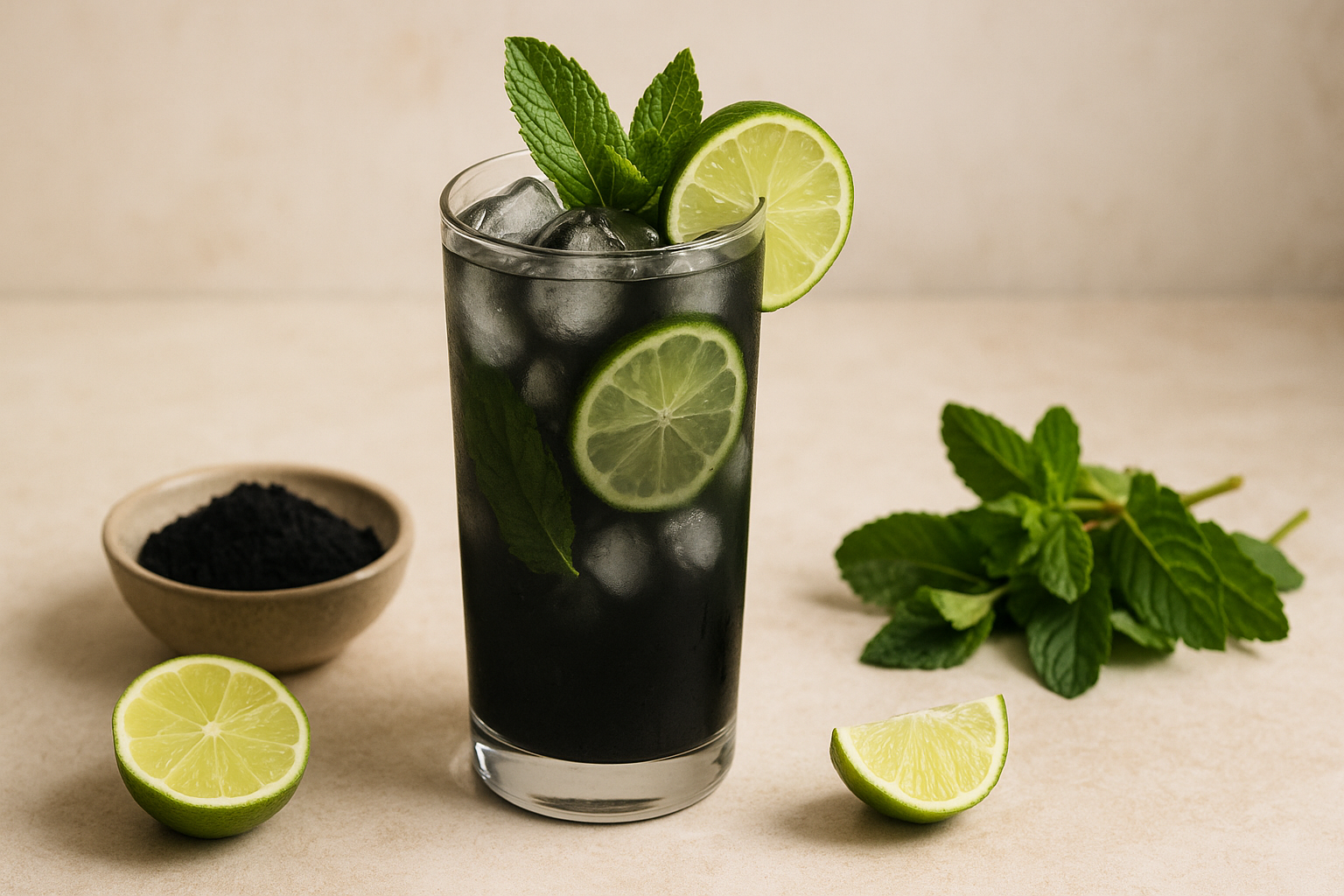
I’ll be honest, the first time I saw a charcoal mojito on a menu I thought it was one of those gimmicky Instagram drinks that looks cool for twelve seconds and then tastes like wet fireplace. Harsh, maybe. But then me and a friend ordered one anyway at this tiny bar after dinner, mostly because the table next to us had this inky-black drink with mint leaves floating on top like some kind of edible science project. And... yeah. I kinda loved it. Not every version, obviously. Some are flat-out bad. But a good charcoal mojito? Cold, citrusy, super minty, a little mysterious-looking. It hits. So this post is my very human, slightly obsessive guide to making one at home, changing it up, and—this part matters a lot—using activated charcoal safely, because there’s a lot of goofy misinformation floating around online.
First, what actually is a charcoal mojito?
#Basically it’s a mojito—mint, lime, sugar, ice, soda, usually white rum—with a tiny amount of food-grade activated charcoal added for that matte black or deep gray color. The flavor of activated charcoal itself is, honestly, almost nothing. Maybe a faint dusty minerally note if you use too much, which means you used too much. The point is mostly visual. It’s cocktail theater. And I say that with affection because, look, food and drinks are supposed to be fun sometimes. Not every sip has to be a moral lesson.
That said, activated charcoal in drinks has had a weird reputation cycle. A few years ago it was absolutely everywhere—lemonades, soft serve, burger buns, latte-adjacent things no one really asked for. Then a lot of chefs, bartenders, and dietitians started pushing back because the wellness claims were overblown and the medication-interaction risks are real. By 2026, the trend hasn’t vanished, but it’s matured. You mostly see charcoal now in novelty cocktails, tasting menus, and occasional zero-proof bar programs where presentation is everything. The smart places usually note the safety issue right on the menu, which I really appreciate.
My favorite version is the one that still tastes like a mojito, not like a stunt
#This is where some recipes go off the rails. They add too much charcoal, too much sweetener, random syrups, edible glitter, dried flowers, smoke bubbles—like okay, calm down. A mojito is refreshing. It should taste bright and snappy and alive, not like a Halloween candle. The best charcoal mojito I had used just enough charcoal to turn the drink this velvety dark gray-black, but the actual flavor was still all lime zest, bruised mint, and a clean rum finish. I still think about it, which is annoying because now I chase that version whenever I see one on a menu.
The core ingredients I use at home
#Here’s the basic lineup I actually use, and yeah, I’ve fiddled with it more times than I can count. For one drink: 8 to 10 mint leaves, half a lime cut into wedges, 2 teaspoons sugar or 3/4 ounce simple syrup, 2 ounces white rum, 2 to 3 ounces chilled soda water, crushed ice, and a very small amount of food-grade activated charcoal. Tiny. Usually 1/16 to 1/8 teaspoon is plenty, depending on the brand and whether you want dark gray or full black. If you’re using capsules, check the amount per capsule and open one carefully. You do not need much. Like... really.
- Mint: spearmint is classic and gives that cooling candy-ish nose without tasting fake
- Lime: fresh only, please, the bottled stuff tastes sad here
- Sweetener: simple syrup dissolves better but plain sugar gives a more old-school muddled feel
- Rum: a crisp white rum works best, though I’ve used lightly aged rum when I ran out and it was still pretty decent
- Activated charcoal: food-grade only, never charcoal from capsules meant for something weird, and definitely not grill charcoal... yes I’m saying that because somebody somewhere has done it
How I make it without wrecking the mint
#So, in a sturdy glass or cocktail shaker tin, add the mint, lime wedges, and sugar or syrup. Muddle gently. Gently! I know every recipe says that and it sounds precious, but if you pulverize mint leaves they can get bitter and grassy in a not-fun way. You want to press enough to release oils and juice, not create green confetti. Add the rum and the activated charcoal, stir or shake briefly so the charcoal disperses, then pack the glass with crushed ice. Top with soda water and give it one or two lifts with a bar spoon from the bottom. That’s it. Garnish with extra mint and maybe a lime wheel if you’re feeling put-together, which I often am not.
The trick is using enough charcoal to make people go ‘whoa’ and not so much that the drink tastes like a chalkboard eraser had a midlife crisis.
Important safety stuff, because this isn’t just an aesthetic ingredient
#Okay. Here’s the big thing. Activated charcoal can bind to certain medications and reduce how well your body absorbs them. That includes some prescription meds and over-the-counter stuff too. It’s literally used in medical settings in specific poisoning situations because it binds things. Which is exactly why tossing it casually into trendy drinks is not always harmless. If you take any medication—birth control, antidepressants, heart meds, thyroid meds, seizure meds, honestly anything important—talk to your doctor or pharmacist before trying charcoal drinks, or just skip it. Seriously. Better boring-looking mojito than medication drama.
Also, don’t have charcoal drinks all the time. It can cause constipation in some people, dark stools obviously, and stomach upset now and then. It’s not a detox miracle. That idea has been debunked over and over and over. Your liver and kidneys are already doing the detox thing unless you’ve got a medical issue, and a black cocktail isn’t somehow a spiritual cleanse. I hate that I even have to say this in 2026, but wellness marketing is undefeated.
My practical safety rules at home
#- Use only a very small amount of food-grade activated charcoal
- Don’t serve it to anyone without mentioning the medication interaction issue first
- Skip it entirely for pregnant guests, people on important meds, and honestly anyone unsure about it
- Treat it like an occasional novelty drink, not your nightly hydration plan
- If you want the black look without the risk, use alternatives like black food coloring or squid ink-inspired savory applications—though obviously not in a mojito, that would be cursed
Variations that are actually worth making
#I’ve tested a bunch, some excellent, some very dumb. My favorite variation is a coconut charcoal mojito: add 1/2 ounce coconut water or a tiny splash of coconut syrup, keep the mint high, and the tropical note rounds everything out. A pineapple version also works, but only if you use a small amount of fresh juice, otherwise it starts tasting like a generic resort drink. Which, okay, that can be nice too, but it’s a diff thing. For a spicy one, muddle a thin slice of jalapeño with the mint and lime. Not too much. I made one too hot last summer and basically pepper-sprayed my own sinuses.
- Zero-proof version: swap the rum for extra soda plus a splash of white grape juice or a nonalcoholic white rum alternative
- Berry version: 2 or 3 blackberries muddled in, gives a gothic little fruit thing going on
- Ginger version: use ginger beer instead of soda for more bite and a darker, moodier finish
- Cucumber version: weirdly elegant, very spa-meets-nightclub
I’ve also tried one with black salt on the rim and I’m torn. Part of me loved the visual, part of me thought it made the first sip too savory. Then again, I was eating salty fries with it and maybe that threw me off. See, this is why recipe testing in a real kitchen gets messy. Variables everywhere.
A quick note on 2026 drink trends, because the charcoal mojito lives in that world now
#If you’ve been out to bars lately—or honestly just looked at beverage menus online—you’ve probably noticed a few huge 2026 trends. Zero-proof cocktails are still booming, but they’re more sophisticated now, less sugary fake cocktails and more layered drinks with tea distillates, fermented fruit, saline, herbs, and botanical nonalcoholic spirits. Savory cocktails keep showing up too, especially with tomato water, seaweed, pepper tinctures, and olive leaf notes. There’s also a big push toward lower-waste bar programs, where citrus peels become syrups, leftover herb stems go into cordials, and bars are way more thoughtful about ice and dilution. The charcoal mojito fits into this era when it’s done with restraint—visual, yes, but still ingredient-conscious.
And restaurant-wise, I’ve noticed more new openings building whole beverage identities around immersive presentation rather than just giant drink lists. Tiny cocktail bars, tasting-counter concepts, and hybrid café-bars are still having a moment in a lot of cities. The menus change constantly, which is exciting and also mildly irritating when you fall in love with one drink and it vanishes two weeks later. Been there. I won’t pretend every black drink on these menus is brilliant, but the better bar teams are using dramatic visuals with more intention now, not just throwing charcoal into anything pale and calling it innovative.
Where charcoal mojitos go wrong in restaurants
#Too sweet. Too much charcoal. Cheap mint. Flat soda. Warm glassware. Weirdly enough, I think temperature matters more here than in a regular mojito because the charcoal changes the visual expectation—you expect it to feel super crisp, almost icy and sharp. If it comes out even slightly lukewarm, the illusion breaks. I had one at a rooftop spot that looked incredible in the sunset and tasted like melted Halloween. Maybe I’m being dramatic, but still. On the other hand, one small Latin-inspired bar I visited did a version with house-made mint-lime cordial and pebble ice that was so good me and him nearly ordered another round before dinner even arrived. Dangerous behavior, honestly.
If you want the look but not the charcoal, you’ve got options
#This is probably my most practical advice. If the black color is what you’re after and you don’t want the charcoal safety issue, just fake it a little. A drop or two of black food coloring in a mojito base gives a similar visual effect. Is it as moody and matte? Not quite. But for parties it’s way easier, and no one has to read a mini health disclaimer before taking a sip. I’ve also seen bartenders use very dark ingredients—like reduced black tea syrup plus a touch of color—to create stormy gray drinks that feel dramatic without trying to cosplay as wellness.
Tiny troubleshooting guide from my many, many slightly annoying test batches
#- Drink tastes bitter? You over-muddled the mint or used too much lime pith
- Drink tastes dusty? Too much activated charcoal, almost certainly
- Drink is muddy-looking instead of sleek black? Charcoal wasn’t dispersed well before adding the ice and soda
- No aroma? Your mint is old. Fresh mint should basically announce itself the second you touch it
- Too sweet? Add more lime or more soda, not more rum... okay maybe sometimes a little more rum
One weird thing I learned: chilling the rum and soda beforehand helps more than people think. Since you’re not shaking super hard with lots of dilution, every cold component counts. Also crushed ice gives you that frosty bar-drink vibe, but if you only have cubes, use smaller ones and stir a touch longer. It’ll be fine. Not identical, but fine.
My go-to charcoal mojito recipe, the one I’d actually serve friends
#For one tall drink: muddle 8 mint leaves with 1/2 lime cut into wedges and 3/4 ounce simple syrup. Add 2 ounces white rum and 1/16 teaspoon food-grade activated charcoal. Stir till evenly dark. Fill the glass with crushed ice, top with 2 to 3 ounces chilled soda water, and lift gently with a spoon to combine. Slap a mint sprig between your hands—yeah, it wakes up the aroma, bartenders aren’t making that up—and tuck it in the glass with a lime wheel. Serve immediately. Tell people what’s in it. That last part is non-negotiable for me.
Final thoughts from someone who really did not expect to care this much
#So do I think a charcoal mojito is the best mojito? No, probably not. On a hot day, a classic mojito still wins more often than not. But I do think the charcoal version can be fun, surprisingly elegant, and worth making once in a while if you handle it responsibly. That’s my entire stance really: enjoy the drama, skip the nonsense. Don’t buy into detox hype, don’t dump in a tablespoon of charcoal because the internet told you darker is cooler, and don’t serve it without the little safety heads-up. If you do it right, it’s one of those drinks that makes people stop mid-conversation and go, wait, what is THAT? And I mean... I love a drink with a bit of theater.
Anyway, that’s my very opinionated charcoal mojito ramble. If you try it, I hope your mint is fresh, your ice is cold, and your kitchen doesn’t end up with charcoal fingerprints all over the counter like mine always does. For more relaxed food-and-drink rabbit holes like this, you can wander over to AllBlogs.in too.