So, um, David Scott Trail. If you’re planning a trip to Shillong and you like walking, history, greenery, clouds, dogs, random streams, all that good stuff – just do this trek. Don’t overthink it yaar. I finally did it after hearing about it for years, and honestly, it surprised me in a nice, very muddy way.
This is not some crazy high-altitude Himalayan expedition. It’s more like a long, old walking route through the Khasi hills that used to be part of a British-era horse trail. The vibe is different from the typical touristy Shillong spots. Fewer selfie sticks, more actual walking and listening to silence. Also, more panting. At least in my case.
Where Exactly Is This David Scott Trail And What’s The Big Deal?
#The trail is basically between two villages: Mawphlang and Lad Mawphlang (some people write Ladmawphlang together, some separate, Google is also confused lol). It’s around 16 km give or take, depending on which route you do and from where you start. Historically, it was named after David Scott, a British officer who used this as part of a trade route between Assam and Bangladesh side. So yeah, when you’re huffing and puffing on those stones, just imagine people doing this with horses and luggage back in the 1800s. Respect.
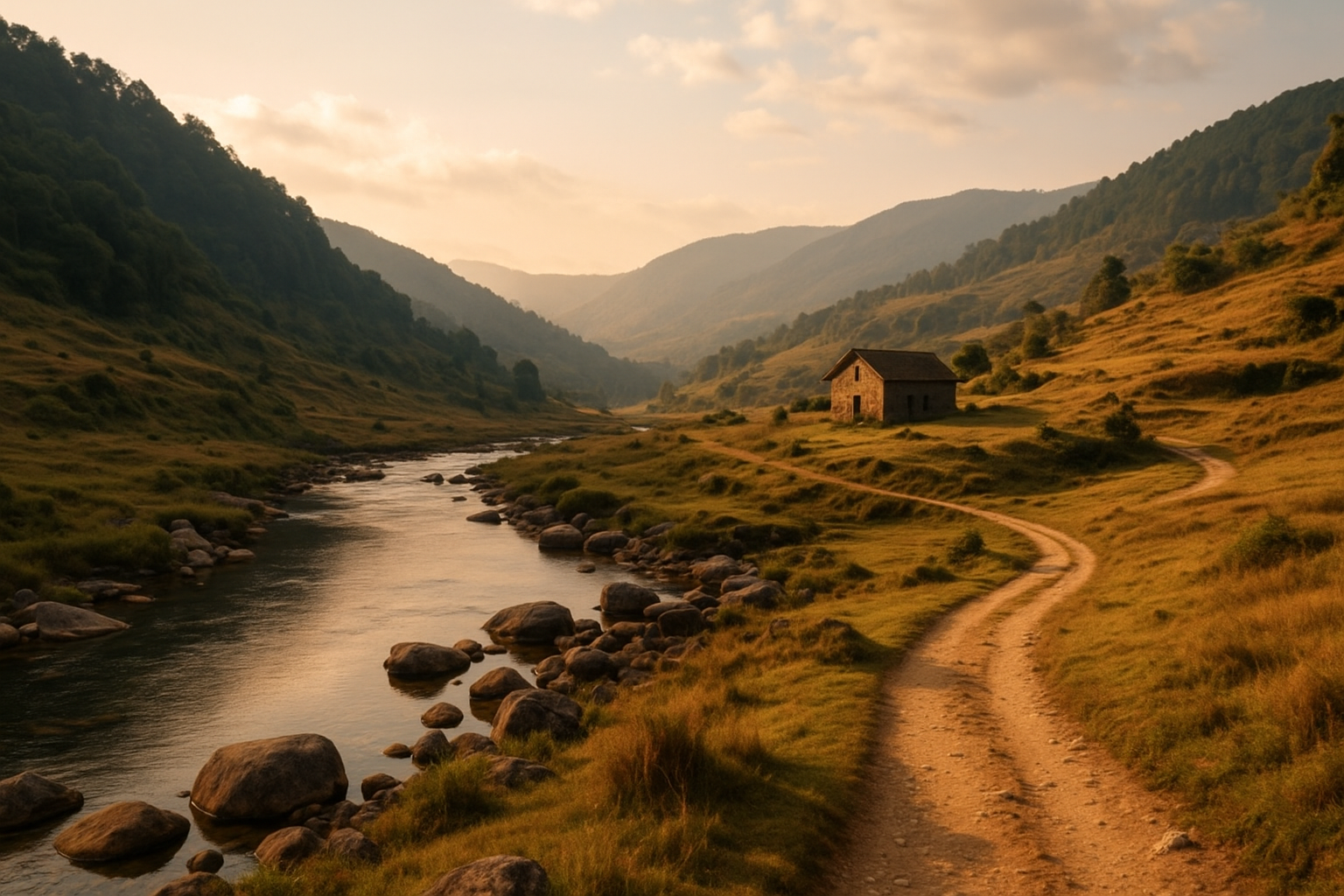
The trail cuts through meadows, small forest patches, little villages, hanging bridges and a beautiful river section. It’s not technical, but it’s long enough to make you feel like you’ve actually done something with your legs. If you’re from the city and your main cardio is running for the metro, you’ll feel it.
Best Time To Do David Scott Trail (And When You’ll Just Be Swimming In Mud)
#Meghalaya is anyway a rain magnet, so timing matters. Broadly:
- October to early March – best for trekking. Clearer skies, pleasant chill, less leeches, less slush. I went in November and it was perfect: cool, slightly cloudy, and my shoes didn’t die.
- Late March to May – gets a bit warmer (still not like Delhi hot, don’t worry), but you may get pre-monsoon showers. Trail is still doable, just carry rain protection.
- June to September – hardcore monsoon. The hills look insanely green, but the trail gets slippery, streams swell up, leeches become your best enemy. Some days local guides themselves will say, ‘aaj mat karo’. If you hate mud and wet socks, just avoid this window.
Weather is changing fast these days, so even in the so-called “good” season you can get random showers. When I went, the forecast was "partly cloudy". It drizzled, it was sunny, it was foggy, all in one trek. Typical Meghalaya mood swings.
How To Reach The Starting Point From Shillong
#Most people start from Mawphlang and end at Lad Mawphlang. You can do the reverse also, but starting at Mawphlang is more common and logistically easier if you’re coming from Shillong.
From Shillong city:
- Shared cabs: You can get shared Sumos from near Anjali / Bara Bazaar side that go towards Mawphlang in the morning. Ask for Mawphlang village, not just randomly say “David Scott” because some drivers will stare blankly. Cost is usually around ₹70–120 per person depending on fuel prices and mood.
- Private taxi: Easiest but more expensive. Expect anywhere from ₹1500–₹2500 for a Shillong–Mawphlang drop and then pickup from Lad Mawphlang after the trek, depending on your bargaining and if you’re booking via hotel, aggregator, or direct driver contact. I went with three friends so splitting made sense.
- Bike: If you’ve rented a bike in Shillong, you can ride till Mawphlang, leave it there, but then you need someone to pick you from Lad Mawphlang or you have to somehow go back. Bit complicated unless you have two bikes or a group plan.
There’s a small parking area near the Mawphlang Sacred Grove side, from where the David Scott trail entry is just a short distance. Some locals will guide you or you’ll see simple signboards. Don’t expect fancy entry gate like a national park, it’s pretty basic.
Do You Need A Guide For David Scott Trail?
#Short answer: if it’s your first time, yes, just take a guide. I know we Indians are like “Google Maps dekh lenge”, but network goes off in many patches and also, the local guides know the old stone pathways, shortcuts, stream crossings, and what to do if weather turns suddenly.
When we went, there was an informal line of guides near the starting area. Rates obviously keep changing, but currently it’s usually around ₹800–₹1200 for the full trail for a group, sometimes more in peak season or if you’re a very big group. Always clarify:
- Start and end point (Mawphlang to Lad Mawphlang or partial trail?)
- Approx time they expect to take
- Whether they will help arrange vehicle from the end point back to Shillong / Mawphlang
We had a young Khasi guy called Michael with us. Super chill, didn’t talk too much unless we asked, but whenever we did, he had some random cool facts – like which old stone ruin was used as a British campsite, or which stream is safe to drink from. Also if you’re not super fit, a guide helps you pace yourself. He knew exactly where to stop and where the trail gets tricky.
How Difficult Is The Trail, Really?
#I’ll be honest, difficulty really depends on your fitness and the weather that day. On paper, people call it "easy to moderate". There’s not crazy altitude gain like in Uttarakhand treks, but don’t underestimate the distance and the uneven stones.
For a normal person who walks sometimes but doesn’t run marathons:
- Distance: Roughly 16 km
- Time: 4–6 hours usually. We took about 5 and a half with lots of photo stops, slow chitchat, and a long lunch break by the river.
- Terrain: Mix of grassy meadows, old stone path, some muddy sections, downhill and uphill bits, narrow trail sections, and a hanging bridge area.
If you have knee issues, carry a trekking pole or even a basic stick. Some downhill portions on uneven stones can be annoying. One of my friends had slight knee pain and she was like, "Why didn’t you tell me it’s THIS long" by the end. But she survived, and later admitted it was worth it.
My Experience On The Trail (Or How I Almost Ate My Sandwich Too Early)
#We started from Shillong around 7 am, had a quick breakfast near Police Bazar (basic poori sabji and chai only, nothing fancy), and reached Mawphlang in about 45–50 minutes. Slight fog, that typical cold breeze – you know that hill station feeling which is somehow better than AC.
There’s a small registration / check point near the starting section. We paid a small entry fee (around ₹50–₹100 per person – this might change) and a bit for camera. Nothing crazy. Then we met our guide and started walking.
First stretch is gentle and honestly I thought, "Arre this is too easy only". Open meadows, cute cows, some local houses in distance, and these big rolling hills that look straight out of Windows XP wallpaper. The stone path starts appearing here and there – that’s the old British horse trail. Pretty cool to imagine old soldiers and traders using the same route you’re walking on, with zero idea that some Indians in Decades later will come with GoPros.
After 40–45 minutes, the trail slowly dips towards forest patches and a stream. This part was my favourite. Sound of water, chirping birds, not much crowd. Our group got super silent here without even deciding it. Just that natural quiet that comes when you realise, oh, this is actually peaceful, I should shut up now.
There are a couple of spots where the trail splits and then rejoins. Without a guide we’d probably have wasted time debating which side to take. Michael would just point and say, “This way, easier”. He also showed us an old stone arch bridge (now broken) which apparently is from the British times. That’s when I ate half my sandwich. Wrong move, because...
The highlight of the trek for me was this wide river section in the middle. Green-blue water, big rocks, and a hanging bridge. We just dumped our bags, removed shoes, dipped feet in the freezing water, and sat there like lazy lizards. This is the perfect place for lunch actually. I had already finished most of my snack like a fool, but okay, still had some leftover chips. Pro tip: don’t eat everything in the first one hour just because you are excited.
After the river, the trail climbs gently up again. By this time the sun had come out properly and we were sweating. The last stretch towards Lad Mawphlang feels a bit long mentally, because you can see scattered houses in distance but they don’t seem to come closer. Classic trek illusion. Finally you pass through some fields, a couple of small shops, and boom, you’re out near the road at Lad Mawphlang.
Safety, Current Conditions & Permits
#As of recent seasons, the David Scott trail is quite popular among Indian travelers, especially backpackers, college groups, and small trekking clubs. Safety wise, it’s considered fine if you:
- Start early (latest by 9 am from Mawphlang, so you don’t end up walking in the dark)
- Check weather the day before – if there’s heavy rain warning, just postpone
- Stick to main trail and listen to your guide
You don’t need some big fancy permit like restricted areas or anything, just basic entry at the start point. Sometimes local communities update rules, like mandatory guide during certain months or specific timings, so it’s good to check once from your hotel / homestay or contact a local operator a day before.
Network is patchy on the trail. I had Jio and got stray bits of signal on hilltops only. Which is actually nice, because it forces you to look up from your phone. But just to be safe, share your rough plan and expected return time with someone in Shillong before you start.
What To Carry (Based On Me Forgetting Half My Stuff)
#I didn’t overpack but still managed to forget a rain cover. Don’t be like me. Rough packing list that actually works:
- Proper shoes – sports shoes with decent grip are fine in dry season. In monsoon-ish times, trekking shoes are better. Don’t wear flat sneakers with zero grip, you’ll regret it.
- Rain jacket / poncho – weather can flip suddenly.
- Water – at least 1–1.5 litre per person. You do cross natural streams, but if your stomach is sensitive, better carry your own. I refilled from one clean stream (guide-approved) and was fine though.
- Snacks – sandwiches, fruits, nuts, biscuits. There are almost no proper shops on the actual trail.
- Cap and sunscreen – the open meadow sections can be surprisingly strong on the skin.
- Power bank – in case you are using phone for photos or offline maps.
- Basic first aid – bandaids, painkiller, ORS, cotton. I always carry a small pouch now after one nasty blister incident on a different trek.
Don’t overload your bag, 16 km with a heavy backpack will just make you crib more than enjoy. Keep it light but sensible.
Where To Stay: Shillong, Mawphlang Or Somewhere In Between?
#Most folks use Shillong as the base, but staying near Mawphlang is also quite a nice experience if you have time.
Options roughly look like this nowadays:
- Shillong city – Huge range. Budget hostels from around ₹500–₹900 per bed (mixed dorms near Laitumkhrah / Police Bazar areas), mid-range hotels between ₹1800–₹3500, and nicer boutique stays from ₹4000 upwards. If you’re short on days, staying in Shillong and doing David Scott as a day trip is the easiest.
- Mawphlang village – A few homestays and simple guesthouses have come up around the Sacred Grove and village area. Expect ₹1200–₹2000 for a basic but clean room, often with home cooked food. Don’t expect luxury, but vibes are great. Waking up here and starting the trek early feels amazing, less rush.
- Lad Mawphlang area – fewer options directly, but some local homestays keep popping up. It’s still more raw compared to Shillong side.
I stayed in Shillong at a small guesthouse near Laitumkhrah (paid around ₹2000 per night for double room). For me that balance worked because evenings were spent exploring Shillong cafes and next morning we went for the trek. If your main aim is slow living and nature, staying in Mawphlang for 1–2 nights is actually quite underrated.
Food: What You’ll Actually Get Around The Trail
#On the trail itself, don’t expect maggi stalls like Himachal. It’s still more natural, which is good, but it also means you need to plan food a bit. There are usually a couple of small stalls near starting / ending points (chai, biscuits, sometimes momo, maggi etc.), but not in the middle section.
In Shillong and Mawphlang, you’ll get a mix of Khasi, North Indian and basic fast food:
- Try jadoh (rice cooked with meat stock), dohneiiong (pork in black sesame), and tungrymbai (fermented soya) if you eat non-veg. Super flavourful.
- If you’re veg, you’ll still find options – rice, dal, aloo fry, some local veggies. It’s not impossible, just slightly limited in smaller villages.
- In Shillong city, the café scene is actually quite up-to-date now – nice coffees, burgers, momos, pizzas, even Korean stuff here and there. Prices are like typical Indian metro café rates, ₹250–₹400 per dish type.
Before the trek, we packed some aloo parathas and boiled eggs from Shillong itself and that was honestly a 10/10 decision. Sitting by the river, feet in cold water, eating slightly cold parathas – it hits different.
Local Culture & Small Things That Stuck With Me
#One thing I really like about trekking in Meghalaya generally – people are quite respectful of nature. Even our guide would casually pick up wrappers that other tourists had thrown (ugh) and keep it in his bag without making any drama. That small gesture actually hit me hard. We city folks come, click 1000 photos, and still some can’t carry back their own trash.
On the way, you pass some grazing areas where villagers bring cattle, and sometimes tiny houses. Many Khasi families in these regions still follow traditional customs, and community decisions are a big thing. Land is often community-owned, so trekking trails like David Scott are not just random “free for all” spaces. There’s a cultural story attached.
Btw, learn a couple of basic Khasi words, even if your pronunciation is bad like mine:
- Khublei – thank you / hello (roughly). Super useful, and locals appreciate it.
- Salaam type gestures – smile, nod, just be polite basically.
You don’t have to overdo it, just don’t be the loud tourist who blasts music on Bluetooth speaker in the middle of a quiet trail. That’s one guaranteed way to spoil the mood for everyone (and honestly, it’s become a bit of a problem in many Indian trekking spots now).
David Scott Trail Vs. Other Meghalaya Spots – How To Fit It In Your Itinerary
#If you’re doing the usual Meghalaya circuit – Shillong, Cherrapunji / Sohra, Dawki, maybe some living root bridges – the biggest confusion is always time. People try to stuff everything in 4 days and then end up rushing.
Personally, I’d say:
- If you have 5–7 days in Meghalaya, absolutely keep one day for David Scott trail.
- If you only have 3–4 days and you really want to do Double Decker root bridge trek also, then you’ll have to choose based on what you like more – waterfalls & root bridges vs historic meadows & long walk.
David Scott is perfect if you love open landscapes, slower walks, and slightly offbeat vibe. It doesn’t have that Instagram-famous single “wow” shot like Dawki river or Nohkalikai waterfall, but overall experience is so soothing. By the end, I felt mentally lighter somehow. Might sound dramatic, but it’s true.
Current Travel Trends & Why David Scott Is Getting More Popular
#In the last few years, Meghalaya tourism has blown up among Indian travelers. Cheaper flights to Guwahati, endless reels of waterfalls and fog on Instagram, plus people wanting cooler, nature-heavy destinations after all the chaos – all this pushed the state into mainstream travel lists.
Because of that, popular spots like Dawki and some Sohra waterfalls can feel crowded on weekends and holidays. A lot of younger travellers and small trekking groups are now actively looking for less crowded but still safe and accessible experiences. David Scott trail fits that perfectly. It’s not unknown anymore, but still far less chaotic compared to typical tourist points.
Local communities and small operators are also organising day treks and guided experiences now – combining the trail with visits to Mawphlang Sacred Grove, or adding village walks and local food. If you’re into slightly more immersive travel instead of just checking off spots, this is honestly a nice trend.
Responsible Trekking: Few Things I Wish Everyone Followed
#I know this sounds preachy, but once you walk in such a quiet, beautiful trail and then see a plastic bottle stuck between rocks, it really hits how careless we can be. So, just some basic stuff:
- Carry your trash back to the car / homestay. Every wrapper, bottle, tissue. Everything.
- Don’t play loud music. Use earphones if you’re that desperate, though honestly just listen to the forest once na.
- Wear decent clothes, especially near villages. You don’t have to be super conservative, just be respectful.
- If you want photos of local people, ask them nicely first, don’t just click zoom lens photos like it’s a zoo.
Me and him went on a small rant about this when we saw one guy tossing his cigarette butt near the river. Our guide quietly went and put it in his pocket. That silent judgment was loud enough for all of us.
Rough Budget For A Day Doing David Scott Trail
#Just to give you an idea if you’re planning your Meghalaya trip and wondering how much to keep aside for this day. Obviously can vary, but broadly:
- Shillong to Mawphlang and back (shared cab + maybe local taxi): ₹200–₹400 per person if in group / using shared options
- Guide: ₹800–₹1200 per group (split between however many you are)
- Entry & small fees: ₹50–₹150 per person
- Food & snacks: ₹200–₹400 depending on what you pack and where you eat later
So roughly, a David Scott trail day from Shillong can be comfortably done in ₹700–₹1500 per person, depending on your comfort level and group size. For what you experience, I’d say it’s honestly worth every rupee.
Would I Do It Again?
#Yeah. 100%. I’d love to do it once in mild mist or light drizzle also, just to see the mood change. It’s one of those treks that isn’t about conquering some huge peak but just walking through layers of history and landscapes. It felt like time slowed down a bit on that trail. Corny, I know, but that’s actually how it felt.
If you’re anyway in Shillong for a few days, please don’t skip it just because it’s not as flashy as the big waterfalls. Take a day, wear good shoes, carry some food, take a good local guide, and let the route do its thing. By the end, when you see the road at Lad Mawphlang and realise, "Oh, I actually walked all that", there’s a tiny proud smile that just appears on your face.
“Sometimes the best part of a trip isn’t some famous viewpoint, it’s just a long walk in a place where your phone is silent and your mind finally shuts up.”
If you want more such no-filter travel stories, Indian-style jugaad tips, and practical guides, I keep stumbling on nice stuff on AllBlogs.in now and then – it’s actually helpful when you’re planning trips beyond just Instagram reels. Check it out when you start plotting your Meghalaya plan.