The first time I ate langar, I forgot I was supposed to be nervous
#I reached Gurudwara Bangla Sahib in Delhi with that very specific tourist hunger where you’ve walked too much, drank too little water, and suddenly every smell in the city feels personal. Outside, Connaught Place was doing its usual Delhi thing, horns and heat and people moving like they all had secret appointments. Inside the gurdwara, everything softened. Shoes came off, head covered, hands washed, and then I followed a stream of aunties, backpackers, school kids, office workers, and elderly men toward the langar hall. I had read about langar before, obviously, but reading “free community meal open to everyone” and actually sitting cross-legged on the floor while someone ladles dal onto your steel plate are two very different things. One is information. The other is a little life lesson with roti.
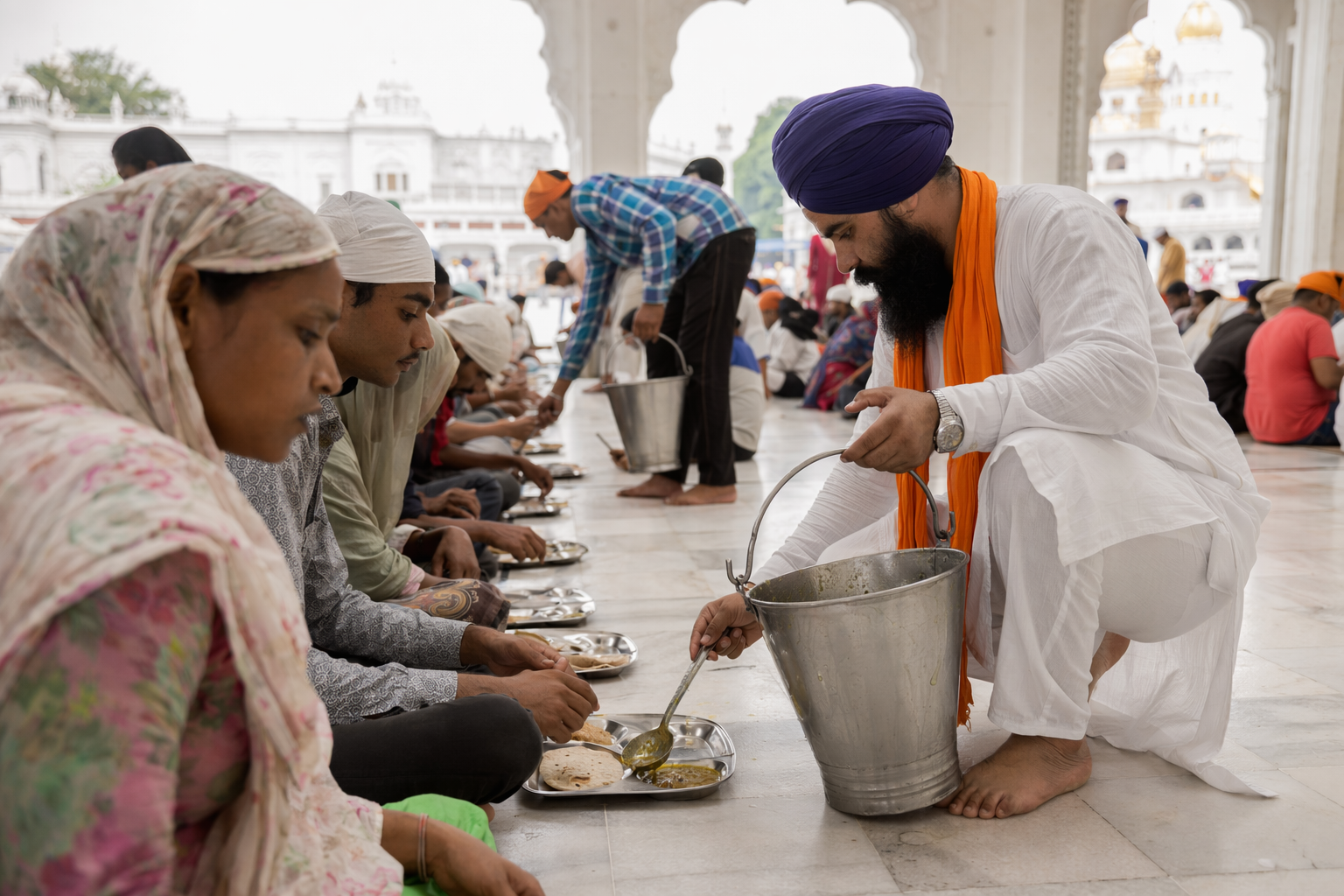
Langar is not a restaurant, not a buffet, and not a tourist attraction in the usual way, even though visiting a gurdwara in India can be one of the most memorable food experiences you’ll have. It’s a Sikh community kitchen, rooted in the ideas of seva, which means selfless service, and sangat, the community gathered together. Everyone sits in rows called pangat, usually on the floor, and eats the same simple vegetarian meal. Rich, poor, local, foreign, religious, not religious, it doesn’t matter. That equality is kind of the whole point. And if you’re a first-time visitor, the etiquette isn’t complicated, but it does matter. Not in a scary way. More like, if someone invites you into their home, you want to behave like you noticed the invitation was precious.
Before the meal: shoes off, head covered, ego also maybe off
#The first practical thing is shoes. Every gurdwara I’ve visited in India had a shoe storage area near the entrance, usually run by volunteers. You hand over your shoes, sometimes get a token, and walk barefoot or in socks. In busier places like Bangla Sahib in Delhi or Sri Harmandir Sahib, the Golden Temple in Amritsar, it feels incredibly organized despite the crowd. Then you cover your head. Men, women, everyone. Many gurdwaras provide scarves or bandanas, but I usually carry a light cotton scarf in my day bag now because it saves fumbling around. Hats are not always seen as ideal, especially baseball caps, so a scarf is safer. And yes, wash your hands before entering the langar hall. If you’re traveling in India, hand-washing becomes almost a spiritual practice anyway.
A small thing I learned the awkward way: don’t wander around with your head uncovered just because you’re “only taking a quick photo.” I did not do this inside the prayer hall, thank god, but I once loosened my scarf in the courtyard because it was hot, and a kind uncle gave me that look. Not angry, just disappointed, which is somehow worse. I fixed it fast. Also, photography rules vary. Some places are relaxed in the outer areas, some are strict, and you should never shove a camera into someone’s face while they’re praying or eating. The langar hall is not content. It’s a meal. If you really want a picture, ask someone first or take one of your own plate after sitting, but honestly, sometimes just eat the food and let memory do its old-fashioned job.
What you’ll usually eat at langar, and why simple food hits so hard
#Most langar meals I’ve had in India were built around dal, sabzi, roti or chapati, rice, and sometimes kheer or a small sweet. It is nearly always vegetarian, which makes it accessible across many dietary lines and fits the Sikh practice of serving everyone without worrying about meat restrictions. The food is simple, but not boring. At Bangla Sahib, I remember the dal being thin but deeply comforting, the kind that tastes like someone has stirred patience into it. The roti was warm and slightly smoky from being made in giant batches. At the Golden Temple, I was more emotional than hungry at first, then I tasted the dal and suddenly became very practical about finishing everything.
There’s a trend in food travel now where people chase “authentic” meals, sometimes in a way that gets a bit silly. Like, if it isn’t hidden in an alley and served by someone’s grandmother, people act like it doesn’t count. Langar quietly makes that whole conversation feel small. It’s authentic because it is alive and useful, not because it performs authenticity for visitors. The kitchen is enormous in famous gurdwaras, but the mood is still homemade. Volunteers roll rotis, stir cauldrons, wash plates, refill water, sweep floors. Food is cooked to nourish, not impress, which weirdly makes it more impressive. I’ve eaten fancy tasting menus that I barely remember. I remember every steel thali I’ve recieved in a langar hall.
How to sit, accept food, and not make a fool of yourself
#When you enter the langar hall, follow the flow. Don’t try to choose a special spot unless someone directs you. People sit in straight rows, usually on mats or the floor. If sitting cross-legged is hard for you, that’s okay. Many larger gurdwaras have arrangements or chairs for elderly visitors or people with mobility issues, but ask politely instead of just dragging furniture around. Once seated, a volunteer will give you a plate, bowl, spoon, or sometimes you pick them up before sitting. Hold your plate steady when food is served. For roti, it’s common to cup both hands together or lift your plate slightly, and volunteers place it for you. It’s a small gesture, but it feels respectful.
- Don’t demand extra before everyone has been served. You can usually ask for more later by raising your hand or gesturing gently.
- Don’t leave food uneaten if you can avoid it. Take small portions first. Langar is free, yes, but wasting food feels especially wrong there.
- Don’t stretch your legs into the serving lane. Volunteers move fast with hot dal, and nobody needs a dal accident on holiday.
- Don’t treat volunteers like waiters. They are doing seva, and many may have traveled or taken time from work to serve.
The serving rhythm can feel intense the first time. Someone appears with dal, someone else with sabzi, then rotis arrive in this beautiful little storm, and before you’ve processed it, another volunteer is offering more rice. Say “thank you,” “shukriya,” or “sat sri akal” if it feels natural, but don’t over-perform. I’ve seen travelers get oddly theatrical, like they’re auditioning for a documentary. Just be present. Eat, smile, accept what you need, decline what you don’t. A gentle hand over the plate usually works if you don’t want more.
The Golden Temple langar is famous for a reason, but don’t skip smaller gurdwaras
#If you’re planning a food-and-faith route through North India, Amritsar is the obvious stop. The Golden Temple, or Sri Harmandir Sahib, is one of the most important Sikh shrines, and its langar is legendary because of the scale. Huge numbers of visitors eat there daily, and the kitchen runs with astonishing teamwork. I went in the late afternoon, when the marble around the sarovar was warm under my feet and the gold of the shrine looked almost unreal. The meal itself was humble: dal, roti, rice, sabzi. But eating it after walking around the water, hearing kirtan floating through the complex, I don’t know... food can become more than food in places like that.
That said, some of my sweetest langar memories are from smaller gurdwaras where nobody cared that I was a traveler with a notebook and too many questions. In a town outside Chandigarh, a family I met on a bus basically adopted me for an afternoon and took me to their local gurdwara. The langar hall was not grand. Plastic buckets, steel plates, kids running around until their grandmother hissed at them. The dal had more ginger, the sabzi was potatoes and peas, and someone insisted I take kheer even though I was full. It felt less like visiting a landmark and more like being folded, briefly, into ordinary life. Both experiences matter. Do the famous one, sure, but leave room for the quiet one.
Allergies, spice, and dietary worries: ask, but understand the limits
#Langar is usually vegetarian, but that doesn’t automatically mean it works for every diet. Dairy can appear in kheer, tea, ghee, or sweets. Wheat is everywhere because of roti. Lentils and legumes are central. Nuts are less common in the basic meal but can appear in sweets or special preparations, especially on festivals or big occassions. If you have a serious allergy, don’t be shy, but also don’t expect a restaurant-style ingredient chart. Volunteers may know what’s in that day’s food, or they may need to ask someone in the kitchen. If you’re traveling with allergies in India, it’s worth reading up on hidden dairy and nuts in sweets too, because prasad or sweet offerings can surprise you. This Indian Sweets Guide for Foreign Tourists: Dairy, Nuts & Freshness is useful before you start saying yes to every delicious thing offered with a smile.
About spice: langar food is generally milder than a lot of restaurant or street food, but “mild” is personal. My British friend once called a completely normal dal “a bit volcanic,” while I thought it tasted like comfort and cumin. You can’t really ask the langar kitchen to make a custom less-spicy plate because it’s cooked in large batches for everyone. If spice worries you, eat slowly, keep rice or roti handy, and don’t arrive starving because panic-eating hot dal is not elegant. For the rest of your India meals outside the gurdwara, this guide on How to Ask for Less Spicy Food in India is genuinely handy, especially in dhabas and local restaurants where the cook may actually adjust things.
Water, chai, and the stomach-anxiety every traveler pretends not to have
#Let’s talk about the thing people whisper about: stomach safety. Langar kitchens at major gurdwaras feed enormous crowds and usually have strong systems for washing, cooking, and serving, but your travel stomach is still your travel stomach. I drink the water served in many gurdwaras now, but on my first trips I was more cautious and carried filtered water. Nobody cared. If you’re worried, bring your own bottle and be discreet. Don’t make dramatic faces or ask if the water is “clean” in a loud voice, because that’s rude anywhere, not just in India. Wash your hands well, use sanitizer if you like, and trust your own health needs without insulting the place feeding you.
You may also be offered chai in or around gurdwaras, depending on the place and time. Chai in India can be one of travel’s great small joys, but it often includes milk, sugar, and water boiled together, and every traveler has a different comfort level. I’m very pro-chai, personally. I have planned entire walks around chai stalls, which is not a balanced lifestyle but it is a happy one. If milk or water safety is something you’re thinking about, this Chai in India for Foreign Tourists: Safety Tips is worth checking before your trip. Also, if you skip chai, don’t announce it like you’re making a moral stand. Just say no thank you.
Seva: the part that changed how I saw the meal
#Eating langar is beautiful, but helping with langar is where the whole idea really lands. Many gurdwaras allow visitors to do seva, even if it’s something simple like drying plates, carrying rotis, chopping vegetables, or sitting with a group rolling dough. Ask first. Don’t just barge into the kitchen because you saw a travel reel where someone stirred a giant pot. Kitchens are busy and safety matters. At the Golden Temple, I spent a short time helping rinse steel plates. It was repetitive, wet, and not remotely glamorous. Also, it was one of the best things I did in Amritsar. Me and a teenage volunteer from Ludhiana stood side by side, barely speaking the same language, passing plates into this endless shining stack.
There is something humbling about washing the plate of a stranger who just ate the same food as you. Not in a big poetic movie way, or maybe yes, kind of. You realize the meal is not charity in the way travelers sometimes misunderstand charity. It’s participation. Today you eat, tomorrow you serve, or maybe you do both in the same hour. Nobody asked me for my religion, passport, income, or opinion on anything. They just handed me a plate. Travel does that at its best, doesn’t it? Takes the story you had about yourself and gently makes it less important.
What not to do, because some mistakes are easy to avoid
#First, don’t go to langar only because it’s free food. Yes, it is free and open to all, and that openness is sacred. But if you can afford restaurants and hotels, enter with gratitude, not with a backpacker hack mentality. I once heard two travelers in Delhi joking that they had “found the ultimate budget lunch.” I don’t think they meant harm, but it sounded ugly. Langar is not a loophole in your travel budget. It’s a community practice. Eat if you’re hungry, absolutely. Eat if you’re curious and respectful, yes. But don’t reduce it to free calories.
Second, dress with some thought. You don’t need formal clothes, but shoulders and knees covered is a safe general approach, and avoid anything that makes sitting on the floor a crisis. Third, don’t bring alcohol, tobacco, or meat into the premises. Many gurdwaras are strict about this, and you should be too. Fourth, don’t interrupt prayers or block pathways. Big gurdwaras can be crowded, and people are moving with purpose. Fifth, don’t argue about food. If you are served something you can’t eat, decline gently or leave it untouched only if you must. Better is to ask for small portions from the beginning.
The best langar etiquette I know is simple: arrive clean, cover your head, sit with everyone, eat with gratitude, waste as little as possible, and remember you are a guest in a living tradition.
A little food trail for first-time visitors in India
#If your travels are built around food like mine usually are, you can pair gurdwara visits with local eating without turning the day into a checklist. In Delhi, visit Bangla Sahib in the morning or late afternoon, then walk toward Connaught Place for old-school snacks, chole bhature, or a careful chai stop. In Amritsar, the Golden Temple is best experienced slowly, not as a quick photo before lunch. Eat langar, sit by the sarovar, listen for a while, then later explore the city’s kulchas, lassi, and the busy lanes around the old city. Amritsari food is not shy. It arrives buttery, crunchy, tangy, and proud of itself.
In Punjab more broadly, smaller town gurdwaras can become part of the road trip rhythm. You drive past mustard fields, stop for tea, visit a gurdwara, eat langar, continue to a dhaba where the parathas are wider than your face. It’s easy to over-romanticize this, I know. Travel days are also sweaty and delayed and sometimes your stomach makes weird decisions. But the combination of langar and Punjabi hospitality is something special. Food is not treated like a luxury object. It is abundance, duty, welcome, and occasionally a very firm aunty telling you to eat one more roti when you clearly cannot.
Why langar stays with you after the trip ends
#I’ve tried making langar-style dal at home, and it never tastes the same. Partly because I’m impatient with lentils, partly because my kitchen doesn’t have the energy of fifty people cooking for strangers, and partly because some foods are tied to the place where you first understood them. The dal itself may be simple: lentils, turmeric, salt, maybe cumin, ginger, onion depending on the kitchen. But the experience seasons it. The sound of steel plates, the soft thud of rotis landing in hands, the volunteer bending down with a bucket of sabzi, the old woman across from you eating in complete silence. You can’t recreate that with a recipe.
For first-time visitors in India, gurdwara langar can be one of the most generous introductions to the country’s food culture. It teaches you how to eat with others, how to accept hospitality without making it weird, and how travel meals don’t always need to be rare or expensive to be unforgettable. Go with an open mind. Cover your head. Wash your hands. Sit down in the row. Take only what you can finish. Say thank you, then maybe offer a little seva if it feels right. And after that, go keep exploring, because India will feed you in a hundred different ways. I’ll keep writing about those meals and messy travel lessons, and you can find more wandering, food-obsessed stories over on AllBlogs.in.