Indian sweets are not really “dessert” in the way a lot of visitors think of dessert. They’re breakfast, temple offering, train snack, wedding gift, festival fuel, apology present, grandmother diplomacy, and sometimes just the thing you eat at 11:40 at night because a shop is still frying jalebi and your willpower has left the country. My own soft spot for Indian mithai started in Delhi, standing outside Old Famous Jalebi Wala near Chandni Chowk, holding a paper plate that was too hot, too sticky, and absolutely not something I could eat neatly. I remember thinking, okay, this is dangerous. Not scary dangerous. More like “I might plan entire trips around sugar now” dangerous.
But here’s the bit nobody told me clearly on my first few trips: Indian sweets are glorious, yes, but they can also be confusing for foreign travelers. Many are dairy-heavy. A lot hide nuts in places you don’t expect. Freshness matters more than the pretty silver leaf on top. And some sweets are perfect for carrying on a train, while others should be eaten right there, ideally before the sun gets too involved. This guide is basically what I wish someone had handed me before I started pointing at trays in sweet shops with too much confidence.
First, What Exactly Is Mithai?
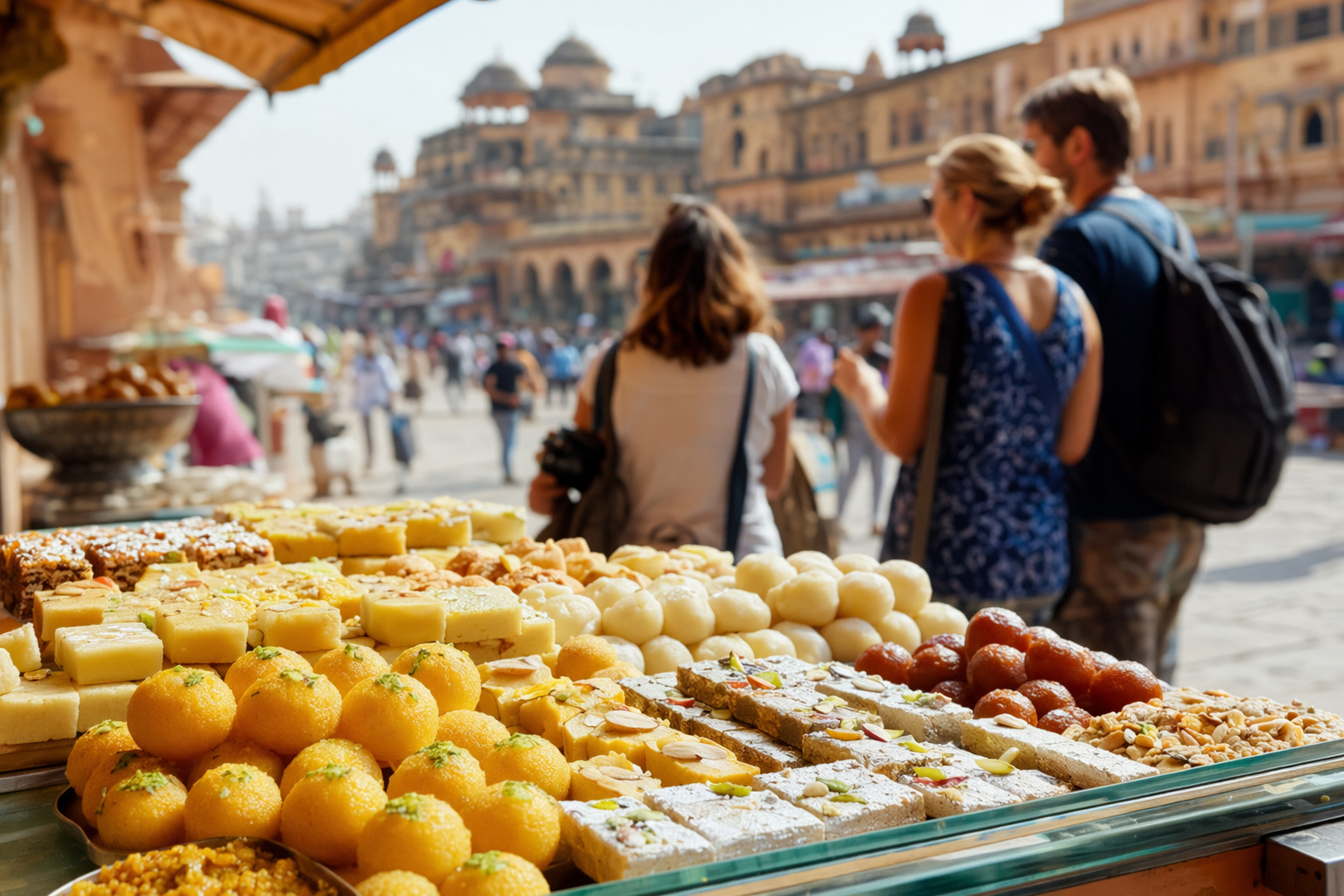
#Mithai is the broad word for Indian sweets, and it covers an enormous world. North Indian shops might be full of milk fudge, syrupy fried things, and pistachio-topped squares. Bengal leans into chhena, that soft fresh cheese used for rasgulla, sandesh, and cham cham. Rajasthan goes big on ghee, gram flour, and festival sweets like ghewar. Maharashtra has modak and shrikhand. South India has Mysore pak, payasam, jangiri, and coconut-heavy sweets. Honestly, trying to “cover Indian sweets” in one trip is like saying you’ll casually see Europe over a weekend. Cute idea. Not happening.
Food travel in India has also changed a lot. In 2026, the trend I keep seeing is dessert-led travel, not just “we’ll eat something sweet after dinner.” People are booking Old Delhi food walks that end in jalebi, Kolkata mishti trails, Jaipur festival sweet tours, and boutique mithai tastings in Mumbai and Bengaluru. Fancy sweet brands are doing vacuum-packed boxes, lower-sugar versions, millet laddus, vegan-ish coconut sweets, QR-coded gifting boxes, and airport-friendly packaging. But the heart of it is still the same: a glass counter, a man with tongs, a mountain of sweets, and you saying “just one piece” like a liar.
The Big Dairy Warning: Milk Sweets Are Amazing, But They Don’t Wait Around
#If you’re from a place where sweets mostly mean baked goods, Indian dairy sweets might surprise you. Many are made from khoya or mawa, which is milk reduced slowly until it becomes thick and rich. Others use chhena, paneer, rabri, cream, yogurt, or condensed milk. This is why peda, kalakand, milk cake, rabri, rasmalai, mishti doi, kulfi, and sandesh taste so lush. It’s also why you should pay attention to freshness. Dairy sweets are not souvenirs you casually leave in a warm hotel room while you go sightseeing for six hours. I learned that the sweaty way in Jaipur. Bought kalakand in the morning, got distracted by block printing markets and coffee, came back to a box that smelled… not evil, but not right either. Into the bin it went, with much sadness.
- Eat high-moisture dairy sweets the same day if possible, especially rasmalai, rabri, kalakand, sandesh, cham cham, and anything sitting in syrup or cream.
- If a shop says “keep refrigerated,” believe them. India’s heat is not joking, even in months you think are mild.
- Dry sweets like kaju katli, soan papdi, besan laddoo, dry fruit barfi, and some pedas travel better, though they still need common sense.
- At railway stations and bus stops, choose fast-moving, busy counters rather than sleepy trays that look like they’ve seen three governments come and go.
How I Judge a Sweet Shop Before Buying Anything
#This is not scientific, okay, but it has saved me many times. I look for turnover first. If local families are buying kilos, wedding boxes are going out, office workers are arguing over rasgulla counts, that’s usually a good sign. I watch whether staff use tongs or gloves. I check if dairy sweets are chilled or at least kept in a clean covered counter. I sniff a little, discreetly. Fresh mithai smells like milk, ghee, cardamom, saffron, fried flour, rose syrup, nuts. Old mithai smells flat, sour, oily, or dusty. You’ll know. Your nose becomes very wise after one bad experience.
Big chains are not automatically better, but for new visitors they can be reassuring. Haldiram’s, Bikanervala, Kanti Sweets in Bengaluru, Anand Sweets, Adyar Ananda Bhavan in South India, Balaram Mullick & Radharaman Mullick in Kolkata, LMB in Jaipur, and Chhappan Bhog in Lucknow are names many travelers run into. I still love the small neighborhood places more, because there’s always some uncle explaining why his motichoor laddoo is better than everyone else’s, but when you’re fresh off a flight and your stomach is still negotiating with time zones, a clean well-known shop is not a bad move.
Nuts: The Beautiful, Sneaky Problem
#Indian sweets and nuts are basically in a long-term relationship. Cashew, almond, pistachio, walnut, and sometimes peanuts appear everywhere. Kaju katli is cashew fudge. Badam barfi is almond. Pista rolls are pistachio. Dry fruit laddus may have a whole pantry inside. Even sweets that don’t look nutty may be garnished with slivers of almond or pistachio, and the same knife may cut ten different varieties. If you have a serious nut allergy, please don’t rely on “it doesn’t look like nuts.” Ask clearly, and ask more than once. Cross-contact is common in traditional sweet shops.
Useful phrases help. “Isme kaju hai?” means “Does this have cashew?” “Badam?” for almond, “pista?” for pistachio, “moongfali?” for peanut. If the allergy is severe, carry a translated allergy card in Hindi and the local language of the state you’re visiting. In Bengal, ask in Bengali if you can. In Tamil Nadu, Tamil helps. Hotel staff can write it for you, and honestly most people want to help, but sweet counters get busy and misunderstandings happen. Also, some sweets use nut paste for richness without advertising it loudly. That creamy pale square might not be plain milk. It might be cashew smiling at you.
My Favorite City-by-City Sweet Trails
#Delhi is chaos in the best and worst ways, and Old Delhi is where I’d send any food traveler who can handle crowds. Start early, before the lanes get too packed. Try jalebi at Old Famous Jalebi Wala, then look for rabri, balushahi, and seasonal gajar ka halwa in winter. I like Delhi sweets because they’re bold. No shyness. Syrup means syrup. Ghee means ghee. By the time you’ve walked Chandni Chowk, eaten a hot jalebi, and burned your fingers slightly, you’ve had a proper welcome.
Kolkata is a different mood entirely. Softer, milkier, more poetic somehow. The sweets here are built around chhena, and the freshness window is serious. Try rosogolla, sandesh, nolen gur sweets in winter, mishti doi, and baked rosogolla if you see it. Balaram Mullick & Radharaman Mullick is a popular stop, and K.C. Das is famous for rasgulla history. But small para sweet shops, the neighborhood ones, can be magical. I once had a jaggery sandesh so delicate it felt rude to chew quickly. Like, calm down and respect the thing.
Jaipur brings the drama. Ghewar during Teej and Raksha Bandhan season is a must if your timing works. Laxmi Misthan Bhandar, usually just called LMB, is an old favorite in the city center, and you’ll see plenty of shops selling mawa kachori, mishri mawa, and moong dal halwa. Rajasthan loves ghee and texture. Things crumble, drip, crunch, and melt. Do not wear white if you’re clumsy like me. Powdered sugar has a way of finding your shirt.
Lucknow is elegant but also very indulgent. Chhappan Bhog is one of those names people mention, especially for premium sweets, and the city’s sweet scene sits beautifully beside its kebab and biryani culture. Try malai gilori if you find it fresh, plus revri in winter, makhan malai or nimish when the season is right, and anything saffron-heavy. Lucknow feels like a city where dessert has manners. Delhi barges into the room. Lucknow knocks, smiles, then quietly ruins all your diet plans.
Mumbai is where mithai gets cosmopolitan. You’ll find old-school Maharashtrian sweets like modak and puran poli, Gujarati farsan-and-sweet shops, Parsi bakery treats, plus designer mithai boutiques doing chocolate barfi, rose-pistachio truffles, date-nut bites, and travel-ready gift boxes. Around festivals, especially Ganesh Chaturthi and Diwali, the sweet shops go absolutely wild. If you’re flying out of Mumbai, dry sweets are better gifts than rasmalai, unless you enjoy explaining dairy leakage to airport security.
Freshness: The Three Categories I Use When Traveling
#| Sweet type | Examples | Travel advice |
|---|---|---|
| Eat immediately | Rabri, rasmalai, kulfi, falooda, fresh sandesh, mishti doi | Best eaten at the shop or within a few hours. Keep cold if taking away. |
| Same-day sweets | Kalakand, cham cham, fresh peda, milk cake, malai sweets | Buy from busy shops, avoid heat, eat by evening if possible. |
| Better for travel | Kaju katli, soan papdi, besan laddoo, dry fruit barfi, Mysore pak, chikki | Usually safer for short trips and gifting, but still check packaging and expiry. |
This little system sounds boring, but it helps. If I’m hopping into a taxi for a half-day sightseeing loop, I don’t buy rabri first. I buy it last, eat it standing up, and move on with my life. If I’m taking a train, I go for dry sweets. If I’m bringing gifts home, I ask for vacuum-packed or sealed boxes and check the expiry date. In 2026, more premium shops are offering proper travel packaging, which is great, though I still wouldn’t push my luck with milk-heavy sweets in hot weather.
The Silver Leaf Question: Is Vark Safe?
#You’ll see shiny silver leaf on many sweets, called vark or varak. It looks fancy, and for a long time travelers were unsure about it because of quality concerns and older production methods. Reputable shops today generally use food-grade silver leaf, and many advertise vegetarian or machine-made vark. If it worries you, ask. Or choose sweets without it. Personally, I don’t stress much in good shops, but I avoid anything where the silver looks patchy, dusty, or like decoration from a school craft project. Again, your eyes and nose are part of the travel kit.
Festival Timing Changes Everything
#If you visit India around Diwali, Holi, Eid, Durga Puja, Raksha Bandhan, Ganesh Chaturthi, Onam, Pongal, or Christmas in places like Goa and Kerala, sweets become part of the street scenery. Diwali brings mountains of laddus, barfi, kaju katli, and gift hampers. Holi has gujiya and thandai. Eid means sheer khurma, seviyan, and bakery sweets in many neighborhoods. Durga Puja in Kolkata is peak mishti season, and Ganesh Chaturthi in Maharashtra is modak heaven. The good news is that turnover is high. The bad news is that crowds are intense and some temporary sellers cut corners. Buy from established shops when possible during festival rush.
One trend I really like lately is the rise of guided festival food walks. Not the sterile kind where someone lectures you for three hours and you’re starving. The good ones take you through markets, explain why certain sweets belong to certain rituals, and help you taste without accidentally ordering two kilos of something. Culinary tourism in India is becoming more organized, with heritage walks, chef-led tastings, farm-to-table spice visits, and regional dessert trails. For foreign tourists, that structure can be comforting, especially on the first trip.
What to Drink With Indian Sweets
#This sounds like a side topic, but drinks matter. Indian sweets can be intensely sweet, and pairing them with the right drink keeps you from crashing into a sugar fog. Masala chai with jalebi is a classic for a reason. Black tea cuts through ghee-heavy sweets. Filter coffee with Mysore pak in Bengaluru or Mysuru is beautiful, though rich enough to make you sit quietly for a while. In Kolkata, mishti doi doesn’t need anything except maybe a spoon and privacy. In summer, I go slower with dairy drinks like lassi or thandai unless I’m at a very clean, trusted place.
Water safety is still a basic travel thing. Drink sealed bottled water or properly filtered water. Be careful with ice unless you trust the place. This isn’t about being paranoid. It’s about not losing two days of a trip because you got romantic about a street-side crushed ice drink in 42°C heat. I’ve done foolish things for flavor. Some were worth it. Some absolutely were not.
Ordering Without Feeling Lost
#Most sweet shops sell by weight, often in 250 gram, 500 gram, or 1 kilo boxes, but you can usually ask for one or two pieces to taste. Say “ek piece” for one piece, “thoda” for a little, or just point and smile. In tourist-heavy cities, staff often know basic English. In smaller towns, pointing works shockingly well. Don’t touch sweets with your hands unless invited. Let staff use tongs. If something is served hot, like jalebi or gulab jamun, eat it hot. Don’t wait for the perfect photo until it dies. I know, I know, the photo matters. But hot gulab jamun has a short emotional lifespan.
Also, prices vary wildly. A basic laddoo from a neighborhood shop may be cheap, while premium dry fruit mithai can cost a lot because nuts are expensive. Saffron, pistachio, and silver leaf push prices up. Designer mithai boutiques in big cities now package sweets like luxury chocolates, and some are genuinely excellent. Others are more pretty than tasty. My rule: if the shop smells like real ghee and roasted nuts, I’m interested. If it smells mostly like perfume and branding, I get suspicious.
Regional Sweets Worth Planning Around
#- Mysore pak in Karnataka: buttery, gram flour-based, crumbly or soft depending on style. The ghee version is rich enough to count as a life event.
- Petha in Agra: translucent ash gourd candy, often sold near the Taj Mahal routes. Buy sealed boxes from busy shops.
- Chikki in Lonavala and Maharashtra: nut brittle, great for travel, especially peanut or sesame versions.
- Ghewar in Rajasthan: seasonal, honeycomb-like, often topped with rabri. Eat fresh, don’t drag it across three cities.
- Modak in Mumbai and Pune: especially during Ganesh Chaturthi. Steamed ukadiche modak with coconut-jaggery filling is my favorite.
- Nolen gur sandesh in Kolkata: winter jaggery sweets. Soft, fragrant, and not something you should pack for a long flight.
For Vegetarians, Vegans, and People Avoiding Gelatin
#Good news: most traditional Indian sweets are vegetarian, but vegan is trickier because dairy and ghee are everywhere. Coconut laddus, some jaggery sweets, sesame chikki, peanut chikki, and certain South Indian sweets may be dairy-free, but you need to ask about ghee. “Ghee hai?” means “Is there ghee?” Some modern sweet shops in Mumbai, Delhi, Bengaluru, and Goa are now offering vegan sweets, date-based bites, sugar-free or no-added-sugar sweets, and millet laddus because wellness travel is everywhere now. Some are really good. Some taste like punishment. Try before buying a full box.
Gelatin is not common in traditional mithai, but fusion desserts, puddings, and some modern bakery-style sweets may use stabilizers or gelatin. If you follow halal, kosher, vegan, or strict vegetarian rules, ask at premium shops where ingredients are listed more clearly. Traditional counters may not always have written labels, and the person serving may not know every ingredient in detail.
A Simple Sweet-Shop Safety Checklist
#- Pick busy shops with fast turnover, especially for dairy sweets.
- Choose refrigerated or freshly made milk sweets, not trays sweating in the heat.
- Ask about nuts if you have allergies, and assume cross-contact is possible.
- Buy dry sweets for trains, buses, flights, and gifts.
- Check packed boxes for manufacturing date, expiry date, and storage instructions.
- Eat street sweets hot and fresh, especially jalebi, gulab jamun, and malpua.
- Don’t be shy about throwing something away if it smells sour, stale, or oily. Your stomach deserves respect.
The Sweet I Still Think About
#If I had to choose one memory, it’s not the fanciest sweet. It was a winter evening in Kolkata, when someone handed me nolen gur sandesh from a small box tied with string. The jaggery had this smoky, date-like warmth, and the chhena was so fresh it barely held its shape. We were walking past yellow taxis and tea stalls, and the city was loud but somehow soft around the edges. That’s what Indian sweets do at their best. They attach themselves to a place. Later, when you taste something similar, you don’t just remember sugar. You remember the street, the weather, the person who said “try this one,” the sticky fingers, the whole mess of travel.
So yes, be careful with dairy. Ask about nuts. Respect freshness. But don’t become so cautious that you miss the joy. Indian mithai is one of the great edible maps of the country, and every region adds its own handwriting. Start with one piece, then another, then maybe a box for the hotel, then suddenly you’re the person comparing peda textures like it’s a serious academic field. It happens.
The best Indian sweets are not just sweet. They’re milky, nutty, floral, fried, chilled, syrup-soaked, crumbly, festive, and completely tied to where you eat them.
Final Thoughts Before You Order That Second Laddoo
#For foreign tourists, the smartest way to enjoy Indian sweets is to travel with curiosity and a little common sense. Fresh dairy sweets are for eating now. Nut sweets need allergy awareness. Dry sweets are your best friends on the road. Famous shops are useful, but tiny local places can give you the best bite of the whole trip. And if a local tells you a sweet is seasonal, listen. Seasonal mithai is often where the magic hides.
I still think India is one of the world’s greatest dessert destinations, not because every sweet is delicate or refined, but because sweets are woven into daily life so deeply. They celebrate, comfort, welcome, and occasionally overwhelm you. Which is kind of what travel does too. If you’re planning your own food trail and want more casual, hungry, slightly obsessed travel reading, have a look at AllBlogs.in — it’s the sort of place I’d browse before deciding which city to eat through next.