Carrying mithai on a trip sounds simple enough.
You buy a nice box, get it tied up, keep it carefully in your bag, and think, “Done.”
And then the actual journey begins.
The box sits in a hot car for two hours. It gets pushed under someone’s overnight bag on a train. It rides on a bus luggage rack. A flight gets delayed. You finally reach your relatives’ house, and the sweets sit unopened on the dining table while everyone has tea, talks, and forgets about them.
By then, not every mithai is still at its best.
Indian sweets are rich, delicate, and often made with milk, ghee, nuts, syrup, or fresh chenna. That is why they are so loved, but it also means some sweets travel beautifully while others really should be eaten close to where they were bought.
So when you are choosing travel-friendly Indian sweets, don’t ask only, “What does everyone like?” Ask, “What will still be safe, neat, and enjoyable after the journey?”
This guide is about freshness, texture, and food safety. It is not about airport security rules. We will look at the best Indian sweets for travel, which ones to eat first, which ones to avoid on long or hot journeys, and how to pack mithai so it does not leak, melt, crush, sweat, or spoil before you arrive.
Quick answer
#For travel, choose dry, sturdy sweets with low moisture.
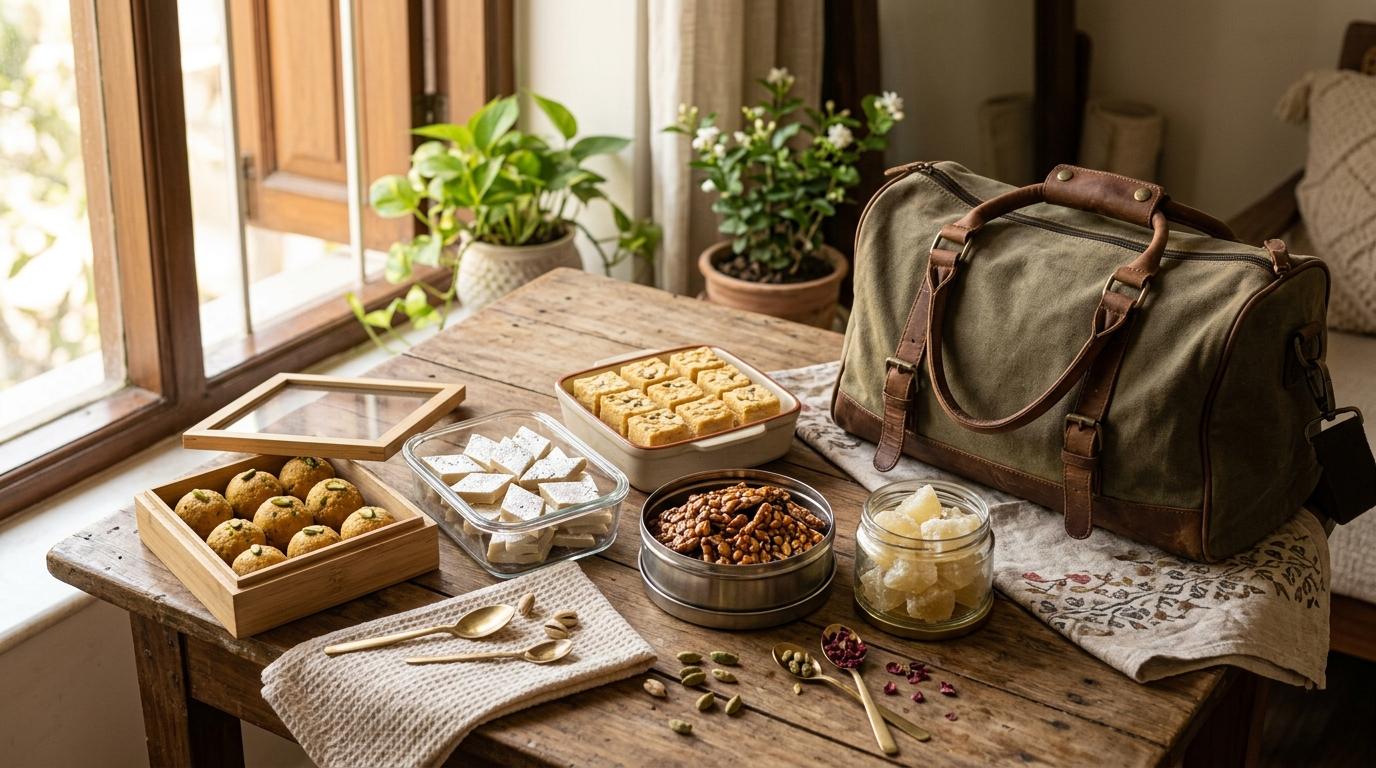
Good options include besan laddoo, dry boondi laddoo, panjiri, pinni, kaju katli, badam katli, soan papdi, patisa, dry petha, chikki, gajak, revdi, and other dry mithai for travel made mostly with roasted flour, nuts, sugar, and ghee.
Be more careful with soft dairy sweets. Kalakand, fresh sandesh, rasmalai, rabdi sweets, cream-filled mithai, soft pedas, and chenna-heavy sweets should be eaten early, especially if you do not have proper cooling.
Avoid syrupy sweets in heat or on long journeys unless you can pack them in truly leak-proof containers and keep them cool. Rasgulla, gulab jamun, rajbhog, cham cham, malpua, and very syrupy petha can leak, ferment, turn sour, or become a sticky mess.
For packing, do not rely only on the shop’s cardboard box. Use airtight, rigid, food-safe containers. Separate layers with parchment or butter paper. Keep dry and moist sweets apart. Keep the box away from direct sun. And please, do not leave mithai inside a parked car.
Some sweets without refrigeration travel well, but “without refrigeration” does not mean “no care needed.” Heat, humidity, old stock, weak packing, and too much handling can still ruin a perfectly good box.
Best sweets to pack
#The best sweets for travel usually have three things in common:
- They are low in moisture.
- They have a firm structure.
- They are made with ingredients that keep reasonably well at room temperature when handled properly.
Roasted flour, nuts, sugar, and ghee generally travel better than fresh milk, cream, chenna, rabdi, or syrup.
Of course, dry sweets can also go stale or turn rancid. They can absorb moisture, crumble, or lose freshness. But compared with soft dairy mithai, they are much more forgiving during train journeys, road trips, bus rides, temple visits, festival travel, and long family visits.
Here are the safer, sturdier choices.
Besan laddoo
#Besan laddoo is one of the most dependable travel-friendly Indian sweets.
It is usually made with roasted gram flour, ghee, and sugar. Since it is dry, dense, and not syrupy, it does not leak and can handle a little movement better than many delicate sweets.
Choose laddoos that feel firm, not greasy or damp. If the surface looks oily, sticky, or too soft, they may not hold up well in heat.
For longer trips, avoid laddoos with fresh cream, wet fillings, or soft decorative toppings.
Panjiri and pinni
#Panjiri and pinni are practically made for storage and travel.
They are usually prepared with roasted flour, ghee, nuts, seeds, and sometimes edible gum. Their dense texture makes them useful for road trips and train journeys because they are filling, sturdy, and less messy.
Still, pack them in a rigid container. They may not spoil quickly, but they can crumble if they are crushed under heavier luggage.
Dry boondi laddoo
#Dry boondi laddoo can travel well, especially if it is the firmer variety.
The key word is dry.
Very moist motichoor laddoos are softer, more delicate, and more likely to become sticky or collapse in warm weather. If you are buying laddoos for a long trip, ask for a drier batch.
Avoid any pieces sitting in extra syrup or feeling wet to the touch.
Kaju katli
#Kaju katli is a classic travel sweet for good reason.
It is flat, compact, easy to stack, and usually made with cashew and sugar. It has less free moisture than many milk-based sweets, which makes it a better option for gifting after travel.
That said, quality matters. Fresh kaju katli should not smell stale, oily, or sour. It should not be sweating inside the box.
In hot weather, the surface can soften, so place parchment paper between layers and keep the container away from direct heat.
Badam katli and nut-based barfi
#Badam katli and other nut-based sweets also travel well when they are firm and not mixed with cream, fresh fruit, or wet fillings.
Almond, pistachio, and cashew sweets are usually better for travel when they are cooked to a dense, sliceable texture.
Be more careful with barfi that contains a lot of khoya or has a soft, milky bite. It may look dry from the outside, but if it is dairy-heavy and moist, treat it as a sweet that should be eaten sooner.
Soan papdi and patisa
#Soan papdi and patisa are among the easiest sweets to carry.
They are dry, light, and not very risky from a moisture point of view. The main issue is not spoilage; it is breakage.
If you want soan papdi to reach neatly, use the original sealed tub if it is sturdy. Otherwise, transfer the pieces into a rigid container with very little empty space so they do not shake around too much.
Do not pack soan papdi next to semi-moist sweets. It can absorb moisture and lose that flaky texture.
Dry petha
#Dry petha, especially the firm crystallized type, can be a good travel sweet.
This is different from syrupy petha or angoori petha, which can drip, turn sticky, and spoil faster in warm weather.
Choose pieces that are dry on the outside and not sitting in liquid. Pack petha separately because even dry petha can release some moisture if the weather is humid or the container gets warm.
Chikki, gajak, and revdi
#Chikki, gajak, and revdi may not always appear in fancy mithai boxes, but they are excellent travel sweets.
Peanut chikki, sesame chikki, gajak, and revdi are dry, compact, and easy to portion. They are also less fussy than cream-based or syrup-heavy sweets.
They can get sticky in heat, so wrap or layer them properly.
Also keep allergens in mind. These sweets often contain peanuts, sesame, or other nuts. If you are sharing them with children, guests, or office colleagues, label the box clearly.
Dry fruit rolls and firm dry fruit sweets
#Dry fruit rolls and dense nut sweets are good options when they are not cream-filled or coated with wet toppings.
They are rich, compact, and less messy than syrupy mithai.
Before buying, check freshness. Avoid pieces that smell rancid, look dull and sweaty, or have a strange sticky film that does not seem normal for that sweet.
Sweets to eat first
#Some sweets are wonderful, but they are not patient.
They are meant to be eaten fresh, not carried around all day in a warm bag.
If your box has soft dairy sweets, chenna sweets, cream sweets, or rabdi-based sweets, put them at the top of your “eat first” list. This is especially important during summer, long road trips, delayed trains, crowded buses, temple queues, and festival days when food often sits out longer than planned.
A simple order helps:
- Eat cream, rabdi, rasmalai, and chenna sweets first.
- Then eat soft khoya sweets and soft pedas.
- Then eat semi-moist barfi.
- Keep dry laddoos, katli, soan papdi, chikki, gajak, and dry petha for later.
Kalakand and milk cake
#Kalakand and milk cake are made with reduced milk and have a soft, moist texture.
Sugar helps preserve them a little, but it does not make them safe for careless long travel in heat.
If you buy kalakand for a journey, buy it fresh, keep it cool if possible, and eat it early. If it turns sour, slimy, unusually wet, or smells odd, do not try to save it.
Fresh sandesh
#Fresh sandesh is delicate and usually made from chenna.
It is best eaten fresh and cool. It does not do well after long hours in a warm vehicle, suitcase, or sealed bag.
For travel, avoid soft sandesh unless the journey is short and you can keep it cool. Dry or baked versions may travel better, but still ask the shop about freshness and storage.
Rasmalai and rabdi sweets
#Rasmalai, rabdi, and similar milk-rich sweets are poor choices for unrefrigerated travel.
They are high in moisture, dairy-heavy, and messy to pack. If someone gives you rasmalai or rabdi sweets right before a trip, enjoy them before leaving or keep them properly chilled.
Do not treat them like dry mithai.
Soft pedas
#Pedas can be tricky.
Some are firm and fairly dry. Others are soft, fresh, and milk-heavy. The soft kind should be eaten early, especially if bought from a temple town, small shop, or fresh batch counter where the sweet is clearly meant for same-day eating.
If a peda feels damp, very soft, or sticky, do not pack it for a long unrefrigerated journey.
Cream-filled and layered mithai
#Modern mithai often comes with cream, fruit layers, chocolate fillings, custard-like centers, or fresh toppings.
They look festive and impressive, but they are usually not good travel sweets.
Eat them first, keep them cool, or skip them for long trips. Fresh fruit and cream reduce the safety margin quite a bit.
A note on the sniff test
#Do not rely only on smell.
Spoiled dairy sweets may smell sour, but unsafe food does not always announce itself clearly. If a milk-based sweet has spent several warm hours in a bag, car, or train compartment and you are not sure about it, it is safer to throw it away.
Yes, that feels wasteful, especially when the mithai is expensive. But food poisoning during travel is much worse.
What to skip in heat or long travel
#Some sweets are better eaten where they are bought.
They may be famous, festive, and delicious, but they are not practical for long, hot, bumpy journeys.
This does not mean you can never carry them. It means you need proper cooling, careful timing, and leak-proof packing. Without that, they are better skipped.
Rasgulla, gulab jamun, rajbhog, and cham cham
#Syrupy sweets are risky during travel for two reasons: moisture and leakage.
They sit in liquid, which makes them more vulnerable to fermentation and souring in warm conditions. They also leak very easily. A normal mithai box is not designed to hold syrup during a bus ride, train journey, flight connection, or luggage shuffle.
If syrup bubbles, smells sour or alcoholic, tastes fizzy, or looks unusually cloudy, do not eat the sweet.
Angoori petha and syrupy petha
#Dry petha can travel well. Syrupy petha is a different story.
Angoori petha and wet petha varieties can drip, ferment, and make the rest of the box sticky. If you are carrying petha on a train or road trip, choose dry pieces and pack them separately.
Jalebi
#Fresh jalebi is best eaten hot or soon after buying.
In a closed container, it loses its crunch and turns sticky. On long trips, it can become one tangled syrupy mess.
If you want to carry jalebi, keep it for a short journey and do not seal it while it is still hot. Trapped steam will make it soggy even faster.
Malpua
#Malpua is rich, moist, and often syrup-soaked.
It does not travel neatly unless handled very carefully and eaten soon. For long travel in heat, it is better to skip it.
Rasmalai and other milk-soaked sweets
#Anything sitting in milk, flavored milk, or rabdi should not be packed like dry mithai.
It needs refrigeration and careful handling. For unrefrigerated travel, skip it.
Mithai with heavy decoration
#Sweets covered with edible silver leaf, delicate toppings, soft decoration, loose nuts, or fancy layers can look beautiful in the shop and tired by the time you arrive.
Vark itself is not the main safety concern. The problem is that decorated sweets rub against the lid and against each other. The surface may smear, stick, or look messy after travel.
If presentation matters, choose firm sweets with minimal decoration.
Mixed boxes with unknown freshness
#Mixed mithai boxes are common for festivals and family visits, but they are not always ideal for travel.
One moist sweet can affect the rest of the box. Strong flavors can transfer. A soft piece can crush dry pieces. Syrup can leak into sweets that were perfectly fine on their own.
If you do not know what is inside, open and sort the box before packing. For long travel, make your own box with sweets you can identify.
Packing
#Good packing cannot make a risky sweet safe forever, but it can protect a good sweet from heat, air, crushing, leakage, and moisture transfer.
These mithai packing tips are simple, but they make a real difference.
Start with fresh sweets
#Packing starts at the shop.
Buy from a place with good turnover, clean display counters, and sweets that look freshly made. Avoid pieces that are already sweating, cracked from dryness, sitting in extra liquid, or giving off a stale oil smell.
If you are travelling later in the day, ask when the sweet was made. Freshness matters for dry mithai too, but it matters even more for dairy sweets.
Do not depend on cardboard alone
#The classic mithai box is fine for short hand delivery.
It is not enough for a long train ride, bus journey, or suitcase situation.
Cardboard bends, absorbs grease, lets in humidity, and fails quickly if syrup leaks. If the sweets matter, place them in a rigid, food-safe container with a tight lid.
If you want to keep the gift-box look, put the closed shop box inside a larger hard container or pack it carefully so it does not absorb moisture or get crushed.
Use airtight containers for dry sweets
#Airtight containers protect dry sweets from humidity and outside smells. They also stop crumbs from spreading through your bag.
For laddoos, use a box that holds them snugly without squeezing. For katli and barfi, stack them in flat layers. For soan papdi, use a rigid container because even light pressure can crush it.
Separate layers properly
#Use parchment paper or butter paper between layers of kaju katli, barfi, chikki, and petha.
This prevents sticking and makes the sweets easier to serve later.
Avoid newspaper or printed paper touching the sweets. Avoid tissue paper directly on moist or ghee-rich sweets too, because it can stick and tear.
Keep dry and moist sweets apart
#This is one of the most important rules.
Do not pack fresh peda with soan papdi. Do not pack syrupy sweets beside dry laddoos. Do not pack petha with flaky sweets unless each one is sealed separately.
Moisture moves. Flavors move.
A dry sweet can become chewy, and a delicate sweet can pick up the smell of cardamom, saffron, rose, or ghee from its neighbor.
Pack syrupy sweets only if you must
#If you must carry syrupy mithai, use a screw-top, leak-resistant food container. Then place that container inside a sealed plastic bag or another outer container.
Do not fill the container to the brim. Movement can force syrup out.
Keep it upright. Do not place it under heavy luggage.
Even with good packing, syrupy sweets are still better for short, cool journeys than long, hot ones.
Watch the heat
#Heat is the quiet enemy of mithai.
It softens ghee, encourages sweating, damages texture, and increases spoilage risk for dairy sweets.
Do not leave sweets in a parked car. Do not keep them beside a sunny window for hours. On a train or bus, keep the box near you instead of burying it near a hot wall, floor, or luggage rack where it may also get crushed.
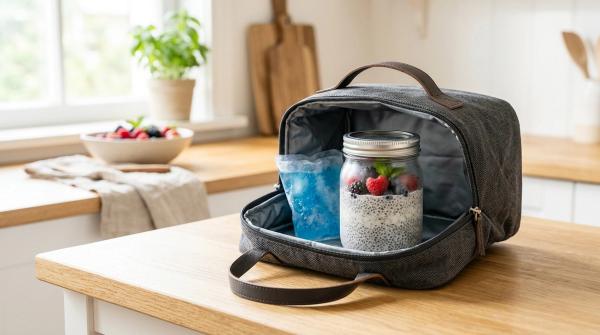
If you are carrying dairy sweets in an insulated bag with ice packs, keep them sealed and cold. Once they warm up, do not keep moving them in and out of cooling casually.
Avoid condensation
#If sweets were refrigerated before travel, keep them sealed while they come closer to room temperature.
Opening a cold box in a warm, humid place can cause condensation on the sweets. That extra moisture can make dry sweets sticky and dairy sweets spoil faster.
This matters a lot during monsoon travel and in humid cities.
Label boxes for sharing
#If you are carrying sweets for a family visit, festival, temple offering, or office sharing, label the boxes.
Mark dry sweets, dairy sweets, nut sweets, and “eat first” items.
This is especially useful when elders, children, or guests may open boxes later without knowing which ones need quicker attention.
Carry smaller portions
#One large box looks festive, but smaller boxes are usually safer and more practical.
You can open one at a time, keep the rest sealed, and reduce repeated handling.
Small boxes also make it easier to separate dry mithai, dairy sweets, nut-based sweets, and syrupy items.
For flights, check food rules separately
#This article is about freshness and packing, not cabin baggage rules.
If your trip includes air travel and you need details on dry mithai, syrup, liquids, gels, or customs concerns, read AllBlogs’ guide on Indian sweets in cabin baggage.
A simple travel mithai plan
#If you are still unsure what to buy, use this simple plan.
For a short local visit, most sweets are manageable if they are bought fresh and eaten soon. Still, keep cream, rabdi, rasmalai, and chenna sweets cool.
For a same-day road trip, choose kaju katli, besan laddoo, dry petha, soan papdi, or dry fruit sweets. Eat any dairy sweets early.
For an overnight train or bus journey, stick mainly to dry mithai for travel. Avoid syrup and fresh dairy unless you have reliable cooling.
For festival gifting after travel, choose sturdy sweets that will still look presentable: kaju katli, badam katli, besan laddoo, pinni, chikki, gajak, or sealed soan papdi.
For temple travel, be extra cautious with heat and crowd delays. Carry dry sweets in smaller sealed boxes. Avoid milk-soaked or syrupy sweets unless they will be offered and consumed quickly.
The best travel sweet is not always the fanciest one. It is the one that reaches safely, opens cleanly, and still tastes the way it should.