There’s something oddly comforting about a hotel breakfast buffet.
You shuffle downstairs, half-awake, grab a plate, pour a coffee, and suddenly the day feels a little more manageable. Maybe you’re heading to meetings. Maybe you’re trying to get kids fed before a long day of sightseeing. Maybe you just want something warm before checkout.
And then you reach the eggs.
Hotel breakfast eggs can be perfectly fine. Plenty of the time, they are. But eggs are also one of those buffet foods where it’s worth pausing for a second before you scoop them onto your plate.
Eggs can carry Salmonella if they’re mishandled, and buffets add a few extra variables: how long the food has been sitting out, whether it’s being kept hot enough, how clean the serving utensils are, and whether staff are actually keeping an eye on things.
That doesn’t mean you need to be anxious about breakfast. It just means some egg options are better bets than others.
Quick answer
#If you want eggs at a hotel breakfast buffet, your safest-looking choices are usually:
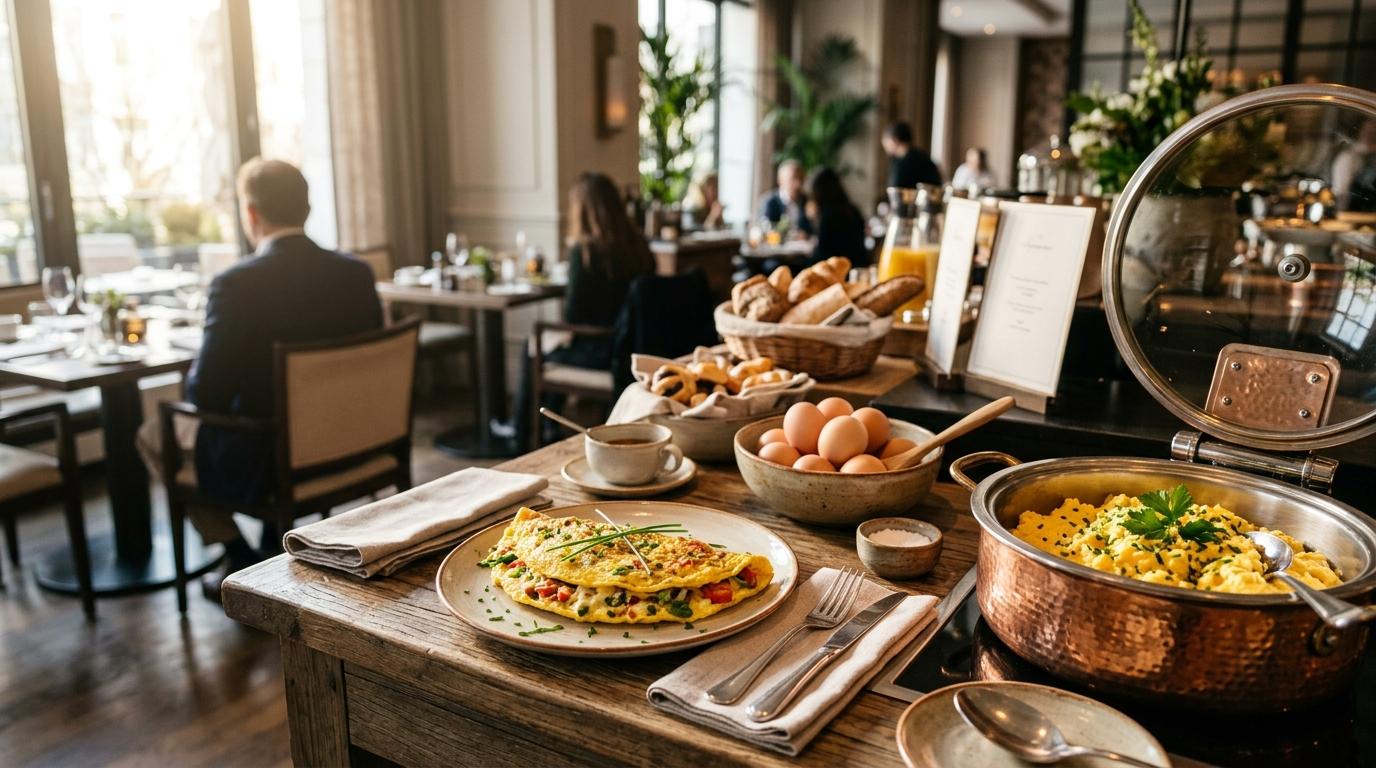
- A freshly cooked omelet from a staffed station
- An unpeeled hard-boiled egg that’s kept hot or properly chilled
- Scrambled eggs only if they look hot, fresh, and well maintained
Be more cautious with scrambled eggs at a hotel buffet if they look watery, gray, dried out around the edges, or lukewarm. Batch-cooked eggs can sit too long if the buffet isn’t being watched closely.
The simplest rule is:
Hot food should be hot. Cold food should be cold.
If the setup feels questionable, skip the eggs and choose something lower risk, like whole fruit, packaged yogurt, hot oatmeal, toast, cereal from a clean dispenser, or sealed items.
Why hotel eggs feel different
#If hotel scrambled eggs taste rubbery, pale, or strangely identical from one hotel to the next, you’re not imagining it.
Hotels are cooking for a crowd. They need breakfast to be fast, predictable, and easy to refill. That often means using liquid egg products or dehydrated egg products and cooking them in big batches. Those products can be safe when they’re cooked and held properly, but the texture doesn’t always feel like eggs you’d make at home.
That’s why breakfast buffet eggs sometimes feel less like fluffy scrambled eggs and more like a warm yellow scoop.
The issue isn’t automatically safety. The real question is how the eggs were cooked, how long they’ve been sitting there, and whether they’re being held at the right temperature.
A fresh omelet made in front of you usually tastes better because it hasn’t been sitting in a pan all morning. A boiled egg in the shell can feel more reliable because the shell gives it some protection from buffet handling. Scrambled eggs are usually the trickiest because they’re exposed, shared, and often held in a warming tray for a while.
Scrambled eggs vs. boiled eggs vs. omelet station
#Not all hotel breakfast eggs are equal. Here’s how to think about the usual choices without turning breakfast into a full inspection.
Scrambled eggs at a hotel buffet
#Scrambled eggs are convenient, but they deserve the closest look.
The concern with scrambled eggs at hotel buffet service is not that scrambled eggs are unsafe by nature. It’s that they’re often cooked in bulk, poured into a warming tray, and served by lots of guests using the same spoon.
If the tray isn’t hot enough, or the eggs have been sitting too long, both quality and safety can go downhill.
Look for these buffet egg temperature clues:
- Steam when the lid opens
- Eggs that look recently stirred, not dried out or crusty
- A pan that isn’t almost empty with old bits stuck to the sides
- Staff replacing trays instead of dumping fresh eggs on top of old ones
- A warming setup that looks like it’s actually working
Skip scrambled eggs if they look watery, gray, rubbery, or barely warm. Also skip them if the serving spoon is sticky, sitting down in the food, or being used for several different dishes.
If the eggs look fresh and hot, and the buffet area looks clean and managed, they may be fine. If you’re not sure, choose something else.
Boiled eggs at hotel breakfast
#Boiled eggs at hotel breakfast are often one of the more reassuring choices, especially when they’re unpeeled.
An intact shell helps protect the egg from serving utensils, other guests’ hands, and the buffet surface. That makes a hard-boiled egg feel a little more controlled than a shared pan of scrambled eggs.
Still, pay attention to how they’re being held. A better setup keeps boiled eggs either hot or cold. Hot water, a covered warm container, ice, or a chilled display are all more reassuring than a bowl of eggs sitting out at room temperature for who knows how long.
Choose unpeeled eggs when you can. Peeled boiled eggs may still be fine if they’re properly chilled and handled, but they’re more exposed to everything around them.
Omelet station safety
#For egg lovers, a staffed omelet station is usually the best bet.
With an omelet station, your food is cooked to order. You can see what’s happening, and the egg isn’t sitting in a warming tray for half the morning. That’s a big win for both taste and peace of mind.
Still, omelet station safety is worth a quick glance. Before ordering, look at it the way you’d look at any open kitchen.
Ask yourself:
- Do the vegetables, cheese, and meats look fresh?
- Are cold ingredients actually being kept cold?
- Does the cook use clean tools and a clean pan?
- Is the raw egg mixture kept away from cooked food and plates?
- Does the finished omelet look fully cooked, not wet or runny?
If the station looks clean and the omelet is cooked all the way through in front of you, it’s usually the most reassuring hotel buffet egg option.
Red flags to watch for
#You don’t need to inspect the buffet like a health inspector. Just pause for a few seconds. Most hotel buffet egg safety decisions come down to what you can see.
Here are the main food safety red flags.
Lukewarm food
#Hot foods should be held hot. If eggs, sausage, porridge, or other hot items look like they’re sitting there without much heat, skip them.
Lukewarm eggs are just not worth it, especially when you have a full travel day ahead.
Cold foods that are not cold
#Cold foods should be kept cold. If milk, yogurt, cut fruit, or cheese is sitting out without ice or refrigeration and looks warm, sweaty, or tired, move on.
Watery, gray, or crusty scrambled eggs
#Scrambled eggs sitting in liquid, turning gray, drying out around the edges, or forming a crust have probably been held too long. Even if they aren’t unsafe, they’re probably not going to taste good.
Messy serving utensils
#Shared spoons and tongs are one of the less charming parts of any buffet.
If utensils are sticky, dropped into the food, mixed between dishes, or handled carelessly by guests, choose something else or ask staff for a clean one.
Old food mixed with new food
#Fresh trays are more reassuring than pans that look like they’ve been topped up again and again.
When new food is added on top of old food, it becomes harder to know how long the older portion has been sitting there.
Unattended chaos
#A busy buffet can still be clean. The red flag is a buffet that looks ignored: spills left sitting, empty trays open, utensils scattered around, and no staff checking on anything.
Safer breakfast plate ideas
#Some mornings, the eggs look great. Other mornings, the buffet is giving very strong “maybe not today” energy.
If you decide to skip the eggs, you can still build a decent breakfast. Here’s what to eat instead when the hot tray looks questionable.
Whole fruit
#Bananas, oranges, and apples are practical travel choices because you peel or wash them yourself.
Whole fruit is usually a better bet than a mixed fruit bowl that has already been cut, handled, and left out.
Packaged yogurt or sealed dairy
#Single-serve yogurt is more reassuring than a big communal bowl, especially if it’s being kept cold. Check that it feels chilled and that the packaging is intact.
Hot oatmeal or porridge
#A steaming bowl of oatmeal or porridge can be a good backup when it’s clearly hot. Add packaged toppings if they’re available.
Toast, bread, or packaged baked items
#Freshly toasted bread is simple and comforting. Packaged muffins, sealed bread portions, or wrapped items reduce contact with shared hands and utensils.
Cereal from a dispenser or sealed box
#If the cereal area is clean and the milk is properly chilled, cereal can be an easy option. Sealed single-serve boxes are even better.
Hot coffee or tea
#Hot drinks are usually a steady choice. If you’re not sure about open juice pitchers, choose sealed juice bottles, or just stick with hot coffee or tea.
Traveler breakfast checklist
#Before you fill your plate, run through this quick traveler breakfast checklist:
- Do hot foods look hot and freshly maintained?
- Do cold foods look properly chilled?
- Are eggs cooked thoroughly?
- Are serving utensils clean and used for one dish only?
- Is staff actively replacing, cleaning, and monitoring the buffet?
- Are high-touch areas messy, or reasonably tidy?
- Is there a made-to-order option?
- If the eggs look questionable, is there a safer backup?
This takes less than a minute. It’s not about being nervous or fussy. It’s just about making the easy choice so you can get on with your day.
Who should be extra careful
#Most healthy adults can make a reasonable choice and move on. But some travelers should be more cautious with hotel breakfast eggs, especially if the eggs are lukewarm, runny, or sitting out.
Be extra careful if you are:
- Pregnant
- An older adult
- Traveling with young children
- Immunocompromised
- Recovering from illness
- On a trip where getting sick would seriously derail your plans
For these travelers, fully cooked, made-to-order eggs are a better choice than soft, runny, or lukewarm buffet eggs. Unpeeled hard-boiled eggs that are properly held can also be a practical option.
If the buffet looks poorly managed, sealed packaged foods and clearly hot items are the safer route.
This isn’t fearmongering. It’s just the reality that eggs can carry Salmonella if they’re mishandled, and some people have a higher risk of getting seriously sick from foodborne germs.