You pull a carton of mushrooms out of the fridge, pop it open, and there they are: a few tan or brown spots on the caps.
Maybe you didn’t notice them when you bought the mushrooms. Maybe they showed up overnight. Either way, now you’re doing that little kitchen pause where you wonder, are brown spots on mushrooms safe, or is this one of those “better not risk it” moments?
The short answer: sometimes they’re totally fine.
A few dry brown spots are often just bruising or normal aging. Mushrooms are delicate, and they can get marked up from being handled, packed, bumped around in the grocery bag, or sitting in the fridge for a couple of days.
But brown spots are not always harmless. If the mushrooms are slimy, sticky, mushy, wet, sunken, moldy, blackened, or smell sour or fishy, they’re past the point of saving.
Here’s how to tell the difference.
Quick answer
#Minor, dry brown spots on mushrooms are usually safe if the mushrooms still smell normal and feel firm. Small tan marks, light bruising, or a little surface discoloration usually aren’t a big deal.
Do not eat mushrooms if you notice any of these spoilage signs:
- Slimy or sticky surface
- Sour, fishy, musty, or unpleasant smell
- Fuzzy mold
- Wet, sunken, or collapsed spots
- Blackened patches
- Mushrooms that feel mushy, limp, or like they’re breaking down
- Liquid pooling in the package, especially with a bad smell
If you’re unsure, throw them out. Mushrooms can spoil quickly, and it’s not worth risking an upset stomach over a few dollars’ worth of produce.
Why mushrooms get brown spots
#Mushrooms bruise easily. They’re soft, full of moisture, and still change after being harvested. That means brown spots can show up even when the mushrooms are not actually spoiled.
Here are the most common reasons it happens.
They got bruised
#Mushrooms can bruise during packing, shipping, shopping, or storage. If the package gets jostled around, or if the mushrooms get squished under heavier groceries, brown marks can appear.
Bruising usually looks dry and flat. The mushroom should still feel firm, not slick, soggy, or mushy.
They’re getting older
#Mushrooms naturally darken a little as they sit in the fridge. This is normal aging, especially if you’ve had them for a few days.
If the browning is mild, the texture is still firm, and the smell is fresh and earthy, they’re probably still fine to cook.
They were stored with too much moisture
#Mushrooms don’t do well when they’re trapped in damp packaging. A sealed plastic bag or airtight container can hold in moisture, which makes mushrooms spoil faster.
This is where you need to pay attention. Dry brown spots are one thing. Wet, slippery, dark spots are another.
They’re actually spoiling
#When mushrooms are going bad, the brown areas often become darker, wetter, or sunken. The mushrooms may start to feel mushy, collapse, develop slime, or smell off.
At that point, it’s no longer simple discoloration. It’s spoilage.
Safe vs. unsafe signs
#If you’re trying to figure out how to tell if mushrooms are bad, don’t rely on color alone. Use your eyes, nose, and hands.
Usually safe to cook
#Mushrooms are usually okay to use if:
- The brown spots are light, dry, and limited
- The caps and stems still feel firm
- The surface is not slimy or sticky
- They smell mild, fresh, or earthy
- There is no fuzzy mold
- They are not leaking liquid
- They are not collapsing or turning mushy
If they pass those checks, you can trim off a small bruised spot if it bothers you. Then cook the mushrooms soon, ideally the same day.
Toss them if you notice this
#Throw mushrooms away if you see or feel:
- Slime or stickiness
- A sour, fishy, rotten, musty, or unpleasant smell
- Fuzzy mold anywhere
- Wet, dark, or sunken patches
- Blackened areas
- Mushy, limp, or collapsed texture
- Excess liquid in the package
- Mushrooms that seem to be breaking down
A little dry discoloration is not the same as a slimy mushroom. Texture and smell are usually the biggest giveaways.
And cooking won’t fix spoiled mushrooms. Heat can kill some bacteria, but it does not make spoiled food fresh again. If the mushrooms smell wrong or feel wrong, don’t try to rescue them.
Cook soon or toss? A simple checklist
#Here’s an easy way to decide what to do with mushrooms that have brown spots.
Cook them soon if:
#- The spots are light brown and dry
- The mushrooms feel firm
- The stems are not mushy
- The smell is normal and earthy
- There is no slime
- There is no fuzzy mold
- They just look a little bruised or aged
If that’s what you’re seeing, go ahead and cook them. Sauté them, add them to soup, toss them into pasta, or use them in a dish where they’ll be fully cooked.
If they have dirt on them, clean them right before cooking. Don’t wash mushrooms and then put them back in the fridge. They’ll hold onto that moisture and usually get sad and slimy faster.
Toss them if:
#- Your fingers feel sticky or slimy after touching them
- They smell sour, fishy, musty, rotten, or just wrong
- The brown spots are wet, dark, or sunken
- You see fuzzy mold
- There are blackened patches
- They feel soft, soggy, or collapsed
- You’re trying hard to convince yourself they’re still okay
That last one matters. If you’re standing there negotiating with yourself while ignoring slime or a weird smell, it’s time to let them go.
Food safety doesn’t have to be dramatic, but it does require being honest about what’s in front of you. When in doubt, throw it out.
How to store mushrooms so they last longer
#Good storage can help slow browning and spoilage. It won’t keep mushrooms fresh forever, but it can buy you a little more time.
Keep them refrigerated
#Store mushrooms in the fridge. Don’t leave them sitting out on the counter for long, especially in a warm kitchen.
Avoid sealed, damp plastic
#Mushrooms need a little airflow. If they sit in a sealed plastic bag or airtight container, moisture can build up and make them slimy faster.
If your mushrooms came wrapped in plastic, check the inside of the package. If you see condensation or the container looks wet, move them to a paper bag.
Use a paper bag
#A paper bag is one of the easiest ways to store mushrooms. It absorbs extra moisture while still letting them breathe a bit.
Place the mushrooms in the bag, fold the top loosely, and keep it in the fridge.
Don’t cram them in too tightly. Mushrooms bruise easily, and pressure can cause more brown spots.
Don’t wash before storing
#Clean mushrooms right before you cook them, not before storing them.
Washing adds moisture, and moisture is one of the fastest ways to turn mushrooms slimy. If they have dirt on them, leave it until you’re ready to use them. Then wipe or rinse them gently and cook them right away.
Buy them with a plan
#Mushrooms are best treated as a “use soon” ingredient. How long they last depends on the variety, how fresh they were when you bought them, and how they were handled before they got to your kitchen.
Instead of relying only on the date, check the smell, texture, moisture, and overall look.
Real-life examples
#Sometimes it’s easier to compare what you’re seeing to a real kitchen situation.
Example 1: A few tan spots on firm mushrooms
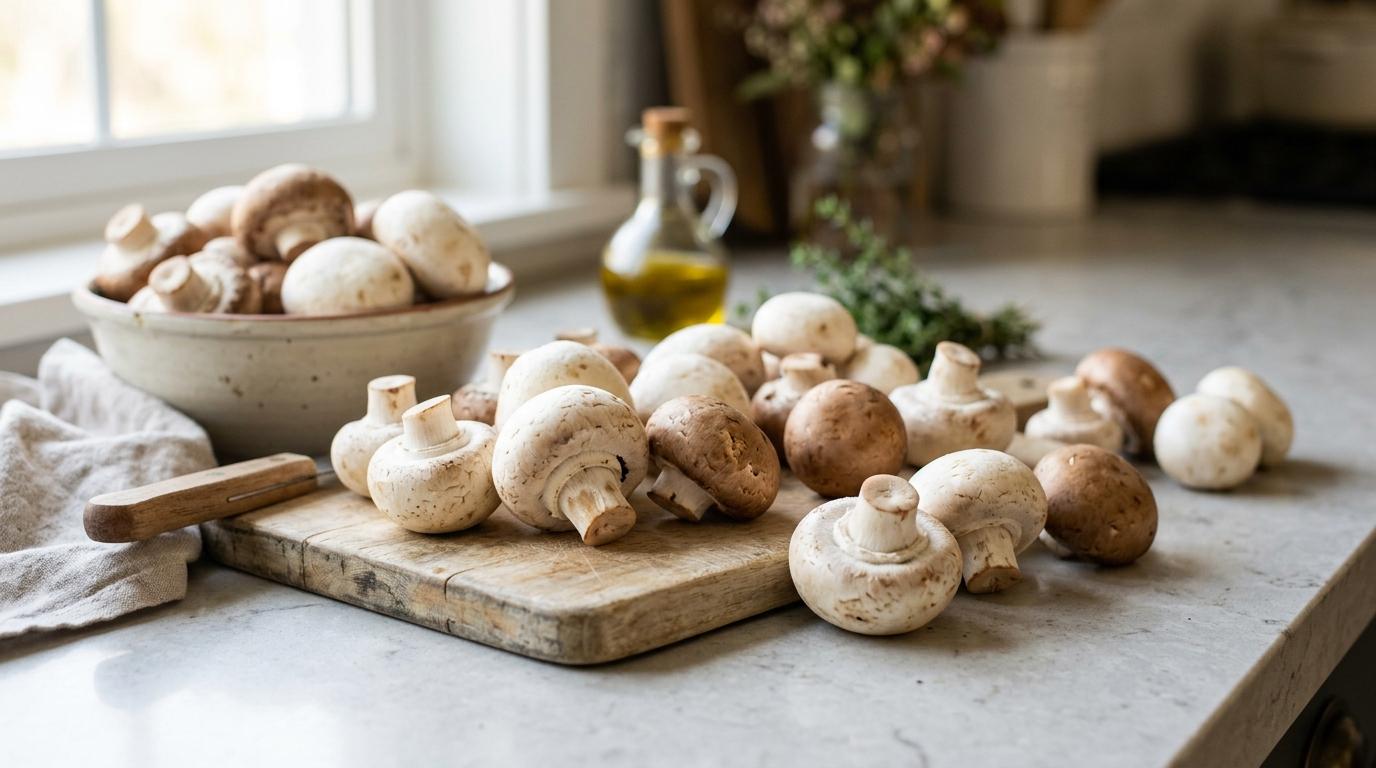
#You bought white button mushrooms two days ago. Now a few caps have light brown freckles. They feel firm, smell earthy, and are dry to the touch.
These are probably fine to cook. Trim the spots if you want, but you likely don’t need to.
Example 2: Brown spots and slime
#The mushrooms have brown patches, and the caps feel slick. There’s moisture in the package, and the smell is a little sour.
Toss them. Slime plus a bad smell is a clear sign they’re no longer good.
Example 3: One mushroom has fuzzy mold
#Most of the package looks okay, but one mushroom has fuzzy growth on it.
Fuzzy mold is not the same as a bruise. Throw away the moldy mushroom. If the rest of the package smells bad, feels damp, or looks slimy, toss the whole thing.
Example 4: Dark, wet, sunken spots
#The mushrooms have dark patches that look wet and collapsed. They feel soft when you press them.
Toss them. That’s not normal dry browning.