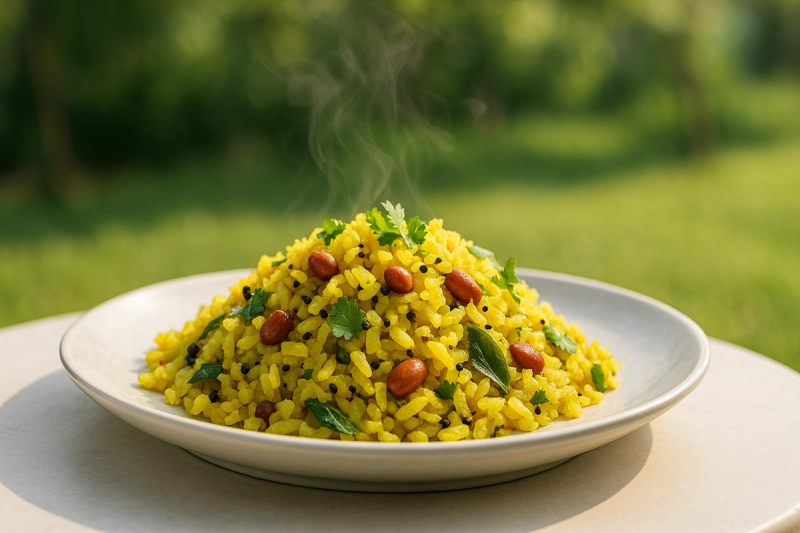
I love poha. Like, really love it. It’s one of those breakfasts that feels light but weirdly comforting, and if you grew up in India you probably know the smell already: curry leaves hitting hot oil, mustard seeds popping, onions going a bit sweet, peanuts getting all toasty, and that soft fluffy poha soaking up turmeric and lemon. Heaven. But here’s the annoying grown-up question that comes up every single summer, especially after family breakfasts, train snacks, brunch buffets, office tiffins, all that stuff: how long can cooked poha stay outside in summer? Short answer, because I know some of y’all just want the answer and need to run — about 2 hours max at normal room temperature, and closer to 1 hour if it’s very hot summer weather, like above 32°C or so. After that, it gets risky. Not “maybe a little stale” risky. More like food-poisoning risky.
And yeah, I know, people will say, “Arre we ate poha left out till noon and nothing happened.” Sure. Sometimes you get lucky. I’ve done it too, not proud of it. But food safety isn’t really about one lucky day, it’s about reducing the chances of ruining your whole afternoon... or whole weekend, ugh.
The basic rule I actually follow in my own kitchen
#The food-safety guideline most people use is the 2-hour rule for cooked foods left at room temperature. If the weather is extra hot, which summer often is, especially in non-air-conditioned kitchens or during power cuts, I personally cut that down to 1 hour. That’s because cooked rice-based foods can become a really nice little playground for bacteria when they sit in the so-called temperature danger zone, roughly 4°C to 60°C. Poha isn’t exactly plain steamed rice, I know, but it is a cooked grain dish with moisture, onions, potatoes sometimes, coriander, lemon, maybe sev, maybe peas, maybe coconut. Stuff grows.
If cooked poha has been sitting out in peak summer heat for over 2 hours, I don’t try to “save” it. Me and my stomach have had enough drama already.
Why poha spoils faster than people think
#This is the part people kinda underestimate. Poha feels dry-ish compared to, say, khichdi or upma. So folks assume it’s safer for longer. But cooked poha still holds enough moisture to support bacterial growth, especially if you added onions, boiled potatoes, fresh coriander, grated coconut, pomegranate, or squeezed lemon and then left it all out on the table while chatting forever. Summer heat makes it worse. Humidity too. And if somebody keeps opening the lid, mixing it with a spoon they already tasted from, or packing it while still warm into a closed dabba and then leaving it around? Yeah... not ideal.
Also, one thing not enough home cooks talk about: rice and rice products can carry spores of Bacillus cereus. Fancy name, deeply un-fancy consequences. These spores can survive cooking, and if the food cools slowly and sits around warm, they can multiply and produce toxins. Reheating later may kill some bacteria, but toxins aren’t always fixed by a quick microwave blast. That’s the sneaky bit.
My slightly embarrassing poha mistake from one brutal May afternoon
#I remember this so clearly because I was sooo sure I was being practical. We had made kanda poha for a late Sunday breakfast, big batch, with extra peanuts because my dad believes peanuts are not garnish, they are a lifestyle. It was one of those horrible dry-heat days, fan running, kitchen still feeling like a toaster. Breakfast stretched into phone calls, random chores, me pretending to clean but actually scrolling food videos. The poha sat on the counter for, I think, around 3 and a half hours. Maybe 4. I looked at it and thought, eh, it smells fine. Heated it. Ate a bowl in the afternoon with chai. Terrible idea. I won’t get graphic, don’t worry, but let’s just say my body gave very immediate feedback. Was it definitely the poha? Can’t prove it 100 percent. But I’ve not messed with summer leftovers like that since.
So what’s the safe timing, actually?
#| Situation | How long cooked poha can stay out | What I’d do |
|---|---|---|
| Cool room, under 25°C | Up to 2 hours | Refrigerate ASAP in a shallow container |
| Typical warm summer room, 26-32°C | About 1-2 hours max | Try to refrigerate within 1 hour if possible |
| Hot summer day, above 32°C, no AC | About 1 hour | Don’t leave it out for brunch-table eternity |
| Outdoor setting, picnic, travel, buffet heat | Less than 1 hour | Use insulated storage or eat immediately |
| Left out overnight | Not safe | Throw it away, no debates |
That table is basically my real-life rulebook now. And yes, I know wasting food feels bad. It does. I hate it. But food poisoning wastes food and your dignity, so...
Signs poha has gone bad — and no, smell alone isn’t enough
#People wait for a dramatic rotten smell, but poha can become unsafe before it starts smelling obviously off. That’s what makes this tricky. Still, there are some clues. If the poha feels unusually sticky or slimy, if the onions taste sour in a weird way not from lemon, if the peanuts have softened into sad little sponges, if the color has dulled weirdly, or if there’s any fermented-ish smell that wasn’t there fresh, I’m out. Tossing it. If flies have been hovering around, also no thanks.
- Slimy or wet patches you didn’t have earlier
- Sour smell that isn’t just lemon
- Weird bitter or fermented taste
- Fresh garnishes looking tired, sweaty, or mushy
- It sat out and you honestly can’t remember for how long
That last one matters more than people admit. If you don’t know, assume it’s not worth the gamble.
How I store poha now, after learning the hard way
#What works best for me is cooling it quickly but not leaving it forgotten. I spread leftover poha in a wide plate or shallow steel container so the heat escapes faster, then refrigerate it once the steam has mostly settled — not after half the day, just after a short cool-down. You don’t want a giant hot lump trapped in a deep vessel. That middle portion stays warm forever. I usually try to get it into the fridge within 30 to 45 minutes in summer. Definitely within 1 hour if the kitchen’s hot.
- Use a shallow container, not a deep patila full of trapped heat
- Keep fresh coconut, sev, coriander, and pomegranate separate if you can
- Refrigerate quickly, ideally within 1 hour in summer
- Eat refrigerated poha within 1 day for best taste, 2 days max if handled well
- Reheat only the portion you’ll eat, not the whole batch again and again
And can we talk about coconut for a sec? Some regional poha versions use fresh grated coconut, and that makes the dish spoil even faster in heat. Same with chopped raw onions mixed in at the end. Delicious, yes. Forgiving, not really.
Does lemon, frying, or extra masala make it safer?
#Nope. I mean, not in the way people hope. More turmeric, more green chilli, extra tadka, squeezing more lemon — none of that turns poha into a shelf-stable survival food. Acidity can affect flavor and maybe slightly influence the environment, but it does not make improperly stored cooked poha safe after hours in summer. Reheating till piping hot can help if the poha was only out briefly and then refrigerated properly, but reheating spoiled poha is not some magical reset button. I wish. Would save a lot of regret.
If you’re packing poha for travel, office, or kids’ tiffin
#This one comes up a lot because poha is such a common tiffin food. I still pack it sometimes, but I’m picky now. If it’s for a commute plus immediate eating, fine. If it’s going to sit in a school bag or office desk till late morning in intense summer, I get nervous unless there’s an insulated lunch bag and maybe even a small ice pack nearby. For travel, dry-style poha works better than very soft poha. Less moisture, fewer add-ins, better odds. But even then, I’d still want it eaten within a few hours.
Actually one thing I’ve noticed from the whole 2026 meal-prep and smart-lunch trend — and yeah, I’m fully that nerd who notices lunch tech — is that more people are using compact temperature-display lunch boxes and insulated steel containers with gel packs. Tiny thing, but useful. There’s also a bigger shift toward “safe meal prep” content now, not just pretty meal prep. Thank god. Because the internet had way too many reels of food sitting out aesthetically for ages.
A little rant about restaurant poha, buffet poha, and brunch counters
#Can I be honest? Buffet poha scares me more than home poha sometimes. At home at least you know when it was cooked. At buffets, especially hotel breakfast buffets or event catering, poha can sit under weak warmers and dry around the edges while still staying in that not-hot-enough zone. If I see a fresh tray being brought out, okay. If the poha looks tired, clumpy, and has coriander from another era on top... I skip.
I’ve had some brilliant fresh poha recently though. Casual breakfast spots are taking Indian regional breakfasts more seriously now, and I love that. In 2026 there’s this whole comfort-breakfast revival happening — less fake-fancy foam nonsense, more proper poha, chila, idli, handvo, millet upma, things people actually eat. A few newer cafes in Mumbai, Pune, and Bangalore are doing elevated poha with seasonal toppings, which is fun though sometimes they overdo it and suddenly there’s avocado involved and I’m like, behen why. Still, when served fresh and hot, poha at a good cafe can be amazing.
Freshness matters almost as much as ingredients
#Good poha has a short golden window, I think. Fresh off the pan, soft but not mushy, peanuts still crunchy, onion cooked just enough, lemon bright, herbs lively. Leave it out too long and everything starts collapsing. The texture goes first. Then the sparkle. Then maybe your plans for the day. So while technically the question is about safety, I also think quality matters. Even if poha is still within the safe-ish range, old room-temp poha just isn’t that nice. It gets flat and dusty tasting. Kinda sad.
What to do if you accidentally left it out
#Okay, practical mode. If your poha has been out less than 1 hour in hot summer, refrigerate it now. If it’s been around 2 hours in a moderately warm room, you’re getting into iffy territory, but refrigeration may still be okay if the room wasn’t blazing and the food was handled cleanly. If it’s crossed 2 hours in summer heat, especially 3 or more, I would not keep it. If it was left out overnight, absolutely no. Don’t do the sniff test and get brave. Just let it go.
- Under 1 hour in hot weather: cool fast, refrigerate
- 1 to 2 hours: maybe salvage only if conditions were cool-ish and clean
- Over 2 hours in summer heat: not worth it
- Overnight: throw away, full stop
My favorite ways to make poha safer in summer without ruining the vibe
#I still want poha often in summer, obviously. So I changed my habits instead of giving up the dish. I make smaller batches. I hold back garnishes till serving. If guests are late, I turn the gas off and don’t plate everything at once. Sometimes I prep the tempering and soaked poha separately, then combine just before eating. If I’m serving a crowd, I keep part of it in the fridge and refill as needed rather than letting one giant mountain of poha sit out on the dining table while everyone debates politics and asks for more chai.
Honestly this has made poha taste better too. Not just safer. Funny how that works.
Final answer, in plain English
#So, how long can cooked poha stay outside in summer? Best answer: around 1 hour in very hot weather, and no more than 2 hours in a relatively cooler room. After that, the risk rises enough that I personally wouldn’t eat it or serve it. Refrigerate leftovers quickly, reheat only once, and if there’s any doubt, toss it. I know that sounds strict, maybe a bit annoying, but summer food safety is one of those things where being chill is not actually chill.
Anyway, now I’m craving fresh poha with extra peanuts and a stupid amount of lemon. Fresh, hot, eaten immediately — as nature intended. If you like these very real food ramblings and kitchen lessons learned the hard way, go wander around AllBlogs.in too, there’s always something tasty to fall into there.