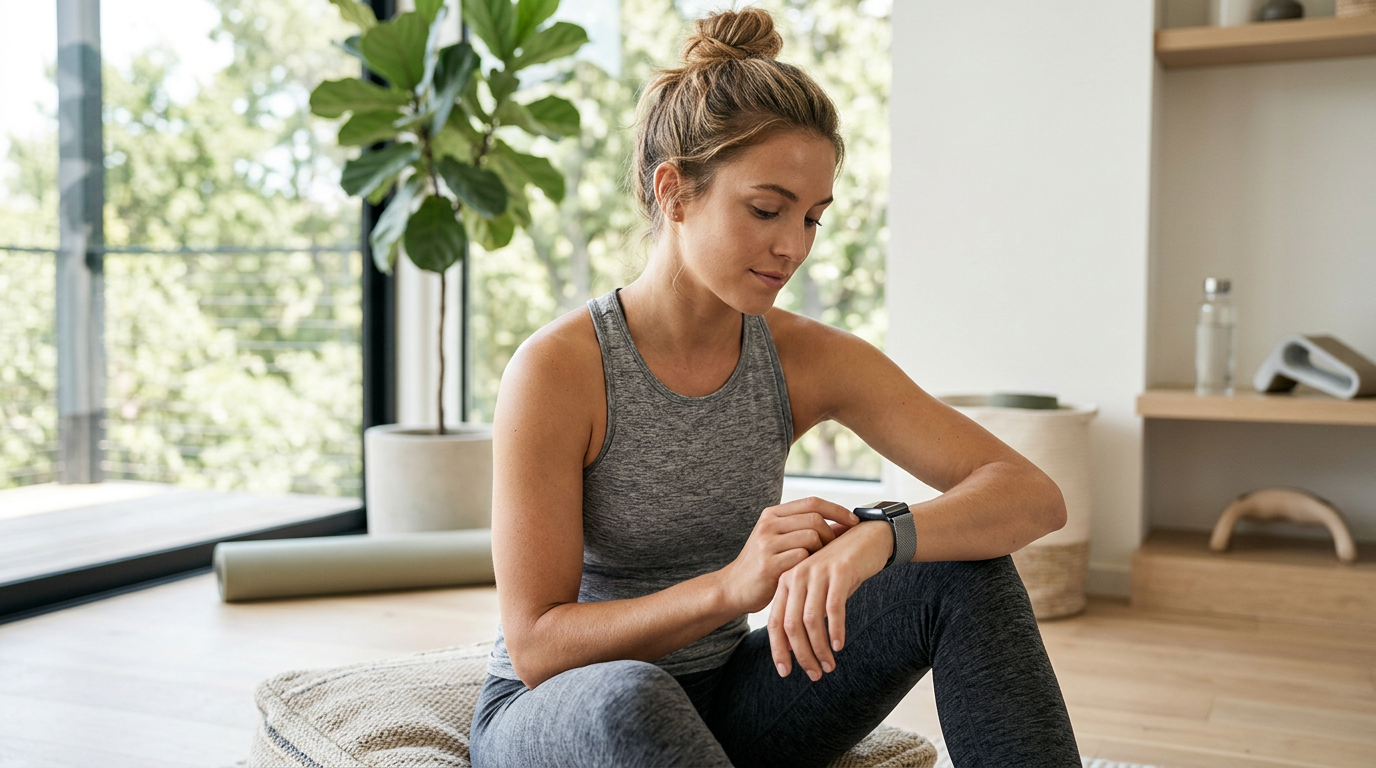
I love health tech. I really do. I'm the exact kind of person these companies are aiming at, honestly. I like seeing my sleep graph in the morning, I like the little readiness number, I like pretending I'm some sort of home-lab sports scientist before I've even had coffee. But... I've also learned the hard way that recovery scores can mess with your head if you don't use them right. A few years ago I woke up feeling pretty decent, checked my wearable, saw a low recovery score, and immediately decided I was exhausted. Which is a weird thing, right? Five seconds earlier I felt fine. Then a number told me I wasn't. That's when I realised this stuff is helpful, but only if you keep it in its lane.
So this post is basically what I wish someone had told me earlier. Not the marketing version. Not the "trust the algorithm completely" version. More like the normal human version. Recovery scores can be super useful for training, stress management, and noticing patterns in sleep, alcohol intake, illness, travel, and overdoing it. But they are not a diagnosis, not a moral judgement, and def not a replacement for paying attention to your actual body. That's the big point. If you only remember one thing, make it that.
First, what a recovery score even is... because the names are all over the place
#Different brands call it different stuff. Recovery. Readiness. Body battery-ish scores. Daily strain guidance. Resilience. Whatever. Usually the score is built from some combo of overnight heart rate variability, resting heart rate, recent sleep, skin temperature trends, respiration, previous strain or exercise load, and sometimes blood oxygen trends or stress markers. In 2026, most of the major wearables have gotten better at combining signals instead of relying on one metric alone, which is good because single-metric health takes were always kinda shaky.
HRV, by the way, is usually the star of the show. In simple terms, heart rate variability is the variation in time between beats, and for many people a higher-than-usual HRV pattern can suggest better recovery and nervous system flexibility. Lower-than-usual can happen with stress, poor sleep, illness, dehydration, heavy training, travel, menstrual cycle shifts, or just life being life. The key word is usual. Your baseline matters way more than somebody else's screenshot on Instagram. A "good" HRV for me might be normal-for-me and totally different from yours. That's one of the biggest mistakes people make, me included.
The right way to use recovery scores is to think trends, not drama
#If your score is low one morning, that doesn't automatically mean cancel your workout, crawl into a cave, and text everyone that your autonomic nervous system is having a moment. It might mean you had a salty dinner, slept hot, drank wine, trained hard, got stressed, or your sensor fit was weird. One day is just one day. What matters more is the trend over several days, or honestly over a few weeks.
This is where wearables are actually awesome. They catch patterns humans are bad at noticing. Like, I didn't realize how much late-evening intense exercise affected my sleep until my data made it embarrassingly obvious. Same with alcohol. I used to be one of those "one drink doesn't affect me" people. Um, aparently it did. Even one or two drinks often nudged my overnight heart rate up and my HRV down. Not every single time, but enough that I couldn't really deny it anymore.
- Use your score as a weather report, not a command from the universe
- Look at 7-day and 28-day trends, not just today's color or number
- Compare the score with how you actually feel: energy, mood, soreness, motivation, illness symptoms
- Notice what consistently pushes your score down: poor sleep, hard training blocks, alcohol, long flights, under-eating, stress
- Notice what helps it rebound: easy movement, more sleep, hydration, enough carbs/protein, rest days, daylight, calmer evenings
A weirdly important thing: don't outsource body awareness to your device
#This one matters more than people think. There've been more conversations the last couple years around what some researchers and clinicians call "orthosomnia" and data-related sleep anxiety, where people get so obsessed with sleep metrics and readiness numbers that the tracking itself becomes stressful. I've felt a mild version of that for sure. You wake up, see a bad score, and then you start scanning your body for proof that you feel terrible. And then, congrats, now you kinda do.
There is some growing real-world evidence in digital health that wearables can support behavior change, especially around activity and sleep consistency, but the benefits are best when the user stays engaged without becoming overly dependent or anxious. That's the sweet spot. Helpful, not controlling. Informative, not obsessive. I actually had to stop checking my score first thing in the morning for a while. I started asking myself first: how do I feel, really? Then I'd look at the wearable after. That one little change helped more than I expected.
What the newer 2026 wellness trends get right... and where they still get kinda silly
#Right now the big trend is "personalized recovery." Which sounds fancy, but some of it is legit. More platforms in 2026 are integrating cycle tracking, travel stress, heat exposure, glucose responses, training load history, and even subjective check-ins like mood and perceived exertion. And honestly? Good. The future should be more context-aware, not less. A recovery score means a lot more if it knows you're in a high-volume training week, just crossed time zones, or are in a phase of your menstrual cycle where temp and resting heart rate naturally shift.
But the silly part is when wellness marketing acts like one dashboard can summarize your entire health. It can't. It just cant. A low score doesn't tell you whether you're iron deficient, depressed, overtrained, coming down with a virus, dealing with perimenopause symptoms, or simply slept badly because your neighbor's dog lost its mind at 2 a.m. Those are very different situations. This is why recent sports medicine and sleep experts keep repeating that wearables are screening and self-monitoring tools, not medical decision-makers. Useful signal, incomplete picture.
My personal rule now: match the score to the decision
#This sounds obvious, but it changed everything for me. Not every low score deserves the same response. If I planned an easy walk or mobility day and my recovery score is mediocre, who cares. I can still do that. If I planned max-effort intervals, a long run, heavy lifting, or a hard competition-style session and my score has been low for three days plus I feel flat, then yeah, I probably adjust. The score should influence the size of the decision, not dominate every tiny one.
- Low score, but I feel okay and the workout is easy -> usually continue, maybe keep it conversational and shorter
- Low score, I feel rough, poor sleep, elevated resting heart rate -> scale back intensity, focus on technique, walking, or recovery work
- Several low-score days in a row with fatigue, mood dip, illness signs, or poor performance -> take recovery seriously and consider medical advice if something seems off
- High score, but I feel awful -> I trust my body first. Always. A green score doesn't magically erase symptoms
That last one is really important. Sometimes wearables miss stuff. Sensor errors happen. Algorithms lag. Early illness can feel obvious in your body before the score fully changes, or the reverse happens and the wearable spots a trend before you feel it. It's a conversation, not a dictatorship.
Recovery scores work best when you pair them with a few boring basics
#Honestly this is the least sexy part, but probably the most useful. Recovery scores become way more actionable when you track them against basic habits. Sleep timing. Protein intake. Total calories. Hydration. Menstrual cycle if relevant. Stressful work days. Training load. Caffeine timing. I know, I know, very thrilling. But this is where the actual insights live. Not in the score alone.
Current guidance from sleep and exercise research still points to the same fundamentals in 2026, even with all the fancy devices. Adults generally need regular sleep opportunity, enough total energy intake to support training and hormones, progressive but not reckless exercise, and recovery that includes both rest and low-intensity movement. Shortchanging carbs after hard endurance work, for example, can keep stress hormones elevated and make next-day readiness look worse. Going too hard too often without deloads can drag HRV trends down for some people. And chronic under-sleep? Basically a recovery score wrecking ball.
The score is not the strategy. Your habits are the strategy. The score just helps you see whether the strategy is working... or not working, which happens too.
A thing people don't talk about enough: some bodies and life stages make the data noisier
#Women's health is a huge example. Recovery scores can shift across the menstrual cycle because body temperature, resting heart rate, and perceived effort can all change. Pregnancy, postpartum, perimenopause, and menopause can also make the data look different than usual. If your wearable platform lets you log that context, use it. If it doesn't, keep your own notes. Otherwise it's too easy to think you're "failing recovery" when your physiology is just doing physiology.
Same goes for chronic illness, medications, shift work, sleep apnea, anxiety disorders, recent infection, and dysautonomia-related issues. If you have a condition that affects heart rate, temperature, or sleep, your score may be less straightforward. That's not you doing anything wrong. It just means the tool has limits. And if your wearable repeatedly shows concerning patterns like unusually high overnight heart rate, poor oxygen readings, big temperature changes, or persistent fatigue, that's not a reason to panic but it is a good reason to bring the data to a healthcare professional. Especially if symptoms are new or worsening.
What research and clinicians generally agree on right now
#The broad picture from recent exercise science, sleep medicine, and digital health is pretty consistent. Consumer wearables are decent at tracking trends in sleep duration, heart rate, and activity, but less perfect for exact sleep stages and not reliable enough to diagnose medical conditions on their own. HRV can be useful for understanding training recovery and stress, especially when measured consistently under similar conditions. Personalized baselines are better than population averages. And combining objective data with subjective data, like mood, soreness, motivation, and perceived recovery, gives better decisions than either one alone.
There are also ongoing discussions about using wearables to flag early illness or excessive training load. That's promising, and some studies plus real-world athlete monitoring programs support it, but again, this is about earlier awareness, not certainty. If your score crashes and your temperature trend is up and your resting heart rate is elevated, maybe that's your cue to take it easy and monitor symptoms. It's not proof of what exactly is happening. The nuance matters, even if wellness apps don't always market nuance very well lol.
The mistakes I made, because wow, I made several
#I used to chase a perfect score. Terrible idea. I'd sleep longer than I needed, avoid social plans, and overanalyze every dip in HRV like I was decoding secret government files. Not healthy behavior, just with a wellness aesthetic. Then I'd get a high readiness score and use it as permission to hammer workouts when my legs were obviously dead. So I managed to misuse both the low scores and the high ones. Impressive, honestly.
- Mistake one: checking the app before checking in with my own body
- Mistake two: reacting to one bad night like it was a catastrophe
- Mistake three: ignoring context, especially stress and not eating enough after training
- Mistake four: comparing my numbers with other peoples numbers on Reddit, which is just a fast lane to nonsense
- Mistake five: treating green scores like an obligation to go hard
These days I'm a lot more normal about it. Well, mostly. I still nerd out on the data, but I try to use it with some humility. The wearable is not me. It's a tool I'm using. Important difference.
So, how should you actually use your recovery score tomorrow morning?
#Here's the practical version I keep coming back to. Wake up. Before looking at the app, ask: How did I sleep? How sore am I? How's my mood? Any signs of illness? Do I feel wired, flat, anxious, heavy, normal? Then check the wearable. If the score matches how you feel, easy, that's useful confirmation. If it doesn't match, get curious instead of dramatic. Maybe your perception is off, maybe the sensor is off, maybe the day just needs a lighter touch.
Then decide from there. You do not need to "earn" rest by having a low score. And you do not need to "earn" intensity by having a high one either. Build flexibility into your week. Have hard, medium, and easy options. Let the data help steer, not shame. Recovery isn't laziness. It's literally the process that lets adaptation happen. Kinda the whole point.
When to ignore the wearable and talk to an actual human professional
#If you're having chest pain, fainting, unusual shortness of breath, signs of severe illness, major sleep issues, or persistent fatigue that doesn't make sense, put the app down and get proper medical advice. Same if your training performance is tanking for weeks, your resting heart rate is staying elevated, your mood is crashing, your period disappears, or you're showing signs of overreaching/under-fueling. A wearable can wave a little flag. It cannot tell you why that flag is waving.
I know that sounds obvious, but when you're deep in wellness culture it's weirdly easy to think one more graph will solve everything. Sometimes what you really need is labs, a sleep evaluation, a sports dietitian, a coach who understands load management, or a doctor who listens. The tech is cool. Human care is cooler.
Final thoughts from somebody who still checks the app too much
#Recovery scores are useful. They really are. They've helped me notice patterns, train a bit smarter, respect sleep more, and stop pretending stress has no physical effect on me. But they became truly helpful only when I stopped treating them like truth with a capital T. The right way to use a wearable recovery score is as one input among many. Your body, your habits, your context, your symptoms, your goals, your life... all of that counts.
So yeah, use the score. Learn from it. Be a little nerdy about it if that's fun for you. Just don't hand over your common sense. Health is messier than a dashboard, and maybe that's okay. Probably better than okay, actually. If you're into this kind of realistic wellness stuff, not the too-perfect version, I casually browse posts on AllBlogs.in now and then too.