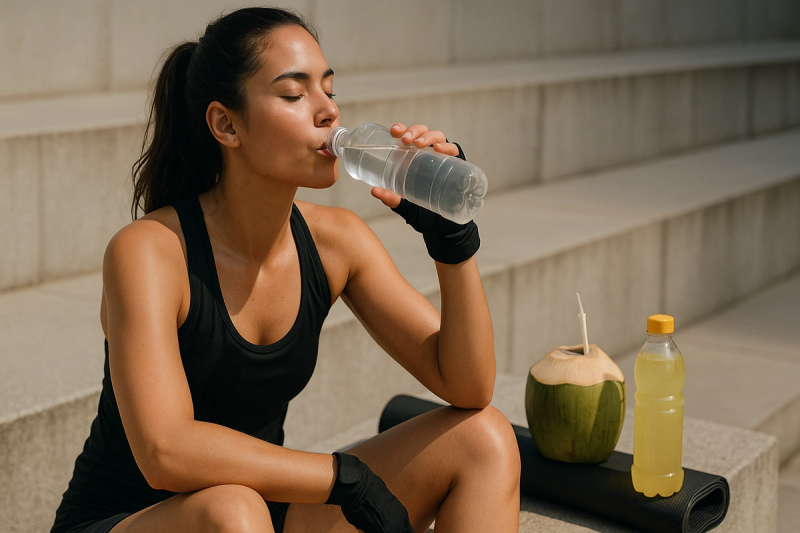
Every summer I do this thing where I act like I'm fine... until I am very much not fine. A couple years back I came home from a long, stupidly hot afternoon walk feeling shaky, headachy, weirdly annoyed at everybody, and convinced I just "needed something cold." So I grabbed coconut water because, you know, it feels healthy and sort of clean and Instagram-ish. It helped a bit, but not enough. Later I learned the annoying truth. Not all hydration drinks do the same job. And in peak summer, especially if you're sweating a ton, dealing with diarrhea, fasting, doing long workouts, traveling, or just existing in brutal heat, the difference between coconut water, ORS, and those flashy electrolyte drinks actually matters. Kinda a lot.
I'm not a doctor, obviously. Just someone who's very into health, reads way too much nutrition stuff, and has had enough dehydration-ish days to stop pretending all drinks are interchangeable. Also, this has become more of a thing in 2026 because heat waves are getting nastier in a lot of places, more people are talking about hydration in the context of wellness wearables, marathon culture, GLP-1 medication side effects, and travel stomach bugs, and honestly brands are marketing the heck out of "electrolytes" like it's magic dust. It isn't magic. Sometimes it's useful. Sometimes it's expensive salty juice.
First, the boring but super important question: what are we even replacing when we sweat?
#Mostly water, yes. But also electrolytes, especially sodium, and to a lesser extent potassium, chloride, and a few others. If you've had vomiting or diarrhea, you can lose both water and salts fast. That combo is what makes people feel so rough. The body doesn't just need fluid sloshing around, it needs the right balance so the intestines can absorb water properly and the cells can use it. That's why plain water is great most of the time, but not always enough in some situations. I used to think more water solved everything, and then I'd end up bloated, peeing constantly, still tired... not exactly winning.
My simple rule now is this: for normal daily summer hydration, water is still queen. But if I'm losing lots of fluid or sodium, I stop trying to be cute about it and pick the drink that matches the problem.
ORS is not trendy, which is maybe why people underestimate it
#ORS means Oral Rehydration Solution. It's basically one of the least glamorous but most evidence-backed things in medicine. The formula matters because it uses a specific balance of glucose and sodium to help the gut absorb water efficiently through the sodium-glucose transport system. Fancy wording, I know, but the point is this: ORS is designed for rehydration when you're actually depleted. The World Health Organization style low-osmolarity ORS has a set composition because the ratios work, not because somebody in wellness branding thought the packet color looked nice.
If you have diarrhea, vomiting, heat exhaustion risk, or you're recovering from a stomach bug, ORS usually beats coconut water and most sports drinks. Straight up. That's not me being dramatic. That's what clinical guidance has said for years, and it's still true in current recommendations. In 2026, a lot of public health messaging around heat illness is again emphasizing early oral rehydration with proper sodium-containing fluids when losses are significant, especially for older adults, kids, outdoor workers, and endurance athletes. ORS isn't just for severe illness in hospitals. It's useful at home too.
- Best for: diarrhea, vomiting, heat exhaustion recovery, travel stomach issues, significant dehydration, heavy fluid loss
- Why it works: sodium + glucose in the right ratio helps actual absorption, not just drinking volume
- Downside: taste. Let's be honest, some ORS sachets taste like sad science water
One thing though: if someone is confused, fainting, unable to keep fluids down, peeing very little, has chest pain, or seems seriously ill, that is not a "sip some ORS and vibe" moment. That's medical care territory.
Coconut water is lovely... but people oversell it
#I like coconut water. I really do. Cold coconut water on a hot day? Elite. It contains potassium, some carbs, and small amounts of other minerals. It's often lower in sodium than ORS or many sports hydration mixes, which is exactly why it can be refreshing for casual hydration but not ideal for every situation. This is the bit wellness culture sometimes skips over. People hear "natural electrolytes" and assume it's automatically the best rehydration option. Natural doesn't mean optimally formulated.
For a mild sweaty day, a beach afternoon, post-walk refreshment, or if you just struggle to drink enough fluids and coconut water helps you drink more, cool, that can be totally fine. Some newer 2026 wellness trends are pushing coconut water again because consumers want fewer artificial colors, less super-sweet sports drink flavor, and more potassium-forward options. Fair enough. But if you've had gastroenteritis, food poisoning, or intense heat exposure with lots of salt loss, coconut water can fall short on sodium. And if you have kidney disease or have been told to watch potassium, it may not be the best casual guzzle-all-day drink either. Not saying it's bad, just... context matters.
| Drink | Main strength | Main weakness | Best use |
|---|---|---|---|
| ORS | Most effective rehydration when fluid + salts are lost | Taste can be meh | Diarrhea, vomiting, heat illness recovery |
| Coconut water | Refreshing, potassium-rich, more natural feel | Usually too low in sodium for bigger losses | Light hydration, casual summer sipping |
| Electrolyte/sports drinks | Convenient, often more sodium than coconut water, easy during exercise | Can be high in sugar or underdosed depending on brand | Moderate-heavy sweating, workouts, long outdoor time |
And then there are electrolyte drinks... which is a huge messy category now
#This is where people get confused, me included. "Electrolyte drink" can mean a classic sports drink, a sugar-free tablet, a high-sodium endurance mix, a wellness powder with adaptogens thrown in for no clear reason, or a influencer brand in a pretty stick pack. They are not nutritionally the same. Not even close. Some are built for athletes sweating for hours. Some are basically flavored water with tiny mineral amounts. Some are useful if you hate sweet drinks. Some are absurdly expensive for what you recieve.
In 2026, the hydration market is honestly wild. You see lower-sugar options, higher-sodium endurance formulas, glucose-based medical-style rehydration powders, and products aimed at people on weight-loss meds who get nauseous and dehydrated easier. There's also more talk about personalized hydration using sweat testing and wearables. I think that's interesting, though maybe a little overhyped for average people. Most of us do not need a lab report to know we got sweaty gardening for three hours in 38°C weather.
- For workouts under about an hour, many people still do fine with plain water, especially if the intensity is moderate
- For longer or very sweaty sessions, drinks with sodium start making more sense
- If you're also trying to refuel energy during endurance exercise, some carbs in the drink can actually help
- Sugar-free isn't automatically better if you need rapid rehydration plus energy, but it's fine if you're just replacing salts and trying to limit sugar
What recent health research keeps circling back to
#A few things seem pretty consistent in recent years and still hold up now. One, sodium matters more than most casual wellness posts admit, especially for heavy sweaters. Two, beverages with a bit of carbohydrate can improve fluid absorption and exercise performance in the right context. Three, overhydration is also a thing. Rare in everyday life, sure, but athletes and some very determined health people can drink excessive plain water and dilute sodium too much, which is dangerous. Four, no single hydration drink is "best" in all settings. I know that's less sexy than a one-size-fits-all answer, but there it is.
There've also been more conversations in 2025 into 2026 around climate-related heat stress. Public health agencies and sports medicine groups keep stressing hydration planning, not just reactive chugging once you feel awful. That means drinking through the day, eating enough, considering sodium losses if you're sweating heavily, and paying attention to early signs like headache, dizziness, dry mouth, irritability, muscle cramps, fatigue, and super dark urine. Although, quick note, urine color isn't perfect if you're taking vitamins, so don't become detective-level obsessed with it like I once did.
So what do I personally choose? Honestly... it depends, and that used to annoy me
#I wanted a simple answer. Like a winner. Coconut water wins! ORS wins! The blue sports drink from the gas station wins! But real life is messier. On ordinary hot days when I'm just out and about, I mostly drink water and eat normally, sometimes with coconut water because I enjoy it. After a sweaty workout where I've lost a lot but I'm otherwise okay, I might use an electrolyte tablet or sports drink, especially if I'm going to keep being active. If I have diarrhea or feel properly dehydrated, I use ORS. That switch alone has saved me from dragging out the recovery for like two extra days.
I remember one summer trip where me and my friend both got a mild stomach bug, probably from some sketchy roadside food. She kept sipping juice and coconut water because it felt gentler. I used ORS packets I had shoved in my bag almost as an afterthought. Not scientific, obviously, but I bounced back faster and felt less wrung out. Since then I don't travel without ORS. Not glamorous. Very useful.
A few mistakes I made, because wow, I made them
#- Assuming coconut water was basically nature's ORS. It isn't.
- Buying electrolyte powders without checking sodium. Some have so little that calling them hydration support feels generous.
- Avoiding all sugar all the time. In some cases, a bit of glucose is literally part of what helps absorption.
- Thinking more is better. Chugging liters at once just made me feel gross.
- Ignoring food. Salted meals, fruit, yogurt, soups, all of that contributes to hydration too.
Who should be a little more careful
#This part matters. Babies, older adults, pregnant people, people with kidney disease, heart failure, uncontrolled diabetes, those on diuretics, and anyone with ongoing vomiting or severe diarrhea should be more cautious and may need tailored advice. Same goes for people doing endurance events or working outdoors in extreme heat. If you have high blood pressure, that doesn't mean sodium is always evil in every moment, but don't start pounding high-sodium mixes all day for fun because TikTok said electrolytes cure afternoon slump. That's... not really how bodies work.
Also, if someone has signs of heat stroke — confusion, very high body temp, fainting, fast pulse, hot skin, acting strange — don't rely on any drink alone. Get urgent medical help. Heat stroke is an emergency. I know that sounds obvious, but every year people underestimate heat illness and it's scary.
My extremely unscientific but practical summer guide
#- Just hot, mildly sweaty, normal day? Water first. Coconut water if you enjoy it. Regular meals help.
- Workout or long walk with a lot of sweat? Electrolyte drink with meaningful sodium can help, especially over an hour or in high heat.
- Diarrhea, vomiting, food poisoning, travel bug, heat exhaustion recovery? ORS is usually the smartest choice.
- Want the "healthiest" option? Wrong question, maybe. Ask which one matches the situation.
And yes, if you truly hate the taste of ORS, chilling it helps. Sometimes sipping through a straw helps too, weirdly. If it's a premixed sports drink and it's super sweet, some people dilute it a bit for casual use, though for medical-style rehydration I'd stick to ORS as directed rather than freestyling the ratios.
My final take, for whatever it's worth
#Coconut water is great, but it's not a replacement for ORS when you're actually depleted. ORS is the MVP for real rehydration needs, even if it has all the charisma of a beige waiting room. Electrolyte drinks sit in the middle and can be genuinely useful, but only if you pick one that fits the job instead of the marketing. That's where I've landed after reading way too many labels and learning the hard way in summer after summer.
Anyway, that's my honest take. Kinda personal, kinda nerdy, hopefully useful. Listen to your body, don't ignore serious symptoms, and maybe keep a couple ORS packets around before the next heat wave sneaks up on you. If you like this sort of practical health rambling, I've found similar wellness reads over on AllBlogs.in too.