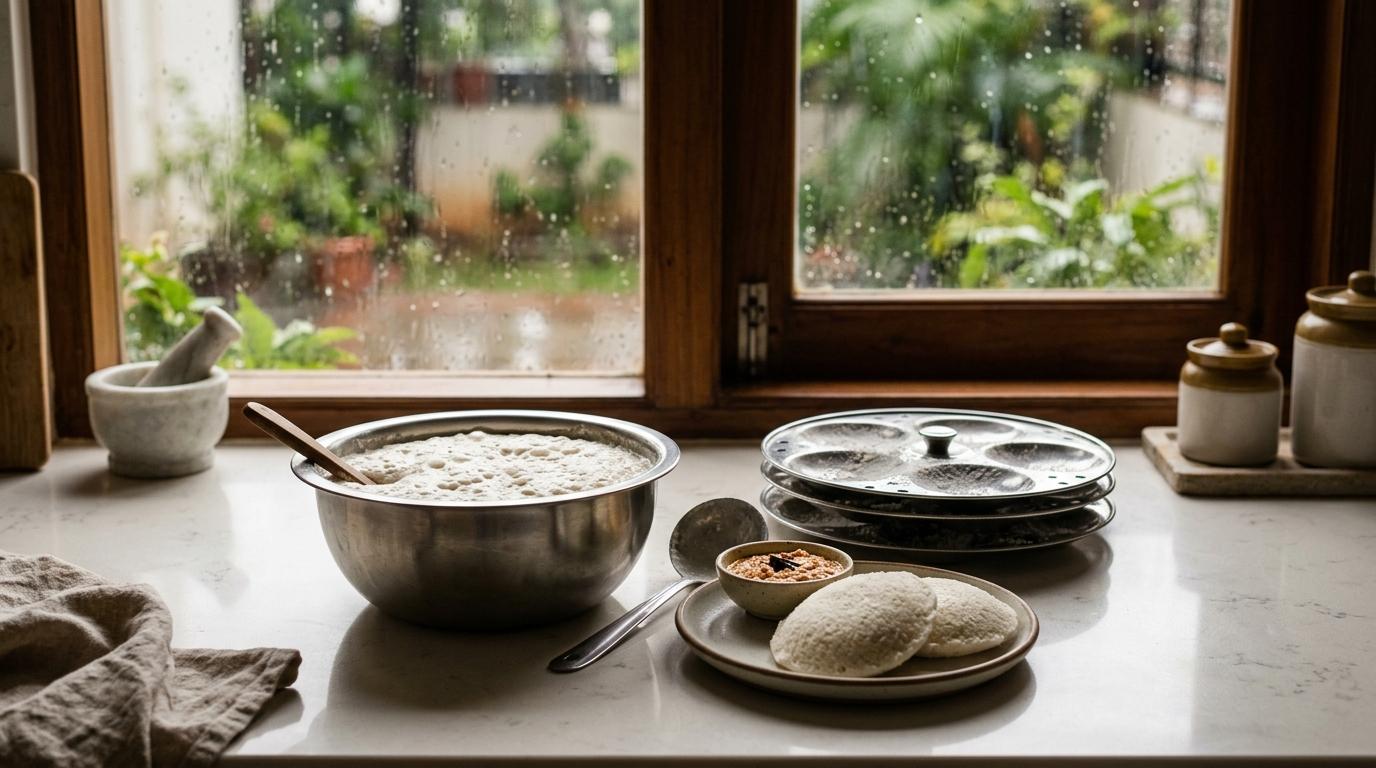
Rainy mornings and hot idlis feel made for each other, don’t they?
A plate of soft idlis, coconut chutney, hot sambar, and maybe one dosa on the side because someone in the house will always say, “Just make one more.”
But then monsoon arrives, and suddenly your reliable idli batter starts behaving like it has its own mood swings.
One night it refuses to rise. Another day it rises too fast and smells sharper than usual. Sometimes it becomes watery. Sometimes you open the lid, take one sniff, and think, “Is this still okay to cook?”
If this sounds familiar, don’t worry. You are not alone.
Managing idli batter in monsoon needs a little extra care because the weather changes everything. Humidity, cooler nights, damp kitchens, less sunlight, and uneven temperatures can all affect fermentation. The good news is that most batter problems are easy to understand, and many of them can be fixed if you catch them early.
This guide will help you know what is normal, what is risky, how to store batter safely, and what to do when your batter turns sour.
Quick Answer Summary
#If breakfast is already late and everyone is hungry, start here.
- Idli batter not fermenting in monsoon? Your kitchen may be cooler than you think. Batter needs warmth, not just humidity.
- Use slightly less water while grinding. Batter can become loose and watery more easily in rainy weather.
- Keep the batter in a warm, steady place. A switched-off oven with the light on, a towel-wrapped container, or a closed cabinet can help.
- A mild sour smell is normal. Good fermented batter smells pleasantly tangy, like curd or sourdough.
- A harsh, rotten, alcoholic, or nail-polish-like smell is not normal. Do not use that batter.
- Check colour and texture. Pink, orange, grey streaks, mould, excess sliminess, or a strange smell means the batter should be discarded.
- Refrigerate after fermentation. Once the batter rises well, move it to the fridge.
- Use refrigerated batter within 3 to 4 days during monsoon.
- Safe but sour batter can be used for dosa, uttapam, or paniyaram. Spoiled batter should not be used at all.
Why Idli Batter Acts Differently in Monsoon
#Fermentation is not just “batter rising.” It is a living process.
When you soak and grind rice and urad dal, natural yeast and good bacteria begin working in the batter. These are what make idlis soft, airy, slightly tangy, and light.
In summer, this usually happens without much drama. The kitchen is warm, the batter gets a good environment, and by morning it has risen nicely.
Monsoon is different.
The air may feel humid, but your kitchen may not actually be warm enough. Nights can be cool. Some homes get a lot of breeze. Some kitchens stay damp but not warm. All of this can slow fermentation.
At the same time, because there is so much moisture in the air, food can spoil faster if it sits outside too long.
That is why monsoon batter feels confusing. One batch does not rise at all. The next batch becomes too sour. Another one rises and then collapses.
So if you are dealing with idli batter not fermenting in monsoon, it does not always mean your recipe has failed. Sometimes the weather is simply not helping.
Common Monsoon Fermentation Problems
#1. The batter does not rise
#This is the classic monsoon problem.
You grind the batter at night, cover it properly, wake up in the morning, and it looks almost exactly the same.
Possible reasons include:
- The kitchen was too cool.
- The batter was too watery.
- The rice or dal was not ground well.
- The container was kept in a drafty place.
- The batter did not get enough time.
- Salt or water quantity slowed fermentation.
- The vessel was too cold or too big for the quantity of batter.
Flat batter can still be safe if it smells fresh or mildly sour and has no strange colour, mould, or slimy texture. But it may not give you soft, fluffy idlis.
2. The batter becomes watery
#During monsoon, soaked rice and dal may soften more than expected. If you add the same amount of water you use in summer, the batter can become thinner than needed.
Thin batter does not trap air well. That means it may not rise properly, and the idlis can turn out dense, sticky, or flat.
Good idli batter should be thick but pourable. It should fall from the ladle slowly, not run like thin dosa batter.
3. The batter smells too sour
#A little sourness is normal. In fact, that mild tang is part of good fermentation.
But there is a difference between pleasantly sour and “something is wrong.”
Good fermented batter smells gently tangy, like curd. It should not smell rotten, alcoholic, chemical-like, or so sharp that you immediately move your face away from the container.
If the smell feels unpleasant or doubtful, take it seriously.
4. The batter rises and then collapses
#This usually means the batter fermented too long after rising.
Once the batter has risen well, it should go into the fridge. If you leave it outside for many more hours, especially in humid weather, it can over-ferment. After that, it may become too sour, lose its airiness, and sometimes even spoil.
5. Dosa batter fermentation feels uneven
#Sometimes the top looks bubbly but the bottom feels heavy and flat. This can happen when:
- The batter is too cold.
- The batter is too thick.
- It was not mixed properly after grinding.
- The fermentation was slow or uneven.
A gentle mix before cooking can help. Just do not beat fermented batter too hard, because that can knock out the air you waited so long for.
How to Help Idli Batter Ferment Better in Monsoon
#You do not need complicated hacks. You mainly need three things: warmth, the right consistency, and a clean container.
1. Grind with slightly less water
#Start with less water than usual. Add only what you need to grind the rice and dal smoothly.
The batter should be thick, smooth, and pourable. If it runs too quickly from the ladle, it is probably too thin.
Too much water can make it harder for the batter to hold air. It can also give you flat or sticky idlis.
2. Keep the batter warm, not hot
#Fermentation needs gentle warmth. Not heat. Not cold. Just a steady, warm spot.
You can try:
- Keeping the batter inside a switched-off oven with only the light on.
- Wrapping the container in a clean, thick towel.
- Placing it inside a closed cabinet.
- Keeping it near a warm pressure cooker after cooking, but not too close.
- Placing it in a draft-free corner of the kitchen.
- Using a casserole or insulated container if your kitchen is very cool.
The idea is simple: give the batter a cosy place to ferment.
3. Use a container with enough space
#Batter needs room to rise.
Do not fill the container to the top. Leave enough space, because well-fermented batter can rise quite a bit.
If it overflows, it becomes messy and less hygienic. And in monsoon, mess plus moisture is never a good combination.
4. Do not keep opening the lid
#It is tempting to check every few hours. Honestly, most of us do it.
But opening the lid again and again lets in cool air, moisture, and kitchen smells. It also disturbs the steady environment the batter needs.
Check once after a reasonable fermentation time. If it has risen well, move it to the fridge.
5. Use a clean, dry vessel
#This matters more than people think.
Use a clean, dry container. Avoid vessels that smell of old food, soap, spices, or previous batter. Do not leave water sitting inside the container before adding batter.
In monsoon, even small hygiene mistakes can show up quickly.
Safe vs Spoiled Batter: Smell, Colour, and Texture
#This is the most important part.
Fermented batter naturally smells sour. Spoiled batter smells wrong. Once you learn the difference, it becomes much easier to decide what to do.
Safe fermented batter usually has:
#- A pleasant, mildly sour smell
- A curd-like or sourdough-like aroma
- A bubbly or airy surface
- Creamy white or off-white colour
- A light, slightly fluffy texture after rising
- Small air pockets when stirred gently
This is normal, healthy fermentation.
Over-fermented but possibly usable batter may have:
#- A stronger sour smell, but not rotten
- A slightly thinner texture
- More tang than you want for idlis
- A flatter look if it rose and then fell
- A sharper taste after cooking
If there is no bad smell, no mould, no strange colour, and no abnormal sliminess, you can usually use this batter for dosa, uttapam, or paniyaram. Cook it well.
Spoiled batter signs
#Do not use the batter if you notice any of these:
- Rotten, foul, or very pungent smell
- Alcohol-like smell
- Nail-polish-like smell
- Smell of rotting fruit or old cheese
- Pink, orange, grey, or unusual coloured streaks
- Visible mould
- Excessive sliminess
- Sticky, stringy texture that feels abnormal
- A swollen closed container along with a bad smell
- Gas pressure, leakage, or fizzing that feels unusual
If you see these signs, throw away the full batch. Do not scrape off the top layer and use the rest. It is not worth the risk.
A simple food safety rule always works: when in doubt, throw it out.
Idli Batter Storage in Monsoon
#Good idli batter storage is what protects all the effort you put into soaking, grinding, and fermenting.
The biggest mistake is leaving fermented batter outside because you plan to make idlis “after some time.” In monsoon, that “some time” can quickly turn good batter too sour or unsafe.
Refrigerate as soon as it rises
#Once the batter has risen well and smells pleasantly fermented, move it to the fridge.
Cold temperature slows fermentation and keeps the batter usable for the next few meals.
Use airtight containers
#Store batter in a clean, airtight container. This prevents fridge smells from entering the batter and reduces exposure to other foods.
If your fridge also has raw foods, keep the batter tightly covered and stored separately as much as possible.
Divide large batches
#If you make batter for several days, divide it into smaller containers.
This way, you open only what you need. The rest stays colder, cleaner, and fresher.
Use clean spoons only
#Do not dip a wet spoon, used spoon, or chutney-stained ladle into the batter.
Use a clean, dry ladle every time. It sounds small, but it can make a big difference during monsoon.
Use within 3 to 4 days
#During monsoon, try to use refrigerated batter within 3 to 4 days.
If it smells bad, changes colour, turns too slimy, develops mould, or simply looks doubtful before that, do not use it.
How to Fix Sour Idli Batter
#First, check whether it is safe.
If the batter smells rotten, has mould, shows strange colours, or feels unusually slimy, do not try to fix it. Throw it away.
But if it is only more sour than you like and otherwise looks normal, you can still use it in tasty ways.
1. Make dosa
#Sour batter often works beautifully for dosa.
It can give you crisp, flavourful dosas, especially if the tawa is hot enough. If the batter is too thick, add a little water and mix gently before spreading.
2. Make uttapam
#Sour idli batter is great for uttapam.
Add onions, green chillies, coriander, tomatoes, carrots, or capsicum. The toppings balance the tang and make the batter taste much better.
Keep the uttapam slightly thick and cook it well on both sides.
3. Make paniyaram
#Paniyaram is one of the best ways to use safe but sour batter.
Add a quick tempering with mustard seeds, cumin, curry leaves, green chillies, onions, and maybe a little grated coconut if you like. The crisp edges and soft centre make the sourness feel intentional.
4. Add a little rice flour
#If the batter is too tangy but still safe, mix in a few tablespoons of rice flour with a little water. Fold it in gently.
Do not add too much, or the texture will change and the batter may become heavy.
5. Avoid very sour batter for soft idlis
#Very sour batter usually does not make the best idlis. The idlis may turn dense, flat, or hard.
If your goal is soft idlis, use batter that is fermented but not overly tangy.
Idli and Dosa Cooking Tips for Monsoon Batter
#Even after fermentation, how you cook the batter matters.
For soft idlis
#- Do not use batter straight from the fridge.
- Let it sit outside for about 30 minutes before steaming.
- Stir gently, but do not beat it hard.
- Grease the idli moulds lightly.
- Steam until the idlis are cooked through.
- Let them rest for a few minutes before removing.
Cold batter can give dense idlis. Overmixed batter can lose the air created during fermentation.
For crisp dosas
#- Bring the batter closer to room temperature.
- Adjust the consistency if needed.
- Heat the tawa properly before spreading.
- Do not spread dosa on a cold or overly greasy tawa.
- If the batter is too thick, add a little water.
- If the batter is too sour for idlis, use it for dosa or uttapam.
For good dosa batter fermentation, the batter should smell mildly sour and feel light. Completely flat, unfermented batter may stick to the pan and cook unevenly.
Common Monsoon Kitchen and Tiffin Mistakes to Avoid
#Small habits can make a big difference in rainy weather.
Leaving risen batter outside
#Once the batter rises, refrigerate it. Do not leave it on the counter for hours.
Mixing old batter into fresh batter carelessly
#If old batter smells too sour or doubtful, do not mix it with fresh batter. You may spoil the new batch too.
Using wet spoons
#A wet spoon adds extra moisture and may introduce contamination. Use a clean, dry ladle.
Packing idlis when they are very hot
#Let idlis cool slightly before closing the tiffin box. If you pack them piping hot, steam gets trapped and makes them soggy.
Sending doubtful batter food in tiffin
#If the batter smelled strange before cooking, do not take a chance. Cooking does not magically make spoiled batter safe or pleasant to eat.
Forgetting about chutney safety
#Coconut chutney and other wet chutneys also need care in humid weather. Keep them fresh, avoid leaving them outside too long, and pack them properly.
What If the Batter Did Not Ferment at All?
#If the batter is fresh, smells normal, and has no signs of spoilage, you still have options.
Give it more time in a warm place
#Move the container to a warmer, draft-free spot and wait longer. Sometimes monsoon fermentation is simply slow.
Use it for dosa
#Even mildly fermented batter may work better for dosa than idli. The texture may not be perfect, but it is usually more forgiving on the tawa than in an idli mould.
Use a small emergency lift if needed
#Some home cooks add a small pinch of baking soda or fruit salt when the batter has not risen and breakfast cannot wait.
This can help make the batter lighter, but it may change the taste and texture. Use it as a backup, not as your regular method.
Should You Add Salt Before or After Fermentation?
#This depends on your home, your weather, and your batter routine.
In very hot weather, many people add salt after fermentation because salt can slow things down a little.
During monsoon, some cooks add salt before fermentation because it seasons the batter evenly and may help control the batter. But if your batter regularly refuses to rise, try adding salt after fermentation and see if that works better in your kitchen.
There is no one perfect rule for every home. Idli batter is local, personal, and honestly, a little moody sometimes.
Final Takeaway
#Monsoon idli batter needs a little more patience and a little more caution.
Keep the batter thick enough, ferment it in a warm place, refrigerate it as soon as it rises, and trust your senses. A gentle sour smell is part of good fermentation. A harsh, rotten, alcoholic, or strange smell is a warning.
If the batter is safe but too sour, turn it into dosa, uttapam, or paniyaram. If it looks or smells spoiled, let it go.
That way, your rainy morning breakfast stays exactly how it should be: warm, comforting, practical, and safe.