If you travel by train in India even semi-regularly, sooner or later this luggage thing becomes a real issue. Not the romantic chai-by-the-window part. I mean the very practical, sweaty, annoying part where you’re standing near your coach door with one trolley, one backpack, one random food bag, maybe a blanket roll, and three people behind you saying “andar chaliye bhaiya.” I’ve done this in Sleeper, 3AC, 2S, even unreserved once... never again if I can help it. And honestly, most people don’t look up the actual Indian Railways luggage rules until they get into trouble or get side-eyed by co-passengers for bringing half the house.
So this guide is for normal passengers like us, specially if you’re travelling in Sleeper class or 3AC and wondering how much luggage is allowed, what’s practical vs what’s legal, where to keep bags, what happens if you carry too much, and how to avoid becoming that person blocking the entire bay. I’m mixing official rules with real-world train experience because, trust me, the gap between “rule” and “what actually happens on Indian trains” is very real.
The basic luggage allowance in Sleeper and 3AC, without the usual confusion
#Let’s get the core thing clear first. For passengers travelling on Indian Railways, there is a free allowance, a marginal allowance, and then a maximum limit beyond which booking is required or things can get messy. For Sleeper Class, the free allowance is generally 40 kg. The marginal allowance is around 80 kg. The maximum ceiling is 150 kg. For AC 3-tier, the free allowance is generally 40 kg too, with marginal allowance around 80 kg and the same upper ceiling often referenced at 150 kg. Rules can be interpreted through railway luggage manuals and enforcement may vary station to station, but for regular passengers, 40 kg is the safe number to remember.
Now, real talk. Has anybody weighed my two bags before boarding from Patna, Nagpur, Delhi or Howrah? No. Almost never. But that does not mean there is no rule. It just means enforcement is inconsistent. If your luggage is normal-looking, compact, and fits under seats or in designated areas, nobody bothers you. If you show up with 6 giant suitcases, cardboard cartons tied with rope, a sewing machine box, and maybe one suspicious trunk from 1998, then yeah, attention can happen.
Indian train luggage rules are one of those things people ignore until they either can’t fit the bags under the berth... or a railway staff member decides today is the day rules will be followed properly.
What “allowed” means on paper vs what is manageable on an actual train
#This is where many blogs get too clean and textbook-ish. On paper, 40 kg free allowance sounds simple. In reality, volume matters almost more than weight. A single 25 kg suitcase is easier to handle than three weird-shaped bags totalling 20 kg. In Sleeper class especially, space is shared, open, visible, and kind of chaotic on busy routes. In 3AC it’s more controlled, but not spacious enough for oversized baggage either. So if you ask me what you should actually carry comfortably, I’d say one medium suitcase or duffel, one backpack, and maybe one small hand bag. That’s the sweet spot.
- Sleeper Class free allowance: usually 40 kg per passenger
- 3AC free allowance: usually 40 kg per passenger
- If luggage is extra-heavy or unusually bulky, railway can charge luggage fees or ask for booking in luggage/parcel arrangements
- What irritates co-passengers fastest is not weight, it’s bag spread
- Compact soft bags usually work better than giant hard-case luggage on Indian trains
My own mistake in Sleeper, and why I stopped carrying hard trolley bags for long train trips
#One trip from Varanasi side to Mumbai cured me of overpacking forever. I had this smart idea that a big hard trolley plus laptop backpack plus one shopping bag would be “organized.” Absolute bakwaas plan. The trolley didn’t slide properly under the lower berth because of the wheel frame, the chain lock got stuck, and every time somebody wanted to sit, adjust, sleep, or reach their slippers, my bag had become a public issue. One uncle didn’t say anything rude, but his face said everything. Since then, for Sleeper I mostly use a soft duffel or rucksack style bag. It squishes, fits, adjusts. Indian trains reward flexible luggage, not fancy luggage.
In 3AC, hard trolley is a bit more manageable, specially if you board at the originating station and settle early. There’s usually under-berth space and side areas that work better than Sleeper. But even there, if your bag is too tall or too wide, you’ll struggle. And if the compartment is full with family groups carrying steel tiffins, blankets, snack bags, baby stuff and one extra mystery bag, space disappears very fast. So don’t plan assuming your coach will be tidy like an airport lounge. It wont. Usually.
Where you’re actually supposed to keep your luggage in Sleeper and 3AC
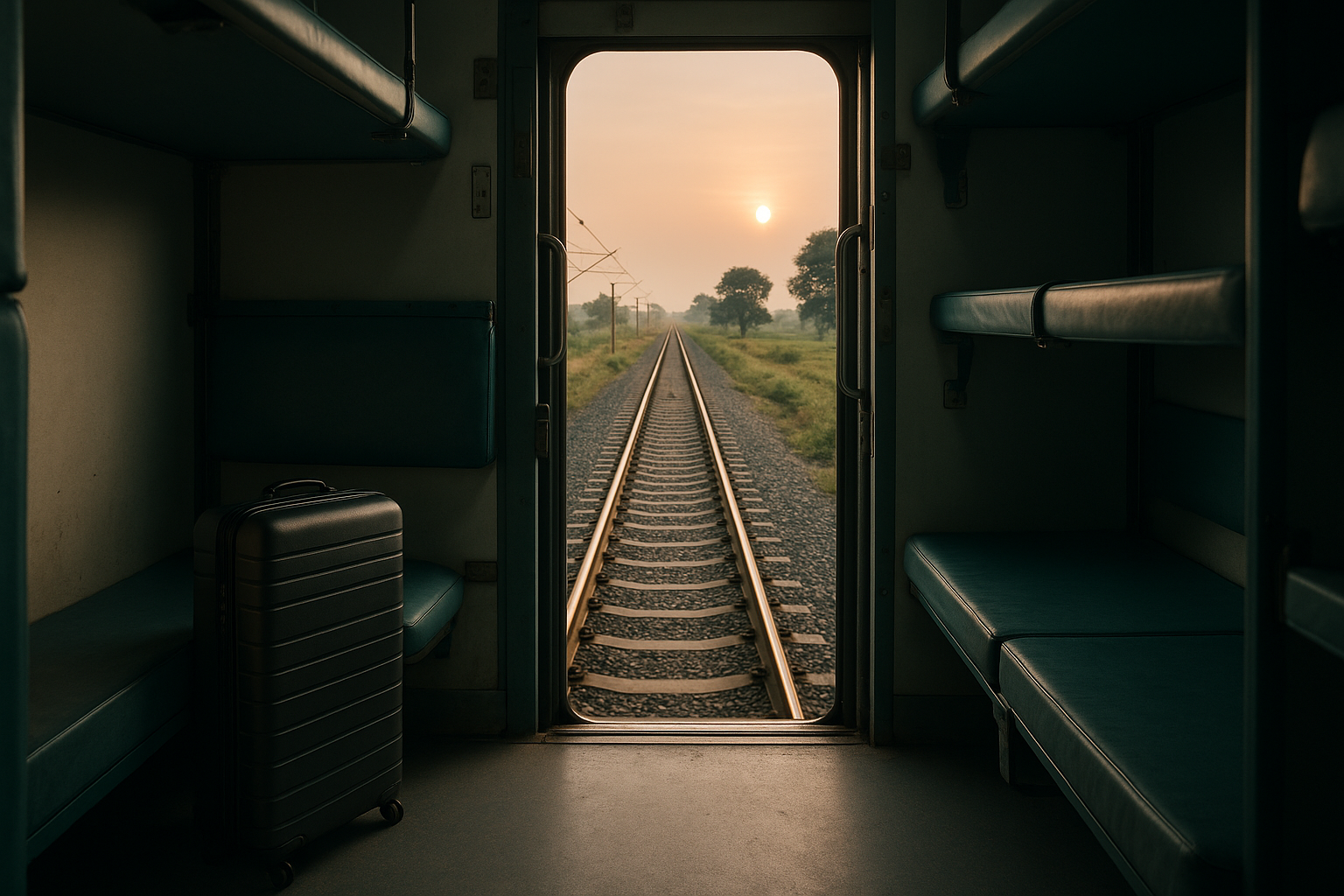
#Most normal luggage goes under the lower berth. That’s the standard spot. Smaller bags, handbags, and valuables stay near your pillow or chained to the berth frame if needed. In some AC coaches there are luggage areas near the entrance or certain ends of the coach, but I personally never rely on those for valuables. Too much movement, too many people crossing. If I can’t see it, I’m not fully relaxed. Maybe I’m paranoid, but Indian train veterans know this feeling.
If you have upper berth or middle berth, try to settle your main bag under the lower berth of your own bay after politely coordinating with co-passengers. Just don’t behave like all under-seat area belongs to you because your ticket confirms a berth. Shared space means shared adjustment. Also, keep slippers, chargers, bottles, and food bag organized. Half the so-called luggage problem is actually people spreading tiny things everywhere and then acting shocked when the place feels cramped.
What happens if your luggage is way over the limit
#If luggage is clearly excessive, Indian Railways can ask you to book it and pay charges. This generally means going through luggage booking procedures, depending on the station and what exactly you’re carrying. Sometimes passengers with huge trunks, business samples, household shifting-type bags, or multiple boxes get questioned. This is more likely at bigger stations and on routes where checks happen more seriously. Not always, but possible. If unbooked excess luggage is detected, there can be penalty or extra charges. So if you are basically moving house, don’t treat a Sleeper coach like a mini cargo van. People do it, sure, but it’s risky and honestly unfair to others too.
There are also restrictions around dangerous, inflammable, and prohibited items. Sounds obvious, but still worth saying. Don’t carry kerosene, crackers, gas cylinders, anything explosive, strongly inflammable stuff, or items that can endanger passengers. Even certain oversized goods and commercial stock are not meant to be casually pushed into passenger coaches. If your luggage smells weird, leaks, takes up a full bench, or looks like wholesale transport... you’re inviting trouble.
Sleeper vs 3AC for luggage, which one is easier if you’re travelling with more bags?
#If budget allows, 3AC is definitely easier. Not luxurious-luxurious, but easier. You get more controlled access to the coach, fewer random entries compared to open Sleeper movement, and generally a bit more order. Curtains are mostly gone in many trains, but the enclosed AC environment still feels more secure. For solo travellers, women travellers, older parents, or anybody carrying one expensive bag plus gadgets, 3AC reduces stress. Sleep quality can still be hit or miss because of snorers and chain phone-watchers, but luggage anxiety is less.
Sleeper is still completely doable, and lakhs of us travel that way all the time. It’s cheaper, lively, more open, and for day journeys honestly I still enjoy it on the right route. But with lots of baggage? Eh. You need more alertness. At night especially, chain your main bag. Use a small steel cable lock or chain lock. Keep wallet, phone, jewellery, meds and tickets near your body or inside your pillow-side backpack. Don’t put valuables in an outer pocket and then sleep like the world is kind. The world is not that kind, yaar.
A few practical packing rules that no official circular explains properly
#- Use soft bags if possible. They fit under berths way better than rigid trolley monsters.
- Split heavy items into two bags instead of one dead-weight suitcase. Easier to lift, easier to store.
- Carry one small night pouch with phone charger, medicine, wallet, bottle, wet wipes, ticket ID. Don’t reopen the big bag every 20 minutes.
- Chain the main bag on overnight journeys, even in 3AC. Over-cautious maybe, but who cares.
- Label your bag clearly. On crowded stations, identical black trolley bags are basically cousins.
- Don’t carry too much food in loose packets. It becomes luggage clutter faster than you think.
Latest train travel reality check, safety, crowding, and why luggage planning matters more now
#In the last couple years, train demand on major routes has stayed crazy high, specially festival periods, long weekends, school holidays, and migration-heavy sectors. Tatkal disappears in a blink, waiting lists go wild, and unreserved crowd pressure spills into reserved coaches sometimes despite checks. That means luggage planning is not just convenience, it’s survival of your personal space. If you board late into a packed coach with too many bags, settling down becomes a whole scene. During peak travel windows, reach the station early, check coach position, and stand where your coach will actually halt. That one move saves so much dhakka-mukki.
Safety-wise, major routes are generally fine if you follow the common-sense Indian train code we all kind of know but don’t always admit. Don’t flash cash. Don’t leave phone charging unattended near the door area. Don’t trust random overly-friendly strangers with your bags. Don’t eat opened food from unknown people. And yes, keep a screenshot of your ticket, coach number, berth, PNR, and emergency contacts because network can vanish exactly when you need it most. RailMadad and official railway channels are useful for coach issues, cleanliness complaints, or onboard concerns, though response quality can vary.
If you’re travelling with family, kids, or elders, the luggage rule feels different
#When my parents travel, luggage maths changes completely. Suddenly there’s one bag just for medicines, one for home food because station food “doesn’t suit everyone,” one shawl bag, one steel dabba situation, and some impossible extra packet that appeared at the last minute. Families usually carry more than solo travellers, and railway staff knows this too. Still, try to keep it sensible. One berth should not turn into a store room. For elders, lower berth access matters, so put the most-used bag where it can be reached without climbing over someone’s legs at 2 am.
For kids, keep one separate easy-access bag with wipes, extra clothes, snacks, water, and one light blanket. That stops you from digging into the main luggage repeatedly. If travelling in 3AC with children, I’d say it’s worth paying a bit extra over Sleeper on longer overnight routes because boarding, sleeping, and baggage handling become much less tiring. Not perfect, but less draining. Big difference.
What about accommodation, food, and station strategy if your train timing is awkward?
#This is slightly off the core luggage topic but actually very related. A lot of baggage stress happens before boarding or after arrival. If your train is early morning or very late night, book a retiring room, dormitory, or a budget hotel near the station if available. On many major stations, railway retiring rooms can be decent value if booked in time. Budget hotel rates near stations in cities like Delhi, Kolkata, Chennai, Lucknow, Jaipur, Pune or Bengaluru often start around ₹800 to ₹1800 for basic stays, while cleaner mid-range options can be ₹2000 to ₹4500 depending on city and season. If you have too much luggage, spending one night nearby is often smarter than wandering all day with bags.
Food-wise, I usually carry a home-packed meal for the first leg, then use station vendors, pantry, or e-catering on longer routes depending on train reliability. Keep dry snacks over greasy stuff if you have more baggage. One leaking aloo sabzi inside your backpack and your whole journey gets spiritually damaged, honestly. Water bottle, tissues, paper soap, and a foldable cloth bag are underrated heroes. Also, if a station has escalators or lifts, use them. Sounds obvious, but some of us still try to macho our way up foot overbridges with 25 kilos and regret every second.
Best seasons and route timing, because luggage feels heavier in Indian summer
#No joke, luggage tolerance changes with weather. April to June in non-AC classes can be rough on many routes, especially if the train is delayed and platforms are baking. If you’re carrying more than one big bag, summer day travel in Sleeper can feel twice as difficult. Monsoon brings a different problem: wet platforms, muddy bag wheels, and damp-smelling baggage if you’re not packed properly. Winter is easiest for handling luggage, especially for long-distance travel in north and central India, though fog delays can test your patience. If you have the option, overnight boarding in extreme peak heat is less exhausting than afternoon chaos.
For long routes with heavy luggage, boarding from the originating station or at least a major stop where the train halts longer is ideal. Small stations with 2-minute halts are stressful if you’ve got multiple bags and elderly parents. I’ve done the running-with-baggage act and, wow, very cinematic in movies maybe, very stupid in real life.
Some lesser-known but genuinely useful tips most regular train people figure out over time
#- A small folding cable lock weighs almost nothing and saves major tension on overnight trips
- Keep one bright ribbon or cloth marker on your bag handle so it’s instantly recognisable
- Don’t overfill trolley front pockets, they snag while pushing under berths
- If your bag has expensive electronics, keep a plain cover or don’t make it look flashy
- Board with water already bought if your station is chaotic, one less task after entering coach
- If co-passengers are cooperative, mutually arrange bags early before middle berths go up
And one more thing. Be decent about shared space. Seriously. Some of the best train journeys I’ve had were not because the coach was amazing, but because passengers coordinated like normal humans. Someone shifted a bag, someone made room for shoes, someone helped an aunty lift luggage, someone watched another person’s berth for 2 minutes while they filled water. Indian train etiquette is messy but kind, when people choose kindness. Nice to see, still.
So what’s the smartest luggage strategy for Sleeper and 3AC now?
#Keep it within the official free allowance where possible, around 40 kg per passenger is the practical benchmark to remember. More importantly, keep it compact, storable, and chainable. In Sleeper, prioritize flexible bags and security. In 3AC, you get a little more comfort, but don’t treat it like unlimited storage. If luggage is truly excessive, book it properly instead of gambling. For most trips, one medium main bag plus one backpack is enough. The rest is overconfidence and shopping temptation.
Honestly, Indian Railways has its flaws, delays, crowd stress, random surprises and all that. But train travel still has that thing... that feeling. Window tea, station cutlets, strangers becoming temporary neighbours, those weird but memorable conversations after lights-out. Your luggage should support the journey, not dominate it. Pack lighter than your ego says you need, reach early, lock your bag, and travel a bit smarter. That’s basically the whole guide. If you like these practical, been-there type travel posts, check out more on AllBlogs.in.