The first time I ordered Jain food on a train, I was way too confident
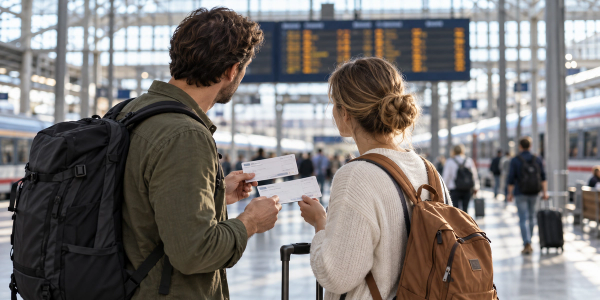
#I still remember that ride from Ahmedabad to Mumbai, partly because the window seat was perfect and partly because I made a rookie food mistake that I now warn everyone about. I had assumed, very casually, that “veg” on an Indian train meant I could somehow manage Jain. I mean, how hard can it be, right? Rice, dal, maybe some sabzi. Then the pantry guy opened the foil container and there it was, a lovely looking curry absolutely floating with onion and probably garlic too. Smelled amazing, honestly. But not Jain. Not even close.
Since then I’ve become that annoying friend who asks three times before ordering, checks the PNR twice, carries dry snacks like I’m preparing for a small famine, and still gets excited when a proper Jain thali arrives hot at a station halt. Because when it works, it’s beautiful. There’s something so travel-ish about eating a simple Jain meal while the train pulls out of Vadodara or Ratlam, steel tracks clacking below, chai sellers shouting in the background, and your sabzi is still warm enough to fog up the lid. It’s not fine dining. But it has soul.
What “Jain food” really means when you’re ordering on Indian trains
#This is where things get a little tricky, because “Jain food” means different things to different kitchens unless you spell it out. In most travel-food ordering contexts in India, Jain food generally means vegetarian food prepared without onion, garlic, potato and other root vegetables. Many Jains also avoid carrots, beetroot, radish, ginger, turmeric roots depending on practice, and some people have stricter rules around greens during certain seasons. So just clicking “veg” is not enough. Even clicking “Jain” is sometimes not enough, and I hate that this is true, but it is.
When I’m ordering on a train, I usually say or write: “Jain meal, no onion, no garlic, no potato, no root vegetables.” If there is a notes box, I use it. If a restaurant number is shared after order confirmation, I call and repeat it politely. Not like a suspicious inspector, more like, hey bhaiya, please confirm this is Jain without onion garlic potato. Most restaurant staff understand immediately, especially in Gujarat, Rajasthan, Maharashtra and parts of Madhya Pradesh where Jain food requests are common. In some smaller stations, they might say “haan haan pure veg” and that is when my eyebrows go up.
The safest official route: IRCTC eCatering, Food on Track, and why I use it
#For train delivery, the most reliable starting point is the official IRCTC eCatering system, also known through the Food on Track website and app. The basic flow is pretty simple: enter your PNR or train details, choose a station where food delivery is available, pick from listed restaurants, select the meal, pay online or choose available payment options, and then recieve confirmation by SMS or app notification. Availability changes by train, station, timing and restaurant partner, so I don’t treat it like ordering pizza at home. It’s railway food logistics, and honestly, even when it works well, there are moving parts.
The reason I prefer official eCatering over random WhatsApp numbers or platform promises is accountability. You get an order ID. You get a station mapped to your train. The restaurant is supposed to deliver to your seat or coach when the train reaches that station. Is it perfect? No. I’ve had delayed deliveries, one order that never came because the train skipped through a halt too fast, and once a “Jain” meal where the dal tasted suspiciously oniony. But compared to yelling at a vendor through a window with 90 seconds left, it’s still safer.
My personal rule: choose a major station with a decent halt
#This is my number one practical tip, learned after too many dramatic platform moments. Don’t order for a tiny station with a two-minute halt unless you really enjoy stress as a side dish. Pick bigger stations on your route if possible. Ahmedabad, Vadodara, Surat, Mumbai Central, Pune, Jaipur, Kota, Ratlam, Nagpur, Bhopal, Delhi, Chennai, Bengaluru, Secunderabad, Howrah, these places usually have more food options and better delivery coordination. Not always, but generally. Also, Jain options tend to be stronger in western India because the local food ecosystem already understands the requirement.
On one Rajdhani-ish journey, I ordered Jain dal khichdi at Vadodara because the halt was long enough and I knew the region’s food culture is comfortable with Jain cooking. The delivery guy came running with a paper bag, called my name completely wrong, and handed me the meal just as a chai vendor squeezed past him. It was chaotic and perfect. The khichdi had ghee, cumin, a little hing, no onion-garlic smell, and a tiny cup of kadhi that made me genuinely emotional. Train food can do that to you when you’re hungry.
Before you order: the little checklist that saves your stomach and your mood
#I don’t make spreadsheets for every trip, but for Jain train food, I do have a mental checklist. It sounds fussy until you’re twelve hours into a journey and the only available snack is masala chips with onion powder. Then suddenly the checklist feels like wisdom.
- Check your PNR and train running status before ordering, because a late train can mess up delivery timing badly.
- Pick a station with a longer halt if you have choices. Bigger stations are usually less risky.
- Read the item name carefully. “Veg thali” is not Jain unless it clearly says Jain or the restaurant confirms it.
- Use order notes: no onion, no garlic, no potato, no root vegetables. Be boringly specific.
- Call the restaurant after confirmation if a number is available. I know, phone calls are awkward, but do it.
- Keep a backup meal or snack. Not just biscuits. Something that can actually fill you.
What I usually order, and what I avoid when I’m being sensible
#My safest picks are Jain thali, dal khichdi, plain rice with Jain dal, thepla with pickle if the pickle is suitable, curd rice in cooler weather, and sometimes Jain pav bhaji only if I trust the kitchen because pav bhaji without potato needs a specific Jain version. In Gujarat and Rajasthan, Jain thalis can be lovely: soft rotis, moong dal, bottle gourd or tinda sabzi, rice, farsan maybe, pickle, sweet, and that comforting feeling that someone actually understood the assignment.
I’m more cautious with paneer gravies, Chinese food, biryani-style rice, and anything described as “special masala.” Restaurant gravies often start with onion-tomato paste, and even if they remove visible onion, the base may already be made. Same with “veg pulao” where the cook might toss in potatoes or carrots without thinking. I once ordered Jain paneer at Nagpur and it was delicious, but I could taste that the gravy had been made seperately. Another time, same dish name, different station, and it had that sweet-brown onion base smell. I didn’t eat it. Sad, but better sad than sorry.
A simple safety ranking from my train notebook
#| Food item | My trust level | Why |
|---|---|---|
| Jain dal khichdi | High | Usually made fresh and easy to prepare without root vegetables |
| Plain rice plus Jain dal | High | Simple, easy to inspect, less hidden masala |
| Jain thali | Medium to high | Great when restaurant understands Jain rules, but check sabzi |
| Thepla or dry snacks | Medium | Depends on ingredients and pickle, but good backup |
| Paneer gravy | Medium to low | Hidden onion-garlic base is common |
| Veg biryani or pulao | Low | Potato, carrot, onion, whole masalas can sneak in |
| Platform samosa, kachori, vada | Very low | Usually potato or onion, and oil/source is unclear |
The platform temptation is real, especially when the train is late
#Let’s be honest, platform food has drama. Hot poha at Ratlam. Kachori smell in Kota. Vada pav near Mumbai. Cutlets that look suspicious but somehow call your name. I love platform food as a traveler, but as a Jain eater or when traveling with Jain family, it’s a minefield. Even foods that look harmless might have potato, onion, garlic paste, or shared oil. And during monsoon delays, when trains are crawling and everyone is hungry, decision-making becomes... questionable.
If your Jain eCatering order is delayed, missed, or looks unsafe, don’t panic-order the first “veg” thing shoved through the window. I wrote a note to myself after one rain-soaked journey where the train sat outside Surat forever and my dinner plan collapsed: compare your options like a calm person. Pantry food, platform food, packaged snacks, backup from home, all have different risks. This is exactly where a guide like Rail Pantry vs Platform Food During Monsoon Delays is useful, because delays change the whole food equation.
How to inspect the meal without becoming rude or weird
#When the food arrives, I check it before the delivery person disappears. Not in a dramatic way. Just open the main container, smell the sabzi or dal, look for potato cubes, onion pieces, garlic bits, carrots, beetroot, anything obvious. If it’s a thali, check every compartment. Sometimes the main sabzi is Jain but the pickle isn’t, or the dal is fine but the raita has boondi fried with unknown masala. If you’re strict, avoid anything doubtful.
The smell test is underrated. Onion-garlic gravies have a very recognizable aroma, especially when hot. Hing, cumin, tomato, coriander, curry leaves, green chilli, all smell different. I’m not saying your nose is a lab test, obviously. But after years of eating Jain food in restaurants and on trains, you do develop that instinct. My aunt can detect garlic from three seats away, I swear she has a superpower.
A Jain meal on a train is not “safe” just because the sticker says Jain. It’s safe when the order, kitchen, delivery timing, packaging, and your own final check all line up.
Backups I carry now, after learning the hard way
#I used to carry only chips and biscuits, which is fine for a two-hour trip and terrible for an overnight train where dinner fails. Now I pack like a slightly paranoid but happy traveler. Dry thepla, roasted makhana, khakhra, plain nuts, chivda made at home without onion-garlic, fruit that travels well, and sometimes a small box of steamed rice or lemon rice if the weather is kind. In summer, I’m much more careful because food spoils quickly in Indian train heat, especially if you’re sitting near a window with hot air blasting in.
Curd rice is one of those foods I adore for travel, but I don’t carry it blindly anymore. It can be soothing, filling, and gentle, but temperature matters a lot. If you’re packing homemade curd rice or any dairy-based travel food, it’s worth reading Curd Rice for Travel: Safe in Indian Summer? before you decide to keep it in your bag for half a day. Food safety doesn’t sound romantic, I know, but neither is a stomach upset somewhere between Itarsi and Jhansi.
My emergency Jain train-food kit
#- A filling dry snack like methi thepla, khakhra, or Jain chivda made at home.
- One sweet item, because hunger plus irritation needs sugar sometimes. Dates, chikki if suitable, or dry fruit laddoo.
- A small fruit knife only if allowed and sensible for your route, otherwise pre-cut nothing because cut fruit spoils fast.
- Electral or ORS sachet, especially in summer. Not food, but trust me.
- A spoon, tissues, hand sanitizer, and a spare zip pouch for messy packaging.
Regional routes where Jain ordering feels easier, in my experience
#Western India is the easiest zone for me. Ahmedabad to Mumbai, Mumbai to Jaipur, Surat to Delhi, Pune to Ahmedabad, those routes have given me some of my best Jain train meals. The food language is familiar: Jain pav bhaji, Jain thali, Jain dal khichdi, Jain snacks. Even local restaurants outside railway delivery culture often understand “without kand-mool” or at least “no onion, garlic, potato.” In Ahmedabad, I’ve eaten Jain food so good that I briefly considered missing my train just to sit down properly, which is not a responsible travel plan but you understand the feeling.
Rajasthan is also interesting. In Jaipur or Jodhpur, simple dal, roti, gatte-style dishes, and dry sabzis can work if made Jain, though you still need to confirm ingredients. Madhya Pradesh junctions like Ratlam and Bhopal can be decent for simple meals. In the south, I’ve had mixed luck. Plain idli can be okay if chutney and sambar are skipped or verified, but many sambars have onion, and some chutneys use garlic. Curd rice from a restaurant may be fine if fresh and properly handled, but again, ask. The point isn’t that one region is “good” and another “bad.” It’s that some food cultures are more used to the request.
When the ordered Jain meal is wrong: don’t just suffer silently
#If the meal is clearly wrong, take photos before opening everything fully, note the order ID, restaurant name, station and time, and report it through the platform you used. If you paid online, raise the issue as soon as you can. If it was cash on delivery and wrong at handover, refuse politely if possible. This is easier said than done when the train is about to move and everyone is shouting, but try. I’ve had one refund processed after a wrong meal, and one complaint that went nowhere. Both times I was glad I had screenshots.
This is similar to special meals on flights, actually. You request the meal, confirm it, and still sometimes it doesn’t show up or comes wrong. The survival principle is the same: confirm early, carry backup, and don’t rely on one system completely. If you travel a lot across transport modes, Airline Special Meal Not Loaded? What Travelers Should Do has useful overlap with train meal planning too, especially for people who need religious or dietary accuracy.
A few ordering scripts that actually work
#I know people hate calling restaurants, so here are the exact lines I use. Nothing fancy. Just clear. In Hindi, I usually say: “Namaste, mera IRCTC eCatering order hai. Jain meal chahiye, bina pyaaz, bina lehsun, bina aloo, bina root vegetables. Please confirm alag se banega?” If I’m speaking in English: “Hi, I placed a Jain food order for train delivery. Please confirm there is no onion, garlic, potato or root vegetables, and that the gravy is not made from onion-garlic base.” If they sound confused, I simplify: “No onion, no garlic, no potato. Jain.”
Sometimes I also ask what the sabzi is. If they say aloo, I change the order or cancel. If they say mix veg, I ask which vegetables. If they say paneer gravy, I ask whether the gravy is made separately. Yes, it feels a bit much. But most staff are patient if you’re polite. And if someone gets irritated by basic questions about a Jain order, that tells me enough.
My favorite Jain train meal memory, because food is not only logistics
#All this talk about safety and checking makes train food sound like a compliance project, but the best meals are still emotional. My favorite was on a winter evening somewhere after Abu Road, when the train was sliding through that dusky Aravalli landscape and my Jain thali arrived wrapped in too many rubber bands. The rotis were soft, the lauki sabzi had a little sweetness, the dal was thin but comforting, and there was a tiny gulab jamun that definitely looked squashed but tasted fantastic. Across from me, an elderly uncle unpacked homemade khakhra and offered everyone some. A kid spilled Frooti. Someone argued about whose charger was whose. India, basically.
That meal wasn’t restaurant-perfect. The rice was clumpy and the salad was useless because I wasn’t sure about it. But it tasted like travel. It tasted like being taken care of in the middle of movement. And for Jain travelers, that feeling matters because so much of the journey can be spent worrying: will there be food, will it be correct, will people understand, will I have to eat dry snacks for dinner again?
Final safe-ordering guide, from one hungry traveler to another
#So, here’s my honest conclusion: Jain food on Indian trains is very possible now, and it’s much easier than it used to be, especially with IRCTC eCatering and more restaurant partners at major stations. But you cannot be casual about it. Order early, choose the station wisely, confirm the Jain requirements in plain words, inspect the meal, and carry backups. Don’t assume “veg” means Jain. Don’t assume a fancy restaurant is safer than a simple one. Don’t assume the pantry car will rescue you. Sometimes it will, sometimes it wont.
And also, try to enjoy it. Look out the window. Share your extra khakhra. Drink the station chai if it suits you. Notice how every route has its own food mood, Gujarat with its farsan and soft sweetness, Rajasthan with dry spice and rotis, Maharashtra with snacky chaos, the south with rice and curd and coconut smells. Train journeys are one of the best ways to taste India slowly, even when you’re being careful. Maybe especially then.
If you’re planning a Jain train journey soon, be practical but don’t be scared. The perfect meal might not always arrive, but with a little planning, you won’t be stuck hungry and grumpy at 10 pm. And if you like these kinds of food-travel notes, the slightly messy, real-life ones, I keep finding more useful stories and travel food rabbit holes on AllBlogs.in.