So, um, Phawngpui Blue Mountain had been sitting on my wishlist for years. You know those places you keep saying “one day I’ll go” and then life just keeps happening? This was that for me. Finally this year I just booked a ticket to Aizawl, closed the laptop before I could overthink, and decided I’m going to conquer Mizoram’s highest peak or at least come back with some solid chai-time stories.
And trust me, it’s not just another mountain trek. Phawngpui is… I don’t know, it feels a bit like a sacred secret the hills are holding. You get insane views, clouds under your feet, random wild horses, crazy winds that slap your face awake, and this weird peace you can’t really explain. Also, your phone network will mostly die, which honestly is a blessing.
Where Exactly Is Phawngpui Blue Mountain & What’s the Big Deal?
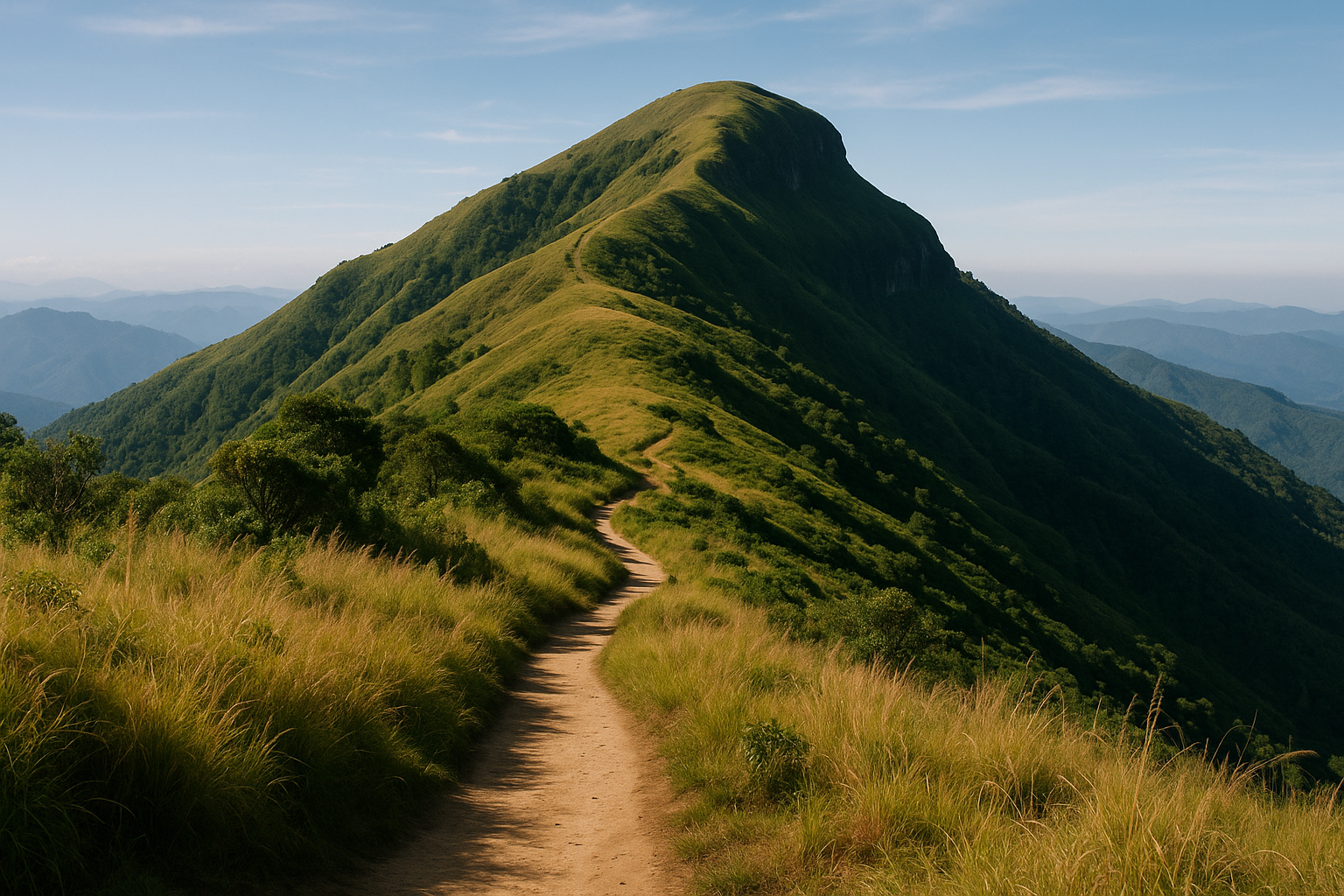
#Phawngpui (locals say it more like Faang-pui or Fongpui) is in southern Mizoram, near the Myanmar border, inside Phawngpui National Park in Lawngtlai district. At 2,157 meters, it’s the highest peak in Mizoram. The name literally means “Blue Mountain” because the slopes look blue from a distance, especially when clouds play around the ridges. Looks like somebody painted the mountain with a soft blue filter.
It’s famous for a couple of things:
- rolling grasslands instead of just thick forest at the top
- rare birds (big hit with birders, I met 3 guys with lenses bigger than my future)
- orchids and rhododendrons in season
- and these cliff faces and valleys that just drop off suddenly and make you go, “okay if I slip here, that’s it, full stop”
Also, the mountain has cultural and spiritual significance for Mizo people. There are a bunch of legends about spirits and a “ghost queen” and all that. You’ll hear different versions depending on who you talk to. One elderly uncle we met at Sangau village told us stories in a mix of English and Mizo while we sipped black tea and ate biscuits. Didn’t understand 100%, but felt the emotion, you know?
How I Actually Got There (Aizawl → Lawngtlai → Sangau → Phawngpui)
#Reaching Phawngpui is honestly half the adventure. If you’re expecting super-smooth tourist infrastructure with signboards every 2 km, nope. This is still relatively offbeat, which is exactly why it feels special. But you do need to plan a bit.
My route looked like this:
Aizawl → Lawngtlai → Sangau → Trek to Phawngpui
Here’s how it played out in real life:
- Flight to Aizawl: I flew into Lengpui Airport (Aizawl) from Guwahati. Now there are fairly regular flights from Kolkata too, and sometimes from Delhi via Guwahati. Prices keep fluctuating but expect 5–10k one way if you time it decently.
- Aizawl to Lawngtlai: I took a shared Sumo from Aizawl. These start early morning (around 5–6 am types) from the main taxi stands. It’s about 8–10 hours depending on the road conditions. Roads are mostly hilly, some patches quite rough, but overall manageable. Cost was around ₹700–900 per seat in a shared vehicle.
- Lawngtlai to Sangau: From Lawngtlai town, we got another shared Sumo/Maxx towards Sangau. This stretch felt more remote. The ride was bumpy but the views just kept getting better and more raw. Budget around ₹300–500 per person.
- Sangau to Phawngpui trek start point: From Sangau, the actual trek starts after you cross the forest check post and drive up to the base point (depending on vehicle and current rule, sometimes vehicles go only upto a certain point). We hired a local jeep plus a guide from Sangau. This part is crucial – doesn’t matter how many YouTube videos you’ve watched, just take a local guide.
Transport things keep changing – some days roads get blocked temporarily due to landslides, sometimes timings shift – so it’s better to confirm from your stay in Aizawl or Lawngtlai a day before. Also, keep buffer time, especially if you’re traveling in monsoon or immediately after heavy rains.
Is It Safe & Any Recent Updates?
#Overall, I felt Phawngpui side is quite safe, both in terms of people and general conditions, esp for Indian travelers. Mizoram has a strong community vibe and people are polite, helpful, and mostly mind their own business. But a few things to keep in mind:
- Always check weather forecast before finalising the trek dates. Heavy rain can make trails slippery and also disturb transport.
- At the time I went, local forest authorities were strict about fire, plastic and camping rules. There’s been increasing focus on keeping the national park clean and reducing random campfires because of forest fire risks.
- Mobile network is patchy at best once you leave the main towns. Jio and Airtel worked in bits and pieces, but don’t depend on it.
- Border area sensitivity: You’re quite close to Myanmar, so follow local rules, stick to marked trails, carry ID proof.
- Women travelers: I met a couple of solo female travelers in Aizawl and one small group of girls on the way to Lawngtlai. The general feedback I heard (and felt) is that Mizoram is comparatively safer than many other regions, but as usual common-sense precautions apply.
Post pandemic, domestic tourism in the Northeast has gone up a lot. Places like Aizawl and nearby viewpoints get more traffic on weekends and holidays, but Phawngpui still isn’t crowded like, say, Triund or Kedarkantha. On our trek we saw just two other small groups in two days, that’s it. That might change gradually as more reels go viral but right now it’s still peaceful and raw.
Best Time to Trek Phawngpui (And When You Should Just Stay Home)
#If you ask 5 people you’ll get 7 opinions but roughly this is how it works:
✔ October to April – Best overall. Clearer skies, cooler temperatures, better visibility. We went in November and got that perfect golden-sun-meets-chilly-breeze kind of weather.
✔ Late Feb to April – Superb for flowers, orchids, and rhododendrons in bloom. The landscape gets this soft, colourful vibe.
⚠ May to early June – Can be hot & humid in lower regions, plus pre-monsoon showers.
❌ Peak Monsoon (June to Sept) – I honestly wouldn’t recommend trekking then. Leeches, slippery trails, possible landslides, and almost zero views because of thick clouds. Some years the forest department itself discourages or restricts trekking depending on conditions.
Nights on the mountain can get quite cold even in so-called ‘pleasant’ months. On the top it felt easily like 5–8°C at night with wind. So carry layers, not just Instagram-friendly hoodies.
How Difficult Is the Phawngpui Trek Really?
#Let me be honest, this is not Everest Base Camp but it’s also not a casual flip-flop walk. I’d call it easy-to-moderate if you’re used to hill walking, and moderate if you’re totally new to trekking.
Most people do it as a 2D/1N or 3D/2N trip from Sangau:
- Day 1: Drive from Sangau to base, trek up to the campsite near the top
- Day 2: Explore summit, viewpoints, return to Sangau (or stay one more night)
The trail is mostly gentle gradients and rolling grassland near the top, not very steep. But:
- the distance is decent
- sun exposure in open sections can be tiring
- altitude is not extreme, but you’ll still feel it if you rush
If you can comfortably walk 10–12 km in a day on mixed terrain, you should manage fine. My friend who doesn’t exercise regularly was huffing and puffing, but still finished. With enough chai breaks.
Permits, Guides & National Park Rules
#Because Phawngpui is inside a national park, you can’t just land up and walk in like it’s a city park. There are some rules, which is good, because it’s keeping the place from turning into a trash heap.
What we had to do:
- Register at the forest check post near Sangau
- Pay entry fees for Phawngpui National Park (rates can change, but for Indian travelers it was quite reasonable, like a few hundred rupees)
- Guide charges: locally fixed per day, depending on route and group size
- If camping, we also paid a small camping fee
We arranged it via a local contact in Sangau a day before the trek. Nowadays, some Aizawl-based tour operators and homestays also help arrange Phawngpui packages including permits, transport, camping gear etc. If you’re not the “I will figure it all alone” type, that might be less headache.
Forest department rules we were told:
- No random campfires
- Don’t litter or leave plastic (they actually check sometimes when you exit)
- Stick to trails, don’t disturb wildlife
- No loud music, drones can be restricted or need special permission
Honestly, these are very basic and we should all be following this anyway. It’s not a party place. It’s a sacred mountain for locals and a fragile ecosystem.
My Actual Trek Experience: From Cloud-Bathing to Wild Horses
#We started from Sangau after an early breakfast – boiled eggs, bread, tea, and a quick prayer from our homestay aunty who literally said, “Mountain kindly be good to them.” That hit different.
The drive till the trailhead already set the mood. Rolling hills everywhere, small villages, and then slowly forest taking over. There’s this moment when your phone network goes and the only thing left is trees, wind and your own heavy breathing.
The first part of the trek is under tree cover. Birds calling, light filtering through, that soft crunch of leaves under your shoes. Our guide, Lalchhunga, kept casually pointing – “hornbill sometimes there”, “bear sometimes there” – in the most chill way. I was like bhai, bear?? But he said sightings are rare and they mostly avoid humans.
After a while, the forest opens up and you start walking on these beautiful rolling grasslands with short shrubs. This part is unreal. The views just keep expanding. Clouds move so fast; one minute everything’s white, next minute the whole valley below appears like somebody pulled a curtain.
At one stretch, we actually saw a small group of wild horses grazing at a distance. Proper movie scene types. Our guide told us they roam around the plateau area and are kind of semi-wild, sometimes associated with local herders historically but now just living free. We just stood there quietly for 10 minutes watching them. No drone, no reels, just staring like idiots and grinning.
The final approach towards the campsite near the summit was windy as hell. I had to tighten my cap or it would’ve gone straight to Myanmar. We reached by late afternoon, pitched tents with the help of our guide, and just sat there with flasks of tea watching the clouds dip and rise below us. That feeling when the sky slowly turns orange and you realise you are above a sea of clouds… I don’t know how to describe it without sounding cheesy. But ya, it hits you.
Sunrise on the Blue Mountain
#Night was cold but manageable with layers and a decent sleeping bag. The wind kept trying to fold our tent but thankfully it survived. Around 4:30–5 am, our guide woke us up for sunrise. Half of me wanted to throw a shoe at him, half of me was excited. We walked a short distance to the viewpoint area near the top.
And honestly… that sunrise alone made the entire journey worth it. The horizon slowly turned pink and gold. Clouds started glowing. Blue ridges of surrounding hills were just stacked one behind another, fading into the distance. My friend who usually never shuts up actually sat silently for once. That’s the review.
We walked along the ridge after sunrise, going towards different viewpoints, including some places where the cliffs just drop straight down. If you’re scared of heights you might feel a little funny in the stomach, but the views from those edges are insane. Please be careful though. No over-smart selfies.
Standing on that ridge, with the wind blowing so hard I could barely hear my own thoughts, I realised this is exactly why I travel – to feel small, but in a good way.
Accommodation: Where I Stayed & What You Can Expect
#There are no fancy resorts on the top of Phawngpui (thank god). You either camp or do a long day hike depending on your fitness and plan. Most people use Sangau as the base, some stay at Lawngtlai and make a more rushed trip. I’d suggest staying closer.
In Sangau / Around the Base
Expect:
- Simple homestays and basic guesthouses
- Rooms with bed, blanket, and very basic amenities
- Shared or attached bathrooms depending on place
- Food is mostly home-cooked: rice, dal, veggies, fish, pork, boiled eggs, tea
Price range (approx):
- ₹800–1500 per night per room in villages / small towns
- Slightly more in better guesthouses with attached bathrooms
On the Mountain (Camping)
You can either:
- Carry your own tent, sleeping bag, mat, etc
- Or arrange through guide / operator (which is what we did)
Our package from Sangau for guide + camping gear + food on the mountain came to around ₹2000–3000 per person for 2 days, because we were a small group and costs were split. This included:
- Tents
- Sleeping bags
- Simple meals (rice, dal, sabzi, noodles, tea, biscuits)
- Guide fees
Don’t expect luxury here. It’s more of ‘eat to fill stomach and stay warm’ vibe than ‘Instagram camping aesthetic’.
Food: What I Ate & What You Should Definetly Try
#Mizo food is underrated. Period. It’s simple, less oily, and full of local vegetables. If you’re used to heavy masala, the flavours might feel mild at first, but after 2–3 days your body feels oddly clean.
Around Aizawl, Lawngtlai and the villages, look out for:
- Bai – A kind of vegetable stew with steamed veggies, sometimes with meat or fermented mustard, eaten with rice. Every house makes it a bit differently.
- Sawhchiar – Rice cooked with meat (often chicken or pork) like a comforting one-pot dish.
- Smoked pork – If you eat non-veg, don’t miss this. Smoked, slightly chewy, very flavourful.
- Local chutneys – Spicy chutneys with chilli, fermented beans, bamboo shoot etc. They will clear your sinuses happily.
- Fresh vegetables – Squash, leafy greens, bamboo shoots. Very homely food.
Tea is everywhere, of course. Sometimes black, sometimes with milk, always welcome.
On the mountain, we mostly had:
- Instant noodles
- Boiled eggs
- Rice + dal
- Tea and biscuits
Carry your own snacks – dry fruits, peanuts, energy bars, maybe some chocolate. But whatever trash you carry, please take it back out with you. Don’t do that thing where people leave wrappers under rocks, it’s just disgusting.
Budget Breakdown: Rough Costs for Phawngpui Trek
#Obviously depends on where you’re coming from and how fancy you want to be, but to give you a ballpark for an Indian backpacker-ish style trip of 4–5 days covering Aizawl + Phawngpui:
- Flights (return, metro city → Aizawl): ₹10,000–18,000 (very variable based on offers)
- Aizawl stay: ₹800–2000 per night (budget to mid-range)
- Shared Sumo transport (Aizawl ↔ Lawngtlai/Sangau + local): around ₹2000–3000 total
- Phawngpui trek (guide, permits, camping, basic food): ₹2000–4000 per person depending on group size and operator
- Food & misc over 4–5 days: ₹1500–3000
So a rough budget could be anywhere between ₹18,000 to ₹30,000 for the whole trip if you plan sensibly and don’t go ultra-luxury. You can do it for less if you’re from nearby NE states or catch cheap flight deals.
What I Wish I Knew Before Going
#Every trip teaches you something new, mostly after you’ve already made the mistake. For Phawngpui, here’s what I’d tell my past self:
- Pack for wind, not just cold – The wind up there is no joke. Windcheater / windproof jacket is a must.
- Good shoes matter – Trail running shoes or trekking shoes with grip. One guy in our group wore old sneakers and was sliding half the time.
- Powerbank – No charging point at the campsite (obviously). If you’re trigger-happy with your camera, carry at least one powerbank.
- Start early – Both for the drive and trek. In the hills, plans after 2 pm are just theoretical.
- No network = inform family beforehand – Don’t freak out your parents / partner. Just tell them there might be 1–2 days with no signal.
- Cash – Digital payments are growing but still carry enough cash for villages, sumos, and forest fees.
Local Culture & Simple Etiquette (Very Important If You Don’t Want To Be “That Tourist”)
#Mizoram is very community-oriented and also quite conservative in some ways. People are modern and educated, but still rooted. A few simple things I followed, based on what friends and locals told me:
- Dress decently, especially in villages and churches. No one’s policing you heavily or anything, but it’s just respectful.
- Don’t drink openly or create noise late at night in local areas. Alcohol is available but low-key.
- Ask before taking photos of people, homes, or religious places.
- Sundays are important – many things shut or slow down because of church.
- Learn a few words – a simple “Ka lawm e” (thank you) goes a long way.
People really opened up once they realised we aren’t just there for a quick reel and run away. We ended up chatting with a local teacher in Sangau for an hour about how tourism is slowly growing and how they’re worried about litter and irresponsible visitors. That conversation made me look at my own habits also.
Lesser-Known Things Around Phawngpui Side
#Most people just go up, trek, come back. But if you have a bit more time, there are a few interesting things around southern Mizoram and along the route:
- Small village walks near Sangau – Just walking around, watching daily life, kids playing football, women carrying firewood, small kitchen gardens… very grounding.
- Birdwatching – If you’re into birds, this whole belt is a treat. Birding groups from India and abroad visit for specific species (like tragopans, sunbirds, etc.). Even as a casual observer I saw so many colourful ones I couldn’t name.
- Other treks and viewpoints – Locals can tell you about nearby short hikes and viewpoints that are not famous online yet. Always check with them about safety and permissions though.
Tourism in this region is still developing, and there’s a lot of conversation now about sustainable tourism, homestays, and community-run initiatives. I personally feel if more of us travel responsibly, it can actually help local economies without ruining the place.
Who Should Do the Phawngpui Blue Mountain Trek (And Who Maybe Shouldn’t)
#You’ll probably love this trek if:
- You enjoy offbeat, less-commercial places
- You don’t mind basic stays and simple food
- You’re okay with long road journeys on hilly roads
- You want more peace and views than crowds and cafes
You might struggle if:
- You only like luxury and insta-ready infrastructure
- You get motion sickness very badly on hill roads and won’t take meds
- You hate walking and expect vehicles to go till the very top
For me, it was the perfect mix of accessible but still wild. Not extremely difficult, but not fully comfort-zone either.
Final Thoughts: Would I Go Back to Phawngpui?
#Honestly, yes. And not just in a dramatic “I’ll be back” way. I really want to go again in peak flower season, with more time to just sit on the grass and do nothing. Also would love to spend extra days in villages around and learn more about local life, maybe even join some community-led birding walk.
If you’re an Indian traveler looking to move beyond the usual Himachal–Uttarakhand–Goa triangle, I’d say put Phawngpui Blue Mountain pretty high on your list. It’s still raw, still quiet, and it has that feeling of stepping into a place that actually doesn’t revolve around tourists. You are a guest there, in every sense.
Just go with respect, go prepared, and go slow. Let the mountain set the pace. It’s not something to be “done” and ticked off. It’s something to be felt, one cold sunrise and one cup of hot tea at a time.
If you want more such detailed, slightly chaotic but honest travel stories and guides from across India, I keep discovering and reading stuff on AllBlogs.in – pretty helpful when I’m planning the next escape and trying to see what other crazy places people are exploring these days.