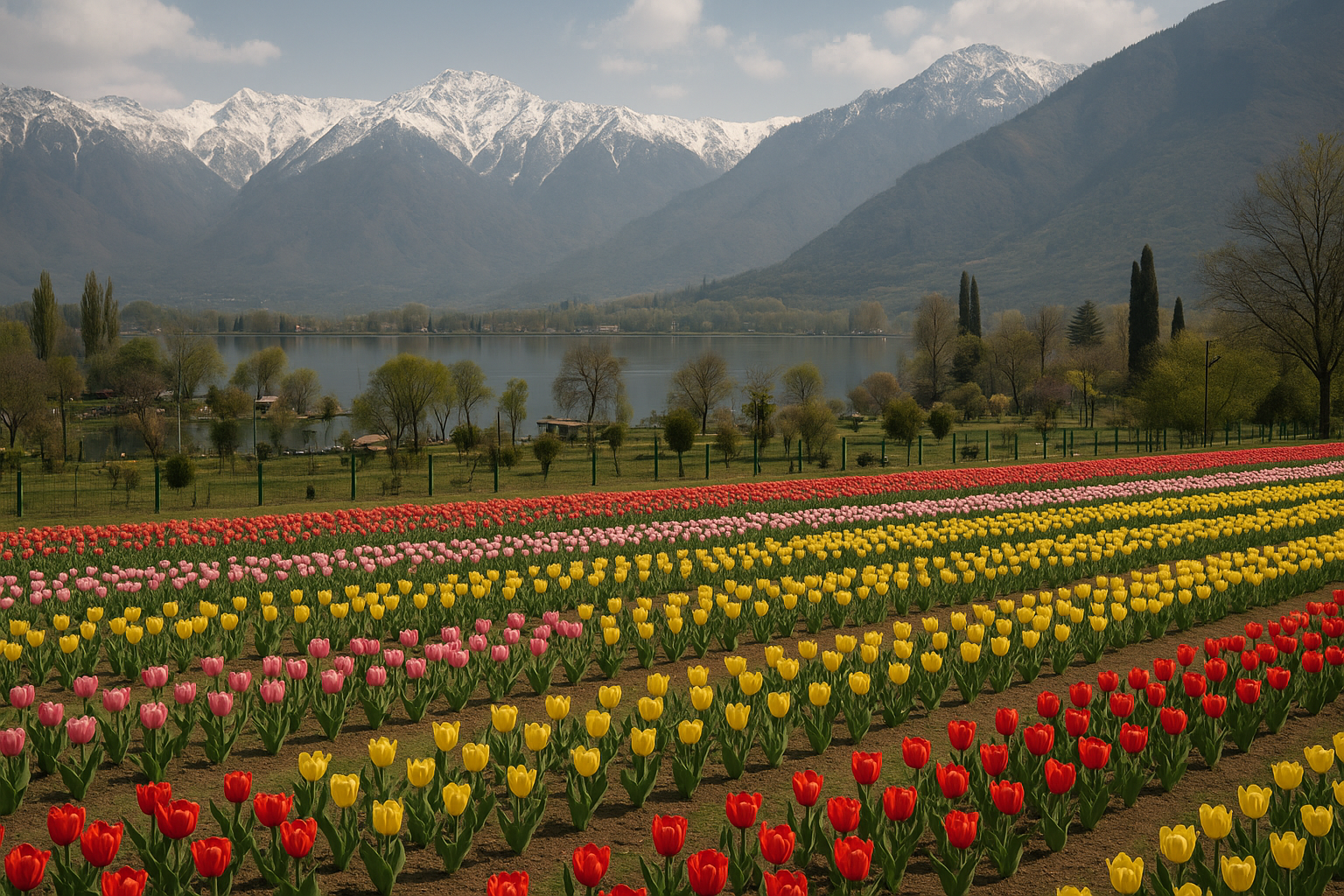
Okay so… Srinagar in tulip season is one of those things that sounds a bit “Instagram-y” till you actually land there and your brain goes quiet for a second. The air feels cold but not rude-cold, the mountains are just sitting there like they own the place (they kinda do), and then you reach the tulip garden and it’s like someone turned the saturation up in real life.
I’m writing this like a friend would tell a friend, because honestly most blogs either get too poetic or too “here is a list of 27 tips” and both can be annoying. I went as a regular Indian traveller (read: budget conscious, over-excited, slightly under-prepared) and I’m sharing what worked, what didn’t, and how you can build a Dal Lake + tulip festival plan without losing your mind.
First, what even is the Srinagar Tulip Festival (and why it gets crazy crowded)
#The festival happens at the Indira Gandhi Memorial Tulip Garden (most people still call it “Tulip Garden” only), up in Srinagar with Zabarwan hills behind it. It’s Asia’s largest tulip garden and during bloom season it’s basically Srinagar’s main character.
Why the madness? Because the bloom window is short. Like… you blink and it’s done. The garden opens for a few weeks in spring, usually late March to mid/late April, depending on weather. And every year, more people are coming in—families, couples, photography groups, aunties in matching shawls, school trips, everyone.
Small note: the government does a proper festival vibe sometimes—cultural performances, local stalls, snacks, Kashmiri handicrafts. It’s not a full-night carnival or anything, but it’s lively enough.
Tulip Festival dates (how to plan without panicking)
#So dates aren’t fixed like a national holiday. The garden opening depends on how winter behaved and when the tulips decide to show up. Most years the “best” bloom starts early April-ish. If you’re planning ahead, keep a flexible 2–3 day buffer.
What I did (and what I’d suggest):
- Pick a travel week that straddles late March/early April.
- Track updates from J&K Tourism / local Srinagar pages closer to the season.
- If you’re arriving too early, it’s okay—Srinagar is still worth it for Dal Lake mornings, Mughal gardens, and food. If you’re arriving too late, you might catch “end bloom” which is still pretty, just patchy.
I’m mentioning it once: for 2026, expect the same general window (late March to April), but please don’t book blindly for one exact day without checking closer to travel. Weather runs the show here.
Tickets: price, timing, and the small tricks that save your mood
#Ticketing is pretty straightforward at the gate. On normal days, it’s usually a small entry fee (in past seasons it’s been around the ₹50–₹100 range for adults, sometimes different for kids). There can be separate parking charges too.
Couple of real-world tips because nobody told me:
- Go early. Like reach around opening time. The light is soft, photos look better, and the crowd is… manageable.
- Weekends are chaos. If you can do a weekday, do it. Your future self will thank you.
- Keep some cash. UPI works in Srinagar in many places now, but at entry points or parking the network can act moody.
- If you’re with elders, plan breaks. The garden is on a slope. Not a trek, but not flat either.
Also: there are security checks at entry. Normal stuff. Just don’t carry silly things and you’ll be fine.
How crowded is it, really? (and what to do about it)
#Crowded enough that you’ll say “bas yaar” at least twice. Not joking.
Midday is the worst—between 11 and 3 it’s like the whole of North India decided today is picnic day. If you want calmer moments, go early morning or closer to closing time. And walk a little deeper into the garden instead of stopping at the first few rows where everyone parks themselves.
Photographers do this thing where they get low angles and block the path… so yeah, just be patient. I got mildly irritated for 5 minutes then I saw a row of bright purple tulips and forgot why I was mad.
My honest Dal Lake experience (shikara rides, prices, and the part nobody puts in reels)
#Dal Lake is not just “a lake.” It’s like a floating neighbourhood with its own tempo. You wake up and hear paddles, vendors calling out, and sometimes azaan in the distance… it’s honestly beautiful.
But. Dal Lake also has negotiation. Lots of it.
Shikara rates vary a lot by season and demand. In tulip peak time, you might be quoted ₹800–₹2000+ for a standard ride depending on duration and route (and your bargaining face). A simple 1-hour ride is common. If you want to go to Char Chinar, floating market (early morning), or deeper canals, the price climbs.
My advice:
- Decide the route + time before sitting.
- Ask your hotel/houseboat what a fair current rate is.
- Don’t be rude while bargaining. Kashmiri hosts are generally polite and warm, and honestly tourism is their bread.
And the “reels part” nobody says: Dal Lake has cleanliness issues in some stretches. It’s improving in pockets, but don’t expect crystal-clear water everywhere. Still, at sunrise with mist? It feels unreal. I didn’t expect that at all.
Where to stay: houseboat vs hotel (and what it costs these days)
#This is the big Srinagar question.
Houseboats: Super atmospheric, very “Kashmir postcard,” and waking up on the water is special. But quality varies wildly. Some are heritage-style and well maintained, some feel like they’re holding on with dua. In peak tulip season, a decent mid-range houseboat can go around ₹2500–₹6000 per night, and nicer ones go higher.
Hotels (Boulevard Road, Rajbagh, Lal Chowk side): Easier heating, more reliable bathrooms, faster check-in, and you can move around quicker. Mid-range hotels can sit around ₹3000–₹7000 in the same season, and premium properties obviously go up.
What I did: one night on a houseboat for the vibe, then shifted to a hotel so I could explore without being dependent on lake shuttles.
Tiny tip: ask about heating. Nights can still be properly cold in spring. I thought “arey March-April is fine” and then I was sleeping like a burrito.
Getting to Srinagar: flights, road trips, local transport (in a very Indian way)
#Flights are the easiest. Srinagar airport is well connected to Delhi and other major cities, but prices spike during tulip season, so book early if you can.
Road trip folks: Jammu to Srinagar is long but scenic. However, landslides and weather delays do happen. Keep buffer time.
Local transport:
- Taxis are common, but don’t expect Uber/Ola like metros. You’ll mostly rely on local taxi unions, hotel-arranged cabs, or negotiated rides.
- Shared cabs exist for certain routes.
- Auto-rickshaws are not as common like other Indian cities.
Safety/travel updates: Srinagar is generally calm for tourists during peak season, with active security presence in many areas. Still, check local advisories closer to your travel dates, avoid late-night lonely walks, and keep documents handy. And please, don’t do that thing where people start political debates with random locals. Just… don’t.
A simple 3-day itinerary: Tulip Garden + Dal Lake (not too hectic)
#If you’ve got 3 days, don’t overstuff it. Srinagar is best when you leave breathing space.
Day 1 (arrival + easy evening):
Reach, check-in, and go for a relaxed shikara ride around sunset. Walk near Boulevard Road, sip kahwa, eat something warm. Early sleep.
Day 2 (tulips + Mughal gardens):
Go to Tulip Garden right at opening. Spend 1.5–2 hours (more if you’re a photo person). After that, do Nishat Bagh and Shalimar Bagh—both nearby-ish. Finish with a late lunch and a slow evening at Lal Chowk for shopping.
Day 3 (old Srinagar + food + one “extra”):
Explore Jamia Masjid area and old city lanes in daytime. Try local bakeries. If you have energy, add Pari Mahal for views or go to Hazratbal Shrine for the calm vibe.
This plan keeps travel time low and avoids turning your trip into a checklist.
If you have 5 days: add a day trip that actually feels worth it
#With 5 days, you can breathe. And Kashmir deserves that.
Options:
- Gulmarg: If snow is still around, it’s magical. Even without heavy snow, the gondola views are insane. It’s a full day.
- Sonamarg: Beautiful valley vibes, river, open spaces. Weather can be unpredictable.
- Yusmarg: Quieter, less touristy, a bit underrated.
I personally liked Gulmarg more for that “wow I’m tiny” feeling. But if you hate crowds, Yusmarg will make you happy.
Food I ate in Srinagar (and what you should NOT miss, like seriously)
#Kashmiri food is comfort food with layers. Also, it will ruin plain chai for you because kahwa exists.
Stuff I loved:
- Kahwa: warm, saffron-ish, and makes you feel fancy even in a hoodie.
- Rogan josh / yakhni: if you eat non-veg, go for it.
- Dum aloo (Kashmiri style): different from the usual, more aromatic.
- Nadru (lotus stem): I didn’t think I’d care, but I did.
- Kashmiri bakery items: sheermal, kulcha, little cookies… you’ll keep “just one more”-ing.
Where: small local restaurants around Lal Chowk, and even houseboats sometimes serve surprisingly good meals. For Wazwan, try a reputable place (or ask your hotel) because you want the real taste, not a watered-down version for tourists.
Also drink water smartly. Carry a bottle, buy sealed water, basic India travel rule yaar.
Shopping: what’s worth buying and what’s kinda overpriced
#You will be tempted by everything. Carpets, pashmina, papier-mâché boxes, walnut wood stuff, saffron, dry fruits.
My honest take:
- If you don’t know how to judge “real pashmina,” be careful. A lot of shops sell blends and still call it pashmina. Ask questions, check feel, don’t get pressured.
- Papier-mâché is a safer buy and looks lovely.
- Dry fruits are great, but compare prices. Sometimes touristy spots quote high.
Lal Chowk and nearby markets are good. So is the area around Residency Road. If a shopkeeper offers you tea, take it, chat a bit, then negotiate calmly. The aggressive bargaining style doesn’t suit the vibe here.
Weather + packing: what I got wrong (so you don’t)
#I under-packed warm layers. Big mistake.
Even when days are sunny, evenings get chilly. Pack:
- A proper jacket (not just a hoodie)
- Thermals if you feel cold easily
- Comfortable shoes (garden has slopes, city has walks)
- Sunglasses + sunscreen (mountain sun hits different)
Also, spring rain can randomly show up. A small umbrella or light raincoat is useful. And if you’re taking photos, carry a lens cloth. Mist + drizzle = foggy lens = frustration.
Little etiquette things (so you don’t look like that tourist)
#Srinagar is welcoming, but it’s also culturally conservative in parts. Basic respect goes a long way.
A few simple things:
- Dress modest-ish, especially in old city and near religious sites.
- Ask before photographing people, specially women and kids.
- Don’t litter. Please. The place is already dealing with enough.
- Keep buffer time because security checks and traffic can slow things down.
And be kind. I know it sounds cheesy, but you’ll recieve kindness back. (Yes, I spelled that wrong, don’t kill me.)
Budget snapshot (rough, but helps you plan)
#Everyone’s budget is different, but here’s a realistic range for a tulip-season Srinagar trip:
- Stay: ₹2500–₹7000 per night (mid-range), more for premium
- Meals: ₹300–₹800 per person per day if you’re normal, higher if you go fancy
- Local taxi/day: can be ₹1500–₹3500 depending on places and season
- Tulip Garden entry: small fee (usually under ₹150)
- Shikara: ₹800–₹2000+ depending on negotiation and duration
If you’re travelling with family, costs can actually get efficient because taxis and rooms get split. Solo can feel more expensive, unless you’re really good at finding shared options.
Quick reality check on connectivity, ATMs, and digital payments
#Mobile networks work in Srinagar, but some areas get patchy, specially around lakeside corners or during heavy crowd times. Keep offline maps downloaded.
UPI works in many shops now (tea stalls too sometimes), but don’t bet your whole life on it. Carry some cash. ATMs exist, but I’ve seen them run out of cash in peak season. So yeah, be slightly prepared, not paranoid.
The one moment that made the whole trip feel… personal
#This isn’t a movie scene, but it stayed with me.
One early morning, I took a shikara when the lake was still half-asleep. A vendor passed by selling flowers, another had hot noon chai in a kettle, and the boatman just casually started talking about his kids’ school and the way winters have been changing. No drama, no “tourist pitch,” just real life floating along.
And then later that day, I was in the Tulip Garden with a thousand people around me, yet when the wind moved through the rows of flowers, it felt quiet for a second. Like the place gave you a small pause. That’s what Srinagar does. It’s chaotic and calm in the same breath.
Final thoughts (and a couple last-minute tips)
#If you’re thinking about doing the Srinagar Tulip Festival, do it. Don’t overthink it to death. Just plan the basics, keep your schedule light, and let the city surprise you a little.
Last-minute tips I’d text a friend:
- Weekday tulip visit > weekend tulip visit, anyday.
- Stay warm, carry cash, start mornings early.
- Do one slow Dal Lake ride without rushing to “points.”
- Eat kahwa at least twice. You’ll crave it later.
And yeah, if you like travel stories like this (messy, honest, useful), I keep finding nice reads on AllBlogs.in too. Worth a scroll when you’re planning your next trip.