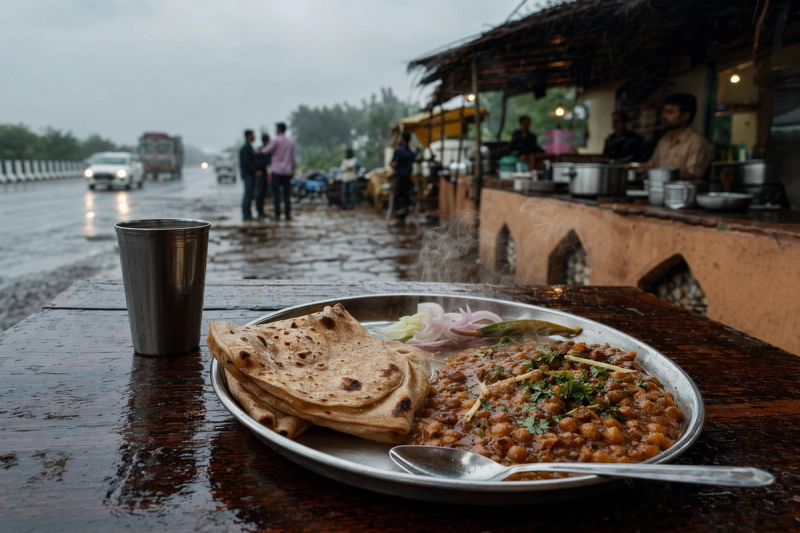
Rain makes Indian highways smell like wet earth, diesel, frying pakoras, and danger. I mean that in the most loving way possible. I’ve done enough monsoon drives now, from Delhi to Amritsar, Mumbai to Pune, Bengaluru to Mysuru, and that long, stomach-testing run toward Rajasthan, to know that a rainy-day dhaba stop can be either the best meal of your trip or the reason you spend the next 36 hours regretting your life choices.
And I love dhabas. Really love them. The steel tumblers of chai, the butter floating shamelessly on dal, the tandoori rotis arriving with those charred blisters, the truck drivers eating quietly like they’ve known the secret spots forever. But rain changes everything. Floors get slushy, water tanks get dodgy, flies disappear but dampness comes in like it owns the place, and suddenly that gorgeous plate of aloo paratha needs a little more inspection than usual.
The Monsoon Highway Food Mood in 2026 Feels Different
#Highway eating in India has changed a lot. Even compared to a few years ago. In 2026, food travellers are doing this funny mix of old-school and super modern. We still want dhaba dal and chai in kulhads, but we also check Google reviews in the parking lot, pay by UPI, scan QR menus, ask if the water is RO, and judge a place by the toilet before ordering lunch. Honestly, that last one is not fancy behaviour, it’s survival.
You’ll notice more highway food plazas now with EV charging stations, cleaner washrooms, branded counters, regional thali stalls, millet snacks, and packaged meal options for families who are nervous about roadside food. But at the same time, the best food is still often at that slightly chaotic dhaba where the tandoor guy has forearms like a wrestler and the cook has been making kadhi since before you were born. So the trick is not avoiding dhabas. The trick is learning how to read them, especially when it’s raining.
My personal rule is simple: never trust a dhaba just because it is crowded, but never ignore a crowded dhaba either. You have to look closer.
My Wake-Up Call Near Karnal, With Chai and One Very Suspicious Onion
#A few monsoons ago, me and two friends were driving toward Himachal. It had been raining since Panipat, the kind of steady rain that makes wipers feel useless. We stopped at a dhaba near Karnal because the parking lot was packed with trucks, buses, SUVs, everyone. I thought, great, high turnover, safe bet. I ordered chai, bread pakora, and an onion paratha because apparently I have no self-control when I’m cold.
The chai was brilliant. Proper strong, ginger-heavy, sweet enough to make a dentist sigh. But then I noticed the sliced onions were sitting uncovered near the serving counter, getting misted by rainwater blowing in from the side. One guy picked them up with wet hands, dropped them on plates, wiped his hand on the same towel he used for the table. That was my little horror movie moment. I still ate the paratha, because I’m weak, but I skipped the onions. Best decision of that day, probably.
Since then, my rainy-day dhaba routine has become a whole thing. My friends tease me for it. But guess who doesn’t get sick on road trips anymore? Mostly me. Mostly.
First Look: The Parking Lot Tells You More Than the Menu
#Before I even think about butter chicken or rajma chawal, I look at the outside. In rain, the dhaba’s surroundings are like an honesty test. Is rainwater pooling near the kitchen entrance? Are staff walking through mud and then straight into the cooking area? Is the garbage bin overflowing and leaking into the path where food is carried? These things matter more than Instagrammable neon signs saying Punjabi Tadka or Highway King or whatever.
A good rainy-day dhaba usually has some kind of raised cooking or serving area. Not always fancy tiles, but at least dry flooring where food is handled. The best ones I’ve seen on the Delhi-Amritsar route and around Murthal have separate wet and dry zones, covered counters, decent drainage, and staff who keep wiping tables with reasonably clean cloths. Reasonably, because let’s not pretend highway dining is a hospital ward.
- If water is flowing from the toilet side toward the eating area, I leave. No debate.
- If raw vegetables are kept on the floor in crates sitting in rainwater, I don’t order salad or anything with fresh garnish.
- If the tandoor, tava, and chai station are hot and busy, that’s usually better than cold snacks lying around.
- If the place smells sour, damp, or like old mop water, my appetite packs its bags.
The Toilet Test, Sorry But We Need to Talk About It
#People get shy about this, but the washroom is the biggest clue. I don’t need marble sinks and scented candles. I just want running water, soap, a working flush, and a floor that isn’t a swamp. If a dhaba can’t keep the handwash area functional during rain, I start doubting the kitchen too. Not always fair, but often true.
In 2026, I’m seeing more travellers choose stops based on toilets first, food second. Families on the Mumbai-Pune Expressway, bikers on the Bengaluru-Coorg route, even solo women travellers I’ve met on the Jaipur highway, everyone talks about safe clean stops now. Food apps and map reviews are full of washroom comments, which is honestly one of the best travel trends ever. Forget foam latte art, tell me if there is soap.
One small thing I do: I wash my hands before ordering, not after the food arrives. That way I can see the handwash setup early. If there’s no soap, I use my sanitizer and order only hot cooked food. If even the water looks questionable, I keep moving. Harsh? Maybe. But food poisoning on a highway is not character building, it’s just awful.
What to Order When It’s Raining, and What I Avoid Like a Cow in the Fast Lane
#Rainy dhaba food has its own logic. Hot, fresh, high-heat items are your friends. Stuff that has been chopped, cooled, stored, reheated, or sitting uncovered is where trouble sneaks in. This is why I become a boring person in the monsoon and order the same safe-ish things again and again, though they’re not boring when done well.
- Tandoori roti, naan, paratha straight from the tava, dal tadka, dal fry, chana, rajma, kadhi, egg bhurji, omelette, fresh pakoras, and chai made in front of you are usually good bets.
- I avoid cut fruit, raw onion salad, chutneys that look watery, raita sitting out, pre-made sandwiches, cold rice, and anything cream-heavy if the fridge situation looks doubtful.
- Chicken and mutton can be amazing at highway dhabas, but I only order them at places with very high turnover. If the curry looks like it’s been waiting since morning, no thanks.
- Lassi in rain is tempting, especially in Punjab and Haryana, but I ask if it’s freshly churned and chilled properly. If they point vaguely toward a bucket, I suddenly become a tea person.
My favourite rainy order is still aloo paratha with white butter and hot chai. On the Delhi-Chandigarh highway, that combination just hits different. But I skip the green chutney unless it’s being made fresh or comes from a clean covered container. I know, chutney is half the joy. But monsoon chutney can be risky, especially coriander and mint chutney that’s been diluted with water and left out.
The Chai Counter Is the Soul, and Also a Hygiene Clue
#I judge a dhaba by its chai counter more than I should. If the milk is boiling properly, the glasses are being washed in running water, the counter isn’t crawling with old sugar sludge, and the chaiwala seems alert, I relax a little. Chai is such a highway ritual that busy dhabas keep it moving, which helps. Constant boiling is your friend here.
On a rainy evening outside Lonavala, I once had masala chai with vada pav at a roadside place that looked very average from outside. The rain was bouncing off the blue tarp roof, bikes were lined up like wet dogs, and the cook was frying vadas in small batches instead of dumping old ones back into oil. That fresh batch detail matters. The vada was crisp, the garlic chutney was fierce, and I still remember standing there with steam fogging my glasses. Not every hygienic place looks polished. Some just work clean because the owner actually cares.
Oil, Steam, and the Smell Test
#Old frying oil has a smell. Once you recognise it, you can’t unknow it. It’s heavy, bitter, almost paint-like. During monsoon, when humidity traps smells, bad oil becomes even more obvious. If pakoras or samosas are dark brown too quickly or taste greasy in that tired way, I stop after one bite. Yes, wasting food feels bad, but ruining your stomach feels worse.
Steam is a happier sign. A pot of dal bubbling away, rice being freshly opened, rotis puffing on flame, chai rolling in a steel pan. These are the sights I trust. Not blindly, obviously, but more than trays of food sitting under weak bulbs. In South India, on the Bengaluru-Mysuru road, I love ordering hot idli, dosa, pongal, or filter coffee at busy highway restaurants because the turnover is fast and the food is generally eaten fresh. But even there, wet chutney and sambar handling matters. I always look for covered vessels and clean ladles.
Regional Highway Eating, With My Very Biased Opinions
#North Indian highway dhabas are dramatic in the best way. Butter, smoke, big plates, loud counters, pickles, parathas that need both hands. The Murthal belt is famous for a reason, though it has become more commercial over the years. Places like Amrik Sukhdev and Mannat Haveli are popular with families because they combine dhaba-style food with more organised facilities, which is useful in rain. I still like smaller places too, but I inspect harder.
In Maharashtra, rainy highway food has a completely different romance. Vada pav, misal, kanda bhaji, cutting chai. Around Lonavala and on the old Mumbai-Pune road, the monsoon snack culture is basically a sport. But again, eat what’s hot. Fresh bhaji from the kadhai? Yes. Chutney sitting open beside puddles? Hmm, not today.
Down south, highway food often feels more breakfast-friendly. Dosa counters, idli steamers, lemon rice, curd rice, meals served on banana leaves in some places. On the Chennai-Pondy ECR side, seafood becomes tempting, but I’m extra careful in rain. Fish fry at a busy, trusted place can be superb. Random prawn curry at an empty shack during a power cut? I’m not that brave anymore.
Rajasthan and Gujarat routes bring another style: kachori, poha, sev tamatar, dal baati, thepla, farsan, kadhi, sweet chai. Dry snacks travel better in rain, so I often keep thepla or roasted makhana in the car as backup. Food travel in 2026 is also seeing this big return of regional snacks and millet-based bites, partly because travellers want lighter food and partly because every second person is pretending to be healthy while ordering extra jalebi. Me included.
The 2026 Tech Stuff That Actually Helps on Food Road Trips
#I’m not a gadget person, but some modern travel habits are genuinely useful. UPI means you’re not handling wet cash before eating, which is nice. Map reviews help, especially recent photos from other travellers. I look for reviews from the last few weeks during monsoon, not old winter reviews where everything looked sunny and dry. QR menus can reduce sticky laminated-menu drama, though sometimes the network disappears and then everyone just yells for the waiter anyway.
Another trend I like is highway stops adding EV chargers and cleaner lounge-style areas. This is changing food choices too. People wait 30 to 45 minutes while charging, so they want proper meals, better coffee, clean toilets, maybe packaged regional snacks to carry. Some places are leaning into local food experiences instead of generic noodles and fries. That’s good for travellers, and honestly good for India’s food identity. Give me a proper poha counter or litti chokha stall over sad reheated pizza any day.
Still, don’t let branding hypnotise you. A shiny food court can have careless food handling, and a humble dhaba can be spotless where it counts. Use your eyes. Use your nose. Watch how the staff moves. It sounds dramatic, but after enough road trips you develop a sixth sense.
My Rainy-Day Dhaba Hygiene Checklist, Not Fancy But It Works
#Okay, if you want the practical bit without my endless food emotions, this is my quick scan. I do it in maybe three minutes. First, I check the crowd. Not just how many people, but who. Truck drivers, families, local cars, bus groups. Mixed crowd is usually a decent sign. Then I check turnover. Are rotis flying out? Is dal being refilled? Is chai boiling fresh? If yes, good.
- Look for dry food prep areas, covered ingredients, and staff using separate cloths for tables and utensils.
- Check if drinking water is sealed bottled water or a clearly maintained RO dispenser. In rain, I prefer sealed bottles.
- Avoid raw salad unless you really trust the place. This includes onions, cucumber, lemon wedges, and those innocent looking green chillies.
- Ask for food to be served hot. Not warm. Hot.
- Carry sanitizer, tissues, ORS sachets, and a small trash bag in the car. Not glamorous, very useful.
- If you’re travelling with kids or older parents, choose places with proper toilets over legendary taste. I know that hurts, but comfort matters.
One more thing: don’t be embarrassed to ask questions. I ask, “Bhaiya, fresh hai?” all the time. Sometimes they laugh. Sometimes they say yes too quickly, which is suspicious. But often they’ll guide you to what’s actually fresh. Once near Jaipur, a waiter quietly told me not to order paneer pakora because it was from the morning, and instead gave us hot mirchi vada. That man saved the trip.
What I Pack Now Before a Monsoon Highway Drive
#Food safety starts before the dhaba, actually. My car snack bag has become slightly auntie-like, and I’m proud of it. Water bottles, roasted chana, peanuts, thepla if someone at home loves me that week, bananas, ORS, ginger candy, wet wipes, sanitizer, and one small steel spoon because I hate flimsy plastic spoons that bend into hot dal.
I also carry a thermos sometimes, but I still stop for chai because road-trip chai is emotional support. The backup snacks are not to avoid dhabas, they’re to avoid bad decisions. When you’re starving in rain, every place looks acceptable. When you’ve eaten a banana and some peanuts, you can think like an adult.
Food Poisoning Is Not a Travel Story You Need
#I’ve had one bad stomach episode on a highway, years ago near a hill route, and it taught me humility. We had eaten cold curd rice from a place where power had been out, and I ignored the little voice in my head because I was hungry and it tasted fine. Famous last words. The next day was just ORS, regret, and me lying in a guesthouse listening to rain like it was mocking me.
If something tastes off, stop eating. Don’t try to be polite. Don’t think, “maybe it’s supposed to taste like this.” Fresh food has a liveliness to it. Spoiled dairy, old meat, sour dal, stale chutney, they all announce themselves if you’re paying attention. And if you do fall sick, hydrate early, use ORS, eat light, and get medical help if symptoms are bad or last too long. Road trips are supposed to be memories, not medical case studies.
The Joy Is Still Worth It
#After all this warning, you might think I’m scared of dhabas. I’m not. I’m obsessed with them. Some of my best travel memories are rainy dhaba stops: tearing hot paratha with cold fingers near Ambala, eating dal baati under a tin roof in Rajasthan while peacocks screamed somewhere behind the fields, sipping filter coffee on a wet Karnataka morning, sharing pakoras with strangers because our cars were stuck behind a waterlogged patch.
Dhabas are not just food stops. They’re weather shelters, gossip centres, unofficial travel help desks, nap zones, charging stations, and sometimes the only warm thing on a miserable road. They show you the region better than many tourist restaurants do. The pickle changes, the bread changes, the tea changes, the language on the signboard changes. That’s why I keep stopping.
But love should not make us careless. The best food travellers I know are curious and cautious at the same time. They’ll try the local speciality, but they’ll also check if the chutney is covered. They’ll eat at a roadside shack, but they’ll watch the oil. They’ll ask the driver where he eats, but they’ll still inspect the washroom. This balance is the whole game.
Final Thoughts From a Rain-Soaked, Overfed Highway Person
#A rainy-day dhaba meal on an Indian highway can be magical. Truly. The sky is grey, the trucks are rumbling, the tandoor is glowing, and someone places a steel plate in front of you with dal, roti, achar, and onions you may or may not eat depending on your risk appetite. That moment is why we travel by road instead of just flying over everything.
So stop. Eat. Talk to people. Try the local dish. Order the chai. But keep your eyes open. Choose hot food, clean hands, dry counters, covered ingredients, safe water, and toilets that don’t make you question humanity. That’s my rainy-day dhaba hygiene guide, born from too many kilometres, too many parathas, and a few mistakes I don’t want to repeat.
And if you’re planning your next food road trip, or just daydreaming about one while the rain taps on your window, have a look at AllBlogs.in. I keep finding nice travel and food reads there, the kind that make you hungry and restless in the best way.