The avocado freezer drama nobody warned me about
#I used to think freezing avocado was one of those kitchen lies people tell on the internet, like “this cauliflower tastes exactly like mashed potatoes.” No it does not, Brenda. And frozen avocado, the first time I tried it, came out looking like sad pond sludge. Brown on the edges, watery in the middle, and with that weird metallic freezer smell that makes you question every life choice that led to Tuesday lunch.
But I kept trying because I am, unfortunately, the kind of person who buys avocados in emotional quantities. If they’re on sale, I suddenly believe I’m running a tiny brunch cafe out of my kitchen. I picture avocado toast with chili crisp, green smoothies, tacos, that quick guacamole I make standing at the counter with one chip in my mouth and one hand on the lime. Then three days later, half the avocados are perfect for about six minutes, and then boom. Too soft. Stringy. Brown. Betrayal.
So yeah, I learned how to freeze avocado without browning or going watery the annoying way. By messing it up. A lot. I’ve frozen halves, cubes, mashed avocado, avocado with lime, avocado with no lime because I was lazy, avocado in jars, avocado in bags, even one tragic whole avocado that thawed like a tennis ball full of baby food. Don’t do that. We’ll talk.
First, let’s be honest about what frozen avocado can and cannot do
#Frozen avocado is not fresh avocado. I know, obvious, but it needs saying because some recipes act like you can thaw it and fan it over toast like you’re at one of those bright little breakfast places with terrazzo tables and $7 iced coffee. Maybe some people can. I cannot. When avocado freezes, the water inside forms ice crystals, and those crystals mess with the creamy structure. That’s not a flaw in your technique, it’s just food science doing food science.
What frozen avocado is amazing for: guacamole, smoothies, dressings, crema, sauces, chilled soups, sandwich spreads, baby-food-style mash if that’s your thing, and quick taco night. What it is less amazing for: pretty slices on salads, sushi rolls, grain bowls where you want clean cubes, or any situation where the avocado has to look like it just walked out of a spa.
I still freeze it. Happily. Because the flavor stays good when you protect it from air and freezer burn, and the texture is totally fine once it’s mashed or blended with lime and salt and a little attitude. Honestly, for weeknight guac? I barely care that it was frozen. Add roasted salsa, cilantro, some diced onion, maybe a spoonful of Greek yogurt if it needs rescuing... nobody at my table complains. Mostly because they are eating chips too fast to speak.
The browning problem: air is basically the villain
#Avocados brown because enzymes in the flesh react with oxygen. Same story as apples and bananas, just somehow more expensive and emotionally charged. The second you cut into an avocado, oxygen starts doing its little damage dance. Freezing slows things down, but it doesn’t magically stop browning if the avocado goes into the freezer already exposed to air, loosely wrapped, or sitting in a container with a big empty air pocket.
This is why lemon or lime juice helps. The acid slows browning and also brightens the flavor, which is good because frozen avocado can taste a little flat after thawing. I usually use lime because my brain goes straight to tacos, but lemon works too. You don’t need to drown it. Too much juice can make the avocado taste sharp and thin. For me, about 1 tablespoon of lime juice per 2 medium avocados is the sweet spot for mashed avocado. For chunks or slices, I brush or toss them lightly, like they’re getting sunscreen, not a bath.
My freezer rule for avocado: acid helps, but less air is the real magic. If there’s a big pocket of air in the bag, the lime juice is not gonna save you.
Pick the right avocados or the whole thing goes sideways
#This is where I used to mess up. I’d wait until the avocado was really soft, like perfect for guacamole right this second, and then freeze it. But very ripe avocado has already started breaking down, so after freezing and thawing it can go watery, stringy, or just weirdly loose. Not ruined exactly, but not joyful.
You want ripe but still slightly firm avocados. The kind that gives gently when you press near the stem, but doesn’t collapse like a sofa cushion. If it’s rock hard, don’t freeze it yet. It won’t ripen properly in the freezer, and thawed unripe avocado is bland and rubbery in a way I find personally offensive. If it’s overripe, use it immediately in guac, chocolate avocado pudding, or whatever emergency avocado situation your household believes in.
- Best stage: ripe, creamy, still holding its shape
- Too firm: let it ripen on the counter first
- Too soft: mash and use today, or freeze only if you’re okay with it being smoothie avocado
- Brown inside already: cut away bad spots, but don’t expect freezing to improve it, because it wont
My favorite method: mashed avocado in flat freezer bags
#If you only try one method, do this one. Mashed avocado freezes the most reliably because you can mix in citrus evenly and press it flat so it freezes fast. Fast freezing means smaller ice crystals, and smaller ice crystals usually means less watery thawed avocado. Also flat bags stack beautifully, and I get a weird amount of joy from a tidy freezer drawer. Like, look at me, I’m a functioning adult with future guacamole.
- Wash the avocado skin first. I know you’re not eating the peel, but the knife passes through it, and I don’t like dragging fridge dust into my food.
- Cut, pit, and scoop the flesh into a bowl. Remove any bruised bits if they’re bothering you.
- Add lime or lemon juice, about 1 tablespoon for every 2 medium avocados. Add a tiny pinch of salt only if you know you’ll use it for savory stuff. I usually skip salt until thawing because salt can pull moisture out a bit.
- Mash with a fork. Don’t puree it into wallpaper paste unless you want it super smooth for smoothies or sauce.
- Spoon into freezer bags in portions you’ll actually use. Half-cup portions are great for smoothies. One-cup portions are good for guac. Press the bag flat, squeeze out every rude little bubble of air, seal, and label it.
I freeze the bags flat on a baking sheet first, then stand them up like files once they’re solid. This sounds fussy, but it saves space and it means I’m not chiseling avocado bricks from the bottom of the freezer like some kind of hungry archaeologist. If you’re trying to get better about labeling and not discovering mystery green packets in six months, the system in Freezer Inventory for Beginners: Label, Date & Use Food is honestly the kind of boring-helpful thing that changes your kitchen life.
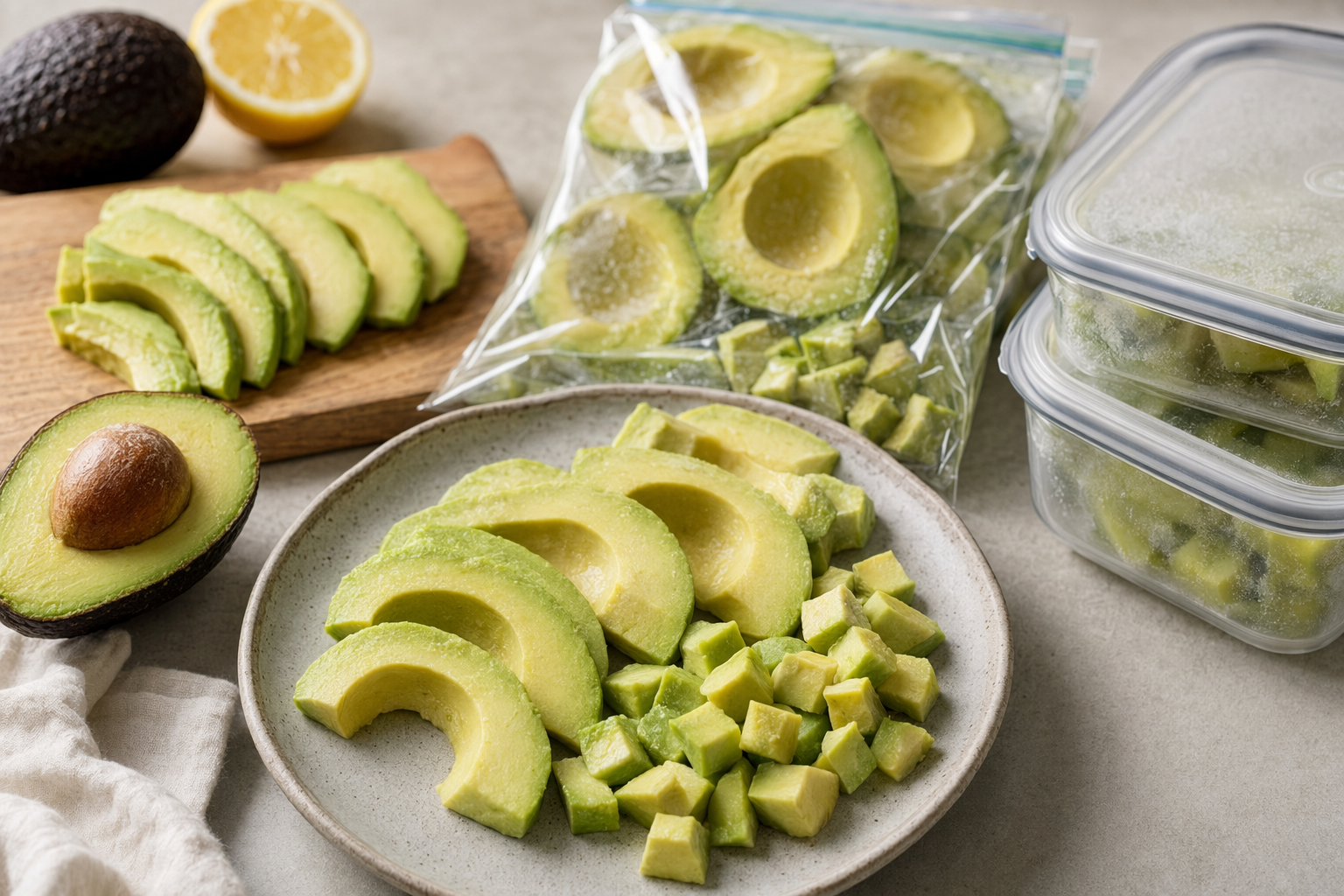
For chunks or slices, flash-freeze first or prepare for clumps
#Chunks are useful when I want avocado for smoothies or a quick taco topping. Slices are prettier, but they are also more dramatic. If you just toss avocado pieces into a bag and freeze them, they’ll stick together into one cold green boulder. Then you’ll stab it with a butter knife, which is how bad kitchen stories begin.
Here’s the better way: cut the avocado into slices or chunks, toss very gently with a little lemon or lime juice, and arrange the pieces in a single layer on a parchment-lined baking sheet. Freeze until firm, usually a couple hours. Then transfer to a freezer bag or airtight container. Again, remove as much air as possible. If you have a vacuum sealer, fantastic. If not, use the straw trick or the water-displacement trick with a zip-top bag. I do the lazy version where I close the bag almost all the way, press the air out with my forearm, and seal it while whispering please don’t brown.
Do slices thaw like fresh slices? No. I wish. They soften and sometimes slump around the edges. But for blending, mashing, or folding into salsa right before eating, they’re great. Sometimes I chop thawed slices into a chunky guac with red onion and jalapeño and you’d never know they had a freezer nap.
The watery avocado issue, and how I stopped making it worse
#Watery thawed avocado usually comes from three things: avocado that was too ripe before freezing, slow freezing in a thick lump, or thawing it in a way that lets it sit around sweating. You can’t prevent every drop of liquid, because again, ice crystals. But you can prevent that sad puddle situation.
Freeze it flat, in small portions. That is the biggest thing. A thick container of mashed avocado freezes slowly in the center, and slow freezing is where texture goes to be punished. Small flat bags freeze faster and thaw faster. I also avoid adding watery ingredients before freezing. No diced tomato, no onion, no cilantro, no salsa. Freeze avocado by itself with citrus. Add the fun stuff later, after thawing, when you can adjust texture and flavor.
And don’t microwave it unless you truly do not care. I have microwaved frozen avocado, and it came out warm on the edges, icy in the middle, and emotionally confusing. Thaw it in the fridge overnight, or put the sealed bag in a bowl of cool water for 20 to 40 minutes depending on thickness. Once it’s thawed, stir it. If there’s a little liquid, drain it off or stir it back in if it smells and tastes fine. If it’s watery and bland, add lime, salt, maybe a teaspoon of olive oil, and something punchy like minced jalapeño or garlic.
My “please don’t brown” checklist
#I have made enough freezer avocado mistakes that now I basically run through this little mental checklist. Not fancy. Just useful.
- Start with ripe but firm avocados, not mushy ones
- Add lemon or lime juice before freezing, not after
- Freeze in small portions so it freezes quickly
- Press out as much air as possible, like actually do it, don’t pretend
- Label the bag with the date because freezer time is fake time and you will forget
- Use it within about 3 to 4 months for best texture and flavor, even though frozen food kept properly frozen stays safe longer
That last bit matters. Food safety and food quality aren’t the same thing. Avocado that’s been frozen for ages might not be dangerous if it stayed frozen solid, but it can taste like freezer and feel watery. Best quality is usually in that 3 to 4 month window. Mine rarely lasts that long because I go through smoothie phases where I become convinced frozen avocado is the secret to being a calm, hydrated person. This lasts roughly nine days.
Whole avocado freezing: I tried it so you don’t have to
#People ask if you can freeze whole avocados. Technically, yes, in the sense that you can put almost anything in a freezer if you’re determined. But should you? I don’t recommend it. The peel protects it a bit, but the texture inside gets unpredictable, and you still have to thaw the whole thing before using it. Also you can’t add citrus to the flesh beforehand, so browning can happen once it’s cut after thawing.
I froze a whole avocado once because I was leaving town and couldn’t bear to waste it. When I came back, I thawed it in the fridge, cut it open, and it looked okay for about thirty seconds. Then it darkened fast, and the texture was uneven: soft near the edges, firmer near the pit area, kind of watery overall. I mashed it with lime and ate it with eggs because I am not made of money, but I would not invite guests into that experience.
Halves are a little better than whole avocados, especially if you brush the cut sides with lime juice and wrap tightly, but mashed still wins. If you freeze halves, wrap each half directly with plastic wrap or press parchment against the surface, then bag them with the air pushed out. But truly, if you already cut it open, just mash it. Your future self will thank you.
How I use frozen avocado without pretending it’s fresh
#The best frozen avocado dishes are the ones where softness is a feature, not a flaw. My favorite is lazy guacamole: thawed mashed avocado, lime, salt, chopped white onion, cilantro, and a spoonful of salsa verde. Sometimes cumin. Sometimes hot sauce. Sometimes I eat it with tortilla chips while standing at the kitchen island and call it dinner because nobody is here to stop me.
Frozen avocado is also brilliant in smoothies. It makes them creamy without making them taste like banana, which is helpful if you’re tired of every smoothie tasting like banana wearing a different hat. I blend frozen avocado with mango, lime, spinach, and coconut water. Or cocoa powder, milk, dates, and a pinch of salt for a chocolate shake situation. It doesn’t scream avocado. It just gives body.
For tacos, I thaw a small bag, stir in lime and salt, then smear it straight onto warm tortillas before adding eggs, beans, fish, roasted sweet potatoes, whatever is happening. I learned this move after eating at a tiny taco spot years ago where they put avocado salsa under the filling instead of on top, and it changed the whole bite. I can’t remember the restaurant name, which drives me nuts, but I remember the salsa. Funny how that works.
A quick avocado crema I make all the time
#Blend 1 cup thawed avocado with 1/2 cup Greek yogurt or sour cream, juice of 1 lime, a small garlic clove, salt, and enough water to make it drizzle. Add cilantro if you have it. Add pickled jalapeño brine if you’re feeling clever. This sauce saves dry chicken, boring rice bowls, roasted vegetables, and those frozen taquitos I buy and pretend are “for emergencies.” They are not emergencies. They are snacks.
Troubleshooting the sad brown bag in your freezer
#If your frozen avocado turned brown, don’t panic immediately. A little surface browning can be scraped off or stirred in if the smell is fine. Brown doesn’t automatically mean unsafe. But if it smells rancid, sour in a bad way, fermented, or freezer-burned beyond hope, let it go. Food waste hurts, but eating gross avocado out of guilt is not noble. It’s just unpleasant.
If it thawed watery, drain the extra liquid and season aggressively. Lime, salt, garlic, chile, herbs. Fat can help too, which sounds backwards because avocado is already fatty, but a teaspoon of olive oil or a spoonful of yogurt can bring back that creamy feeling. If it tastes dull, acid is your friend. If it tastes too sharp because you overdid the lemon before freezing, mash it with something rich like sour cream, tahini, or even a little mayo for a sandwich spread. I know mayo and avocado sounds like a lot, but on toast with tomato? Very good. Maybe too good.
If it has freezer burn, you’ll see dry pale patches or ice crystals and it may taste stale. That usually means air got in or it was stored too long. Next time, flatter portions, less air, better seal. I’ve learned this lesson with avocado, pesto, soup, and one bag of strawberries from 2021 that I found hiding behind peas. We don’t need to discuss her.
The tiny details that actually matter
#I don’t think freezing avocado needs to be a whole personality, but a few small details make a big difference. Use freezer bags, not thin sandwich bags. Thin bags let smells creep in, and avocado is a little sponge for freezer funk. If using containers, choose the smallest container that fits the avocado and press a piece of parchment or plastic wrap directly onto the surface before adding the lid. Less air, always less air.
Don’t add tomatoes before freezing. They get watery and weird. Don’t add raw onion before freezing unless you enjoy onion flavor taking over everything like a loud guy at a dinner party. Don’t freeze guacamole with lots of mix-ins and expect it to thaw like party dip. Plain avocado with citrus is the base. Fresh mix-ins come later. This is the hill I will gently stand on.
Also, label the portion size. Not just the date. “Avocado” is not enough when you’re holding a frosty green rectangle at 7 a.m. trying to make a smoothie. Write “1/2 cup avo, lime, Jan 12” or whatever. It feels excessive until the day it saves you from thawing a family-size guac portion for one sad wrap.
My freezer avocado method, the short version
#If you scrolled because you have three ripe avocados staring at you right now, here’s the quick version. Choose ripe-but-firm avocados. Mash with lime or lemon juice, about 1 tablespoon per 2 medium avocados. Portion into small freezer bags, press flat, remove air, seal, label, and freeze on a tray until solid. Use within 3 to 4 months for best quality. Thaw overnight in the fridge or in cool water. Stir, season, and use in guac, smoothies, crema, sauces, or spreads.
For chunks or slices, toss lightly with citrus, flash-freeze on parchment, then bag with the air pressed out. Expect softer texture after thawing. Don’t freeze whole avocados unless you’re experimenting or desperate. And honestly, I respect desperation, but I respect good guac more.
A final little avocado confession
#I used to feel weirdly guilty about freezing avocados, like I was failing some imaginary fresh-food purity test. But cooking at home is not a magazine spread. It’s Tuesday nights, forgotten groceries, overexcited market hauls, and trying to make something good from what you’ve got. Freezing avocado isn’t perfect, but it’s practical, and practical can be delicious when you know how to work with it.
Now when I see avocados ripening too fast, I don’t panic. I mash, lime, flatten, label, freeze. Future me gets creamy smoothies, quick taco sauce, and emergency guacamole. Past me gets to feel smug for once. Everybody wins, except maybe the avocado toast aesthetic, but she’ll survive.
If you’re the kind of food person who loves these little kitchen experiments, the not-glamorous-but-so-useful stuff, you’ll probably have fun poking around AllBlogs.in too. I always like finding more food ideas that feel like they came from real kitchens, with real messes, and real appetites.