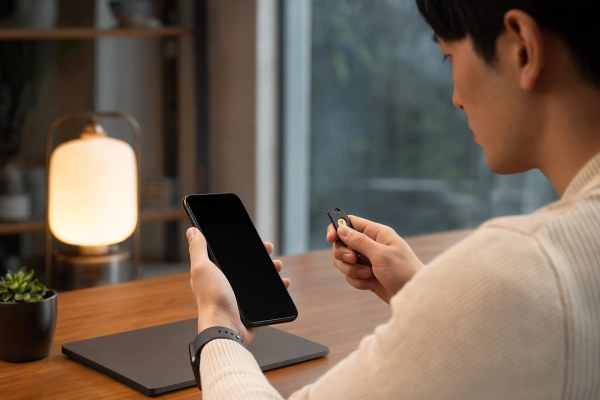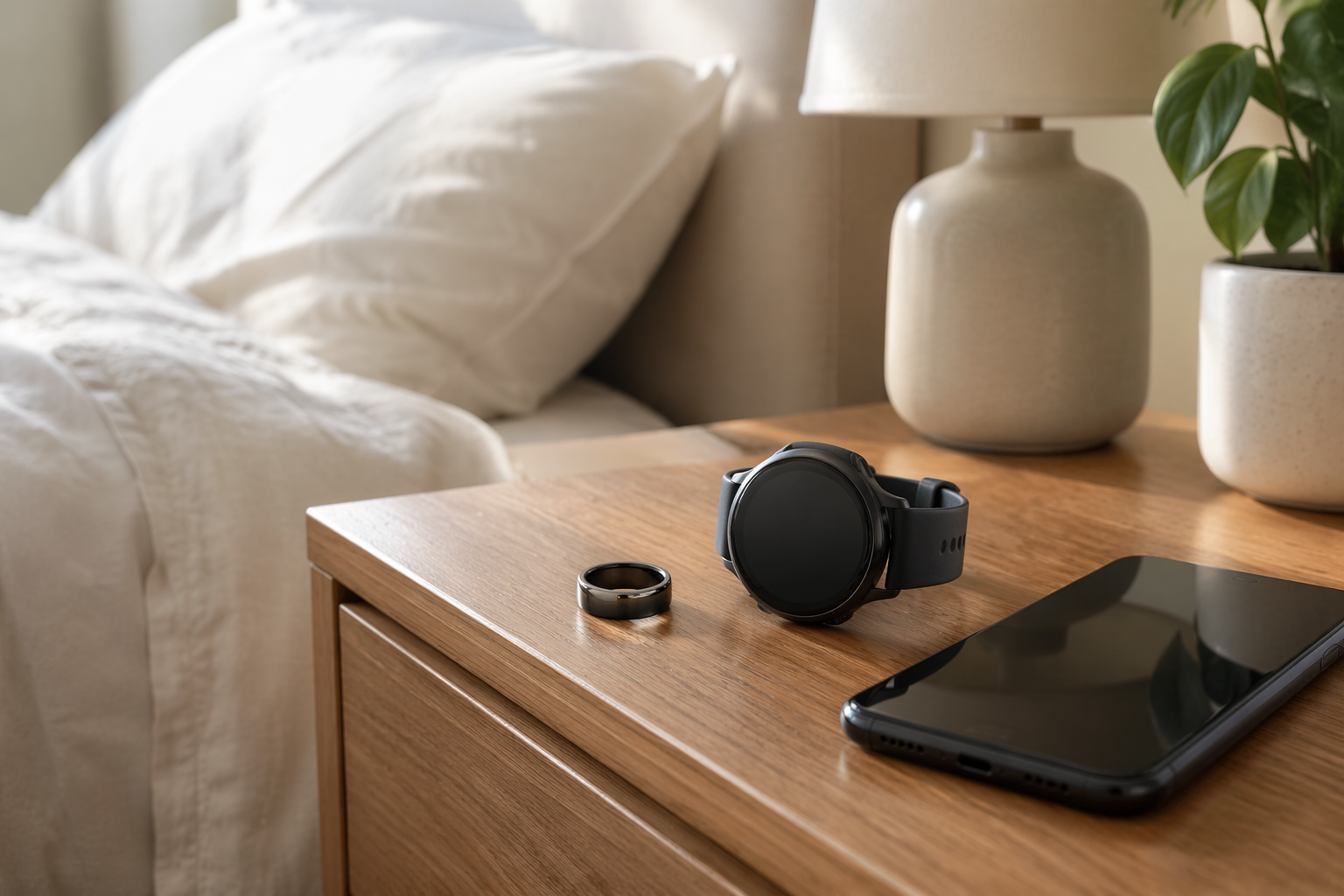
If sleep tracking is the main reason you want a wearable, a smart ring is usually easier to live with. It is smaller, more comfortable in bed, and typically lasts longer between charges. A smartwatch makes more sense if you want sleep tracking plus workouts, GPS, notifications, apps, alarms, and quick stats on your wrist.
Neither one is a medical sleep test. Both are best used for noticing patterns, not diagnosing sleep problems.
The Quick Answer
#Choose a smart ring if:
- You want something light and barely noticeable while you sleep.
- You do not like wearing a watch in bed.
- You mostly care about sleep consistency, resting heart rate, HRV, and recovery trends.
- You want longer battery life and fewer charging headaches.
- You prefer a screen-free device at night.
Choose a smartwatch if:
- You want sleep tracking plus workouts, GPS, notifications, and apps.
- You like seeing stats directly on your wrist.
- You want one wearable for both day and night.
- You do not mind wearing something bulkier to bed.
- You want better fitness features during exercise.
The most important question is not which device has the longest feature list. It is which one you will actually wear every night.
Why This Choice Is More Personal Than It Looks
#Sleep tracking sounds simple. You wear a device, go to bed, wake up, open an app, and get a neat little score that tells you how you slept.
But real life is messier than that. Maybe you hate the feeling of a watch strap while you sleep. Maybe your smartwatch battery is always low by bedtime. Maybe you want recovery scores and HRV trends. Or maybe you care more about GPS runs, workout screens, and phone notifications.
That is why the smart ring vs smartwatch decision is not just about sensors. It is about your habits. The best sleep tracker is the one that fits into your routine without annoying you.
For related reading, AllBlogs already has practical guides on smartwatches vs fitness bands, wearable recovery scores, and reading HRV without overreacting.
Who This Guide Is For
#This guide is for anyone trying to choose between a smart ring for sleep tracking and smartwatch sleep tracking.
It is especially useful if you:
- Want to understand your sleep without making it complicated.
- Care about comfort because sleep is already hard enough.
- Want recovery and HRV trends, but not medical claims.
- Exercise regularly and wonder if a ring can replace a fitness watch.
- Do not want to buy another gadget that ends up forgotten in a drawer.
- Care about battery life, privacy, subscriptions, and long-term value.
If you are choosing between a smart ring vs fitness watch, the better option depends on what you want the device to do when you are awake too.
What to Check Before Buying
#Before you buy any wearable sleep tracker, look beyond the marketing page. These are the things that matter in daily use.
1. Subscription Costs
#Some smart rings require a monthly subscription for deeper sleep insights, recovery scores, long-term trends, or advanced reports. Some smartwatches include more data in their apps without a separate sleep subscription, but that depends on the brand.
Do not compare only the upfront price. Check what the device will cost over the next year or two. A cheaper device can become more expensive if the useful features sit behind a monthly fee.
2. Battery Life
#Sleep tracking only works if the device is actually on your body overnight.
Smart rings usually last several days because they do not have screens, big apps, or bright displays. Smartwatches often need charging more often because they handle notifications, GPS, workout tracking, apps, and always-on screens.
If your battery is at 8 percent when you are ready for bed, you may skip tracking that night. Do that often enough, and your sleep data becomes patchy.
3. Comfort While Sleeping
#Comfort is not a small detail. Ask yourself:
- Do you sleep on your side?
- Do you dislike pressure on your wrist?
- Do watch straps make you sweat?
- Do you already wear rings comfortably?
- Do your fingers swell at night?
- Would you notice a device if you rolled onto it?
A wearable can have the best app in the world, but if it annoys you in bed, you will stop wearing it.
4. Privacy and Data Control
#Sleep trackers collect personal data. That can include heart rate, HRV, movement, skin temperature trends, oxygen data, sleep timing, and recovery patterns.
Before buying, check:
- Where your data is stored.
- Whether the app relies heavily on cloud syncing.
- Whether you can export your data.
- Whether the privacy policy is clear.
- Whether you can delete your account and data.
- Whether the company shares data with third parties.
Your sleep data is personal. Treat it that way. For a wider privacy angle, read AllBlogs’ guide to health wearable privacy.
5. Airplane Mode or Offline Tracking
#Some people prefer fewer wireless signals while they sleep. If that matters to you, look for a device with airplane mode or offline tracking. Some wearables can collect data while Bluetooth is off and sync later. Others need a more constant connection.
Do not assume every device offers this. Check before buying.
6. Workout Needs
#A smart ring can be great for passive sleep and recovery tracking, but it is not the same thing as a fitness watch during exercise.
If you want real-time pace, heart rate zones, GPS routes, workout screens, alerts, or detailed training metrics, a smartwatch is usually the better choice.
Smart Ring vs Smartwatch: Practical Comparison
#Overnight comfort: A smart ring usually wins because it is small and screenless. A smartwatch can feel bulky, especially for side sleepers.
Battery life: A smart ring usually lasts longer because it does not run a screen, apps, notifications, or GPS. A smartwatch needs more frequent charging.
Sleep tracking style: A smart ring is usually more passive and background-focused. A smartwatch gives sleep tracking plus screen-based features.
Workout tracking: A smartwatch is stronger for GPS, workout screens, pace, distance, alerts, and live heart-rate zones. A smart ring is better for passive activity and recovery trends.
Notifications: A smartwatch is far better if you want calls, messages, app alerts, alarms, and wrist controls. A ring is quieter and less distracting.
Best use case: Choose the ring for sleep, recovery, low-effort tracking, and screen-free nights. Choose the watch for fitness, smart features, and all-day use.
What Actually Changes Day to Day?
#The real difference shows up at bedtime, when you are tired, your device battery is low, and you just want to sleep.
Comfort: The Smart Ring Usually Wins
#For sleep tracking, comfort is where smart rings shine. A smart ring is small, screenless, and worn on your finger. Many people stop noticing it after a while. That makes it appealing if you hate sleeping with something strapped to your wrist.
A smartwatch is more noticeable. Even a slim one can press into the mattress, catch on bedding, or make your wrist feel warm under the strap. If you are a side sleeper or move around a lot, that can get old quickly.
Sleep Data: Both Are Useful, But Neither Is Perfect
#Smart rings and smartwatches both estimate sleep using sensors and algorithms. They may track movement, heart rate, HRV, sleep timing, resting heart rate, skin temperature trends, and oxygen data, depending on the device.
The key is not to treat every sleep score like absolute truth. Instead, look for patterns:
- Are you consistently sleeping too little?
- Is your resting heart rate higher than usual?
- Does your HRV drop after late meals, stress, illness, or hard workouts?
- Are you waking up more often than normal?
- Do you feel better on days when your sleep schedule is more consistent?
That is where wearable sleep tracking becomes helpful: not as a perfect judge of every sleep stage, but as a way to notice trends.
Battery Life: Rings Make the Habit Easier
#Battery life can make or break sleep tracking. Smart rings usually last longer because they do less. No screen. No apps on the device. No constant notifications. No GPS display.
Smartwatches usually need more planning. If the battery is low at bedtime, you have to decide whether to charge it or wear it to sleep. Some watches charge quickly, but it is still another thing to manage.
Smart Ring for Sleep Tracking
#Best For
#A smart ring is best for people who want sleep tracking to feel almost invisible.
Choose a smart ring if you:
- Mostly care about sleep, recovery, and HRV trends.
- Want a screenless device at night.
- Prefer longer battery life.
- Already wear a regular watch and do not want another screen.
- Sleep on your side and dislike wrist pressure.
- Want passive tracking that does not interrupt your day.
- Want fewer notifications and less bedtime distraction.
Avoid If
#A smart ring may not be right if you:
- Need real-time workout stats.
- Want built-in GPS on your wearable.
- Want notifications, calls, or apps.
- Lift heavy weights often and do not want a ring rubbing against bars or grips.
- Dislike wearing rings.
- Struggle to find a comfortable size.
- Want to check your stats without opening your phone.
Fit matters a lot with rings. A ring that feels fine during the day can feel tight at night if your fingers swell. If the company offers a sizing kit, use it.
Smartwatch for Sleep Tracking
#Best For
#A smartwatch is best if you want one device that does a lot.
Choose a smartwatch if you:
- Want sleep tracking plus fitness tracking.
- Need GPS, pace, distance, and workout screens.
- Like checking stats on your wrist.
- Want notifications, calls, alarms, timers, and apps.
- Prefer a bigger ecosystem with integrations.
- Do not mind charging more often.
- Are already used to wearing a watch all day.
Avoid If
#A smartwatch may not be right if you:
- Hate wearing a watch to bed.
- Are easily distracted by screens or notifications.
- Forget to charge devices regularly.
- Find watch straps sweaty or irritating.
- Want the least noticeable sleep tracker possible.
- Already know you will take it off before sleeping.
A smartwatch can be powerful, but if it ends up on your nightstand every night, it will not collect useful sleep data.
Smart Ring vs Fitness Watch: Which Gives Better Value?
#Value depends on what you will actually use.
A smart ring gives better value if your main goal is consistent sleep and recovery tracking with very little effort. It is built around comfort, passive data, and daily readiness trends.
A smartwatch gives better value if you want a more complete device. You are not just paying for sleep tracking. You are also getting workout tools, GPS, notifications, alarms, timers, apps, and on-wrist controls.
So the real question is not “which device has more features?” It is “which features will I use every day?”
If you only want sleep tracking, a smartwatch may feel like too much device. If you want serious training data, a smart ring may feel too limited.
Common Mistakes to Avoid
#1. Buying for Medical Accuracy
#Do not buy a smart ring or smartwatch expecting a diagnosis. Wearables can help you notice trends in sleep duration, resting heart rate, HRV, wake times, and recovery. But they are not replacements for clinical sleep studies or medical advice.
If you have serious symptoms, breathing concerns, extreme daytime tiredness, or ongoing sleep problems, speak with a qualified health professional.
2. Ignoring Fit
#Fit is everything. For smart rings, use the physical sizing kit if one is available. Do not rely only on your normal jewelry size. Your finger size can change throughout the day and overnight.
For smartwatches, strap fit matters too. Too loose, and the sensors may not read well. Too tight, and it can become uncomfortable.
3. Forgetting About Charging
#A sleep tracker has to be charged before you go to bed. If your device keeps dying overnight, your data will have gaps. Before buying, be honest about your routine.
Can you charge it while you shower? While you work? While you get ready in the morning?
Battery life is not just a spec. It is a habit.
4. Paying for Features You Will Not Use
#A smartwatch may have a huge list of features, but that does not automatically make it better for you. A smart ring may have great recovery insights, but that does not help much if you need GPS runs and live workout screens.
Buy for your real life, not the longest feature list.
5. Taking One Bad Sleep Score Too Seriously
#Sleep trackers are not perfect night-by-night judges. One bad score could come from poor fit, movement, charging issues, stress, a late meal, illness, or simply an algorithm getting confused.
Look at longer patterns. Weekly and monthly trends are usually more helpful than one dramatic morning score.
Final Buying Advice
#If your priority is comfort, battery life, and quiet overnight tracking, buy a smart ring. It is the better choice for people who want sleep and recovery data without wearing a screen to bed.
If your priority is workouts, GPS, notifications, and all-day usefulness, buy a smartwatch. It is the more versatile device, and its sleep tracking may be more than enough if you can comfortably wear it overnight.
For most people comparing a smart ring vs smartwatch for sleep tracking, the decision comes down to this: choose the device you will actually wear every night.