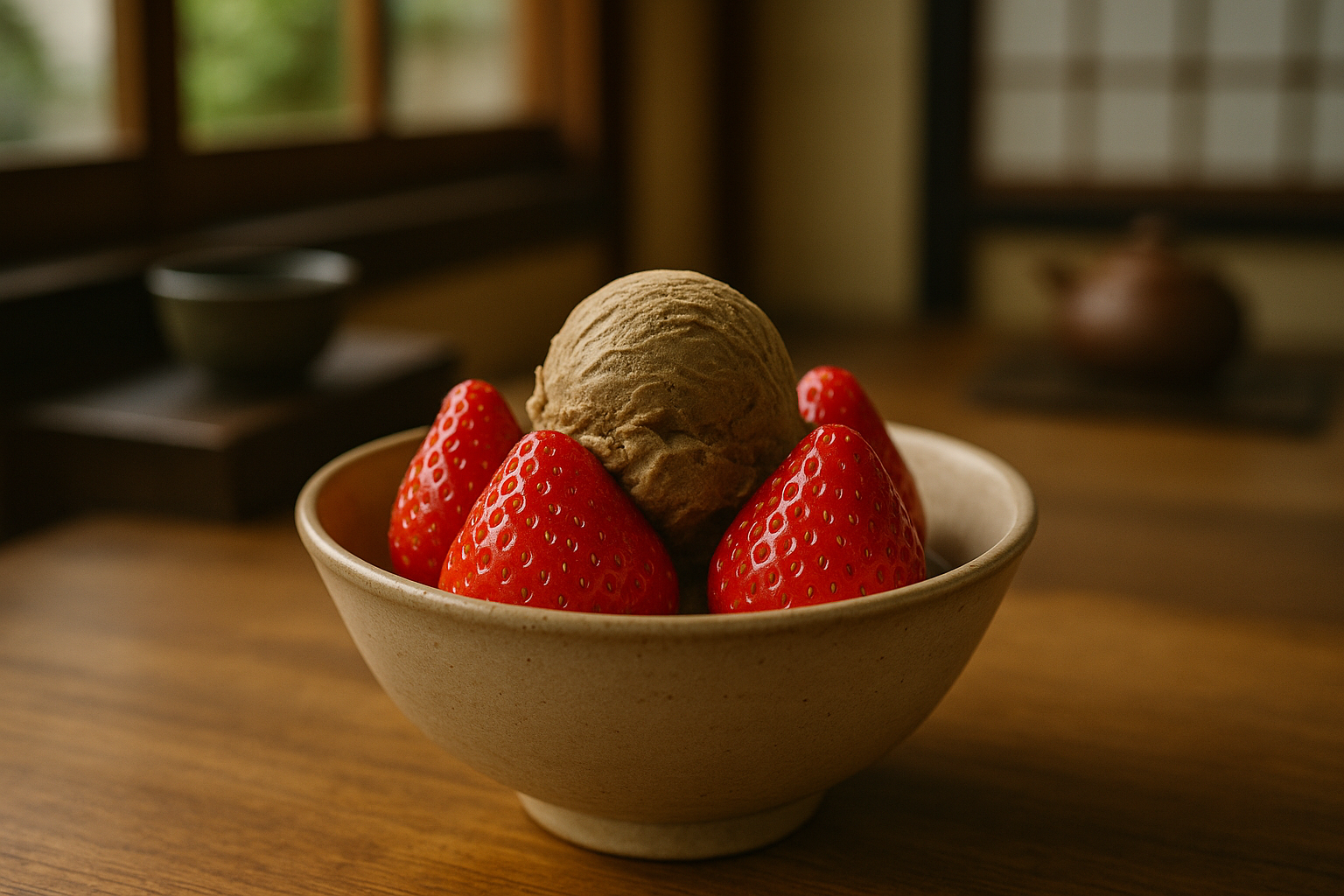
Every summer seems to pick a few ingredients and suddenly they are everywhere, right? One year it's yuzu, then it's chili crisp in soft serve, then everybody loses their mind over tomatoes that actually taste like tomatoes. But summer 2026, at least from what I've been seeing, tasting, and honestly low-key stalking on menus, belongs to two very specific Japanese flavor obsessions: premium strawberries and hojicha. And not in a random gimmicky way either. These two actually make sense together, which I didn't fully get until I had a hojicha cream drink with a ridiculously fragrant Japanese strawberry shortcake back in early June and sort of sat there in silence for a minute. That never happens to me. I'm usually yapping.
I should say this upfront, because food trend posts can get a little too neat and polished. Mine won't be. I am writing this as someone who genuinely plans weekends around desserts, has absolutely overpaid for fruit more than once, and still thinks the smell of roasted tea is one of the most comforting things on earth. So if this sounds a bit rambley... well, that's because it is. Summer eating should be a little messy anyway.
The big vibe for summer 2026: lighter luxury, less sugar shock, more ingredient worship
#What feels different this year is that people still want indulgence, but not the old huge, overdecorated, sugar-bomb kind. Menus in 2026 are leaning into what I'd call quieter luxury. Cleaner flavor, better sourcing, more seasonal specificity. You see it in how cafes are talking about single-origin matcha and roasted tea profiles, but also in fruit programs, especially Japanese strawberries. Instead of just saying "strawberry dessert," places are naming varieties, farms, prefectures, or at least signaling that these berries are softer, sweeter, more aromatic, and meant to be eaten almost like fine pastry ingredients all on their own.
And hojicha fits that exact mood. If matcha is still the extrovert, hojicha is the friend who walks in late, says one funny thing, and somehow becomes everyone's favorite. Roasted green tea has this nutty, toasty, caramel-ish depth without being heavy. It's lower in caffeine than most green teas because of the roasting process and often made from bancha, sencha, or kukicha stems and leaves, so it works all day. Morning latte, mid-afternoon soft serve, little night time parfait, whatever. It doesn't punch you in the face. It sort of hums.
Summer 2026 food is less about showing off and more about making one really beautiful thing taste like itself. Japanese strawberries and hojicha just nail that mood.
Why Japanese strawberries are suddenly the fruit people are whispering about
#Okay, yes, Japanese strawberries have been admired for years. This is not exactly brand-new. But in 2026 they've crossed from luxury fruit nerd territory into mainstream food conversation, at least in major cities and on dessert menus. Part of that is social media, obviously. Perfectly shaped berries with glossy skin and pale centers photograph like a dream. But part of it is also broader interest in Japanese fruit culture, where cultivation methods, variety selection, texture, and aroma matter almost absurdly much. In the best way.
The names matter too. If you've seen Amaou, Tochiotome, Beni Hoppe, Awayuki, or Kotoka on a menu, that's not just marketing fluff. Amaou from Fukuoka is probably the one more people recognize, known for its size and sweetness. Tochiotome, from Tochigi, tends to be balanced and juicy. Beni Hoppe has richer sweetness with nice acidity. Awayuki is that pale blush-pink strawberry that looks fake until you bite it. I had one once at a tasting event and honestly thought, this is kinda stupid, no berry should be this pretty. Then I ate it and shut up immediately.
- Amaou shows up most often in premium shortcakes and fruit sandos because it's bold and very sweet
- Tochiotome works beautifully in lighter desserts where you want brightness, not just candy sweetness
- Awayuki is the one people order with their eyes first, but the floral softness is real too
- Beni Hoppe, in my opinion, is underrated and maybe the best with tea because it has a bit more personality
My first proper Japanese strawberry moment... and yeah, it was dramatic
#I remember my first really serious Japanese strawberry experience way too clearly for a normal person. It wasn't in Japan, actually, which almost feels embarrassing to admit. It was at a Japanese bakery cafe pop-up where they were doing fruit sandos with imported berries and impossibly soft milk bread. I bought one because it looked cute. That's it. No deeper philosophy. Then I bit into it and the strawberry wasn't just sweet, it was perfumey, almost creamy somehow, with none of that watery shrug you get from too many supermarket berries. The whipped cream was barely sweetened and suddenly the whole thing made sense. The fruit was the point. Not the sugar, not the garnish, not the trick.
Since then I've had them in chiffon cakes, daifuku, kakigori, parfaits, little tartlets, and once on top of a hojicha basque cheesecake that I am still not over. It was one of those desserts where me and my friend took turns pretending we were done with it so the other person wouldn't notice we wanted the last bite. Real dignity stuff.
And then there's hojicha, the roasted tea that finally stopped living in matcha's shadow
#Hojicha has been creeping up for a while, but in 2026 it feels fully established. Not a substitute for matcha, not a backup option, its own thing. If you haven't had it much, the easiest way to describe it is roasted green tea with notes that can lean nutty, woody, cocoa-like, sometimes almost coffee-adjacent but gentler. Because the roasting lowers bitterness and softens the grassy edge, hojicha is ridiculously adaptable in desserts. Ice cream, panna cotta, tiramisu, roll cakes, affogato-ish drinks, cookies, even morning granola, though that one can go either way if the cafe gets too clever.
What I love is that hojicha tastes grown-up without being severe. Matcha can be stunning, but it asks something of you. Hojicha is more like, hey, come sit down. It has this campfire-toast-rice-cracker coziness to it. Last summer I was still seeing matcha in every third drink special. This year? Plenty of matcha, sure, but hojicha has moved from side note to headline, especially in iced lattes and soft serve. A lot of cafes are pairing it with milk jam, black sugar, sesame, peach, and, yes, strawberries.
Why the strawberry-hojicha combo works better than it sounds
#On paper, a delicate berry and roasted tea maybe don't scream soulmates. But taste them together and it's obvious. Japanese strawberries bring fragrance, brightness, and that almost melt-in-the-mouth texture. Hojicha brings warmth, toast, and structure. One is vivid, one is grounding. One says summer afternoon, one says shade on a porch. Together they stop each other from getting annoying. Strawberry doesn't go too sweet, hojicha doesn't get too earthy. It's balanced in a way a lot of trend pairings aren't.
- Hojicha cuts through cream, so strawberry shortcake tastes fresher with it
- The berry's acidity lifts roasted notes that might otherwise feel heavy in hot weather
- Both work really well with dairy, which is why parfaits and lattes are having a whole moment
- The color contrast is gorgeous too, which, let's be honest, absolutely matters in 2026
What I'm actually seeing on menus this summer
#A few clear patterns keep popping up. First, fruit-first desserts are huge. Think Japanese-style shortcakes with barely sweet cream, fruit sandos, and shaved ice with real fruit syrups instead of neon fake stuff. Second, tea is getting more nuanced. Cafes aren't just offering matcha or not-matcha anymore. They're specifying hojicha roast level, origin, whether it's powdered for lattes or steeped for jelly, things like that. Third, texture is everything. Crispy crumble under soft cream, chewy mochi with roasted tea custard, airy sponge with fresh fruit. Summer 2026 is very much about contrast.
I've also noticed more crossovers between Japanese dessert technique and broader cafe culture. So instead of strictly traditional wagashi or strictly Western pastry, you're seeing hybrids everywhere: hojicha maritozzi with strawberry cream, strawberry mochi crullers, hojicha espresso tonic experiments, kakigori with mascarpone, that sorta thing. Some are genius. Some are... trying very hard. I had a strawberry-hojicha laminated cube pastry last month that was all concept and no soul. Beautiful, yes. Tasted like expensive confusion.
A few restaurants and cafes making this feel very now
#I gotta be careful here because openings and pop-ups move fast, and what is hot in June can be gone by August. But one thing that seems true in 2026 is that Japanese-inspired bakeries and tea bars are expanding their seasonal fruit programs in a serious way. In New York, LA, London, Singapore, Bangkok, Seoul, and parts of Sydney, the tea-dessert cafe scene is getting kind of wild. More places are doing limited strawberry menus and rotating hojicha drinks in summer instead of waiting for autumn. That's a shift.
The places I personally get most excited about are not always the fanciest. I love a polished dessert salon, sure, but some of the best versions I've had came from tiny bakeries that understand restraint. A Japanese cafe near me started doing a summer special with hojicha soft serve, macerated premium strawberries, and olive oil sponge crumbs. Sounds pretentious, maybe is pretentious, tasted amazing. Another spot did a simple iced hojicha latte with strawberry milk foam that I thought would be too TikTok-y, but nope, it worked. Weirdly subtle. Like summer in a glass.
If a place is using good strawberries, they don't need to bury them. That's my main dessert opinion of 2026 and I stand by it.
Trying it at home, which is honestly less intimidating than it looks
#You do not need a pastry degree or one of those terrifyingly tidy Japanese home kitchens online to enjoy this trend at home. The easiest entry point is an iced hojicha latte and a bowl of your best strawberries. If you can find Japanese strawberries, amazing. If not, get the most fragrant local berries you can and don't refrigerate them into blandness. Let them come to room temp a bit. Brew hojicha strong, chill it, pour over ice with milk. Oat milk works, whole milk works better, sorry. Add a tiny bit of syrup if you need it, but not much.
If you want to get fancier, make whipped cream that's barely sweet and layer it with sliced strawberries and store-bought sponge or ladyfingers. Then dust a little hojicha powder on top, or fold some concentrated hojicha cream into one layer. That's basically the whole mood right there. I also really love hojicha syrup spooned over vanilla ice cream with chopped strawberries and a pinch of flaky salt. Sounds random, tastes like you know what you're doing.
- Don't over-sugar the berries unless they truly need help
- Use hojicha for roast and aroma, not bitterness. If it tastes harsh, you've pushed it too far
- Keep the dairy light and softly sweet
- A little salt makes the whole thing pop, which I forget constantly and then regret
The part nobody says enough: sourcing matters, and so does seasonality
#One reason this trend feels meaningful instead of gimmicky is that it taps into a bigger 2026 conversation around traceability and seasonality. People want to know where ingredients came from, how they were grown, and whether the premium price actually means something. Japanese fruit culture has always taken that seriously, but now more cafes and retailers are trying to communicate that care in a way regular customers can connect with. Same with tea. Good hojicha isn't just brown powder. The source leaf matters, the roast matters, freshness matters. Old hojicha can taste flat and dusty, which is honestly sad.
And look, not everyone can or should buy imported luxury strawberries all summer. I definitely can't. But I do think this trend is nudging people toward eating fruit when it actually tastes good and treating tea like an ingredient with character, not just a wellness prop. That's probably the healthiest thing about it, weirdly enough. Not healthy as in diet-culture nonsense. Healthy as in paying attention.
My slightly messy predictions for the rest of summer 2026
#I think we're only at the start of where this is going. Hojicha will keep moving deeper into frozen desserts, especially soft serve, shaved ice syrups, and bottled cafe drinks. Strawberry pairing menus will get more specific, maybe even variety-led in a way wine lists are, which sounds ridiculous until you taste the differences. I also think we'll see more savory crossovers. Maybe not a ton, but enough. Hojicha rubs, strawberry kosho-ish condiments, roasted tea vinaigrettes with summer tomatoes, that whole lane. I don't know if I want all of that, to be honest, but some chef somewhere is absolutely doing it right now.
The only thing I hope doesn't happen is overbranding. Once every chain starts launching "artisan Japanese strawberry hojicha cloud cream" in a plastic cup, the magic wears off a little. Then again, trends always do that. The good stuff survives, the silly stuff fades, and we're left with a few combinations that deserved the hype. This one does. Mostly. Unless somebody puts it in a protein bar, in which case I am out.
Final bite
#So yeah, if you're wondering what summer 2026 tastes like to me, it's the soft snap of a really good strawberry and that deep toasted exhale of hojicha right after. Bright and calm at the same time. Kinda fancy, kinda comforting, not trying too hard but also obviously special. That's a hard balance to hit, and maybe that's why I'm so into it. Food doesn't always need to be louder. Sometimes it just needs to be better.
If you spot a strawberry-hojicha dessert on a menu this summer, order it. Maybe split it, maybe don't. I probably wouldn't. And if you're in the mood to keep going down the rabbit hole of food obsessions and delicious little trend spirals, have a scroll around AllBlogs.in too. That's the kind of place where these cravings tend to multiply, fair warning.