I’ve always thought South India makes the most sense before 9 am. Not at sunset, not in those glossy travel reels with drone shots and flute music. Morning. Proper morning. When temple bells are going off, flower sellers are stringing jasmine with this unreal speed, the streets are still a bit damp from washing, and somewhere nearby somebody is pouring filter coffee from a steel tumbler so high it looks like theatre. I did this breakfast-trail trip across a few temple towns recently, mostly in Tamil Nadu and Karnataka with a little Andhra influence sneaking in, and honestly it became less of a trip and more of a habit. Wake up stupidly early, walk to a shrine or along an old market lane, then just follow the smell of ghee, woodsmoke, pepper, sambar, coffee. Works every single time.
Also, before someone says this sounds romanticized, yeah maybe a little. These towns are crowded, noisy, chaotic, and half the time I was sweating through my shirt by 7:15 am. But that’s the charm too, isn’t it. The breakfast scene around temple districts is still one of the best ways to understand South India without doing the whole checklist-tourist thing. You see office-goers, priests, students, grandparents, delivery riders, pilgrims who’ve been awake since 4, all eating in the same places. And right now, in 2026, food-led travel in India has gotten even bigger. More people are planning “breakfast walks” and short culinary heritage trails rather than just destination hopping. There’s a stronger push toward regional menus, local grains, traceable ingredients, and old-school tiffin places that have suddenly become cool again... though to be fair they never stopped being cool for locals.
Why temple-town mornings hit different
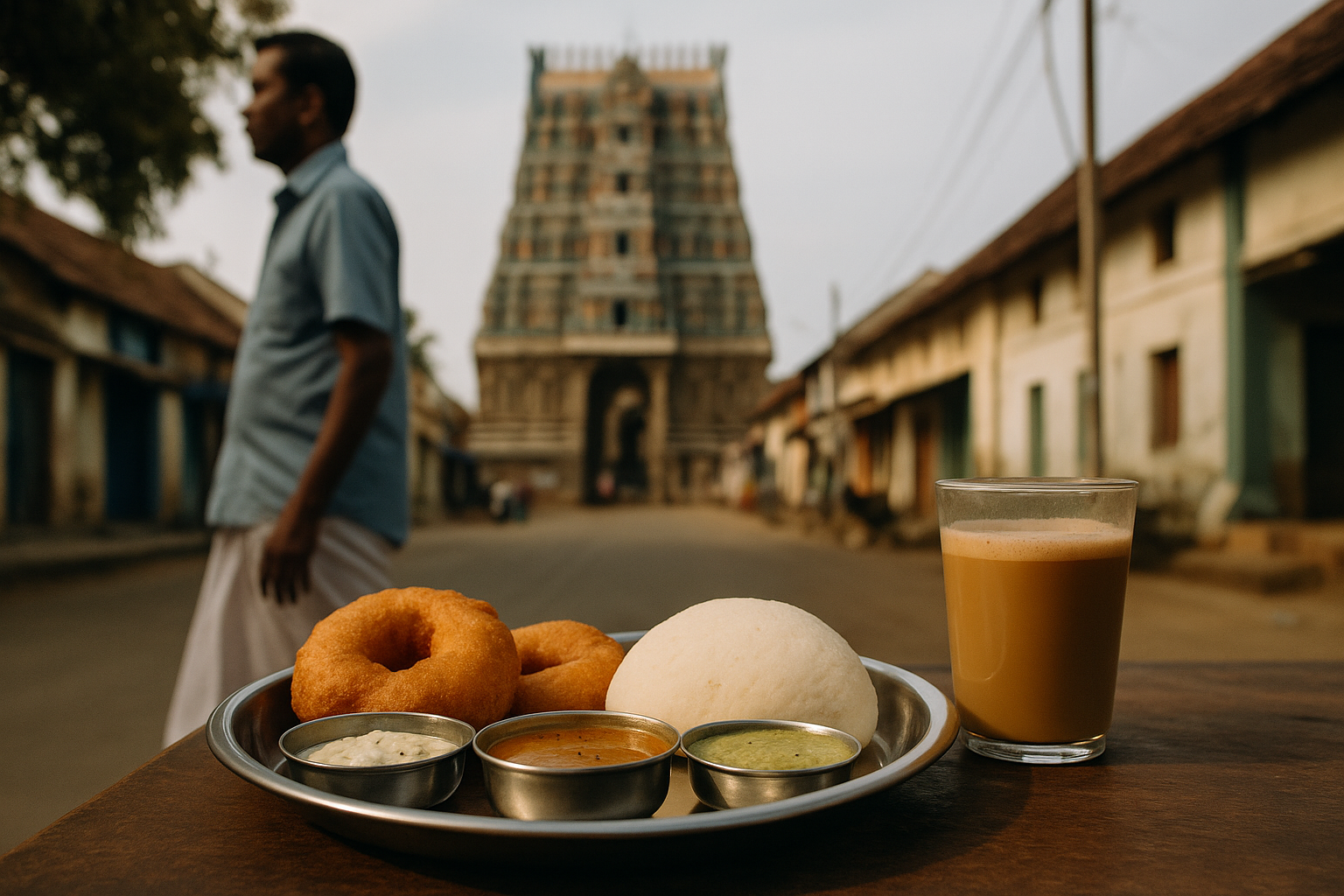
#What makes these breakfast walks special isn’t just the food, it’s the sequencing of everything. You start with sound. Bells, scooter horns, devotional songs from crackly speakers, vendors yelling. Then color. Banana leaves, marigolds, kolams outside doorways, brass lamps catching first light. Then smell, which is where I completely lose all self-control. Roasting coffee. Freshly steamed idlis. Ven pongal with black pepper and ghee. Medu vada frying. Sometimes sweet appam, sometimes kal dosa, sometimes a random kadai with aval upma that’s way better than it has any right to be. The walk itself primes your appetite. It’s not just breakfast, it’s breakfast earned.
My totally biased opinion: if you want to understand a temple town, don’t start with the monument. Start with the street around it at 6:30 in the morning, coffee in hand, a little hungry, a little lost.
Kanchipuram: silk, shrines, and that glorious temple idli
#Kanchipuram was one of the easiest towns to love. It’s famous for temples and silk, sure, but my brain mostly files it under idli now. Real Kanchipuram idli isn’t your everyday cloud-soft idli. It’s seasoned, usually with pepper, cumin, ginger, sometimes curry leaves, and traditionally steamed in a way that gives it more body and this faintly spiced warmth. I had it near the temple quarter after a sunrise walk past flower stalls and gopurams just beginning to glow. Served with chutney and sambar, yes, but honestly the idli itself carried the whole thing. It tasted old in the best possible way, like a recipe that survived because nobody dared mess with it too much.
The walk here is simple and very do-able. Start near Ekambareswarar Temple, wander the lanes while shops open, swing toward smaller tiffin spots before the bigger breakfast rush. I remember this one tiny place, stainless steel tables, no drama, where me and another traveler got into an argument about whether pongal should be loose and silky or firmer and mound-like. The owner just laughed and put extra ghee on both plates, problem solved. Kanchipuram right now is also seeing more curated heritage-food walks, especially on weekends and festival periods, but I still think self-guided is nicer. You notice more when you’re not being herded around with a flag.
- Best thing to eat here, no contest: Kanchipuram idli with milagai podi and a strong filter coffee
- If you see fresh pongal with visible pepper and cashews, don’t overthink it, order it
- Go early. By 8:30 the mood changes and it gets more rush-rush than dreamy
Madurai: the city that wakes up hungry
#Madurai is different. Less gentle, more electric. Around Meenakshi Amman Temple, the city doesn’t so much wake up as continue from the previous night. I stepped out before dawn thinking I’d have this quiet, meditative temple-town stroll and lol, no. There were already tea stalls going, temple visitors moving in streams, and tiffin counters sending out plate after plate. Which I loved, actually. Madurai has that lived-in confidence. It doesn’t perform heritage for you, it just is what it is.
Breakfast here felt broader than in some smaller temple towns. You’ll still get classic idli-vada-pongal sets, but there’s also kari dosa culture later in the day, jigarthanda fame in the background, bun-butter-jam in old tea shops, and some beautiful little eateries doing fluffy set dosas and kuzhi paniyaram in the mornings. Near the old core, I had one breakfast of mini idlis drenched in sambar that was absurdly comforting. Like baby food for exhausted travelers, but in a good way. Then filter coffee so hot I nearly burnt my tongue because I was too impatient. I never learn.
What’s interesting in 2026 is how Madurai’s food scene is balancing tourism and local habits. More cafes are talking about millet breakfasts, cold-brew filter coffee twists, and farm-linked sourcing because that’s where urban Indian food trends have gone. But the soul of the place is still in the standing-room tiffin joints and old vegetarian messes. I’m not against innovation, not at all, but if a menu says deconstructed pongal I am probably leaving. Sorry not sorry.
Srirangam and Tiruchirapalli: a pilgrim walk with coffee breaks every ten minutes
#Srirangam in the morning is just beautiful, there’s no cleverer way to put it. The island setting, the layered streets around the Ranganathaswamy Temple, the rhythm of people moving inward toward the temple and outward toward breakfast. This is where the walk and the meal become inseperable. I started from my stay while it was still dim, passed women drawing kolams outside houses, and stopped first for coffee because my body is mostly coffee and bad decisions. Then after darshan queues started building, I ducked into a local tiffin place for pongal-vada. That combo, when done right, is one of the great breakfasts on earth. Soft peppery pongal, crisp vada, coconut chutney that tastes fresh rather than fridge-cold, and sambar with actual character.
Trichy side gives you more range too. There are old-school vegetarian hotels, road-side idli vendors, and newer spots that have polished up traditional breakfasts for younger travelers who want good food but also cleaner seating, card payments, maybe oat milk in coffee if they’ve lost the plot a bit. One thing I noticed on this trip is how digital discovery has changed these towns. People aren’t only finding places from cab drivers and temple staff anymore. Short-form video, local food maps, WhatsApp recommendations, hyperlocal review apps, all of that matters now. Yet my best meal in Srirangam came from asking a flower seller where she eats after temple work. So, old methods still win sometimes.
- Start near the temple streets before sunrise if you can manage it
- First stop coffee, second stop breakfast, third stop maybe another coffee because who’s judging
- Ask for pongal if it looks freshly made. If it’s sitting tired in a vessel, skip it and get idli instead
Kumbakonam: coffee capital, brass town, breakfast heaven
#If you love filter coffee even a little bit, Kumbakonam can get under your skin. I don’t mean in a metaphorical way only. I came back smelling faintly of coffee decoction and smoke. This town has one of the strongest breakfast identities on the whole trail, and the walk around its temple clusters and tank areas is quietly wonderful. Not dramatic like Madurai, not as famous internationally, but deeply satisfying. You move through lanes with mutts, shrines, old houses, utensil shops, and then suddenly there’s a tiffin stall sending out hot adai-avial or idli with chutneys that taste sharper, fresher, somehow more awake.
Kumbakonam degree coffee is the headliner, of course. Rich milk, strong decoction, that frothy pull between dabarah and tumbler. There’s debate over what “degree” really refers to and every local has a version, and I kinda love that nobody fully agrees. I paired it one morning with rava dosa, another day with ven pongal, and once with a sweet poli because self-control was not available. Current travel trends here lean heavily toward slow travel and culinary heritage weekends. People are coming not just for one temple stop but for 2-3 day circuits around Kumbakonam, Thanjavur, and nearby temple towns, mostly to eat, walk, and absorb. Which, honestly, is the right idea.
Thanjavur: big temple, surprisingly subtle breakfast moments
#Thanjavur can feel overshadowed by its monumental stuff, the Brihadeeswarar Temple kind of dominates the imagination, but the breakfast side of town sneaks up on you. My best morning here wasn’t fancy at all. I walked around the temple precinct early, admired that impossible Chola scale, got a little emotional because history does that to me sometimes, then wandered outward into regular streets where breakfast was being served on banana leaves. Idli, poori masala, pongal, kesari. Nothing revolutionary on paper. But the texture of the meal, the timing, the temple still sitting in your head from half an hour before, it all changed the taste somehow. Travel does that. Context is seasoning too, maybe that sounds cheesy but I stand by it.
There’s also a growing interest across the Thanjavur region in reviving older rice varieties and traditional preparation styles, partly because travelers now actively seek “authentic regional breakfasts” and partly because local chefs and home-cooks are proud of these traditions and are pushing back against generic hotel buffets. You see more mention of native rice, stone-ground batter, seasonal produce, and no-waste kitchen practices. Not everywhere, obviously. Some places are still just trying to get 200 plates out before 9 am, fair enough. But the shift is real.
Udupi: technically coastal, spiritually linked, still one of the great breakfast walks
#Okay yes, Udupi is not a Tamil temple town and the vibe is different, but if we’re talking South Indian temple-town breakfast walks and I leave out Udupi, that would be ridiculous. Around Sri Krishna Matha, the morning scene has this clean, efficient, deeply comforting energy. Udupi cuisine is one of those things people think they know because they’ve eaten at “Udupi restaurants” in cities, but being there is another story. The breakfasts feel lighter in some ways, more coconut-forward, more vegetable nuance, and the dosa game is serious. I had a masala dosa one morning that was so crisp and evenly browned I almost wanted to applaud. Nearly did, actually.
Walk the Car Street area early, watch the devotional rhythm, then settle into a tiffin room for neer dosa, goli baje if available later, or classic idli-sambar with a side of saagu depending on the place. Udupi in 2026 is also seeing more sustainability-minded travelers, people who care about vegetarian temple-linked food systems, local produce, lower-waste dining, reusable steel serviceware, all that. And here it doesn’t feel like a trendy add-on. It’s built into the food culture already.
One thing I kept relearning on this trip: the best breakfasts were rarely the most famous ones. They were the ones I reached on foot, a little hungry, after passing through a place that mattered to people.
A few random things I learned the hard way
#First, don’t assume every legendary place opens when Google says it does. Temple-town timing is its own weird universe. Some places open before dawn, some after the first puja rush, some only when enough staff show up, some are “open” but not really open. Second, carry cash even though UPI is everywhere now. Network can act dumb in old dense temple areas. Third, if you want the best photos, sure go early. If you want the best smell-and-sound experience, go even earlier. Fourth, don’t wear anything too precious because sambar splashes happen and they happen without remorse.
- Shoes that slip on and off easily. Temple visits + breakfast walks = obvious but I somehow forgot once
- Come hungry but not too hungry, or you’ll order badly and miss the subtle stuff
- Filter coffee first can sharpen the morning, but on an empty stomach it can also send you to another dimension
And a small note on etiquette because it matters. These aren’t theme parks, they’re living religious and residential spaces. Dress decently, be patient, don’t block lanes for reels, ask before photographing cooks or temple-goers, and don’t act shocked that people are getting on with their morning while you’re trying to have a transformative food moment. You know? Respect first, breakfast second. Maybe equal, but still.
So, what’s the best temple-town breakfast walk?
#Annoying answer, but it depends what kind of morning you want. If you want iconic and layered, I’d say Kumbakonam. If you want intensity and urban temple energy, Madurai. If you want something spiritually textured and deliciously walkable, Srirangam. For one specific dish memory, Kanchipuram. For balance and sheer breakfast elegance, Udupi. Thanjavur if you like your mornings with a side of history so massive it alters your appetite. I contradicted myself three times writing that, because honestly there isn’t one winner. The whole point is the trail, not the ranking.
What I know for sure is this: South India’s temple towns are still among the best places in the world to build a day around breakfast. Not brunch, not tasting menus, not curated luxury food experiences with tiny tweezers. Breakfast. Walk, pray if that’s your thing, observe, eat, repeat. In 2026 with all our overplanned travel and algorithm-made itineraries, that feels weirdly radical. And very, very satisfying.
If you’re putting together your own morning food trail, do it loosely. Pick one temple town, stay nearby, wake up before you want to, and let the smells make some decisions for you. That’s what I did, mostly. No grand system, just appetite and curiosity and too much coffee. Worked out pretty great. I’ll probably keep chasing these breakfasts for years, to be honest. And if you’re into this kind of rambling food-and-travel obsession, yeah, go poke around AllBlogs.in too.