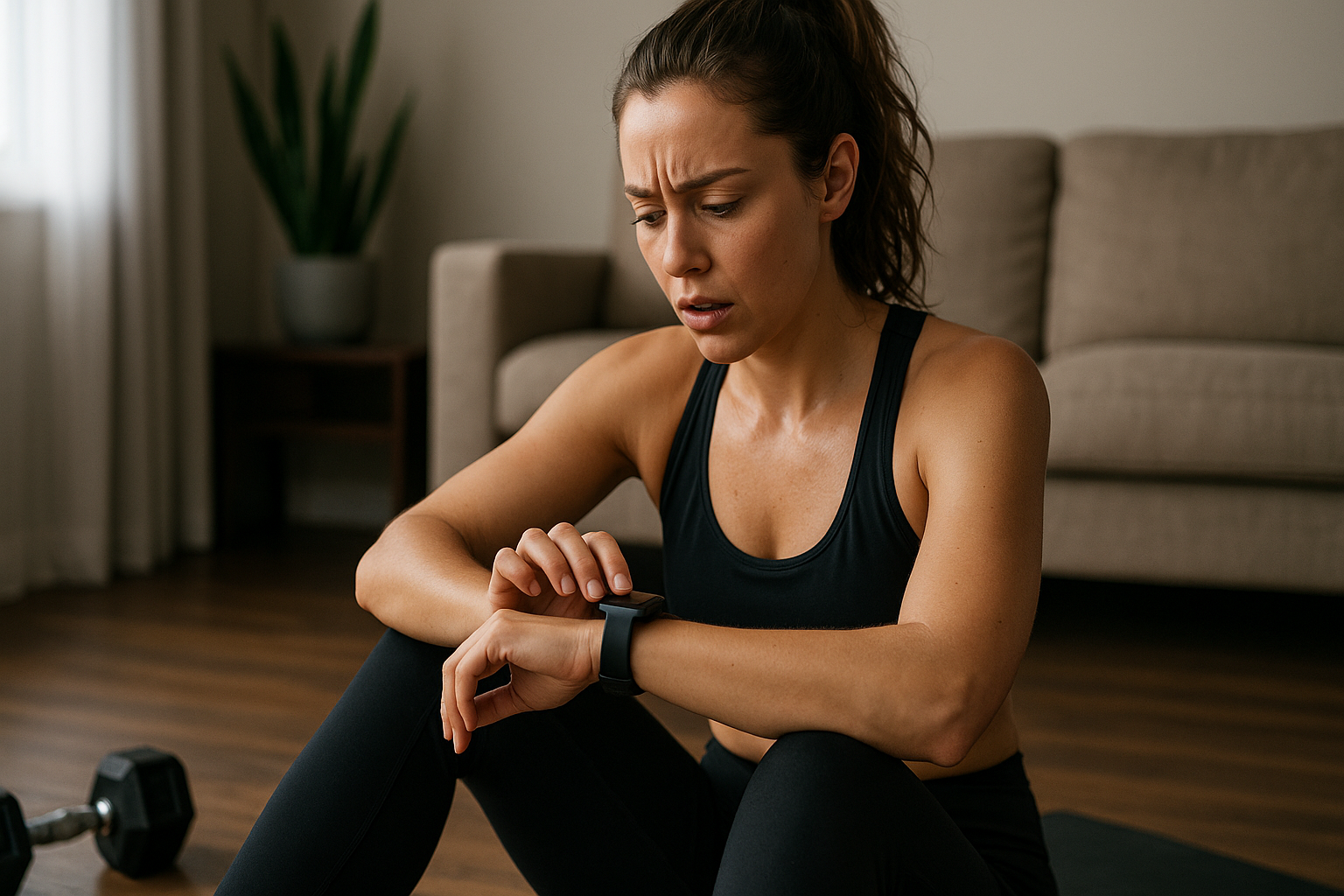
I used to trust my smartwatch way too much. Like... weirdly too much. If it told me I burned 780 calories after a long walk, a lifting session, and pacing around my kitchen while pretending to meal prep, I believed it. Fully. I’d eat extra because, hey, "earned it," right? Then on days it said I only burned 320, I’d get annoyed at my own body like it was being lazy or difficult. Which is honestly such a messed up relationship to have with a tiny computer strapped to your wrist.
And look, I’m not anti-wearable. I still wear one most days. I like the step reminders, I like seeing trends, I like the little fake trophies that somehow still make me feel accomplished at my grown age. But calorie burn? That number is one of the shakiest things these devices give you, and a lot of people don’t realize how rough the estimate can be. Sometimes it’s off by a little. Sometimes by a lot. Like, enough to mess with your eating, training, mood, and body image if you’re not careful.
The first time I realized the number was kinda nonsense
#I remember doing two very different workouts on back to back days a while ago. One was a sweaty interval run where I was breathing like an asthmatic accordion. The next day was a slower strength session with longer rests, but my muscles were smoked for like two days after. My watch said I burned way more calories in the run, which maybe sounds obvious, except my appetite, soreness, recovery, and actual fatigue told a more complicated story. That was the first little crack in the illusion for me.
Then I started reading more sports science stuff and asking an actual registered dietitian friend about it. Short version, wearables are decent at some things and pretty mediocre at others. Step counting has gotten better over the years. Heart rate at rest, often pretty solid on newer devices. Sleep staging, mixed bag. Calories burned though? That’s an estimate built from formulas, assumptions, sensor data, population averages, and a bunch of behind-the-scenes guesswork. It’s not directly measuring calories. It’s infering them. And yeah, that matters.
So what your watch is actually doing
#Your smartwatch can’t look inside your body and watch ATP get used up or measure oxygen consumption directly the way fancy lab equipment can. In research settings, energy expenditure is estimated with methods like indirect calorimetry, where they measure oxygen in and carbon dioxide out, or doubly labeled water in some studies for total daily energy expenditure. Your watch is not doing that. It’s using things like heart rate, movement from accelerometers, maybe GPS, your age, sex, height, weight, and whatever proprietary algorithm the company cooked up.
That can work okay-ish in certain conditions. Steady walking. Maybe easy running for some people. But bodies are annoying and individual, and the algorithm doesn’t always know if your elevated heart rate is from heat, stress, caffeine, poor sleep, medication, dehydration, or because you just sprinted up three flights of stairs carrying laundry and rage. It also struggles with exercise that doesn’t have a neat motion pattern. Strength training is a big one. Cycling can be weird. Pushing a stroller, hiking uphill, yoga, rucking, carrying groceries, mobility work, anything with lots of isometric effort... all of that can throw things off.
What the research keeps showing, including the newer stuff people are talking about
#The broad pattern in wearable research has been pretty consistent for years and, from what experts are still saying in more recent reviews and 2025 into 2026 discussions, it hasn’t magically changed. Heart rate measurement has improved a lot on many devices, especially at rest and during steady-state exercise. But calorie expenditure estimates still show wide error ranges. Some validation studies have found mean errors big enough that using the number for precise nutrition planning is just not a great idea. Depending on device, activity type, skin contact, body size, workout intensity, and the person wearing it, the estimate can swing pretty wildly.
That doesn’t mean wearables are useless. It means the calorie metric isn’t precise enough to treat like truth. A lot of exercise physiologists and clinicians basically frame it this way now: useful for trends, not for exact accounting. That’s very different from how most of us actually use them, which is more like, "my watch says 612 so I can totally have dessert and half a pizza." Been there. No judgement. Literally me and half the internet.
A smartwatch calorie number is usually better thought of as a rough signal, not a permission slip and definitely not a moral score.
Why it’s extra wrong for strength training, HIIT, and real life movement
#This is the bit that annoyed me the most, because these were the exact workouts I cared about. With lifting, your watch often over-relies on heart rate and wrist movement. But muscle tension, time under load, exercise selection, your actual lean mass, rest intervals, and post-exercise oxygen use all complicate the picture. Heavy squats don’t always look dramatic from the wrist. Carries and sled pushes can be brutal and your watch is just there like, meh, 146 calories, good job little buddy. Sir, no. I nearly saw God during those pushes.
HIIT is another mess because heart rate lags behind effort and spikes can happen for reasons not fully tied to energy use minute by minute. Plus many people do intervals with rest periods where calories are still being used, but not in a smooth predictable pattern. And then there’s ordinary life movement, what researchers call NEAT, non-exercise activity thermogenesis. Fidgeting, standing, cleaning, child care, yard work, carrying stuff, walking while on phone calls, all the random movement that can add up huge across a day. Watches catch some of it, miss some of it, and don’t always weight it well.
The 2026 wellness trend I’m seeing that I actually like
#One thing I’m seeing more in 2026 wellness spaces, thankfully, is a move away from obsessing over "burn" and toward recovery, consistency, and metabolic health markers. More coaches and dietitians are talking about sleep quality, resting heart rate trends, heart rate variability carefully and with context, blood pressure, blood sugar response, strength gains, endurance, mood, and whether your habits are sustainable. That feels... healthier? Less weirdly punitive.
There’s also more conversation around how wearable data can nudge disordered behaviors in some people. Not everyone, obviously. But for folks with a history of compulsive exercise, under-eating, or body image stuff, calorie numbers can become very sticky in the brain. I’m glad more professionals are saying this out loud now. Because if a number on your wrist is making you feel panicky, guilty, or like you have to "earn" food, that’s not wellness. That’s stress with branding.
A thing people forget: your body is not a calculator
#This part is honestly huge. Even if your watch somehow gave a more accurate exercise burn number, your total daily energy expenditure still shifts. Sleep debt can affect hunger and movement. Hormonal changes matter. Menstrual cycle phase can affect performance and fluid balance for many women. Illness changes things. Stress changes things. If you diet hard, your body may adapt by subtly reducing spontaneous movement or changing energy use. If you’re building muscle, recovering from training, dealing with perimenopause, taking certain meds, or just going through a rough week, the neat little equations get messy fast.
I had a phase where I was trying to match my food intake super closely to what my watch said I burned. It made me more disconnected from my own appetite, not less. Some days I was ravenous after a workout the watch called "light." Other days it gave me a giant burn number and I wasn’t actually that hungry. It took me a while to realize the body’s signals and the watch data were not always saying the same thing, and the watch was not automatically the smarter one.
Why companies keep showing the number anyway
#Because we love numbers. And because numbers feel objective even when they’re kinda fuzzy. Calories burned is simple, sticky, competitive, and marketable. It gives people a dopamine hit. It turns movement into a score. To be fair, for some people that’s motivating in a harmless way. But it can also flatten health into this one simplistic metric when health is way bigger than daily output. A gentle walk that lowers your stress and helps your blood sugar after dinner might matter a lot, even if your device acts like it barely counted.
Common reasons your watch estimate gets even wobblier
#- Loose fit or bad sensor contact, especially if the watch slides around while you exercise
- Darker tattoos, sweat, colder temps, skin perfusion changes, and wrist anatomy affecting optical heart rate readings
- Using generic profile info that doesn’t reflect your body composition or fitness level
- Activities the algorithm wasn’t really designed to understand well, like lifting, rowing, mixed circuits, or pushing a stroller uphill
- Holding onto treadmill rails, moving your arms weirdly, or doing lower-body work with minimal wrist motion
- Medications like beta blockers or stimulants, dehydration, caffeine, anxiety, heat, altitude... stuff that changes heart rate independent of actual calorie use
And this is before we even get to the fact that different brands use different formulas. So two watches on the same person can spit out different burn numbers for the exact same workout. Which should tell you something right there, honestly.
What to pay attention to instead, at least what helped me
#I still use my wearable, I just changed what I care about. I look at workout duration, step trends over the week, resting heart rate, sometimes pace, and whether I’m recovering okay. I pay attention to whether my lifts are improving, whether my walks feel easier, whether I’m sleeping decently, whether my mood tanks when I overdo it. If my hunger is way up, I don’t argue with it just because my watch gave me a stingy number. If I’m trying to manage weight, I use longer-term trends like body measurements, average scale trends over weeks, gym performance, and how my clothes fit, not one dramatic Tuesday spin-class estimate.
- Use smartwatch calorie burn as a rough range, not an exact figure
- Avoid eating back 100 percent of exercise calories unless a clinician or sports dietitian has specifically told you to for training reasons
- If you do adjust intake around workouts, think in practical portions and hunger cues, not hyper-precise math
- Watch trends over 2 to 4 weeks instead of reacting to one day of data
- If the data messes with your head, hide the calorie screen or take the watch off sometimes. Seriously, that can be weirdly freeing
If your goal is weight loss, this is where people get tripped up
#A lot of folks assume the watch creates certainty. Like, if I burned 500 and ate 500 less, I should lose exactly X. But human metabolism doesn’t behave that neatly in free-living conditions. Food labels can be off. Portion estimates can be off. Calorie burn can be off. Water retention can mask fat loss for days or weeks. Menstrual cycles can swing scale weight. Constipation, sodium, stress, travel, all of it matters. That doesn’t mean fat loss is impossible, just that trying to micromanage it through a wrist estimate is usually frustrating as heck.
Honestly, what worked better for me was boring stuff. Regular meals with enough protein and fiber. Walking most days. Lifting a few times a week. Sleeping more. Not turning every workout into a punishment. And keeping my eye on monthly patterns instead of daily drama. Very unsexy advice, I know. But it helped more than staring at a glowing calorie number ever did.
When wearable data is actually useful in health
#This is important because I don’t want to overcorrect and pretend the devices are trash. They can be genuinely helpful. Activity tracking can increase awareness in sedentary people. Heart rhythm notifications have prompted some users to seek medical care for possible irregularities, though they’re not diagnostic and false alarms happen. Sleep schedules can get more consistent when people notice patterns. Some people use watches to pace chronic illness symptoms or rehab activity, which can be really valuable when done with a healthcare professional. The point isn’t that data is bad. It’s that not all metrics deserve equal trust.
And quick responsible note here, because this is health stuff and not just gadget talk: if you have chest pain, fainting, significant shortness of breath, concerning palpitations, signs of low blood sugar, or anything else worrying, don’t let your watch reassure you into ignoring symptoms. And don’t let it scare you into spiraling either. Use it as one piece of information, not the final boss of reality.
My personal rule now, which has saved me a lot of mental energy
#I basically divide wearable numbers into three buckets. Pretty useful, maybe useful, and lol absolutely not precise. Steps and workout time go in pretty useful. Resting heart rate trend, maybe useful. Sleep stages and calories burned, lol absolutely not precise. That little system keeps me sane. It reminds me the body is a living thing, not a spreadsheet with wrists.
Also, and this might sound small, I stopped using exercise to "deserve" food. Food is not a prize for suffering. Your body needs energy whether or not your watch gives you a gold star. That mindset shift took a while, not gonna lie. I still catch myself wanting the validation number. But I’m better at noticing it now.
The bottom line, from one mildly overtracked person to another
#Your smartwatch calories burned is so wrong because it’s not actually measuring calories in the direct way most people imagine. It’s estimating from imperfect inputs, using generalized models, in a body that changes day to day and does not care about neat app graphics. That estimate may be fine for broad trends. It is not good enough to base your self-worth, food choices, or whole training plan on by itself.
If the number motivates you to move a bit more and doesn’t mess with your head, cool. Keep perspective and use it lightly. If it makes you feel confused, obsessed, or weirdly guilty, you have full permission to ignore it. Truly. You’re not failing health because you stopped worshipping a wrist gadget.
Anyway, that’s my rant-slash-love-letter to being a little more human about fitness. Trust your body some, trust trends more than daily spikes, and trust calorie burn numbers less than marketing wants you to. If you like reading health stuff that’s practical and not too preachy, poke around AllBlogs.in sometime. There’s good wellness content there, and yeah, I’m always looking for that too.