I grew up in a house where breakfast was never, ever boring. There was the smell of vaghar in the morning, someone arguing about chai, somebody else asking where the green chutney went, and on weekends it was basically a full event. But when diabetes entered our family convos in a serious way, first with my dad and then with me hovering in the prediabetes zone for a while, breakfast suddenly got... complicated. Not sad exactly, but confusing. Because Gujarati food is comforting and clever and honestly way more diabetes-friendly than people assume, if you tweak it a bit. You don’t have to give up taste and just start chewing dry oats like punishment. Thank god.
Quick thing before I get into the food stuff, because this matters. I’m not your doctor, obviously. And low-GI doesn’t mean unlimited. Glycemic index is useful, but glycemic load, portion size, total carbs, protein, fiber, sleep, stress, meds, whether you walked after eating, all of that changes your blood sugar response. The newer 2025 into 2026 nutrition guidance keeps leaning harder into this idea of personalization, and honestly that matches what I’ve seen at home too. My dad can eat one thing and be totally fine, me and him eat the same amount and I’ll get a bigger spike. Bodies are weird.
Also, I can’t claim live web browsing here, so I’m relying on established recent medical guidance up to 2026 patterns people are talking about a lot: more emphasis on CGM-guided eating even for some people with prediabetes, strength training for glucose control, higher-protein breakfasts, fermented foods for gut health, and old-school whole foods over “diabetic” packaged junk. Most diabetes orgs still agree on the basics, which is reassuring actually. More fiber. Fewer refined carbs. Pair carbs with protein, fat, and veg. Keep breakfast balanced. Very not glamorous, but it works.
What makes a Gujarati breakfast more diabetes-friendly, anyway?
#For me, the biggest mindset shift was this: don’t ask “Is this dish allowed?” Ask “How do I build this dish so it hits slower?” That changed everything. A breakfast works better for blood sugar when it usually has whole grains or legumes instead of maida or lots of poha/rava, enough protein to slow digestion, fiber from vegetables or seeds, and portions that are sane. Sorry, I know “sane portions” is the least fun phrase on earth. But still. It matters.
- Choose chana dal, moong, whole wheat, jowar, bajra, besan, oats, or handvo-style batters more often than refined flour
- Add protein, like curd, paneer, tofu, sprouts, peanuts, chana, or extra dal
- Use methi, dudhi, spinach, cabbage, carrots, peas in sensible amounts, and other veg to raise fiber
- Watch hidden carbs from potato, sev, sugar in chai, fruit juice, and giant portions of “healthy” snacks
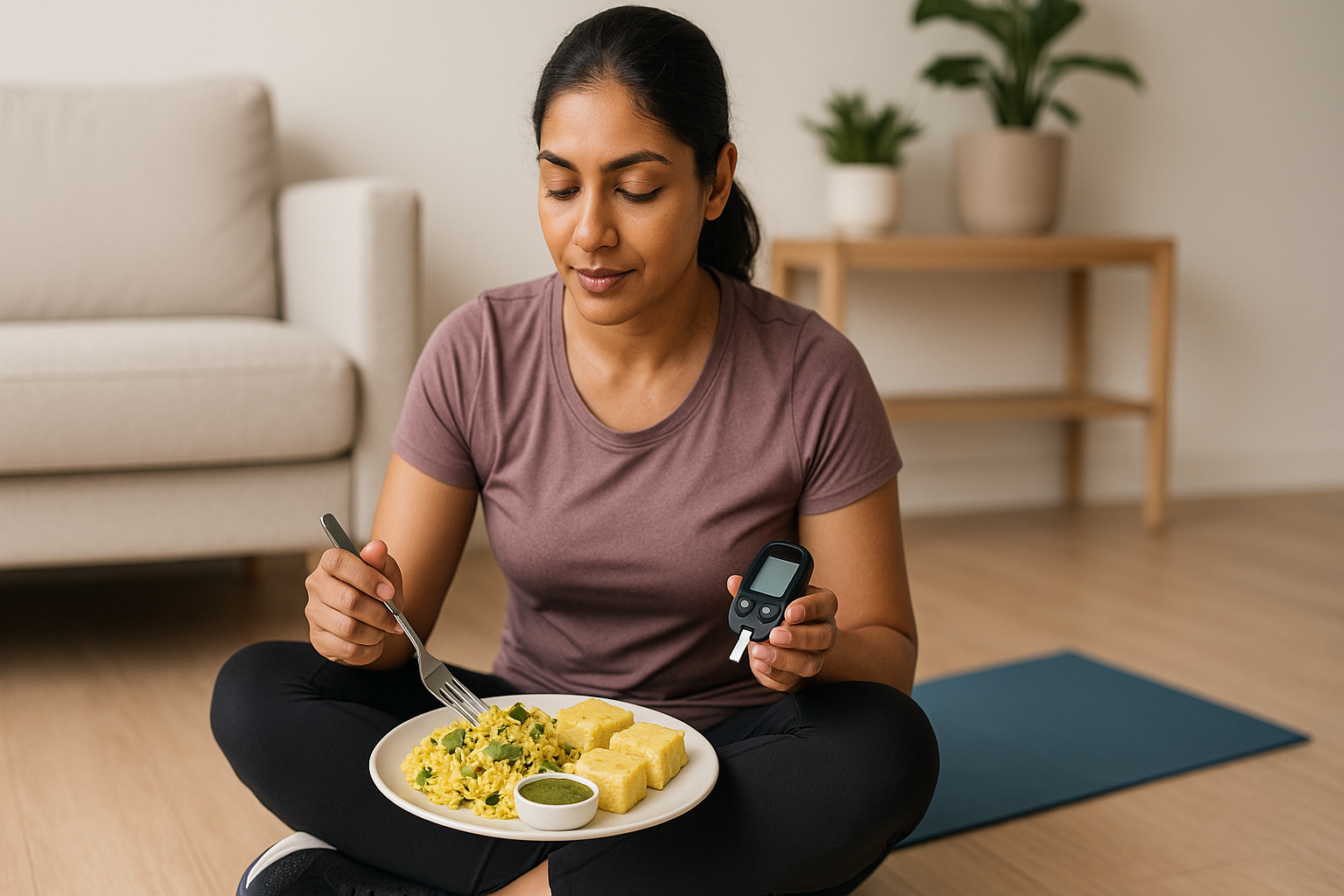
- If you use a CGM or fingersticks, test your own response. That’s kinda the goldmine
A low-GI breakfast doesn’t need to look like diet food. Most of the time it just looks like normal Gujarati food made with a little more thought and a little less denial.
1) Moong dal chilla, but Gujarati-style with methi and dudhi
#This one saved me during a phase when I was trying to stop relying on toast. Split yellow moong soaked overnight, blended with ginger, green chilli, jeera, methi, and grated bottle gourd or spinach, then cooked like a cheela or pudla. It’s soft, filling, and weirdly comforting on a rainy morning. Moong has a lower glycemic impact than many refined breakfast options and gives protein too, which is a big deal. In 2026 there’s still a lot of talk about front-loading protein earlier in the day to improve satiety and post-meal glucose, and honestly I buy it. I stay full way longer with this than with the old fafda-on-Sunday nonsense.
I usually have 2 medium chillas with mint-curd dip. If your sugars run high after breakfast, adding the curd helps. And no, I don’t put ketchup. That’s where me and my aunt deeply disagree.
2) Besan methi thepla with plain Greek yogurt or homemade dahi
#Thepla gets blamed too much, in my opinion. Regular thepla can be fine, but for better glucose control I do a mixed dough with besan plus whole wheat, lots of fresh methi, sesame, turmeric, and curd in the dough. Smaller size. Less oil than the travel version our families somehow make indestructible. Pairing it with plain dahi adds protein and softens the blood sugar rise. If you make thepla with mostly atta and then eat 4 of them with pickle and sweet chai... yeah, that’s a different story.
One thing current diabetes educators keep saying is don’t drink your sugar in the morning. That hit hard because cutting sugar in chai was emotionally offensive to me at first. But now I do masala chai with no sugar or with whatever sweetener works for me, and after a couple weeks my taste buds stopped being dramatic.
3) Vegetable handvo made with more lentils, less rice
#Handvo is one of those foods that feels like it should be healthy and can be healthy, but not automatically. The better version for diabetics, at least from what I’ve tested on family and on a friend’s CGM screenshots, is using a batter heavier on chana dal, toor dal, and moong than on rice. Then adding dudhi, carrot, cabbage, or even zucchini if you’re one of those modern fridge people. Fermented batter may also help digestibility, and fermented foods are having a huge wellness moment in 2026, though I think Indian kitchens were doing that before it became trendy on podcasts.
A square of handvo with coriander chutney and a side of unsweetened curd is actually enough for breakfast. Not half a tray. Learned that the hard way.
4) Sprouted moth or moong usal with a small jowar rotla
#This is one of the most under-rated breakfasts ever. Sprouts, cooked properly with onions, tomatoes, turmeric, garlic, and a little lemon, then eaten with a small jowar rotla or just by itself in a bowl. It’s earthy, high-fiber, and gives that steady energy feeling instead of the sleepy-carb crash. Legumes tend to have a lower GI and a better overall metabolic profile than many processed breakfast foods, and newer research keeps supporting high-fiber, minimally processed eating patterns for insulin resistance and type 2 diabetes management.
Tiny note though, because people online can be a bit too breezy about sprouts. If your digestion is sensitive, cook them well. Raw sprouts are not magic. Sometimes they’re just gas with PR.
5) Oats and vegetable muthiya, steamed not fried
#I know, oats in Gujarati food sounds mildly illegal. But hear me out. When mixed with besan, grated lauki, methi, and spices, then steamed into muthiya, oats stop tasting like sad foreign porridge and start acting normal. This one worked for my dad especially because he wanted familiar texture and savory breakfast, not smoothies or chia puddings or whatever the internet keeps trying to force on us. Since soluble fiber from oats can help with blood sugar and cholesterol, it’s a nice add-in, though I don’t think it needs to replace our own grains. It just joins the team.
6) Bajra upma with peas, peanuts, and lots of vegetables
#Millets are still very much in the wellness spotlight in India, and for once the trend isn’t completely annoying. Bajra can be a good choice because it’s fiber-rich and more filling than semolina for a lot of people. I make a broken bajra upma with mustard seeds, curry leaves, onions, beans, capsicum, a few peas, and roasted peanuts. Important phrase there being a few peas, because a lot of “healthy upma” recipes quietly become carb-on-carb situations. The peanuts matter too, not just for taste. Fat and protein from nuts can help slow the meal down.
If bajra feels too heavy in summer, jowar daliya works too. The broader point is swapping refined grains for whole grains where possible. Not in a preachy way. Just in a practical, what-will-I-actually-cook way.
7) Khaman dhokla, tweaked, with chana flour and fiber boosters
#Okay okay, before anybody yells at me, standard fluffy market dhokla is not exactly my first diabetes pick because portions disappear fast and some versions have sugar in the batter or syrupy tempering. But homemade khaman can be adjusted. Use besan, keep sugar minimal or skip it, add grated zucchini or spinach if you’re brave, and eat a moderate portion with a protein side like dahi or a handful of roasted chana. The GI of besan-based dishes is generally better than many refined flour snacks, though again, quantity changes everything.
This is one of those slight contradictions I live with. Is dhokla the ideal diabetic breakfast? Maybe not. Can it fit in a balanced breakfast sometimes? Absolutely yes. Real life matters. Perfect plans are the ones people quit by Thursday.
8) Paneer bhurji with a small methi rotli or stuffed in a chilla
#This one isn’t super traditional breakfast in every Gujarati home, but these days lots of us mix and match and I think that’s fine. Paneer bhurji with tomatoes, onions, capsicum, turmeric, and coriander gives a strong protein anchor, which many people with diabetes benefit from in the morning. If I know I have a busy day and maybe no chance for lunch on time, this breakfast keeps me steady. There’s increasing interest in 2026 around preserving muscle for glucose management, especially in midlife and after menopause, and protein plus resistance exercise keeps coming up. So I’ve become a bit annoying about both.
Sometimes I roll the bhurji into a moong chilla and call it breakfast genius. Sometimes I drop half of it on the stove. Wellness is humbling.
9) Thick unsweetened yogurt bowl with roasted flax, nuts, and a small guava or berries
#This is for the mornings when cooking feels impossible, which, let’s be honest, is many mornings. Plain dahi or Greek yogurt if you use it, topped with roasted flaxseed, a few chopped nuts, cinnamon, and a low-GI fruit portion like guava or berries. Not mango. Not banana plus honey plus granola plus dates pretending to be health. I mean, delicious, but your glucose meter may have some comments. A protein-rich breakfast with fiber can improve fullness and often results in a gentler glucose curve than carb-heavy quick options. Guava especially is underrated and way more useful here than fancy imported fruit.
If you’re lactose intolerant, unsweetened soy yogurt with nuts can work too. Check labels. Some “healthy” yogurts are basically dessert in activewear.
10) Leftover shaak + chana chilla, yes leftovers count
#My most controversial opinion maybe? Breakfast does not need its own seperate cuisine category. Some of my best glucose mornings happened when I stopped chasing breakfast foods and just ate leftover tinda shaak or cabbage-peas sabzi with a fresh besan or chana chilla. It sounds unromantic, but it’s balanced, fast, and avoids the trap of sweet or starchy convenience foods. Plus, vegetables at breakfast are still one of those boring habits that work suspiciously well.
In a lot of current metabolic health circles there’s more focus on meal order too, like eating vegetables and protein before the starch portion. I don’t follow it in a obsessive way, but when I naturally do that, I often feel better after eating. Less sleepy. Less snacky. More normal.
A few mistakes I made, so maybe you don’t have to
#- Thinking “traditional” automatically means low sugar impact. It doesn’t
- Replacing sugar with jaggery and then acting like I hacked biology. I did not
- Ignoring portion size because the food was homemade
- Drinking fruit juice with breakfast. Nope
- Skipping breakfast entirely, then overeating at 11:30 and wondering why I felt awful
One thing I wish more people said clearly: diabetes-friendly eating shouldn’t feel like punishment. It should feel sustainable, tasty, and familiar enough that your family doesn’t make a whole seperate meal forever. The best breakfast is the one you can repeat without resentment.
Tiny reality check on trends in 2026
#There’s a lot floating around right now about vinegar shots, glucose hacks, supplement stacks, anti-spike powders, biohacking, and all that. Some of it is interesting, some of it is expensive nonsense, and most of it matters less than regular sleep, walking after meals, enough protein, fiber, medication adherence if prescribed, and checking your own response. CGMs are more common now, even outside intensive diabetes care, and I do think they’ve helped people understand breakfast responses better. But they can also make some folks anxious. Data is useful. Data obsession, not so much.
If you take insulin or diabetes meds that can cause hypoglycemia, breakfast planning needs extra care, obviously. And if you have kidney disease, digestive issues, PCOS, or are pregnant, your meal needs may be different. So please use this list as practical inspo, not strict medical orders from some random breakfast-loving internet person.
My simple formula now
#Honestly I keep it really basic now. Pick one main carb source, not three. Add protein. Add veg. Keep chutneys mostly unsweetened. Drink chai without sugar if possible. Walk 10 minutes after, especially if breakfast was heavier. That little walk sounds too small to matter, but for me it weirdly does. And on the weeks I do strength training even twice, my numbers are usually better overall. Not perfect. Better.
If I had to rank the top winners from this whole list for blood sugar steadiness in my own life, I’d say moong chilla, sprouted usal, vegetable handvo, paneer bhurji with a small roti, and yogurt with nuts. But then again, some days only a warm thepla feels emotionally correct, and I think there’s room for that too if you build the plate smartly.
Final thoughts, from one Gujarati breakfast lover to another
#So yeah, you absolutely can eat Gujarati breakfasts while managing diabetes or prediabetes. You don’t need to become a completely different person. You just need a few better defaults, a little honesty about portions, and maybe less trust in packaged “diabetic-friendly” marketing. Start with one meal you already love and tweak that first. Don’t redo your whole kitchen in one dramatic weekend. That never lasts, at least not in my experiance.
And if your family is resistant, start by making the food tasty enough that nobody notices the health angle till later. That’s maybe my most useful trick, actually. Anyway, hope this helped a bit. If you like this kind of practical health-and-food writing, casual but still researched, have a look at AllBlogs.in sometime.